7 Easy Steps to Remove Grease From Kitchen Cabinets
Greasy kitchen cabinets can make your whole space feel less clean, even when you’ve just finished tidying up. You’re not alone—many people struggle to remove stubborn buildup without damaging their cabinet surfaces. These simple tips will help you find the best way to remove grease from kitchen cabinets and keep them looking fresh.
Start by clearing cabinets and removing hardware to protect surfaces. Choose an eco-friendly cleaner like vinegar or a gentle commercial option, and test it on a small spot first.
Use a soft microfiber cloth to apply the solution, letting it sit for 5-10 minutes to loosen grease. Wipe gently in circular motions, then rinse with a damp cloth and dry immediately.
Regular cleaning and protective finishes will keep your cabinets shining longer. Keep going to uncover more tips on maintaining your kitchen’s fresh look.
Key Takeaways
- Remove cabinet contents and hardware to access all greasy areas and avoid damage during cleaning.
- Use a gentle, eco-friendly cleaner like vinegar or baking soda to loosen grease without harming finishes.
- Apply cleaner evenly, let sit 5-10 minutes, then wipe grease in circular motions with a soft microfiber cloth.
- Rinse surfaces with a damp microfiber cloth and dry immediately to prevent water damage and residue buildup.
- Improve kitchen ventilation and wipe cabinets regularly to prevent future grease accumulation and maintain cleanliness.
Prepare Your Kitchen Cabinets for Cleaning
How do you get your kitchen cabinets ready for a thorough grease cleaning? Start by removing everything from the cabinets to give yourself full access to all surfaces. Take off the cabinet hardware, like handles and knobs, so you can clean every nook without obstruction.
Clear out all cabinet contents and remove hardware to access every surface for a thorough grease cleaning.
This also prevents any damage to the hardware while you clean. Next, check your kitchen’s ventilation systems. Turn them on to help clear out fumes from cleaning products and grease particles that loosen during scrubbing.
Proper airflow makes the process safer and more comfortable. Before applying any cleaner, wipe down cabinets with a dry cloth to remove loose dust and debris. This prep step guarantees your cleaning solution works directly on the greasy buildup, not on surface dirt.
Taking these careful steps lets you tackle grease efficiently and protects your cabinets and hardware during the cleaning process.
Pick the Best Cleaning Solution for Greasy Cabinets
Although many cleaning products claim to tackle grease, choosing the right solution for your kitchen cabinets makes all the difference. You’ll want a cleaner that breaks down greasy residue without damaging the finish.
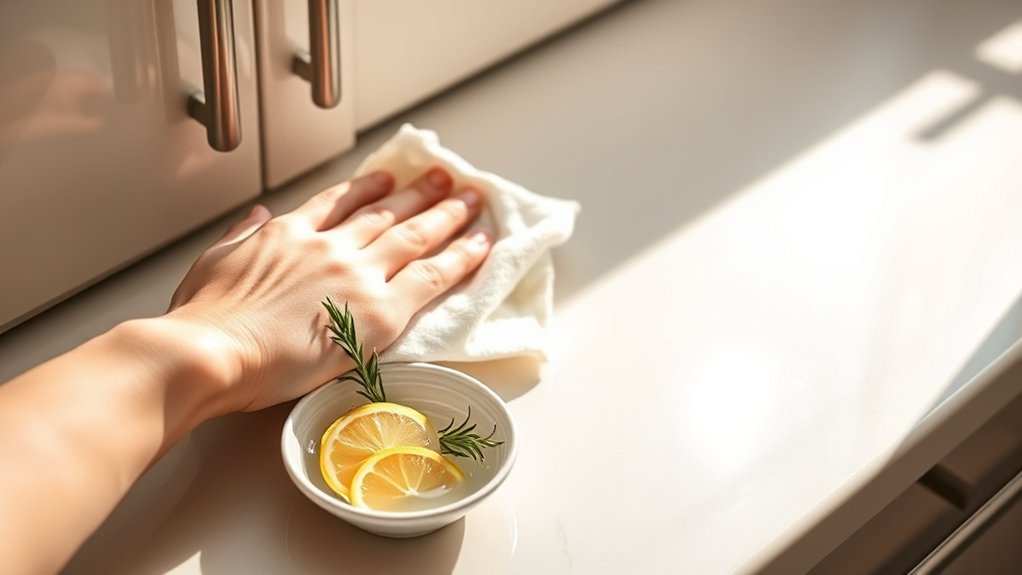
When choosing a cleaner, consider eco-friendly options. They’re safer for your family and the environment, and they’re often just as powerful as commercial products.
Look for natural ingredients like vinegar, lemon, or baking soda. These options cut through grease gently yet thoroughly.
If you prefer commercial products, choose those labeled non-toxic and biodegradable. Avoid harsh chemicals that can strip paint or wood coatings.
Test the cleaner on a small, hidden area first to make sure it won’t harm your cabinets. By selecting the right solution, you can remove grease efficiently while preserving your cabinets’ beauty for years to come.
Use Soft Cloths and Sponges to Protect Cabinet Surfaces
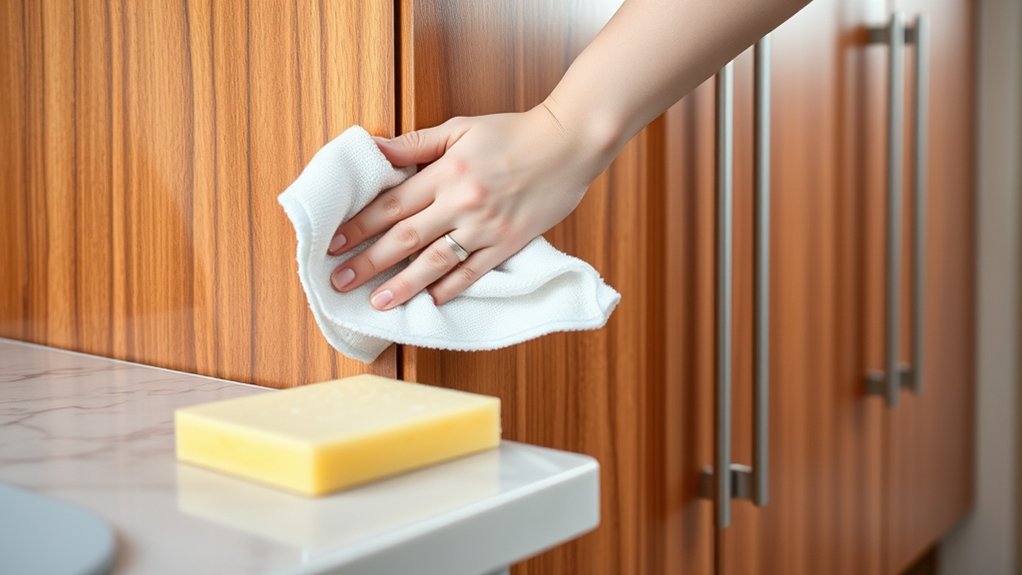
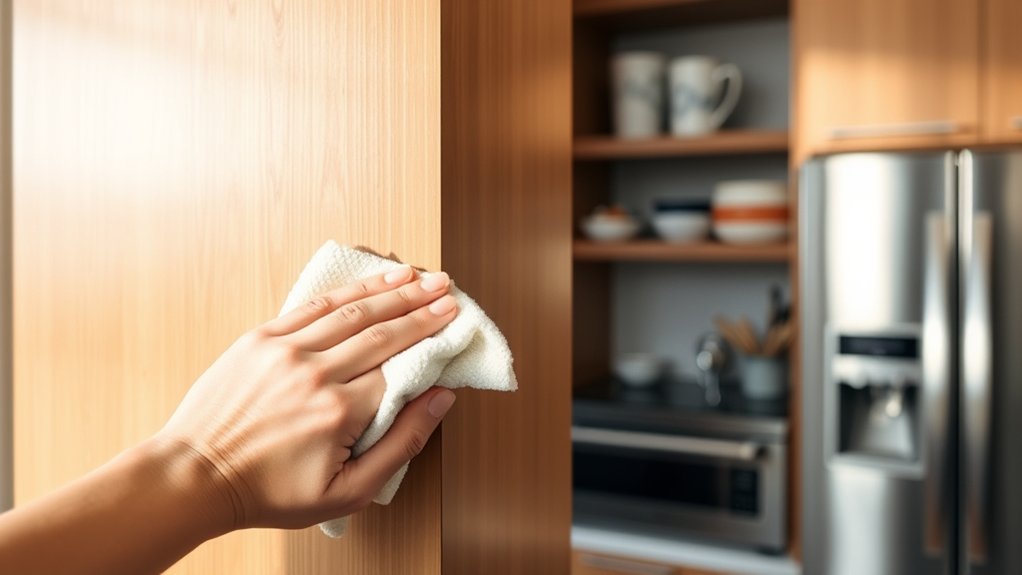
When cleaning greasy cabinets, you’ll want to choose soft cloths and sponges that won’t scratch or damage the surface. Avoid abrasive scrubbers, as they can leave marks on your cabinet hardware and ruin the finish.
Instead, pick microfiber cloths or non-abrasive sponges designed for delicate surfaces. These materials gently lift grease without harming the cabinet’s exterior or interior surfaces.
Choose microfiber cloths or gentle sponges to lift grease without damaging delicate cabinet surfaces.
Using soft cloths also helps you clean around cabinet hardware more effectively, preventing accidental scratches on knobs and handles. When wiping down interior surfaces, a soft cloth ensures you don’t strip away any protective coatings.
Always dampen the cloth or sponge slightly; too much water can cause damage, especially on wooden cabinets. By handling your cabinets carefully with the right tools, you’ll maintain their appearance and durability while successfully removing grease.
This approach sets you up perfectly for the next cleaning step.
Apply Cleaning Solution and Let It Sit Briefly
After choosing the right soft cloth or sponge, your next move is to apply a cleaning solution designed to break down grease effectively.
You can use a commercial degreaser or a homemade mix of warm water and mild dish soap. Apply the solution evenly to the greasy areas of your kitchen cabinets, focusing on spots with visible buildup.
Let the cleaning solution sit briefly, usually around 5 to 10 minutes, to loosen stubborn grease and improve stain removal without damaging the cabinet surface.
Avoid letting the solution dry out, as this can make cleanup harder. This brief waiting period gives the solution time to penetrate the grease, making the next cleaning steps more effective.
Once the grease is softened, gently wipe it away. Then, proceed with cabinet polishing to restore shine and protect the finish.
This method ensures thorough cleaning while maintaining your cabinets’ appearance.
Gently Wipe Away Grease With Circular Motions
Grab a soft cleaning cloth and dampen it with a gentle cleaning solution. Then, wipe the cabinets in consistent circular motions to break down the grease without damaging the surface. This helps lift the grime effectively while keeping your cabinets safe.
Choose Soft Cleaning Cloth
How do you effectively lift grease without damaging your cabinets? The key lies in choosing the right cleaning cloths made from soft materials. These cloths gently remove grime without scratching or wearing down the cabinet surface.
When you wipe away grease, opt for microfiber or cotton cloths. They’re absorbent and kind on finishes.
Here’s a quick guide to help you pick the best cleaning cloth:
| Cloth Type | Benefits |
|---|---|
| Microfiber | Highly absorbent, scratch-free |
| Cotton | Soft, durable, eco-friendly |
| Terrycloth | Good for heavy grease |
| Flannel | Gentle, ideal for delicate surfaces |
Using these soft materials ensures your cabinets stay clean and well-maintained while effectively removing grease.
Use Gentle Cleaning Solution
Pairing the right soft cloth with a gentle cleaning solution makes lifting grease even easier. When you tackle oil stains and tough grime on your kitchen cabinets, opt for a mild detergent diluted in warm water or a mixture of vinegar and water.
These solutions break down grease without damaging cabinet finishes. Avoid harsh chemicals that can strip paint or wood.
Dampen your cloth with the cleaning solution, making sure it’s not soaking wet to prevent water damage. Gently wipe the greasy areas, allowing the solution to loosen the buildup.
This approach helps you remove stubborn oil stains effectively while preserving your cabinets’ appearance. Using a gentle cleaning solution ensures you clean thoroughly without harsh scrubbing or damaging surfaces.
Apply Consistent Circular Motion
While cleaning, use consistent circular motions to gently break down and lift grease from your kitchen cabinets. This technique helps tackle stubborn stains and prevents spreading greasy residue further.
Moving in small circles ensures you cover every inch, loosening grime without damaging the cabinet’s finish. Apply light pressure and be patient, since rushing may push dirt deeper.
Here’s a quick guide to applying circular motions effectively:
| Step | Motion Type | Pressure Level |
|---|---|---|
| 1. Prep area | Small circles | Light |
| 2. Target spots | Medium circles | Moderate |
| 3. Stubborn stains | Tight circles | Firm but gentle |
| 4. Rinse area | Large circles | Light |
| 5. Dry cabinet | Circular wiping | Gentle |
Stick with this method to remove grease efficiently without harm.
Rinse Cabinets and Dry Thoroughly to Remove Grease Residue
Once you’ve scrubbed away the grease, rinse your cabinets thoroughly to prevent residue from attracting more dirt or damaging the finish. Start by wiping down all surfaces with a clean, damp cloth.
Pay special attention to areas around cabinet hardware, where grease can easily hide. Avoid soaking the wood, as excess moisture can ruin the paint finish.
To rinse and dry effectively:
- Use a microfiber cloth dampened with warm water to gently remove soap and grease remnants.
- Dry the cabinets immediately with a soft towel to prevent water spots and warping.
- Wipe around cabinet hardware carefully to prevent rust and buildup.
Keep Cabinets Shiny With Regular Cleaning and Protection
Keeping your cabinets shiny doesn’t have to be a chore if you commit to regular cleaning and protection. Wipe down your cabinets weekly with a gentle cleaner to prevent grease buildup.
Don’t forget to clean your cabinet hardware too. Knobs and handles attract grime and can dull the overall look. Using a microfiber cloth helps you avoid scratches while effectively removing dirt.
Improving your kitchen ventilation also plays a big role in protecting your cabinets. Proper ventilation reduces moisture and grease accumulation, keeping surfaces cleaner longer.
Consider using an exhaust fan or range hood every time you cook to minimize airborne grease particles.
Finally, apply a protective finish or polish suitable for your cabinet material every few months. This extra layer shields the surface from stains and helps maintain that fresh, shiny appearance.
Frequently Asked Questions
Can Grease Damage the Finish on Kitchen Cabinets Over Time?
Yes, grease can damage the finish on your kitchen cabinets over time. When grease builds up, it compromises cabinet durability by breaking down protective coatings, leading to discoloration and weakening the surface.
To guarantee finish preservation, you need to clean grease regularly and promptly. Neglecting this allows grime to seep into the wood or laminate, shortening your cabinets’ lifespan and making them harder to maintain.
Keeping them clean helps maintain their appearance and strength.
How Often Should I Deep Clean Greasy Kitchen Cabinets?
Think of your kitchen cabinets like a canvas that collects paint splatters over time. You should deep clean greasy kitchen cabinets every 1 to 3 months to keep them looking fresh and prevent buildup.
Regular cabinet cleaning helps with grease prevention, stopping stubborn grime from settling in. If you cook often or notice grease accumulating faster, clean more frequently.
Staying consistent makes your cabinets shine and last longer, saving you from tougher scrubbing later.
Are There Eco-Friendly Cleaning Solutions for Removing Grease?
Yes, you can definitely use eco-friendly cleaning solutions to tackle grease. Natural remedies like vinegar, baking soda, and lemon juice work wonders as DIY solutions.
Mix vinegar with water in a spray bottle, apply it to greasy spots, then scrub gently with baking soda for extra power.
These ingredients are safe, inexpensive, and effective, so you don’t have to rely on harsh chemicals to keep your kitchen cabinets clean and fresh.
Can Grease Buildup Cause Odors in Kitchen Cabinets?
Yes, grease buildup can cause odors in kitchen cabinets. When you don’t have proper kitchen ventilation, grease traps smells and moisture, creating a breeding ground for bacteria and mildew.
Your cooking habits also play a role. Frequent frying or heavy oil use increases grease accumulation.
To keep odors away, improve ventilation and clean your cabinets regularly, especially if your cooking style tends to produce more grease and smoke.
Is It Safe to Use Commercial Degreasers on Wooden Cabinets?
Using commercial degreasers on wooden cabinets can be a double-edged sword. If you’re not careful, harsh chemicals might strip your kitchen cabinet paint or weaken wooden cabinet durability.
You’ll want to choose a degreaser labeled safe for wood and always test it on a small, hidden spot first. That way, you protect your cabinets’ finish while effectively cutting through grease without turning your kitchen into a chemical battleground.
Conclusion
Keeping your kitchen cabinets grease-free doesn’t have to be a chore. Did you know that kitchens can accumulate up to 50% more grease than other rooms?
By following these simple steps, you’ll protect your cabinets and keep them looking fresh. Regular cleaning not only removes built-up grime but also prolongs their life and shine.
So, roll up your sleeves, grab your favorite cloth, and enjoy a sparkling kitchen. These easy steps to remove grease from kitchen cabinets will help your space feel brand new every day!