3 Tips to Display Cutting Boards on Your Kitchen Counter
A cluttered counter can make even a beautiful kitchen feel disorganized. If you’re struggling to display cutting boards in a way that looks stylish and keeps them easy to grab, you’re not alone. The right arrangement can turn everyday essentials into attractive kitchen décor.
To display cutting boards on your kitchen counter, start by choosing boards that complement your kitchen’s style—wood for warmth or bamboo for an eco-friendly touch. Next, arrange them by size and material, leaning larger boards at the back and smaller ones in front for visual interest.
Finally, keep frequently used boards within easy reach while mixing decorative elements for a balanced look. With these tips, you’ll boost both style and efficiency, and there’s plenty more to discover.
Key Takeaways
- Group cutting boards of varying sizes and materials together for an attractive, layered look on your countertop.
- Lean boards upright against the backsplash or use stands to keep them visible and easy to access.
- Arrange larger boards at the back and smaller ones in front for a neat, organized display.
- Mix wood, bamboo, and marble boards to add texture and complement your kitchen’s style.
- Incorporate small decorative items like plants or utensils to enhance and personalize the cutting board display.
Why Display Cutting Boards in Your Kitchen?
Although many people store cutting boards out of sight, displaying them on your kitchen counter can improve both functionality and style. When you keep cutting boards within easy reach, you boost your countertop organization by reducing clutter and making meal prep quicker.
Keeping cutting boards visible on your counter enhances both kitchen efficiency and aesthetic appeal.
You won’t waste time searching through cabinets or drawers, which means cooking becomes smoother and more enjoyable.
Beyond utility, cutting boards serve as beautiful kitchen decor accents. Their natural wood grains or colorful patterns add warmth and personality to your space without overwhelming it.
By thoughtfully arranging a few boards, you create an inviting atmosphere that reflects your taste. Plus, these boards break up the monotony of plain countertops, introducing texture and visual interest.
Displaying cutting boards on your counter balances practicality with design. It’s a smart way to keep essential tools handy while elevating your kitchen’s overall look and feel.
This simple step transforms an everyday item into a stylish statement.
Choose Cutting Boards That Match Your Kitchen Style
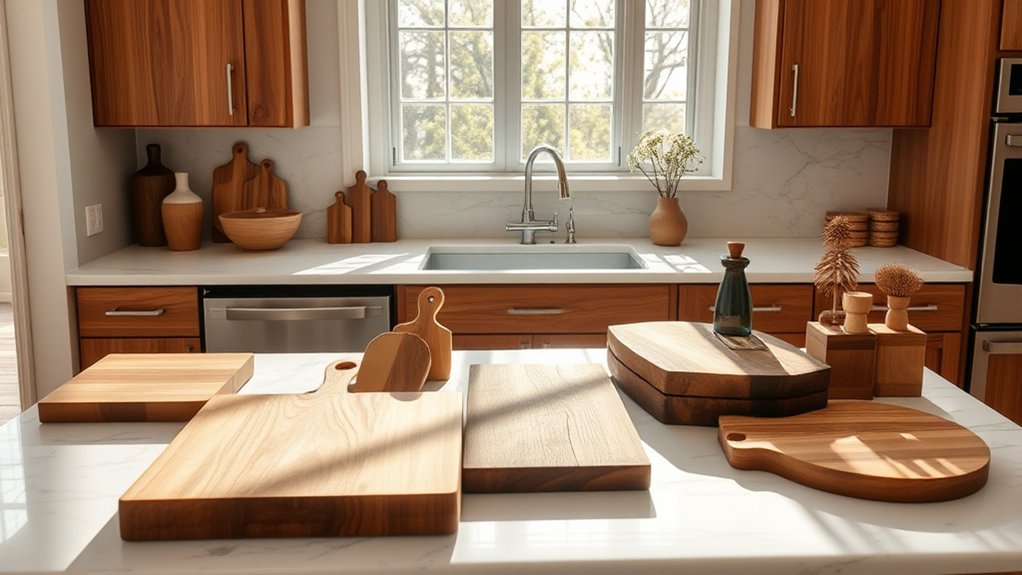
Displaying cutting boards on your kitchen counter offers a great opportunity to improve your space’s style as well as its functionality. When choosing cutting boards, consider material options that complement your kitchen’s design.
Wooden boards add warmth and a rustic touch, while bamboo offers an eco-friendly, modern look. Glass or acrylic boards bring a sleek, contemporary feel, perfect for minimalist spaces.
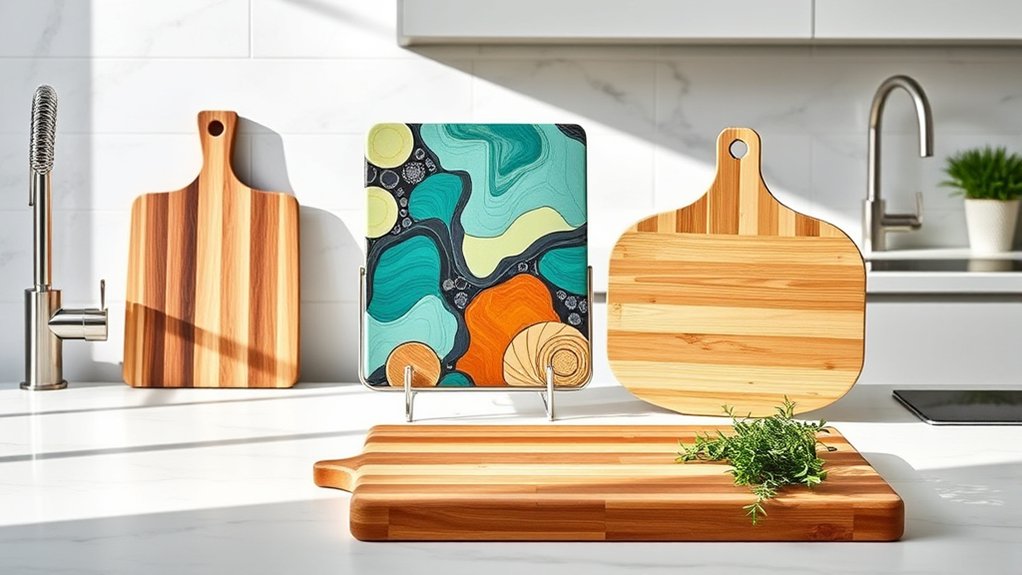
You can even find cutting boards with unique patterns or colors that act as decorative accents, enhancing your kitchen’s personality.
Match the cutting board’s tone and texture to your countertops, cabinets, and overall decor. For example, if you have marble countertops, a wooden cutting board creates a pleasing contrast.
If your kitchen features stainless steel appliances, opt for cutting boards with clean lines and neutral hues. By selecting cutting boards that align with your kitchen style, you not only keep your space cohesive but also turn these functional tools into stylish additions.
Arrange and Highlight Your Cutting Boards With Style
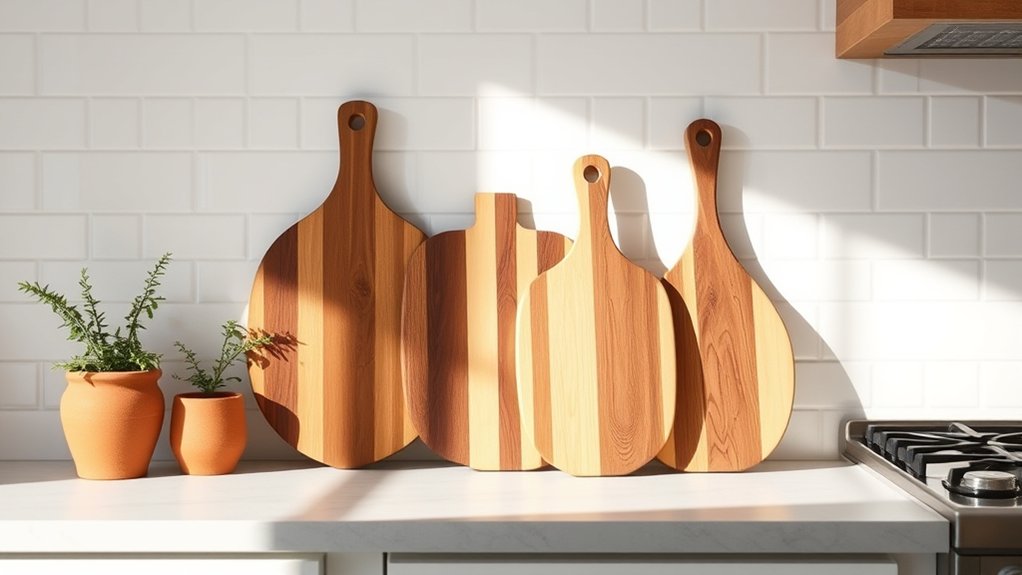
When you arrange your cutting boards thoughtfully, you can turn them into eye-catching focal points on your kitchen counter. Combining decorative display with functional organization guarantees your boards look great and remain easy to access.
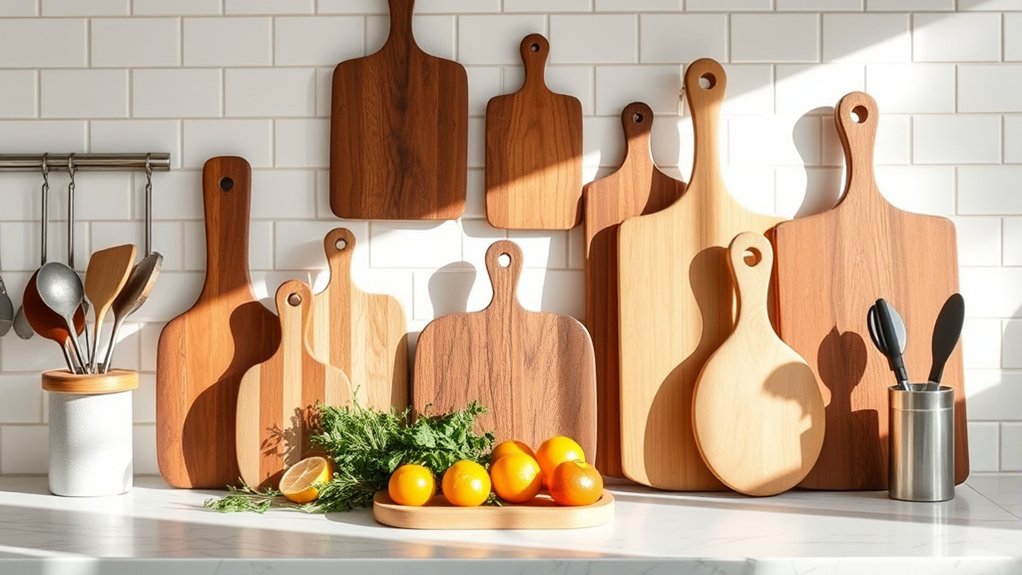
Start by grouping boards of different sizes and materials to create visual interest while keeping frequently used ones within reach. Lean them against the backsplash or use a stand to keep them upright and tidy.
This approach not only highlights their natural textures but also maximizes counter space.
Here are some tips to arrange and highlight your cutting boards with style:
- Mix wood, marble, and bamboo boards for a layered look
- Place larger boards at the back and smaller ones in front
- Use a metal or wooden rack to keep boards neatly stacked
- Add a small plant or kitchen tool nearby to complement the display
- Rotate boards regularly to prevent wear and showcase variety
With these strategies, your cutting boards become both beautiful and practical.
Frequently Asked Questions
How Do I Clean and Maintain Displayed Cutting Boards?
You should clean your cutting boards regularly with warm, soapy water to keep your kitchen décor looking fresh. Avoid soaking wooden boards; instead, wipe them down and dry immediately to prevent warping.
For material selection, use mineral oil on wood boards to maintain their finish and prevent cracking. For plastic or bamboo, sanitize with vinegar or mild bleach solution.
Proper care guarantees your cutting boards stay beautiful and functional.
Are Certain Wood Types Better for Cutting Board Durability?
Think of wood grain as nature’s fingerprint, each telling a story of strength and character. Yes, certain wood types are better for cutting board durability.
Hardwoods like maple and walnut have tight wood grain, making them more resistant to knife marks and moisture. Their natural moisture resistance helps prevent warping and cracking, so your board stays sturdy and beautiful longer.
Choosing the right wood means your cutting board can handle daily use without losing its charm.
Can Cutting Boards Harbor Bacteria if Left Out?
Yes, cutting boards can harbor bacteria if left out, especially if they’re damp or not cleaned properly. To keep your kitchen safe, you should dry your boards thoroughly and store them upright for better air circulation.
Combining knife storage and counter organization helps prevent cross-contamination by keeping your workspace tidy. Regularly cleaning your cutting boards and organizing your tools guarantees a healthier cooking environment and prolongs the life of your kitchen essentials.
What Is the Best Way to Store Cutting Boards When Not in Use?
The best way to store cutting boards when not in use is by creating decorative displays that also serve as space saving solutions. You can stand them upright against the backsplash or use a stylish rack to keep them organized and accessible.
This not only saves counter space but adds a charming touch to your kitchen. Just make sure they’re dry before storing to prevent bacteria growth and keep your boards in great condition.
How Often Should Cutting Boards Be Replaced for Safety?
You might think cutting boards last forever, but material longevity varies. Wood boards can last years with care, while plastic often needs replacing every 1-2 years.
Your replacement frequency depends on wear and deep grooves where bacteria hide. If you see cracks, heavy staining, or persistent odors, it’s time to swap it out.
Staying aware of your board’s condition keeps your kitchen safe and your food fresh.
Conclusion
So, who knew your cutting boards could steal the spotlight from your fancy appliances? By choosing ones that match your kitchen style and arranging them thoughtfully, you’re not just storing tools—you’re creating art.
It’s ironic that something meant for chopping veggies ends up being the centerpiece. But hey, if your cutting boards can make your kitchen look this good, maybe it’s time to rethink what really deserves counter space!