How to Get Rid of Ants in the Kitchen Step by Step
Ants in the kitchen can quickly turn a clean, welcoming space into a frustrating problem. You’re not alone—many people struggle to stop ants from returning, especially when hidden trails lead back to the colony. The right products can make the process easier and more effective.
To get rid of ants in your kitchen, start by identifying their trails and sealing cracks they use to enter. Clean counters and floors thoroughly to remove crumbs, spills, and food odors that attract them, then store food in airtight containers.
Use natural deterrents like vinegar wipes or peppermint near entry points, and set bait stations to target the colony. Keep monitoring and refilling bait as needed to guarantee lasting control.
Following these steps helps you manage ants effectively and prevent future invasions.
Key Takeaways
- Identify ant trails and entry points by observing their paths along walls, countertops, and cracks, then seal these openings to block access.
- Clean kitchen surfaces thoroughly, removing crumbs, spills, and food residues, and store food in airtight containers to eliminate attractants.
- Use natural deterrents like vinegar-water solution or place cinnamon and peppermint near entry points to disrupt ant trails.
- Set up appropriate ant baits along trails and entry points, monitor daily, and replace baits promptly to target the colony effectively.
- Maintain ongoing prevention by fixing leaks, keeping the kitchen dry, disposing of trash regularly, and continuing to seal potential entry points.
Why Do Ants Invade Your Kitchen?
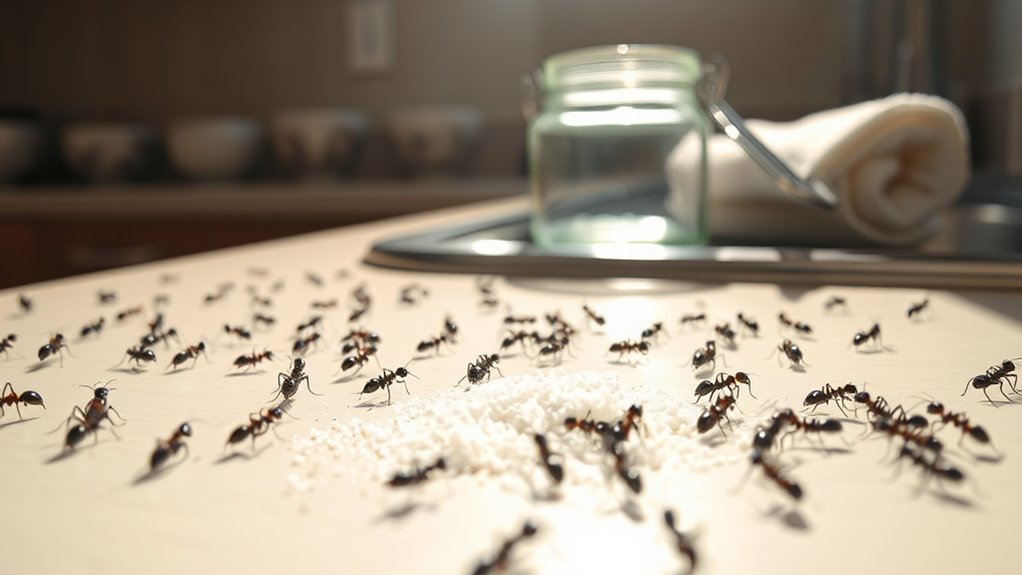
Although ants are tiny, they can quickly become a big problem in your kitchen because they’re always searching for food and water. Different ant species have unique pest behavior, but most are drawn to kitchens due to easy access to crumbs, spills, and moisture.
You might not realize it, but some ant species prefer sugary substances, while others go for greasy or protein-rich foods. Understanding this helps you identify which ant species you’re dealing with and adjust your cleaning habits accordingly.
Ants send scouts to investigate your kitchen, and once they find a food source, they leave pheromone trails to guide others. Their pest behavior is highly organized, allowing them to exploit your kitchen efficiently.
If you don’t act quickly, these tiny invaders multiply and establish nests nearby, making your kitchen a constant battleground. Knowing why ants invade helps you anticipate their moves and tackle the problem effectively.
How to Locate Ant Trails and Entry Points
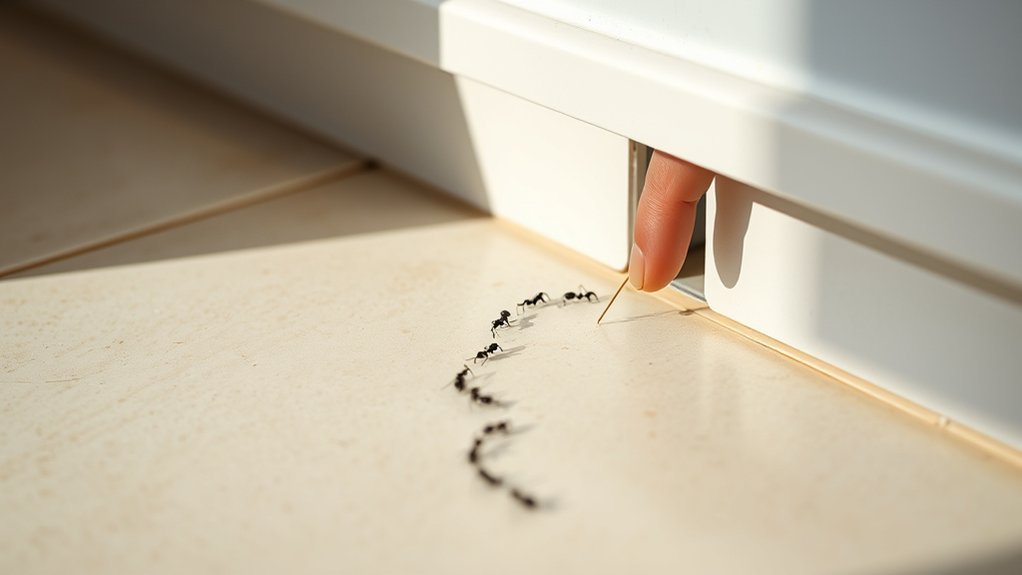
Start by looking for common ant paths, especially along walls and countertops. Then, check around windows, doors, and cracks where ants may be getting into your kitchen. Follow their movements to identify their entry points and trails more accurately.
Identifying Common Ant Paths
When ants invade your kitchen, the first step to stopping them is pinpointing their common paths. Understanding ant behavior patterns helps you track where they travel between their nest and food sources. Start by observing these key areas:
- Along baseboards and under cabinets, where ants often create visible trails.
- Near crumbs, spills, or sticky residues on countertops and floors attracting their attention.
- Close to moisture sources like sinks or leaky pipes, which can indicate nearby ant nest identification.
Inspecting Kitchen Entry Points
Since ants need easy access to your kitchen, start by carefully inspecting common entry points like windows, doors, and cracks in walls or floors. Ant behavior shows they prefer small gaps to infiltrate, so focus on these vulnerable spots.
Look closely for tiny openings where they might enter, especially near baseboards and plumbing. Entry point detection often involves spotting ants moving in and out or noticing residue trails they leave behind.
Use a flashlight to reveal hidden cracks and seal them once found. By understanding ant behavior and pinpointing exact entry points, you’ll prevent more ants from invading.
This step is vital before moving on to tracking their movement deeper inside your kitchen.
Tracking Ant Movement Patterns
Although sealing entry points is essential, tracking ant movement patterns helps you identify where they travel once inside your kitchen. Understanding ant behavior and trail navigation allows you to pinpoint their routes and target problem areas effectively.
Start by observing the ants during active hours, usually early morning or late afternoon. Look closely for shiny, narrow trails ants leave with pheromones to guide others.
To track ant movement patterns:
- Follow ants from their entry points to food sources or nests.
- Note frequently traveled paths along walls, baseboards, or under appliances.
- Use a flashlight to detect faint trails or clusters during low light.
How to Clean Your Kitchen to Remove Ant Attractants

Get rid of food crumbs and spills that may be attracting ants. Wipe down countertops, tables, and other surfaces regularly with a good sanitizer to remove lingering food residue. Keeping your kitchen clean helps cut off the ants’ food supply.
Eliminate Food Residues
Why do ants keep invading your kitchen? It’s usually because they find easy access to food residues. To stop them, remove these attractants thoroughly.
Focus on proper food storage, and avoid leaving crumbs or spills around. Here’s how you can eliminate food residues effectively:
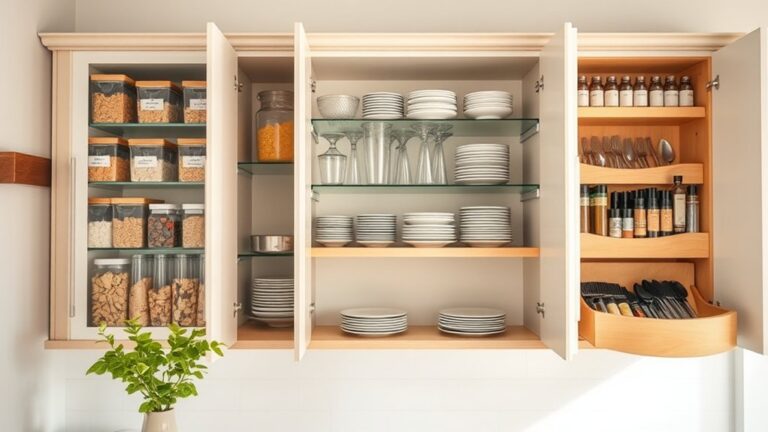
- Store all food in sealed containers to cut off ants’ access.
- Wipe down counters, shelves, and pantry areas to remove crumbs and sticky spots.
- Dispose of food waste promptly, and clean trash bins regularly.
Sanitize Surfaces Regularly
Since ants are drawn to leftover food particles and sticky residues, sanitizing your kitchen surfaces regularly is essential to keep them away. Different ant species have varying behaviors, but all share a keen ability to detect food sources.
Wipe down countertops, tables, and stovetops after every meal using a mild cleaner or vinegar solution to remove any trace of sugars or grease. Don’t forget areas like cabinet handles, fridge doors, and pantry shelves where crumbs can accumulate unnoticed.
Regularly cleaning your sink and floor also disrupts ant trails and reduces attractants. By maintaining a spotless environment, you interfere with ant behavior patterns that lead them indoors, making your kitchen less inviting to these persistent pests.
Consistent sanitation is your best defense against an ant invasion.
How to Seal Cracks to Block Kitchen Ant Entry
Although ants are tiny, they can squeeze through the smallest cracks and crevices in your kitchen walls and floors. To stop their entry, you need to seal gaps effectively.
Even the tiniest ants can slip through small cracks, so sealing gaps is key to keeping them out.
This not only blocks ants but also improves your kitchen’s weatherproofing, preventing drafts and moisture.
Here’s how to seal cracks to block kitchen ant entry:
- Inspect the kitchen thoroughly, focusing on areas near pipes, baseboards, and windows where cracks are common.
- Use a high-quality silicone or acrylic caulk to fill the gaps. Apply it smoothly and let it dry completely for a strong barrier.
- Consider weatherproofing strips or foam tape on doors and windows to close off additional entry points.
Natural Ways to Keep Ants Away
Sealing cracks can keep many ants out, but some might still find their way inside. To naturally keep ants away, focus on disrupting their ant diet and nesting habits.
Clean up food crumbs and spills immediately, especially sugary or greasy items ants love. Store food in airtight containers to limit access to their preferred diet.
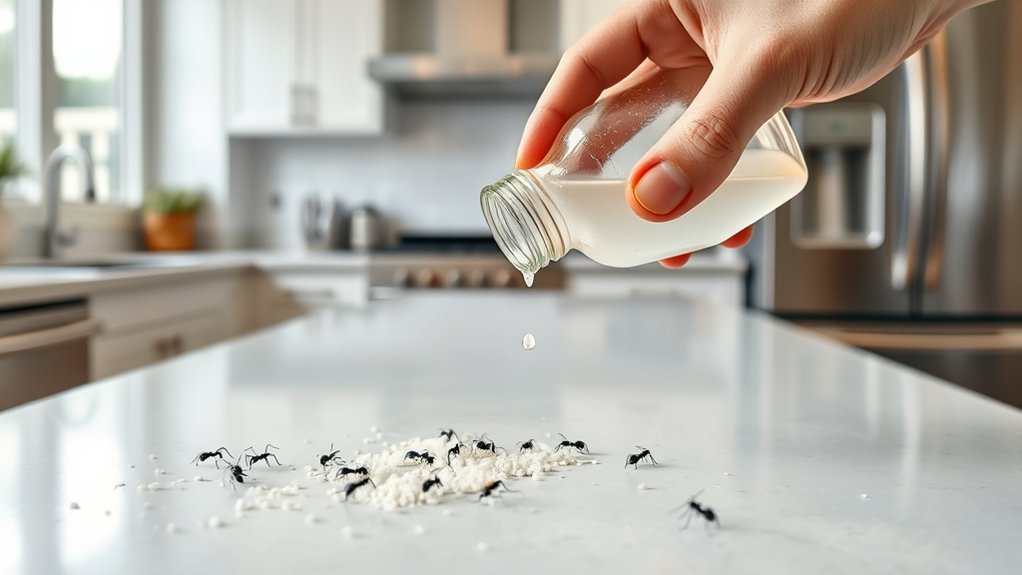
Vinegar is a great natural deterrent. You can wipe down counters and floors with a vinegar-water solution to erase scent trails ants use to navigate.
You can also sprinkle natural repellents like cinnamon, peppermint, or coffee grounds near entry points and potential nesting spots. These strong smells interfere with ants’ ability to communicate and settle nests.
Keep your kitchen dry, as moisture encourages ant nesting in hidden areas. Regularly check behind appliances and under sinks, removing any debris or standing water.
Setting Up Effective Ant Baits in the Kitchen
To get rid of ants effectively, start by choosing a bait they’ll find appealing. Then, place it where you see the most activity, such as along trails or near entry points.
Check the bait regularly and replace it as needed. This keeps it fresh and helps attract ants consistently.
Choosing The Right Bait
When you want to eliminate ants effectively, choosing the right bait is essential because it directly influences how quickly and efficiently you can control the infestation. Understanding ant behavior helps you pick bait types that attract them best.
Ants seek food sources based on their colony’s needs, often favoring sugary or protein-rich options.
Consider these common bait types:
- Sugar-based baits – ideal for ants craving sweet nourishment.
- Protein-based baits – work well when ants require protein for larvae.
- Gel baits – versatile and easy to apply in hard-to-reach spots.
Choose a bait matching the ants’ current preference to guarantee they carry it back to the colony, eliminating more ants at the source.
This strategic selection maximizes your success before moving on to placement tactics.
Strategic Bait Placement
Choosing the right bait sets you up for success, but placing it correctly makes all the difference in catching ants efficiently. Start with an ant trail analysis by observing where ants enter and the paths they follow.
This helps you pinpoint the best spots for bait station placement. Place bait stations close to these trails but out of reach of pets and children.
Avoid blocking their path because ants prefer a clear route. Focus on corners, baseboards, and areas near food sources where ants are most active.
Proper placement helps ants find the bait quickly and carry it back to the colony, maximizing its effectiveness. By setting your bait strategically, you increase the chances of eliminating the entire ant colony rather than just a few wandering workers.
Monitoring And Replenishing Baits
Although placing bait correctly is essential, you’ll need to monitor and replenish it regularly to keep ants interested and ensure the colony is effectively targeted. Understanding ant colony behavior and feeding habits helps you know when to refresh the bait.
Ants share bait with the colony, so maintaining fresh bait helps the poison spread efficiently.
Here’s how to monitor and replenish baits:
- Check bait stations daily to see if ants are actively feeding or if the bait is gone.
- Refill or replace the bait when it’s nearly empty or dried out to maintain its attractiveness.
- Remove old bait if it’s no longer attracting ants, then set up fresh bait nearby.
Preventing Future Ant Infestations
To keep ants from returning, you need to eliminate the conditions that attract them in the first place. Understanding ant behavior helps you identify what draws them: food crumbs, moisture, and easy access points.
Clean your kitchen thoroughly every day by wiping counters, sweeping floors, and storing food in airtight containers. Don’t leave dirty dishes or pet food out overnight.
Seal cracks and gaps around windows, doors, and baseboards to block entry routes. Fix leaky pipes and reduce moisture since ants are attracted to water sources.
Regularly take out the trash and keep your kitchen dry to make it less inviting.
Pest prevention is all about removing the reasons ants invade your space. By consistently maintaining cleanliness, securing food, and closing off entry points, you disrupt their ability to establish a colony.
These steps keep your kitchen ant-free long term, saving you from recurring infestations and the hassle of constant treatment.
Monitoring Your Kitchen for Ant Activity
Since ants can reappear even after thorough cleaning, you need to keep a close eye on your kitchen for any signs of their activity. Monitoring helps you catch infestations early and supports effective kitchen pest prevention. Pay attention to trails, entry points, and hidden spots where ants might gather.
Ants can return despite cleaning, so vigilant monitoring is key to early detection and prevention in your kitchen.
Here are three key steps to monitor ant activity:
- Check common entry points like windows, doors, and cracks daily for ant trails or nests.
- Inspect food storage areas regularly for tiny ants or crumbs that attract them.
- Use sticky traps near suspected areas to capture ants and assist with ant species identification.
Identifying Common Kitchen Ant Species
When you spot ants in your kitchen, identifying the species can help you choose the most effective treatment. Common ant species found indoors include odorous house ants, carpenter ants, and pavement ants.
Odorous house ants are small, dark brown or black, and emit a strong, rotten coconut smell when crushed. Carpenter ants are larger, usually black or red and black, and tend to nest in wood, which can cause structural damage.
Pavement ants are small, brown to black, and often build nests under sidewalks or concrete.
For identification tips, observe their size, color, behavior, and where you find them. Note if they’re trailing in lines, which is typical for many ant species.
You can also capture a few ants and compare them to online guides or use smartphone apps designed for ant identification. Knowing the specific ant species lets you target their nesting habits and food preferences, making your control methods more effective.
When to Call a Professional Pest Control Service
Although you can handle minor ant problems on your own, you should call a professional pest control service if the infestation grows beyond your control or if ants keep returning despite your efforts.
Professionals can identify and treat the ant habitat effectively, which is essential for long-term pest prevention. Here are signs you shouldn’t ignore:
Professionals pinpoint and treat ant habitats, ensuring lasting pest control and preventing recurring infestations.
- Ant trails multiply and spread across multiple rooms, indicating a large colony.
- Your DIY treatments don’t reduce ant activity, showing the infestation is deeper.
- You spot different ant species, suggesting complex ant habitats that need expert handling.
A professional service uses targeted treatments and thorough inspections to eliminate nests hidden in walls or under floors.
They also offer advice on preventing future invasions by sealing entry points and removing attractants.
Don’t wait too long. Early professional intervention saves you time and protects your kitchen from persistent ant problems.
Frequently Asked Questions
Can Ants Cause Health Problems in My Kitchen?
Yes, ants can cause health problems in your kitchen. Their behavior includes foraging on food and surfaces, which leads to contamination.
When you spot ants, proper pest identification is essential to address the issue effectively. Some ant species carry bacteria that can spread illness.
To protect your health, you should clean thoroughly and eliminate food sources, preventing ants from invading and reducing the risk of contamination in your kitchen.
Are Certain Foods More Likely to Attract Ants?
Yes, certain foods like sweets, greasy items, and proteins attract ants more. You’ll want to focus on proper food storage by sealing containers tightly and cleaning up crumbs promptly.
Using natural remedies like vinegar sprays or lemon juice around entry points can also help deter ants without harmful chemicals. Keeping your kitchen spotless and storing food correctly limits their access, reducing the chances of an infestation naturally and effectively.
How Long Does It Take for Ant Baits to Work?
Ant baits usually start showing results within 3 to 7 days. You’ll notice fewer ants as worker ants carry poison back to the colony, wiping out the nest.
While natural remedies and DIY traps can help deter ants quickly, they often don’t eliminate the whole colony. For lasting success, combine baits with these methods.
Can Pets Be Harmed by Ant Control Methods?
Yes, pets can be harmed by ant control methods if you’re not careful. Many traditional ant killers contain chemicals that pose serious risks to your animal companions.
To keep them safe, choose pet safe solutions like natural sprays or bait stations designed to prevent pet access. Always read labels and store products out of reach.
Taking these precautions helps you tackle ants without putting your pets in danger.
Do Ants Return After Treatment Is Completed?
Yes, ants often return after treatment because about 90% of ant colonies survive initial control efforts if you skip proper ant prevention.
To stop this, you need accurate pest identification to target the right species and their nests. Without ongoing prevention, such as sealing entry points and removing food sources, ants will keep coming back.
Conclusion
So, unless you want your kitchen to turn into Ant City, where tiny invaders throw block parties on your countertops, it’s time to act. Spot those ant trails like you’re tracking a secret agent, clean like a detective erasing clues, and seal cracks tighter than a fortress gate.
Use natural tricks to keep these six-legged squatters at bay. Follow these steps on how to get rid of ants in the kitchen, or you might become the landlord of the busiest ant motel in town!