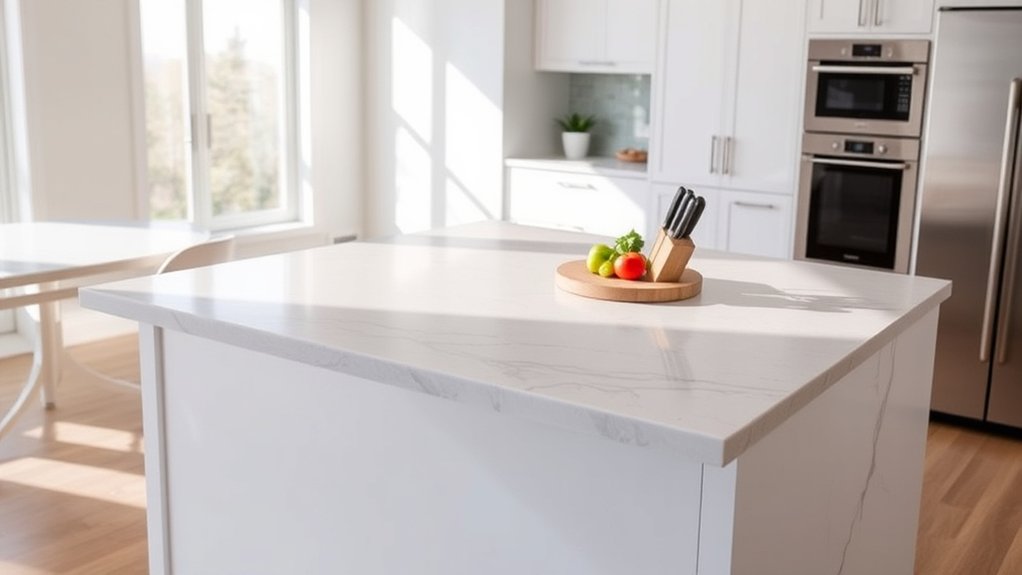
How Deep Should Kitchen Counters Be?
Choosing the right kitchen counter depth can be tricky, especially when you want plenty of prep space without making your kitchen feel cramped. You’re not alone—many homeowners struggle to balance comfort, storage, appliance space, and budget.
You should choose kitchen counters around 24 inches deep for standard use, but deeper ones—up to 30 or 36 inches—can give you more workspace and better accommodate larger appliances. Consider your kitchen layout and daily cooking habits; narrower counters suit tight spaces, while deeper ones boost prep area and efficiency.
Material and budget also matter since deeper counters can add cost and affect ergonomics. Keep exploring to find out how specific layouts and cooking styles influence the perfect counter depth for you.
Key Takeaways
- Standard kitchen counters are typically 24 inches deep, balancing workspace and room for movement in most kitchens.
- Deeper counters, up to 36 inches, suit kitchen islands or heavy multitasking, providing extra prep space and seating options.
- Shallower counters improve accessibility and workflow in compact layouts like galley kitchens by keeping items within easy reach.
- Material thickness and appliance size influence counter depth to ensure proper height alignment and functional clearance.
- Choose deeper counters when prioritizing workspace for frequent cooking, multitasking, or accommodating large appliances and durable surfaces.
How to Choose the Right Kitchen Counter Depth
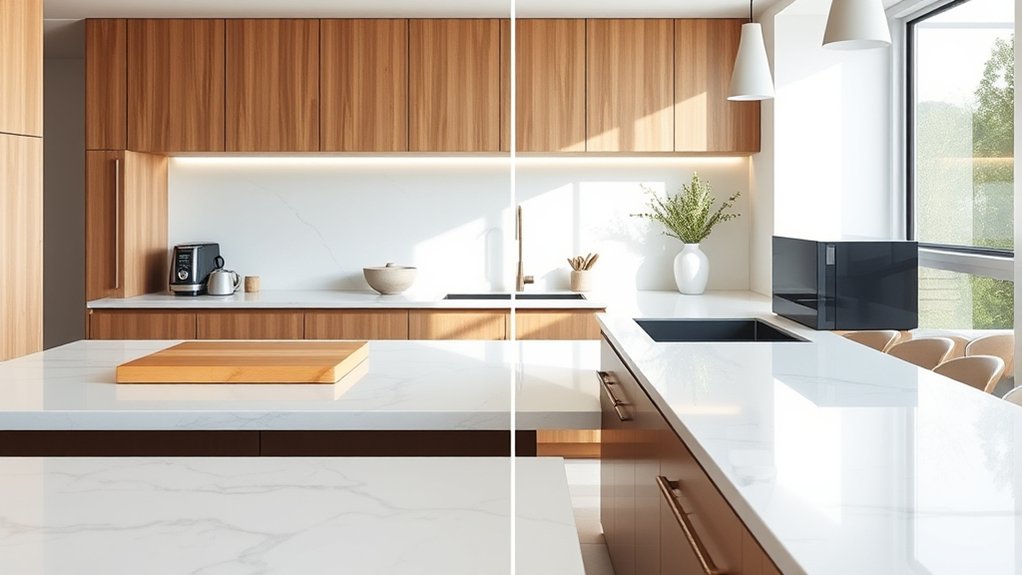
When choosing the right kitchen counter depth, you’ll want to balance functionality with space constraints. Think about how you use your kitchen daily.
A deeper counter offers more workspace, but it can crowd small kitchens. Consider decorative finishes that complement your kitchen’s style without overwhelming the space.
Sleek, minimalistic designs work well in tight areas, while ornate finishes suit larger rooms.
Material durability also plays a key role. Durable materials like quartz or granite stand up better to heavy use, especially on deeper counters where you might prep more food.
If your budget allows, choose materials that resist scratches and stains, maintaining both look and function over time.
Ultimately, pick a depth that fits your cooking needs while enhancing your kitchen’s aesthetic. By focusing on decorative finishes and material durability alongside size, you’ll create a balanced, practical workspace that feels just right.
Standard Kitchen Counter Depths: What You Need to Know
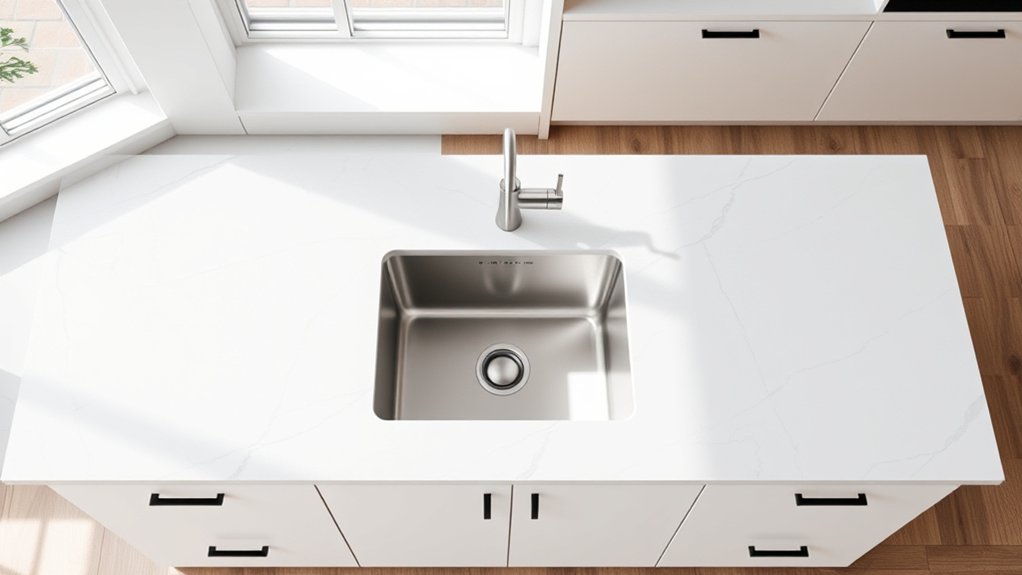
Although kitchen counter depths can vary, most standard countertops measure about 24 inches from the wall to the front edge. This depth suits most kitchens, offering enough workspace without overcrowding.
When choosing your countertop materials, keep in mind that thickness and durability can affect the overall feel. Plus, standard depths work well with common kitchen color schemes, ensuring a balanced look.
Here’s a quick overview of standard counter depths:
| Counter Depth (inches) | Common Use | Notes |
|---|---|---|
| 24 | Typical base counters | Fits most kitchens |
| 36 | Kitchen islands | Extra workspace, seating space |
| 12 | Backsplashes | Minimal, decorative |
| 18 | Raised bars | For casual dining |
| 30 | Appliances | Counter-to-appliance alignment |
Understanding these standards helps you make choices that blend style and function seamlessly.
How Different Kitchen Layouts Influence Counter Depth
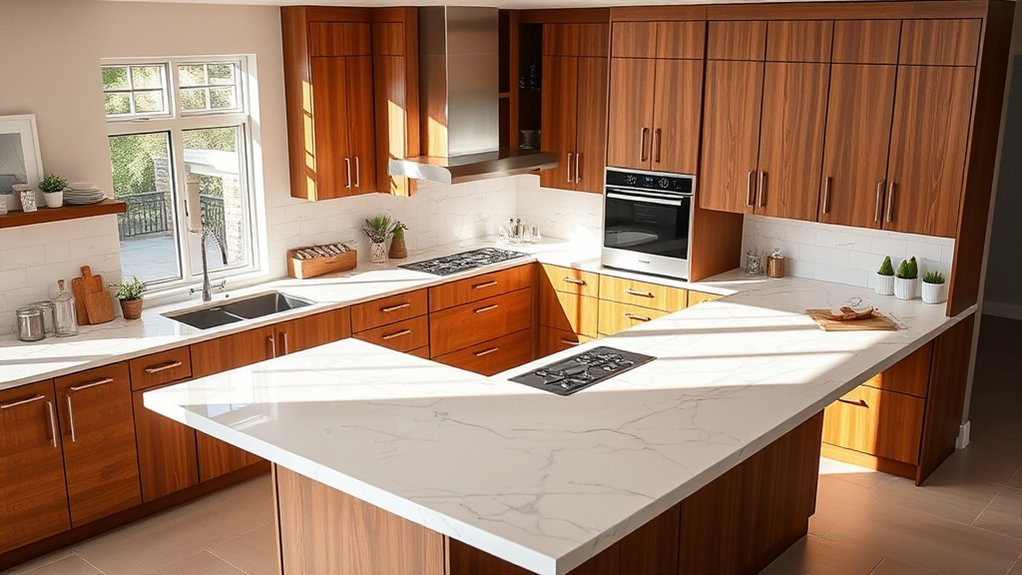
Choosing the right counter depth depends heavily on your kitchen’s layout. If you have a galley kitchen, narrower counters can keep the space open and easy to navigate.
In contrast, L-shaped or U-shaped kitchens often benefit from deeper counters that provide more prep space without crowding the room. When planning, consider how your counter depth affects both workflow and aesthetics.
Color coordination plays a key role, especially if your counters meet walls or backsplashes. Matching tones can create a seamless look regardless of depth.
Material durability also matters. Deeper counters may require sturdier materials to support heavier use without warping or damage.
If your layout includes an island, you might want a deeper countertop there for added function and style. Just be sure to keep walkways clear.
Ultimately, your kitchen’s shape guides how deep your counters should be to balance practicality, durability, and cohesive design.
How Your Appliances Affect Countertop Depth Decisions
Because your appliances set the stage for your kitchen’s functionality, their size and style directly influence countertop depth choices. When planning appliance placement, account for how much space each appliance requires, including clearance for doors and vents.
For example, a deep countertop might accommodate a large range or built-in microwave better, while a shallower counter works well with compact appliances. You also want to guarantee enough workspace remains after fitting your appliances.
Countertop materials play a role too. Thicker materials like granite or quartz can add bulk, affecting how appliances align with edges and cabinets.
You’ll want to select materials that complement your appliance depth, ensuring a seamless look and functional surface height. By thoughtfully coordinating appliance placement and countertop materials, you can create a balanced kitchen that’s both attractive and comfortable to use, maximizing efficiency without sacrificing style.
Why Your Cooking Style Changes the Ideal Counter Depth
Your cooking style directly affects how much prep space you need and how easily you can reach your appliances. The right counter depth should support your workflow without making anything feel out of reach. Let’s look at how these factors can help you choose the ideal countertop depth for your kitchen.
Prep Space Requirements
When you cook frequently or entertain often, having enough prep space becomes essential to keep things efficient and enjoyable. Your ideal counter depth depends on how much counter space you need for chopping, mixing, and assembling dishes.
If you prefer preparing multiple meals at once or hosting large gatherings, deeper counters offer the extra room required to spread out ingredients and utensils comfortably.
Moreover, deeper counters can increase your storage capacity by allowing for larger or additional cabinets underneath, which helps keep your kitchen organized.
On the other hand, if you mostly make simple meals, a standard depth might suffice, freeing up space for other kitchen elements.
Ultimately, matching your counter depth to your cooking style ensures your prep space supports your workflow without feeling cramped.
Appliance Accessibility Needs
Counter depth doesn’t just affect how much prep space you have. It also impacts how easily you can access appliances. If you frequently use countertop appliances like mixers or coffee makers, a shallower counter may keep them within easy reach without feeling cramped.
On the other hand, deeper counters can accommodate larger appliances but might push controls and displays farther back, making them harder to use comfortably. When selecting your counter depth, consider how your cooking style shapes your appliance needs.
Also, think about material choices. Certain materials support decorative accents that can integrate appliance areas seamlessly while maintaining functionality. Ultimately, balancing depth with accessibility ensures your kitchen feels both stylish and practical, letting you enjoy your appliances without awkward stretching or clutter.
Cooking Workflow Efficiency
Although kitchen layouts vary, the way you move through cooking tasks plays a crucial role in determining the best counter depth for your space. Your cooking style influences how much surface you need for prep, plating, and cleanup.
If you often multitask or prepare complex meals, deeper counters offer more room to spread out. Conversely, if you prefer quick meals, shallower counters keep everything within easy reach.
Consider these factors to optimize your cooking workflow efficiency:
- Space for chopping, mixing, and plating simultaneously
- Easy access to frequently used utensils and ingredients
- Balance between decorative finishes and practical material durability
- Room for small appliances without cluttering your workspace
Choosing the right depth ensures your kitchen supports how you cook, blending style with functionality.
When to Choose Deeper Counters for Extra Workspace
If you often find yourself juggling multiple cooking tasks or prepping meals for a large family, opting for deeper counters can make a significant difference in your kitchen’s functionality. Deeper countertops provide more surface area, giving you ample room to spread out ingredients, appliances, and tools without feeling cramped.
Choosing deeper counters creates more space to organize ingredients and tools, enhancing your kitchen’s efficiency and comfort.
This extra space is especially useful if your countertop material supports heavy-duty use, like granite or quartz, ensuring durability despite the increased surface.
Keep in mind, though, that choosing deeper counters may affect your installation cost. The added materials and labor can raise expenses, so you’ll want to balance your need for extra workspace with your budget.
Also, consider how deeper counters fit into your overall kitchen layout to avoid obstructing movement or crowding other elements. When you prioritize efficient meal prep and ample workspace, deeper counters can be a smart upgrade that boosts your cooking experience.
When Shallower Counters Improve Kitchen Accessibility
When you want to make your kitchen more accessible, especially for individuals with limited mobility or those who use wheelchairs, shallower counters can be a game-changer.
Reducing counter depth helps you reach items more easily without stretching or straining, regardless of counter height. This setup also improves maneuverability, letting you get closer to the workspace.
Here’s how shallower counters improve accessibility:
- Allow easier reach across the entire surface, reducing physical effort
- Improve visibility of countertop items and tasks
- Create more open floor space, helping wheelchair users move freely
- Make under-counter storage more accessible and manageable
While shallower counters reduce overall storage capacity, you can compensate with smart organization and vertical storage solutions.
Adjusting counter height alongside depth ensures comfort and usability for everyone in your kitchen. By choosing shallower counters thoughtfully, you create an environment that’s both functional and welcoming.
The Impact of Countertop Depth on Kitchen Ergonomics
Because countertop depth directly affects how you interact with your kitchen workspace, it plays a crucial role in ergonomics. If your counters are too deep, you might have to lean or stretch, causing discomfort and strain during meal prep.
On the other hand, shallower counters keep everything within easy reach, reducing fatigue and improving workflow. When choosing your countertop depth, consider how it complements your kitchen layout and your daily habits.
Countertop aesthetics also influence your choice. Deeper counters can create a generous, luxurious look, while shallower ones often feel more open and streamlined.
Material selection matters, too. Some materials like granite or quartz can support deeper surfaces without warping, while others may limit practical depth due to weight or cost constraints.
Ultimately, balancing depth with ergonomics ensures your kitchen feels both functional and visually appealing, making cooking more enjoyable and less taxing on your body.
How to Measure and Plan Countertop Depth for Your Kitchen
Although countertop depth might seem like a minor detail, measuring and planning it carefully can transform your kitchen’s functionality. To guarantee your counters suit your space and needs, start by measuring the available wall length and consider the standard depth of 24 inches as a baseline.
Think about how much working space you want and how deep appliances or sinks will be.
Consider your desired workspace and the depth needed for appliances or sinks when planning countertops.
Keep these points in mind when planning:
- Measure from the wall to the front edge, factoring in backsplash thickness
- Consider material durability to choose depths that support heavy use
- Plan for ergonomic comfort to avoid straining when reaching across
- Match depth with your kitchen’s aesthetic appeal, balancing form and function
Custom vs. Pre-Made Countertop Depth Options Explained
Deciding between custom and pre-made countertop depths can considerably impact your kitchen’s fit and feel. Pre-made options offer standard depths, making them quick and budget-friendly.
Custom depths, however, let you tailor your space perfectly, especially when considering specific countertop material and edge profiles for a unique look and function. Here’s a quick comparison:
| Feature | Pre-Made Countertops | Custom Countertops |
|---|---|---|
| Depth Options | Standard sizes (24″, 25″) | Any depth you need |
| Countertop Material | Limited to popular types | Wide variety available |
| Edge Profiles | Few standard choices | Fully customizable |
| Installation Time | Faster | Longer, due to tailoring |
| Cost | Lower | Higher |
Choosing custom depths allows you to optimize workflow and aesthetics but costs more and takes extra time.
Pre-made counters suit straightforward remodels with common dimensions. Consider your kitchen’s unique needs before deciding.
Frequently Asked Questions
What Materials Are Best for Durable Kitchen Counters?
You’ll want to choose materials that balance countertop aesthetics with material durability. Quartz is a top pick because it’s tough, non-porous, and looks sleek.
Granite offers natural beauty and stands up well to wear and tear. If you want something budget-friendly but durable, consider laminate with a good finish.
Solid surface counters also resist stains and scratches, making them practical while keeping your kitchen stylish.
How Do I Maintain and Clean Different Countertop Surfaces?
You should clean your countertops regularly with mild soap and water to keep them looking great. For natural stone, apply countertop sealing every 6-12 months to prevent stains.
Use specific stain removal techniques depending on the surface: baking soda paste works on quartz, while hydrogen peroxide can help with granite. Avoid harsh chemicals on laminate.
What Is the Average Cost of Installing New Kitchen Counters?
You can expect the average cost of installing new kitchen counters to range between $2,000 and $5,000, depending on materials and countertop thickness. Quartz and granite tend to be pricier, while laminate is more budget-friendly.
When doing a cost comparison, factor in labor and any additional customization. Thicker countertops usually increase costs but offer better durability.
Knowing this helps you balance style, function, and budget effectively.
Can I Install Kitchen Counters Myself or Should I Hire a Professional?
Jumping in headfirst with DIY installation can save you money, but it’s not for everyone. If you’ve got basic carpentry skills and patience, you might handle it yourself.
However, kitchen counters require precise measurements and heavy lifting, so mistakes can be costly. Hiring professional assistance guarantees a flawless fit and peace of mind.
Weigh your confidence and tools before deciding. You don’t want to bite off more than you can chew.
How Do Kitchen Counter Heights Affect Usability?
Your kitchen counter height directly impacts usability by influencing counter height ergonomics and counter height accessibility. When counters fit your height, you minimize strain on your back and wrists, making tasks easier and more comfortable.
If counters are too tall or too short, you might experience discomfort or awkward posture. Adjusting counter height to your needs guarantees better accessibility, especially if you have mobility challenges or use a wheelchair, improving your overall kitchen experience.
Conclusion
Choosing the right kitchen counter depth means balancing style with function, matching your layout with your appliances, and tailoring your space to your cooking style. You’ll improve accessibility with shallower counters, boost ergonomics by measuring carefully, and choose between custom or pre-made options to fit your needs.
By considering these factors, you’ll create a kitchen that’s not only beautiful but practical, comfortable, and distinctly yours. Understanding how deep kitchen counters should be can help you design a space that works perfectly for your needs.