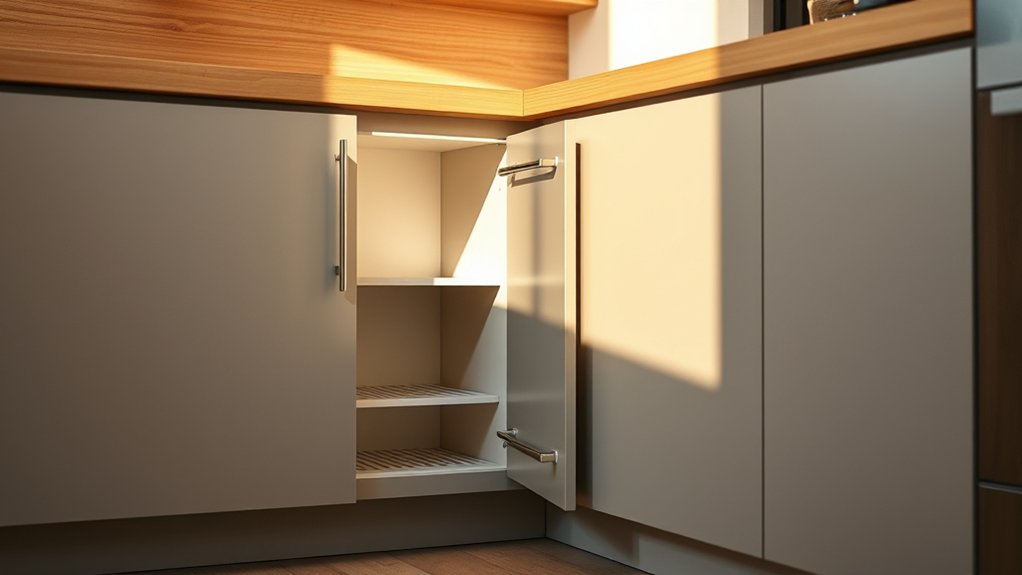
How Deep Are Kitchen Base Cabinets?
Struggling to find kitchen storage that fits your space without making the room feel cramped? You’re not alone—many homeowners wonder, “How deep are kitchen base cabinets?” before choosing the right layout, appliances, and countertop.
Kitchen base cabinets are typically 24 inches deep, giving you a good balance of storage space, countertop area, and appliance fit. You can also find custom depths from 15 to 30 inches to better suit unique layouts or tighter spaces.
Choosing the right depth helps improve accessibility and workflow while keeping your kitchen functional and stylish. If you want to optimize your kitchen setup or examine custom options, there’s a lot more to consider about cabinet depth.
Key Takeaways
- Standard kitchen base cabinets are typically 24 inches deep, balancing storage capacity with countertop workspace.
- Custom base cabinet depths range from shallow 15–18 inches to deep 27–30 inches or more for unique space needs.
- Measuring cabinet depth includes front-to-back dimensions, accounting for decorative accents, hardware, and toe kicks.
- Depth affects appliance fit, storage capacity, and kitchen workflow, influencing accessibility and countertop space.
- Custom depths allow enhanced organization with pull-out shelves and better space optimization but may require complex installation.
What Is the Standard Depth of Kitchen Base Cabinets?

Although kitchen designs vary widely, the standard depth of base cabinets is typically 24 inches. This depth strikes a balance between offering enough storage space and maintaining comfortable countertop workspace.
Base cabinets are typically 24 inches deep, balancing storage capacity with comfortable countertop workspace.
When planning your kitchen, consider how this standard depth complements your color schemes and lighting choices. For example, lighter colors can make the cabinets appear less bulky, while darker tones may emphasize their presence.
Proper lighting, such as under-cabinet LED strips, can improve visibility and highlight the depth without overwhelming the space.
Knowing the standard depth helps you visualize how your kitchen will feel and function. It ensures your appliances and countertops align properly, creating a smooth workflow.
Sticking to standard dimensions also makes it easier to find replacement parts or custom additions later. This keeps your kitchen both stylish and practical.
Understanding this foundation lets you confidently plan the rest of your kitchen design.
How to Measure Your Kitchen Base Cabinets Correctly

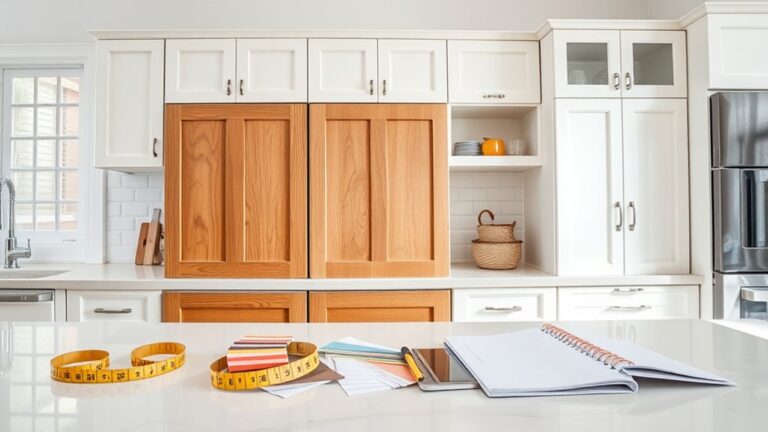
To measure your kitchen base cabinets correctly, start with a tape measure and a level. Then, measure from the front edge of the cabinet area to the back wall to determine the depth accurately. Taking precise measurements helps ensure your cabinets fit properly and function as intended.
Measuring Cabinet Depth
How do you measure the depth of your kitchen base cabinets accurately? Start by considering the space behind the cabinet door, including decorative accents that may add a slight overhang. These details can affect the total depth, so don’t overlook them.
Next, focus on the cabinet box itself, which reflects the material durability and construction quality. Measuring this part ensures you understand the cabinet’s true size and sturdiness.
Follow these steps:
- Measure from the front edge of the cabinet door, including any decorative molding, to the back wall.
- Check the interior depth by measuring inside from front to back.
- Account for toe kicks or any base trim that may extend beyond the cabinet box.
This approach gives you an exact depth reading for your kitchen base cabinets.
Tools Needed
Before you start measuring your kitchen base cabinets, gather the right tools to guarantee accuracy and ease. You’ll need a tape measure for precise measurements of depth, including areas around decorative hardware that might add extra inches.
A level helps ensure your measurements are straight, especially if your cabinet finishes have uneven surfaces or trims. Don’t forget a pencil and notepad to jot down measurements clearly.
Having a flashlight can help you see inside darker cabinet corners, ensuring you don’t miss details impacted by cabinet finishes or hardware. These tools will make measuring efficient and exact, preventing errors when ordering replacement parts or planning upgrades.
With everything ready, you’ll confidently measure your kitchen base cabinets, accounting for all decorative and structural elements.
Common Standard and Custom Depth Variations in Base Cabinets

Most kitchen base cabinets come in standard depths—typically around 24 inches—which work well in many layouts. However, if your space or storage needs are unique, custom depths can provide a better fit and added functionality. Let’s look at how standard and custom options can shape your kitchen design.
Standard Base Cabinet Depths
Although standard base cabinet depths suit most kitchens, custom depths may better fit your space or storage needs. Standard base cabinets are typically 24 inches deep, balancing appliance compatibility and aesthetics.
This depth allows most appliances to fit seamlessly while maintaining a clean, uniform look.
Here are common standard base cabinet depths to keep in mind:
- 24 inches: The most common depth, ideal for countertops and appliances.
- 12 inches: Used for shallow cabinets, often in kitchen islands or pantries.
- 18 inches: Sometimes used for narrow spaces or additional storage without crowding.
Choosing the right depth helps your kitchen function smoothly and look cohesive without awkward gaps or overhangs.
Custom Depth Options
While standard base cabinet depths cover most kitchen layouts, customizing the depth can better suit your unique space and storage needs. You can improve cabinet aesthetics by choosing depths that complement your kitchen’s design and increase material durability by selecting thicker materials for deeper cabinets.
Custom depths also allow better access and storage flexibility, especially in compact or unusually shaped kitchens.
| Depth Type | Typical Measurements |
|---|---|
| Standard Depth | 24 inches |
| Shallow Custom Depth | 15 to 18 inches |
| Deep Custom Depth | 27 to 30 inches or more |
Choosing the Right Base Cabinet Depth for Your Kitchen Workflow
When designing your kitchen, selecting the right base cabinet depth can dramatically improve your workflow and comfort. You want cabinets that not only fit your space but also improve how you move and work.
Consider these factors to find your ideal depth:
Keep these key factors in mind to choose the perfect cabinet depth for your kitchen.
- Accessibility: Deeper cabinets offer more storage but may require better interior lighting to see everything clearly. Shallower cabinets keep items within easy reach, reducing strain.
- Ergonomics: Choose a depth that allows you to comfortably reach the back without bending excessively. This helps maintain a smooth cooking rhythm.
- Hardware Compatibility: Your cabinet hardware should complement the depth. For example, larger pulls work better on deeper drawers, while smaller knobs suit shallow cabinets.
How Base Cabinet Depth Affects Countertop Space
Standard base cabinets are typically about 24 inches deep, and that depth directly affects how much countertop space you have. Choosing deeper cabinets can give you more room for food prep and cooking, but keep in mind that they may make the kitchen feel more crowded. Understanding these measurements helps you maximize your workspace while maintaining a comfortable layout.
Standard Depth Measurements
Because base cabinet depth directly impacts your countertop space, understanding standard measurements is essential for kitchen design. Most base cabinets come in standard depths, balancing material durability and aesthetic appeal while providing practical workspace.
Here are the common standard depths you’ll encounter:
- 24 inches – The most typical depth, allowing enough room for durable materials and a comfortable countertop overhang.
- 21 inches – Slightly shallower, this depth can improve kitchen flow without sacrificing too much prep space.
- 18 inches – Less common, ideal for tight spaces but limits countertop area and might affect material choice.
Choosing the right depth helps you maintain a balance between sturdy construction and a visually pleasing kitchen layout.
Maximizing Workspace Efficiency
How much workspace do you really need in your kitchen? Choosing the right base cabinet depth directly impacts your countertop space and how efficiently you can work. Deeper cabinets provide more surface area for meal prep, but they might crowd your kitchen if space is tight.
Meanwhile, standard depths balance workspace with room to move. When selecting cabinets, consider material durability—sturdy materials withstand daily wear and support heavier countertops without sagging.
Also, think about decorative accents; these can improve your kitchen’s style without sacrificing functionality. By carefully weighing cabinet depth, material durability, and design elements, you’ll create a workspace that’s both practical and visually appealing, making your kitchen a joy to use every day.
Why Base Cabinet Depth Matters for Appliance Installation
Why does the depth of your kitchen base cabinets play a crucial role in appliance installation? When you’re setting up appliances, the cabinet depth directly impacts how well they fit and function.
Proper appliance placement depends on matching the cabinet material’s durability and depth with your appliance’s size and requirements.
Matching cabinet depth and durability to your appliance’s size is key for proper placement and function.
Here’s why you should pay attention to base cabinet depth for appliances:
- Fit and Clearance: Appliances need enough space for ventilation and operation. Too shallow, and they might stick out or not fit at all.
- Support: Cabinet material must be sturdy enough at the chosen depth to support heavy appliances without warping or damage.
- Aesthetic Integration: Proper depth ensures appliances align flush with cabinets, creating a seamless, professional look.
How Base Cabinet Depth Influences Storage Capacity
When you choose the depth of your base cabinets, you directly affect the amount of storage space available in your kitchen. Deeper cabinets naturally offer more room to store pots, pans, and bulkier items, which can help keep your countertops clear and improve your kitchen decor’s neatness.
On the other hand, shallower cabinets may limit storage but can make your kitchen feel more open and accessible.
Using smart storage accessories like pull-out trays, tiered racks, or adjustable shelves can maximize whatever depth you select. These accessories help you organize items efficiently, making even standard-depth cabinets feel more spacious.
Keep in mind that deeper cabinets might require more robust storage accessories to support heavier loads.
Ultimately, balancing cabinet depth with your storage needs and kitchen decor style ensures you get functional, attractive base cabinets that suit your space perfectly.
Handling Non-Standard Base Cabinet Depths When Remodeling
Although remodeling often involves standard cabinet sizes, you might encounter situations where non-standard base cabinet depths are necessary to fit your kitchen’s unique layout. When dealing with these depths, you’ll want to balance cabinet aesthetics and functionality carefully.
Here’s how you can handle it:
- Assess space constraints: Measure your kitchen’s layout precisely to determine if a deeper or shallower cabinet suits better without disrupting traffic flow or appliance placement.
- Coordinate with kitchen lighting: Non-standard depths may cast shadows or affect natural light. Plan lighting fixtures accordingly to keep your workspace bright and inviting.
- Choose consistent finishes: To maintain cabinet aesthetics, pick matching door styles and hardware even if depths vary, ensuring a cohesive look throughout your kitchen.
Custom vs. Stock Base Cabinets: Differences in Depth Options
Since your kitchen layout might demand specific cabinet depths, understanding the differences between custom and stock base cabinets becomes essential. Stock cabinets come in fixed depths, usually 24 inches, and use standard cabinet materials and installation techniques, making them quicker to install and more affordable.
Custom cabinets offer flexibility in depth, letting you tailor cabinet sizes to your space and storage needs, often crafted with higher-quality materials. However, they require more complex installation techniques and take longer to build.
| Feature | Stock Base Cabinets | Custom Base Cabinets |
|---|---|---|
| Depth Options | Standard (usually 24″) | Fully customizable |
| Cabinet Materials | Standard plywood, MDF | Wide range, including premium |
| Installation | Quick, straightforward | Detailed, time-consuming |
| Cost | Lower | Higher |
| Lead Time | Short | Longer |
Knowing these differences helps you choose the right cabinet depth for your kitchen’s function and style.
Tips to Maximize Space With Shallow or Deep Base Cabinets
If you want to make the most of your kitchen’s layout, choosing shallow or deep base cabinets can considerably impact your storage efficiency. To maximize space, focus on smart organization paired with thoughtful design elements like interior lighting and flooring finishes.
Here are three tips to help you optimize both shallow and deep base cabinets:
- Use pull-out shelves or drawers inside deep cabinets to reach items easily without digging around. Pairing these with LED interior lighting brightens the space, making everything visible.
- Install vertical dividers in shallow cabinets to store cutting boards or baking sheets upright, saving floor space and improving access.
- Match flooring finishes with cabinet depth to create a seamless look that visually expands the kitchen. Light-toned, reflective flooring works well to open up tighter spaces.
Frequently Asked Questions
What Materials Are Commonly Used for Kitchen Base Cabinets?
You’ll find kitchen base cabinets commonly made from plywood, MDF, and solid wood because they offer durability and strength. These materials support cabinet hardware like hinges and drawer slides well.
Inside, manufacturers often add interior features such as adjustable shelves and soft-close drawers for convenience. Choosing quality materials guarantees your cabinets handle daily use while keeping their look.
How Do I Clean and Maintain Kitchen Base Cabinets?
Think of your kitchen base cabinets as the heart of your cooking space, needing regular care to keep beating strong. To clean and maintain them, wipe surfaces with a gentle cleaner and soft cloth to avoid damage.
Improve cabinet organization by adding shelf liners or pull-out trays. Don’t forget hardware upgrades like new handles or soft-close hinges—they keep everything running smoothly and add style.
Regular upkeep guarantees your cabinets stay functional and beautiful for years.
What Are the Typical Heights of Kitchen Base Cabinets?
You’ll find typical kitchen base cabinets stand about 34.5 inches tall without the countertop. When you add the countertop, the total height usually reaches around 36 inches, which is comfortable for most people.
Don’t forget to choose cabinet hardware and cabinet accessories that complement this height, making your kitchen both functional and stylish. Properly selected handles and organizers can improve your experience while working at this standard height.
Can Base Cabinets Be Installed on Uneven Floors?
Yes, you can install base cabinets on uneven floors by using adjustable leveling feet to guarantee they sit perfectly flat. This prevents problems like misaligned doors or countertops.
While doing so, consider adding cabinet insulation to improve energy efficiency and reduce noise. Taking these steps helps you achieve a professional finish and ensures your cabinets function well despite floor irregularities.
Don’t skip the leveling. It’s key for a sturdy, long-lasting installation.
What Styles and Finishes Are Available for Base Cabinets?
You’ll find over 60% of homeowners prefer shaker-style base cabinets for their timeless appeal. You can choose from classic, modern, or rustic styles, each offering various finishes like matte, glossy, or distressed wood.
Don’t forget cabinet hardware. Knobs and pulls add personality and function.
Decorative accents, such as crown molding or glass inserts, enhance the look even more. You’ve got plenty of options to match your kitchen’s vibe perfectly.
Conclusion
When choosing kitchen base cabinet depth, balance countertop space with storage to suit your needs. Standard depths work well for most kitchens, but custom options can help you create a more personalized layout.
Measure carefully to ensure a proper fit, and remember that even shallow cabinets can store plenty of essentials. With the right depth, your kitchen will feel both functional and inviting.