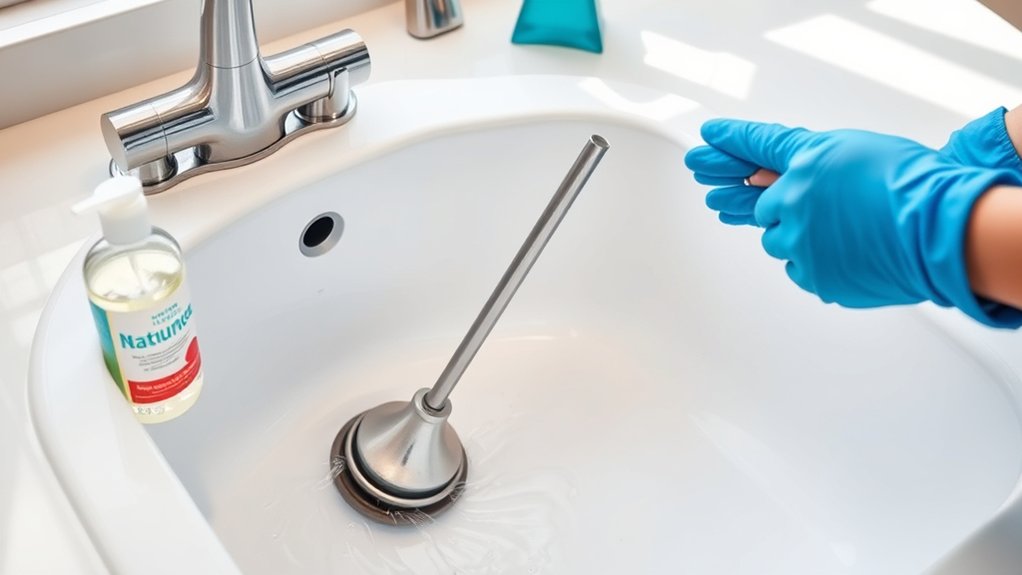
10 Easy Steps to Unclog a Kitchen Drain
A slow or clogged kitchen drain can quickly turn a simple cleanup into a frustrating mess. You’re not alone—many people struggle with grease, food particles, and buildup that cause kitchen drain problems.
If your kitchen drain slows or backs up, start by pouring boiling water and baking soda down the drain to dissolve grease and grime. Gather essential tools like a plunger, gloves, and a drain snake.
Remove visible debris and plunge firmly, then use the snake to break up deeper clogs. Finish by flushing with hot soapy water to clear buildup.
Adopt simple habits like using strainers and regular hot water flushes to prevent future problems. Keep going to uncover more helpful tips.
Key Takeaways
- Remove visible debris like food scraps and grease manually using gloves and tools before attempting other methods.
- Pour baking soda followed by boiling water down the drain, wait 15 minutes, then rinse to dissolve grease and grime.
- Use a sink plunger with a sealed overflow hole, plunging vigorously for 15-20 seconds to dislodge blockages.
- Insert and rotate a drain snake slowly to break up and pull out stubborn clogs without damaging pipes.
- Flush the drain with hot water mixed with mild dish soap to loosen and wash away remaining debris.
Spot the Signs Your Kitchen Drain Is Clogged
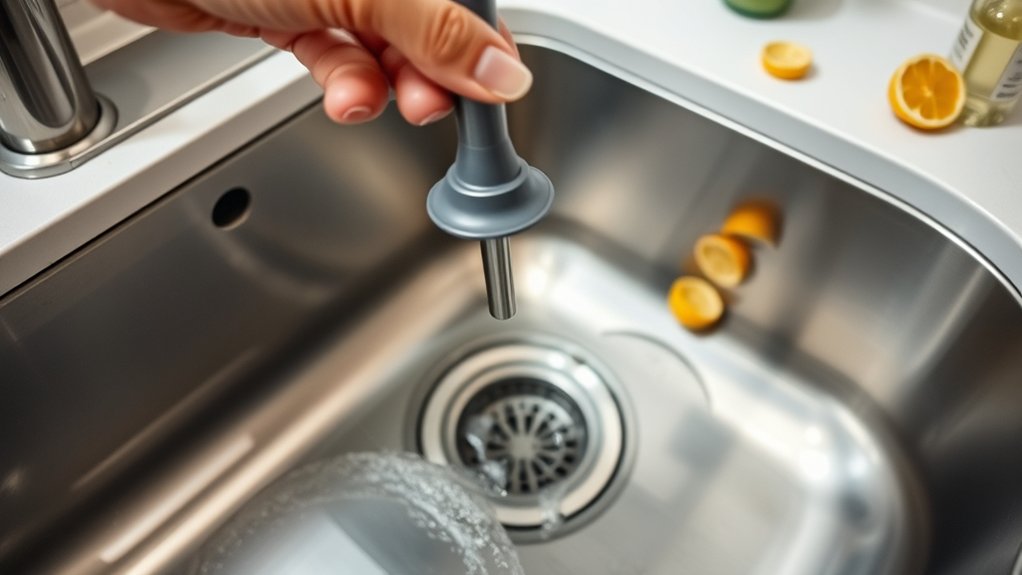
How can you tell if your kitchen drain is clogged? You’ll notice the water flow slows down markedly when you run the sink. Instead of draining quickly, water might pool around the drain or back up. This sluggish water flow is often the first clear sign that something’s blocking the drain pipe.
You may also hear gurgling sounds coming from the drain as air struggles to move past the blockage. Sometimes, unpleasant odors escape from the drain, signaling trapped debris in the pipe.
If you spot water rising unusually high in the sink or notice leaks under the cabinet, it’s a strong indication the drain pipe isn’t functioning properly.
Try Quick Fixes: Boiling Water and Baking Soda
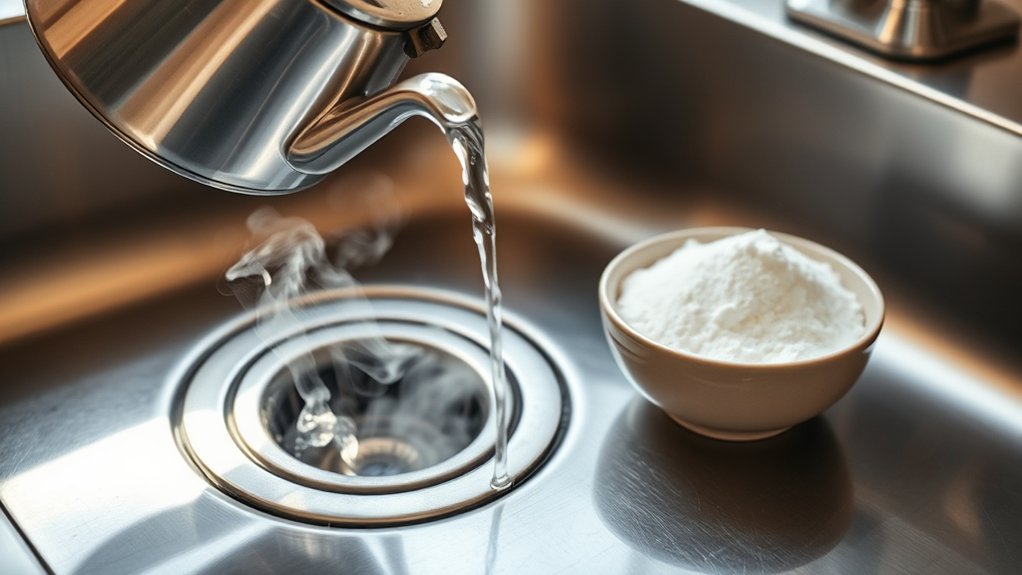
Start by pouring boiling water down the drain. It can help dissolve grease and loosen grime. Then, add baking soda for an extra cleaning boost. It helps break down buildup and reduce odors. Together, they offer a simple, natural way to tackle minor clogs quickly.
Benefits of Boiling Water
Boiling water offers one of the simplest and most effective ways to tackle minor kitchen drain clogs. When you pour boiling water down your drain, you take advantage of water temperature benefits that help dissolve grease, soap scum, and other residues.
The high temperature softens and loosens buildup, allowing it to flush away easily. This method is quick, chemical-free, and affordable, making it a smart first step before trying stronger solutions.
You’ll also appreciate that boiling water won’t damage your pipes if used correctly, unlike harsh chemicals. Just be sure to pour slowly and in stages to maximize contact time and effectiveness.
Baking Soda Cleaning Power
Pairing boiling water with baking soda improves your drain-cleaning efforts by combining heat with a natural abrasive and deodorizer. Baking soda’s cleaning power comes from its unique chemistry: it’s a mild alkali that reacts with acids and grease, breaking them down so they wash away easily.
When you pour baking soda into your drain, it clings to grime and neutralizes odors, leaving your drain fresh. The abrasive texture helps scrub away buildup without harsh chemicals.
After letting it sit a few minutes, flushing with boiling water pushes the loosened debris down the pipes. This simple, eco-friendly method taps into baking soda chemistry to restore your drain’s flow quickly and safely, making it a go-to quick fix for minor clogs and unpleasant smells.
Combining Methods Effectively
Although unclogging a kitchen drain can seem intimidating, combining quick fixes like baking soda and boiling water makes the process straightforward and effective. When these two meet, a chemical reaction occurs, breaking down grime and easing blockages.
Here’s how you can apply this method for better plumbing maintenance:
- Pour half a cup of baking soda directly into the drain.
- Follow it with a pot of boiling water, allowing the heat to activate the baking soda’s cleaning power.
- Let the mixture sit for 15 minutes before flushing with warm water.
This combination not only clears minor clogs but also helps maintain your pipes, reducing the chance of future blockages. You’ll find this simple method saves time and avoids harsh chemicals.
Grab These Household Items Before You Start
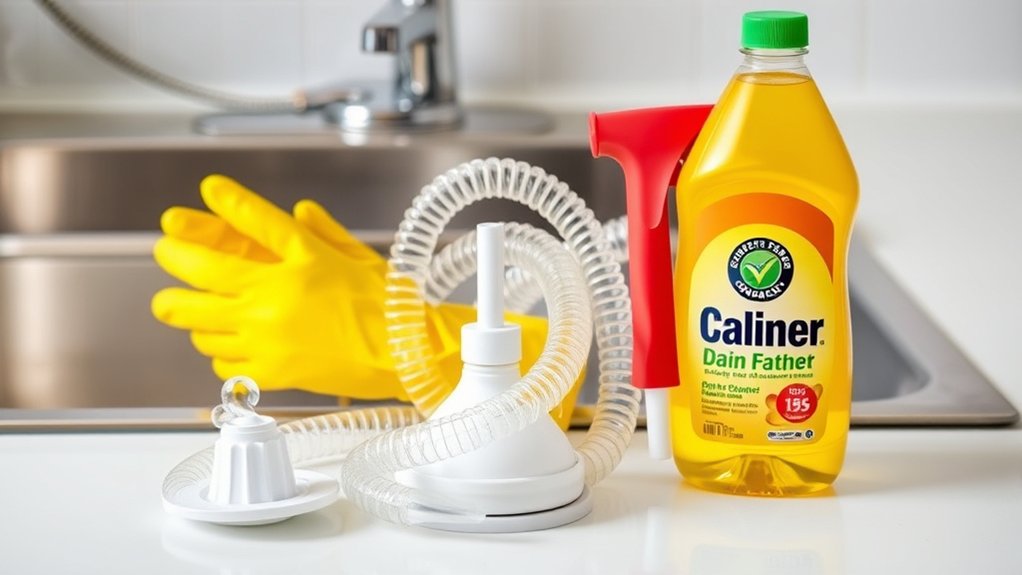
Before you plunge into unclogging your kitchen drain, make sure you’ve gathered a few common household items that will make the process easier and more effective. Start by grabbing a plunger designed for sinks, a bucket to catch water, rubber gloves to protect your hands, and a flashlight for better visibility.
You’ll also want a drain snake or a wire hanger to help reach deeper clogs.
Keeping these items within reach reflects good kitchen organization, ensuring you’re prepared for drain maintenance whenever needed. Having these tools ready saves time and avoids unnecessary mess.
Moreover, a mixture of baking soda and vinegar is a natural alternative to chemical cleaners and is gentle on your pipes.
Clear Visible Debris From Your Kitchen Drain
Food scraps, grease, and soap buildup can often clog your kitchen drain. Put on gloves, then use a drain snake or tweezers to safely remove any visible debris. Clearing the blockage early can restore proper water flow and help prevent bigger problems.
Identify Common Drain Blockages
Several common blockages can cause your kitchen drain to clog, and spotting visible debris is the first step to fixing the problem. Proper drain maintenance starts with understanding what usually blocks your pipes.
Different pipe materials may react differently to various debris, so knowing what you’re dealing with helps.
- Food scraps like potato peels, egg shells, and coffee grounds often get stuck near the drain opening.
- Grease and oil solidify inside pipes, especially in older metal pipes, narrowing the flow.
- Soap scum and hair combine to form sticky buildup, common in plastic or PVC pipes.
Use Gloves and Tools
Understanding the types of blockages in your kitchen drain helps you prepare the right approach to clearing them.
Before you start, put on sturdy gloves to protect your hands from bacteria and sharp debris. Using tools like a drain snake, plunger, or tweezers lets you safely remove visible buildup such as food scraps, grease, or hair.
This step is vital for effective drain maintenance, preventing deeper clogs and maintaining smooth water flow. Clearing visible debris also supports good kitchen hygiene by reducing odors and bacterial growth.
After you’ve removed the blockage, clean your gloves and tools thoroughly. Taking these precautions guarantees your kitchen drain stays clear and your workspace remains sanitary, making future unclogging efforts easier and more effective.
Plunge Your Kitchen Sink the Right Way
Although plunging might seem straightforward, doing it correctly can make all the difference in clearing your kitchen drain quickly. Before you start, perform a quick drain inspection to spot any visible blockages. Using a plunger properly also supports ongoing pipe maintenance by preventing buildup.
Here’s how to plunge your kitchen sink effectively:
- Seal the overflow holes or the second sink basin with a wet cloth to maintain pressure.
- Fill the sink with enough water to cover the plunger’s cup, ensuring a tight seal.
- Position the plunger over the drain and plunge vigorously in a controlled up-and-down motion for 15-20 seconds.
This method forces trapped debris through the pipes, improving flow and reducing clogs. Remember, regular plunging as part of pipe maintenance can save you from bigger plumbing issues down the line.
Remove and Clean the P-Trap Under Your Sink
If your kitchen sink remains clogged after plunging, it’s time to remove and clean the P-trap under your sink. Start by placing a bucket underneath to catch any water. Then, carefully loosen the slip nuts on both ends of the P-trap using pliers or by hand if possible. This P trap removal step allows you to detach the curved pipe, which often holds trapped debris causing blockages.
Once removed, inspect the P-trap for gunk, grease, and food buildup. Use a brush or an old cloth to thoroughly clean the inside of the trap. Rinse it with hot water to clear away residue.
After trap cleaning, reassemble the P-trap by tightening the slip nuts securely, but avoid overtightening to prevent damage. Finally, run water to check if the clog is cleared. Proper P trap removal and cleaning often resolve stubborn kitchen sink clogs effectively.
Use a Drain Snake to Reach Deeper Clogs
Choose a drain snake that fits your pipe size to prevent damage. Insert it slowly, twisting as you push it deeper into the pipe. When you feel resistance, keep turning to break up the clog or pull the blockage out.
Choosing The Right Snake
Selecting the right drain snake makes all the difference when tackling stubborn clogs deep within your kitchen pipes. When choosing tools for the job, consider the type and size of your pipes, as well as the clog’s location. Proper maintenance routines will keep your snake effective and ready for future use.
Here are three key points to help you select the best snake:
- Length and thickness: Choose a snake long enough to reach deep clogs but thin enough to navigate your pipes without damage.
- Material: Opt for flexible steel snakes for durability and ease of use in tight spots.
- Handle type: A comfortable, ergonomic handle allows better control and less fatigue during use.
Proper Snake Insertion
Although inserting the drain snake may seem straightforward, doing it properly guarantees you reach the clog without damaging your pipes. Start by feeding the snake slowly into the drain, turning the handle clockwise. This steady motion helps the snake navigate bends and avoid pipe damage.
Use your other hand to guide the cable, keeping it steady but flexible. Don’t force the snake. If you meet resistance, gently rotate and push forward to work around the blockage.
Proper insertion is key for effective drain maintenance and prevents costly plumbing repairs. Always use the right plumbing tools for your drain type, ensuring the snake fits well.
Taking your time during this step sets you up for success in clearing deeper clogs efficiently.
Clearing The Clog Effectively
Once the snake is properly inserted and steering the pipe bends, you can start working on breaking up or pulling out the clog. Turn the handle clockwise to extend the snake deeper, feeling for resistance where the clog hides. With each turn, you’ll either shred the blockage or hook it for removal.
Here’s how to clear the clog effectively:
- Rotate steadily to break down grease or food buildup, common culprits in kitchen drains.
- Pull the snake back slowly, dragging out debris and residues that block water flow.
- Flush hot water while moving the snake to wash away loosened grime.
Flush Your Kitchen Drain With Hot Water and Soap
Before you move on to more intense methods, try flushing your kitchen drain with hot water and soap. This simple step can often dissolve grease and break down minor clogs without harsh chemicals.
Start by flushing your kitchen drain with hot water and soap to dissolve grease and clear minor clogs.
Boil a kettle or heat water on the stove, then mix in some mild dish soap. Pour this mixture slowly down the drain, allowing it to work through any buildup.
Using hot water and soap is one of the best eco friendly solutions you can try because it avoids toxic substances that harm your pipes and the environment. It’s also a gentle alternative cleaning method that’s safe for most plumbing systems.
Repeat the process if necessary, giving the hot water time to loosen debris. If the clog persists, then you might need to move on to more advanced steps.
But starting here saves time and supports sustainable practices in your kitchen maintenance.
Prevent Kitchen Drain Clogs With Simple Habits
Even though occasional clogs are inevitable, you can prevent most kitchen drain problems by adopting a few simple habits. Proper kitchen organization and mindful food disposal play vital roles in keeping your drains clear and functioning smoothly.
Here are three habits to help you prevent clogs:
- Dispose of food scraps properly: Avoid putting large food particles or grease down the drain. Use a compost bin or trash instead of relying solely on your food disposal.
- Use a drain strainer: Catch debris before it enters the drain. Empty the strainer regularly to prevent buildup.
- Maintain regular cleaning: Flush your drain with hot water and soap weekly to dissolve grease and residue, supporting good flow.
When to Call a Plumber for Kitchen Drain Issues
Although you can handle minor clogs yourself, knowing when to call a plumber can save you time and prevent further damage. If your kitchen drain remains slow or clogged after trying basic unclogging methods, it’s time to seek professional help.
Handling minor clogs is doable, but persistent slow or clogged drains call for professional plumbing assistance.
Persistent blockages might indicate deeper issues like pipe damage or extensive buildup, which require expert tools and skills.
Also, if you notice foul odors, water backing up into your sink, or leaks under the cabinet, don’t hesitate to call a plumber. These signs suggest problems that DIY fixes won’t fully resolve.
Regular kitchen drain maintenance helps prevent emergencies, but plumbing emergency preparedness means recognizing when a problem is beyond your control.
Frequently Asked Questions
Can Chemical Drain Cleaners Damage My Kitchen Pipes?
Yes, chemical drain cleaners can damage your kitchen pipes. The strong chemical reactions they cause can eat away at your pipes over time, leading to pipe corrosion.
If your pipes are old or made of metal, this corrosion can create leaks or weaken the structure. It’s better to use safer methods or mechanical tools to clear clogs, so you don’t risk costly pipe damage from harsh chemicals.
How Often Should I Clean My Kitchen Drain to Avoid Clogs?
Like clockwork in a well-tuned symphony, your drain maintenance should follow a steady cleaning schedule. You should clean your kitchen drain at least once a month to keep clogs at bay.
Regularly flushing with hot water and using natural cleaners like baking soda and vinegar helps prevent buildup. Sticking to this routine keeps your pipes flowing smoothly, saving you from the chaos of unexpected blockages and costly repairs.
Are There Natural Alternatives to Commercial Drain Cleaning Products?
Yes, you can use natural alternatives like plant-based cleaners and baking soda remedies to tackle clogs. You’ll find plant-based cleaners gentle yet effective, avoiding harsh chemicals.
For a baking soda remedy, pour half a cup of baking soda down the drain, followed by half a cup of vinegar. Let it fizz for 15 minutes, then flush with hot water.
These options keep your drain clear without harming your pipes or the environment.
What Causes Recurring Clogs Despite Regular Cleaning?
Recurring clogs often happen because buildup hides deep in your pipes or damage affects flow. You should schedule plumbing inspections to identify hidden blockages or corrosion.
Sometimes, the pipe material itself causes issues—older pipes made of galvanized steel or clay can trap debris more easily than modern PVC. Fixing these underlying problems stops clogs from returning, so don’t just clean; get your plumbing checked thoroughly to guarantee lasting results.
Can Food Waste Disposers Prevent Kitchen Drain Clogs?
Imagine a whirlpool spinning down your sink, quickly breaking up scraps. Food waste disposers can help prevent kitchen drain clogs by grinding food into tiny pieces, reducing buildup in your pipes.
However, they’re not a magic fix. You still need regular kitchen maintenance to avoid greasy or fibrous blockages. So, while a food waste disposal makes cleanup easier, staying vigilant with maintenance keeps your drains flowing smoothly.
Conclusion
Think of your kitchen drain like a garden path: sometimes leaves and twigs block the way, but with the right tools and care, you can clear it and keep it flowing smoothly. By spotting signs early and taking simple steps, you’re the gardener of your sink’s health.
Just remember, when the path gets too tangled, calling a plumber is like inviting a skilled landscaper to restore order. Keep your kitchen drain happy, and your kitchen will thank you!