10 Steps to Redesign a Kitchen Efficiently
Redesigning a kitchen can feel overwhelming, especially when you’re trying to balance style, functionality, and cost. You’re not alone—many homeowners struggle to know where to begin.
This guide to the 10 steps to redesign a kitchen efficiently will help you plan with confidence and avoid common mistakes.
To redesign your kitchen efficiently, start by setting a realistic budget that covers materials, labor, and unexpected costs.
Assess your needs and create a functional layout with smart storage and proper lighting.
Choose durable materials, color finishes, and energy-efficient appliances that fit your space.
Decide on flooring balancing style and durability.
Hire reliable contractors or plan your DIY approach carefully.
Prepare for installation with a solid timeline and finalize details to guarantee a smooth, satisfying transformation.
Consider these essentials to make your kitchen redesign a success.
Key Takeaways
- Plan your budget carefully, including materials, labor, and a contingency fund to avoid unexpected costs.
- Design an ergonomic kitchen layout focusing on the work triangle and efficient storage solutions.
- Choose durable, easy-to-maintain materials and coordinate finishes for a cohesive style.
- Select energy-efficient appliances and install layered lighting for functionality and ambiance.
- Schedule project milestones, hire reputable contractors, and conduct final inspections to ensure safety and quality.
Set a Realistic Budget for Your Kitchen Redesign
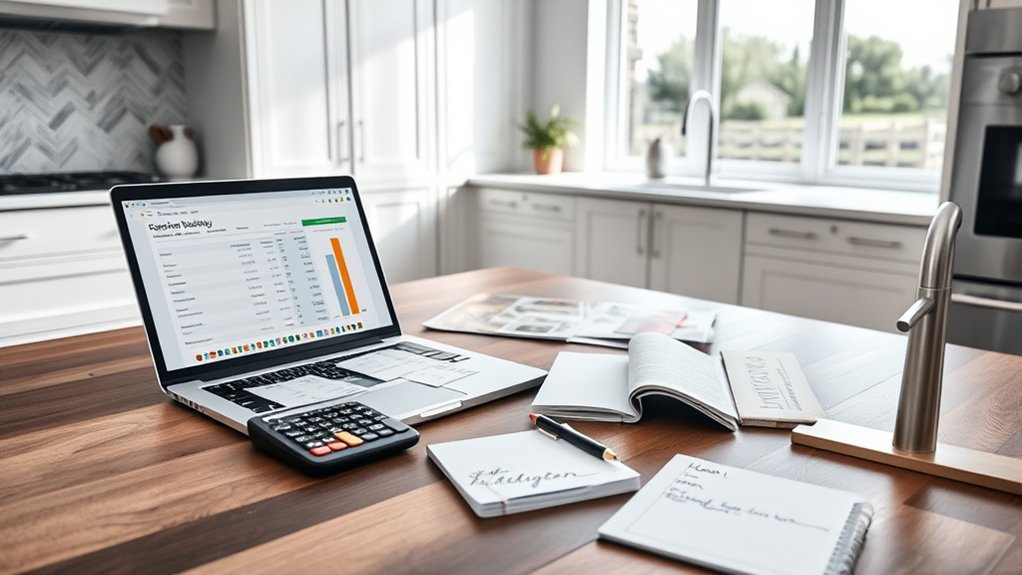
Before diving into your kitchen redesign, you need to set a realistic budget that matches your goals and limits. Budget planning is essential because it guides every decision you’ll make, from materials to appliances.
Start by researching average costs for the elements you want, like cabinets, countertops, and lighting. This cost estimation helps prevent surprises and keeps you on track financially.
Begin by estimating costs for cabinets, countertops, and lighting to avoid surprises and stay within budget.
Next, prioritize your must-haves and identify areas where you can save. For example, choosing mid-range fixtures instead of high-end ones can free up funds for custom cabinetry.
Don’t forget to include labor costs and a contingency fund for unexpected expenses. By carefully planning your budget, you can keep your kitchen redesign feasible and stress-free.
Assess Your Needs and Design an Efficient Kitchen Layout
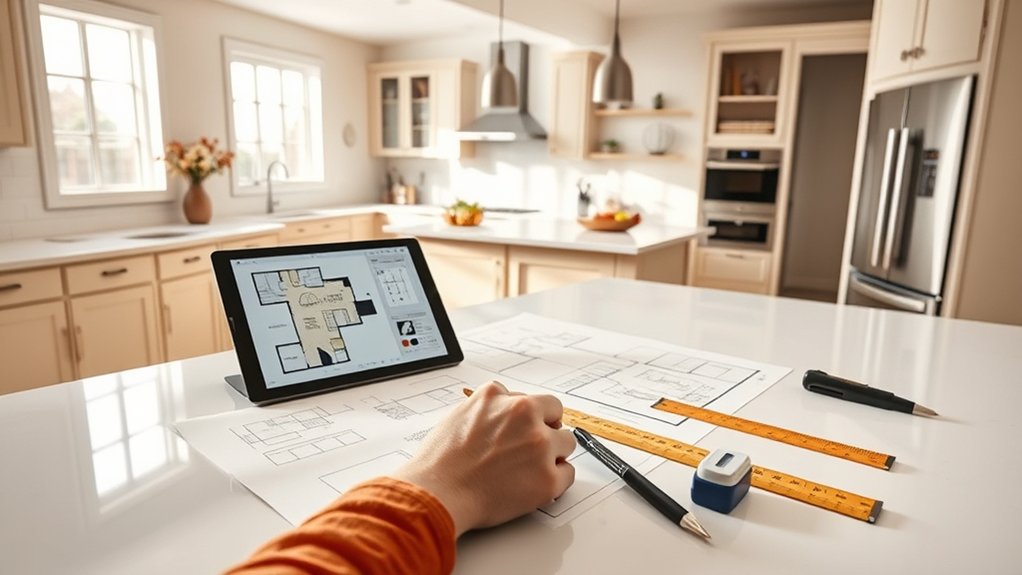
How do you guarantee your new kitchen works seamlessly for your daily routines? Start by assessing your needs carefully. Think about how you use your kitchen, including your cooking style, meal prep frequency, and storage requirements.
Prioritize a layout that supports kitchen ergonomics, ensuring everything is within easy reach to reduce unnecessary movement and strain. The classic work triangle connecting the sink, stove, and refrigerator remains essential for efficiency.
Don’t forget ventilation solutions. Good airflow prevents lingering odors and keeps your kitchen comfortable, especially during heavy cooking. Place vents strategically near the stove or cooktop to remove smoke and steam effectively.
Also, consider natural light and traffic flow to avoid bottlenecks. By focusing on these practical elements, you’ll design a kitchen that’s not just beautiful but also highly functional and tailored to your daily habits.
This thoughtful approach sets the foundation for a successful kitchen redesign.
Choose Durable Materials and Color Finishes for Your Kitchen
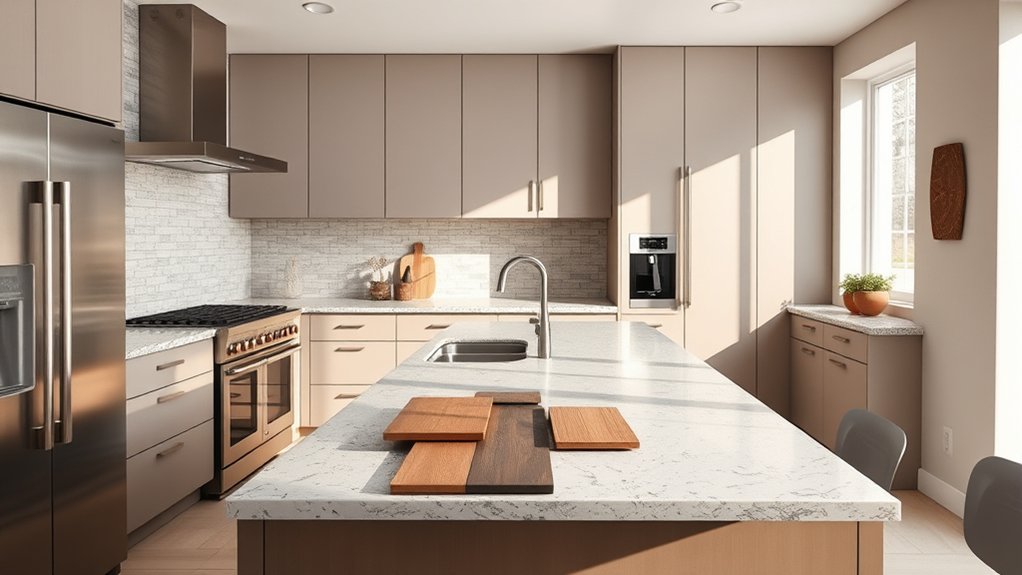
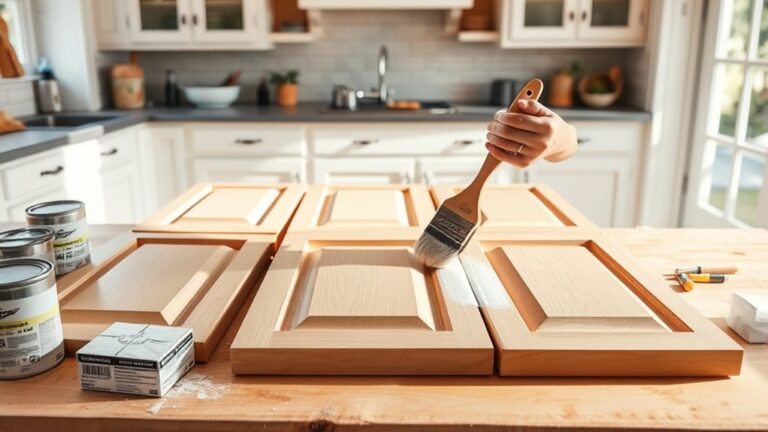
Choose durable materials that can handle daily use while still looking great. Quartz, stainless steel, and hardwood are all strong, long-lasting options. Once you’ve chosen your materials, select finishes that match your style and help hide everyday wear and tear over time.
Durable Material Options
What materials will stand up to daily kitchen use while keeping your space stylish? When selecting countertop materials, consider quartz or granite. They’re durable, resistant to scratches, and easy to maintain.
If you want something budget-friendly yet sturdy, laminate countertops have improved considerably in durability. For backsplash options, ceramic or porcelain tiles offer excellent resistance to heat and moisture, making cleanup simple.
Glass backsplashes add a modern touch while resisting stains and water damage. Stainless steel is also a durable choice for backsplashes, especially if you cook frequently and need something easy to wipe down.
Choosing Color Finishes
Selecting durable materials sets a strong foundation, but the color finishes you choose bring personality and warmth to your kitchen.
To create a cohesive look, focus on color coordination between cabinets, countertops, and walls. Finishing techniques also impact the durability and style of your surfaces.
For a lasting, attractive kitchen, consider these tips:
- Match finishes to your kitchen’s lighting and size
- Use matte or satin finishes to hide fingerprints and smudges
- Opt for high-gloss finishes to reflect light and brighten space
- Coordinate colors with appliances and hardware for harmony
- Choose finishes that resist moisture and stains for easy cleaning
Select Appliances That Fit Your Needs and Kitchen Space
Measure your kitchen space carefully so your appliances fit comfortably without making the room feel crowded. Look for energy-efficient models to help lower your utility bills and reduce your environmental impact. Then, choose styles that complement your kitchen’s layout for a cohesive, functional look.
Assess Appliance Size Requirements
How much space do your appliances really need? Before you buy, carefully assess the size requirements to guarantee smooth appliance placement that fits your kitchen layout. Consider both the appliance dimensions and the clearance needed for doors to open fully. Don’t forget to check appliance energy ratings, as some models may be bulkier due to added features.
Keep these points in mind:
- Measure available space precisely, including height and depth
- Account for ventilation and ease of cleaning
- Plan for appliance door swings and drawer openings
- Ensure pathways remain clear to avoid congestion
- Balance appliance size with your cooking and storage needs
Prioritize Energy Efficiency Ratings
Energy efficiency ratings play a crucial role when choosing appliances for your kitchen redesign. By prioritizing appliance efficiency, you secure long-term energy savings and reduce utility bills.
Select appliances that not only fit your kitchen space but also excel in energy performance. This decision benefits your wallet and the environment.
Consider these emotional benefits when choosing energy-efficient appliances:
| Benefit | Feeling Gained |
|---|---|
| Lower bills | Relief |
| Reduced waste | Pride |
| Quiet operation | Comfort |
| Long-lasting use | Satisfaction |
Choosing appliances with strong energy efficiency ratings means you’re making a smart investment. You’ll enjoy a kitchen that’s both functional and eco-friendly, giving you peace of mind every time you cook or clean.
Match Style With Layout
Although selecting appliances with the right style is important, guaranteeing they fit your kitchen’s layout is just as essential. When you choose appliances, aim for layout harmony to avoid crowding or awkward spaces.
A contemporary style pairs well with sleek, space-saving designs that improve your kitchen’s flow. Consider your cooking habits and space limitations carefully.
- Measure your kitchen space before selecting appliances.
- Opt for built-in or compact designs for a streamlined look.
- Choose appliances with consistent finishes for cohesive style.
- Guarantee appliance doors don’t block walkways when open.
- Balance appliance placement for efficient workflow and ease of use.
Maximize Kitchen Storage With Smart Cabinets and Shelving
When you redesign your kitchen, maximizing storage with smart cabinets and shelving makes a huge difference in both organization and functionality. You’ll want to invest in smart storage solutions that adapt to your needs.
Think pull-out drawers, rotating shelves, and built-in compartments that keep everything accessible without clutter. Modular shelving is another great way to customize your space.
It lets you adjust shelf heights or add sections as your storage needs change, so you won’t feel boxed in by your design. By combining these elements, you create a kitchen where every inch counts.
Smart cabinets and modular shelving help you store utensils, ingredients, and appliances efficiently, leaving your countertops clear and your workflow smooth.
This approach not only boosts your kitchen’s practicality but also elevates its overall appeal. With smart storage, you’ll enjoy a kitchen that’s both stylish and highly functional.
Pick Lighting That Boosts Functionality and Sets the Mood
With smart storage clearing your countertops, lighting becomes the next key factor in improving your kitchen’s functionality and atmosphere. Blend ambient lighting that softly fills the room with task illumination focused on prep areas. This combination keeps your kitchen practical and inviting.
Consider these tips to pick lighting that works for you:
- Install under-cabinet lights to brighten countertops for chopping and cooking.
- Use dimmable overhead fixtures to adjust ambient lighting for different moods.
- Add pendant lights above islands for both style and focused task lighting.
- Choose LED bulbs to save energy and provide consistent brightness.
- Incorporate accent lights inside glass cabinets to highlight dishware and add warmth.
Decide on Flooring Options That Balance Style and Durability
Choosing the right flooring can transform your kitchen’s look while standing up to daily wear and tear. When deciding on flooring, focus on options that blend style with durability to handle spills, foot traffic, and kitchen activities.
Materials like porcelain tiles, luxury vinyl, and hardwood offer great resilience and aesthetic appeal. If you want to be eco conscious, look for eco friendly options such as bamboo or cork flooring, which are sustainably sourced and renewable.
These materials not only reduce environmental impact but also add warmth and texture to your kitchen. Furthermore, consider recycled materials like reclaimed wood or tiles made from recycled glass for a unique look.
Balance your design preferences with practicality by choosing flooring that’s easy to clean and maintain. By prioritizing both style and durability, while embracing eco conscious choices, you’ll create a kitchen floor that’s attractive, functional, and kind to the planet.
Hire Reliable Contractors or Plan Your DIY Kitchen Remodel
Before diving into your kitchen remodel, decide whether you’ll hire reliable contractors or tackle the project yourself. If you opt for professionals, thorough contractor vetting is essential. Check references, verify licenses, and review past work to assure quality. If you choose DIY, prioritize DIY safety by understanding your skill level and using proper tools.
Consider these tips to guide your choice:
- Research local contractors and read reviews.
- Get multiple quotes to compare pricing and services.
- Assess your DIY skills honestly to avoid costly mistakes.
- Invest in safety gear and follow best practices during DIY work.
- Plan for potential delays or unexpected issues regardless of your approach.
Making this decision early helps streamline your remodel and keeps the project on track. Whether you hire experts or do it yourself, preparation is key to achieving a kitchen you’ll love.
Prepare for Installation and Manage Your Kitchen Remodel Timeline
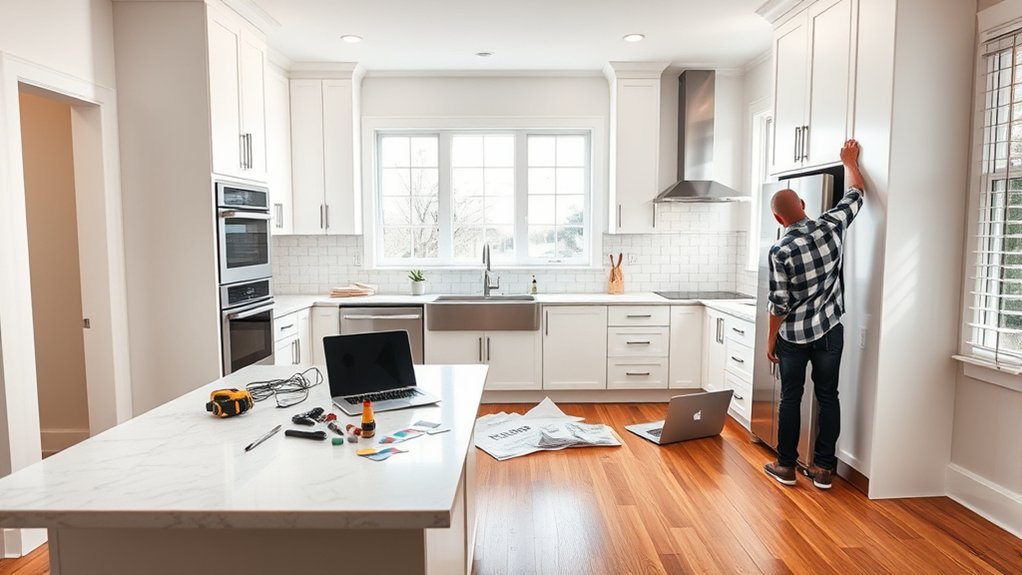
Although the excitement of a kitchen remodel is high, you need to prepare thoroughly for installation and stay on top of your timeline to avoid costly delays. Start by confirming delivery dates for appliances, cabinetry, and materials to align with your schedule.
Clear the space and plan furniture placement carefully to guarantee a smooth workflow during installation. Don’t forget to communicate your ventilation solutions clearly with your contractor to avoid last-minute changes that could slow progress.
Create a detailed timeline, breaking down each phase, including demolition, plumbing, electrical work, and installation, to track milestones effectively. Stay flexible but proactive, addressing any unexpected issues immediately to keep things on track.
Finalize Details to Reveal Your Dream Kitchen
Now’s the time to confirm your design details and choose the finishing touches that bring your vision to life. Be sure to schedule the final inspections, too, so everything meets the required standards.
Once these last steps are complete, you’ll be ready to reveal the kitchen you’ve been dreaming of.
Confirm Design Specifications
When you confirm your design specifications, you guarantee every detail aligns perfectly with your vision and practical needs. This step makes certain your kitchen will be both beautiful and functional.
Focus on key elements like color coordination to create a harmonious look and material durability to guarantee longevity. Double-check measurements and appliance placements to avoid surprises later.
Consider these crucial points:
- Verify color coordination between cabinets, countertops, and backsplash
- Confirm material durability for flooring and surfaces suited to your lifestyle
- Make certain appliance dimensions fit seamlessly in designated spaces
- Review lighting plans for both task and ambient needs
- Validate storage solutions meet your daily usage requirements
Select Finishing Touches
Since every detail contributes to your kitchen’s final look, selecting the finishing touches is essential to bring your vision to life. Focus on decorative accessories that complement your style while adding personality.
Think about stylish containers, distinctive utensil holders, or vibrant rugs that improve comfort and functionality. Don’t forget wall art, which can create a focal point or add warmth to the space.
Choose pieces that resonate with your taste and coordinate with your color scheme. These elements personalize your kitchen, making it inviting and truly yours.
Schedule Final Inspections
After choosing the perfect finishing touches, it’s time to make sure everything meets your expectations and safety standards. Scheduling final inspections is essential to confirm your kitchen complies with building codes and is safe to use.
You’ll want to prepare thoroughly with an inspection checklist to avoid any last-minute issues.
Here’s what you should focus on:
- Verify electrical and plumbing systems meet code requirements
- Confirm ventilation and gas connections are secure
- Check cabinet installation and countertop stability
- Inspect lighting fixtures and appliance hookups
- Review overall safety features like smoke detectors and fire extinguishers
Frequently Asked Questions
How Do I Handle Unexpected Issues During the Remodel?
When unexpected issues pop up during your remodel, stay calm and be ready to make budget adjustments quickly. Keep open, honest contractor communication to understand the problem fully and examine solutions together. You’ll want to prioritize fixes that impact safety or structure first, then adjust your timeline if needed. Staying flexible and proactive helps you manage surprises without letting them derail your entire project or blow your budget.
What Permits Are Needed for a Kitchen Renovation?
You’ll typically need permits for electrical, plumbing, and structural changes in your kitchen renovation. Check local building codes to see what specific permits apply.
The permit process usually involves submitting detailed plans and getting inspections at different stages. Don’t skip this step. It guarantees your remodel meets safety standards and avoids fines.
Contact your local building department early to understand requirements and streamline your permit approval.
How Can I Improve Kitchen Ventilation During Redesign?
You can improve kitchen ventilation by installing high-quality systems, such as range hoods that vent outside. Make sure the system matches your stove’s size and cooking style to improve air quality effectively.
Adding exhaust fans and increasing window openings can also help circulate fresh air. Don’t forget to check the ductwork and maintain your ventilation equipment regularly to keep your kitchen’s air clean and reduce odors, smoke, and humidity.
What Are Eco-Friendly Options for Kitchen Remodeling?
Sure, because who wouldn’t want their kitchen to save the planet while you’re whipping up dinner?
You can start by choosing eco-friendly materials like bamboo countertops or recycled glass tiles.
Don’t forget sustainable appliances that use less energy and water. Your wallet will thank you too.
These choices not only reduce your carbon footprint but also create a stylish, modern kitchen that’s kind to the environment.
Win-win, right?
How Do I Maintain My New Kitchen Post-Renovation?
To maintain your new kitchen post-renovation, regularly clean surfaces and appliances to prevent buildup. Pay attention to appliance placement to guarantee proper ventilation and easy access, which helps prolong their lifespan.
Rotate and refresh decorative accents to keep your space lively and avoid clutter. Address spills and stains immediately, and schedule routine deep cleanings.
Staying organized and mindful of wear will keep your kitchen looking great and functioning efficiently for years.
Conclusion
Redesigning your kitchen is like planting a garden—you nurture each step carefully to watch your dream space bloom. By setting a clear budget, choosing smart layouts, and selecting durable materials, you’ll create a kitchen that’s both beautiful and functional.
Stay organized, hire the right help, and keep your timeline in check. Soon, you’ll open the door to a kitchen that feels like the heart of your home, ready for countless memories. Follow these 10 steps to redesign a kitchen efficiently and bring your dream space to life.