How Do You Measure Kitchen Cabinets in 7 Essential Steps?
Measuring kitchen cabinets can feel overwhelming, especially when one wrong measurement leads to delays, extra costs, or an awkward fit. You’re not alone—many homeowners struggle with knowing where to begin.
This guide breaks down how to measure kitchen cabinets in 7 essential steps so you can order with confidence.
To measure kitchen cabinets in 7 essential steps, start by clearing your space and identifying cabinet styles. Gather tools like a tape measure and level.
Measure width, height, and depth carefully at multiple points, noting any obstacles such as appliances or trim.
Differentiate between wall and base cabinets, adjusting for toe kicks and clearances. Record and organize measurements clearly, then double-check for accuracy before ordering.
Follow these steps closely, and you’ll guarantee a perfect fit while avoiding costly mistakes.
Key Takeaways
- Clear and declutter the kitchen space to enable accurate cabinet measurements without obstructions.
- Use reliable measuring tools like tape measures and levels to record width, height, and depth precisely.
- Measure wall cabinets from the countertop to the ceiling and base cabinets from the floor to the countertop, including trims and toe kicks.
- Account for obstacles such as appliances, trims, and uneven surfaces by adjusting measurements accordingly.
- Organize and verify all measurements systematically before finalizing to ensure accuracy and a proper fit before ordering.
Getting Your Kitchen Ready to Measure Cabinets
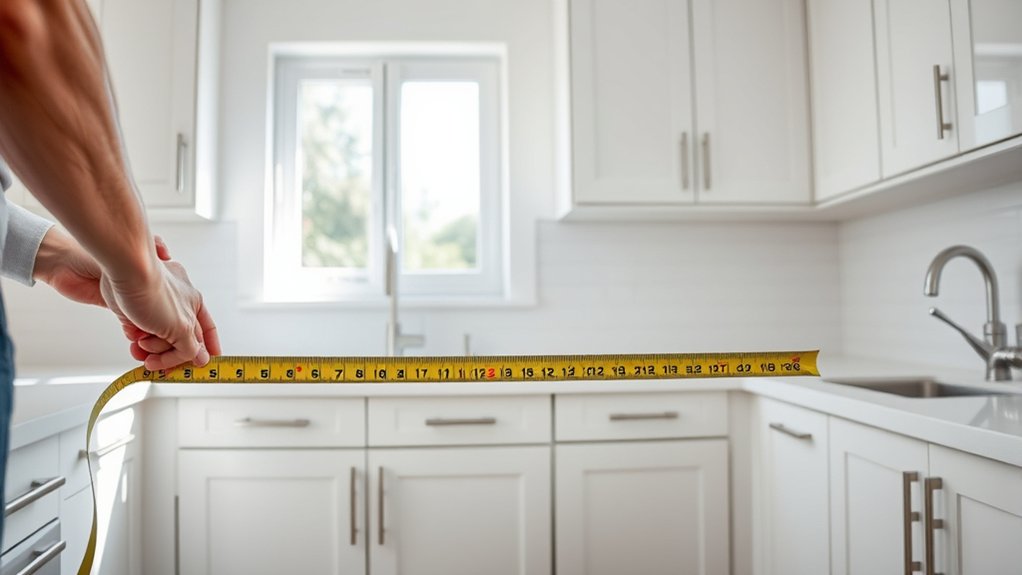
Before you measure your kitchen cabinets, make sure the space is clean and free of clutter. Clearing countertops and cabinet interiors lets you access all surfaces easily, which is essential for accurate measurements.
As you prepare, consider your overall kitchen design. Knowing the style and layout helps you anticipate measurement challenges.
Whether your cabinet styles are traditional, modern, or custom-built, each type might require slightly different attention when measuring. You’ll want to identify the exact edges and corners of each cabinet, so nothing skews your results.
Also, check for any uneven walls or floors that could affect dimensions. Taking a moment to understand your kitchen design ensures you approach measuring methodically and avoid mistakes later.
Once your kitchen is tidy and you’ve assessed the cabinet styles, you’re ready to start measuring confidently. You’ve set the right foundation for precise results.
Tools You Need to Measure Kitchen Cabinets Accurately
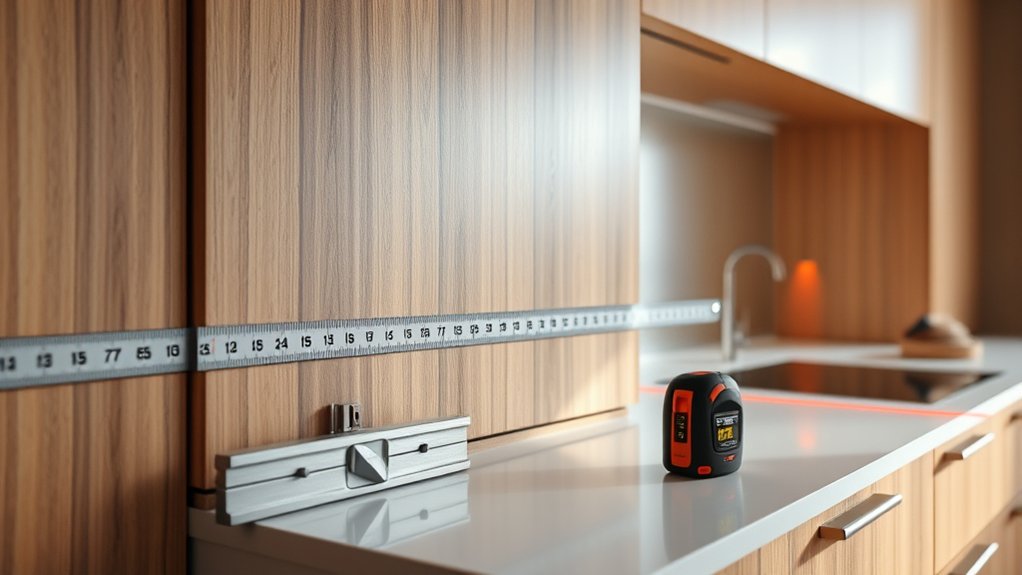
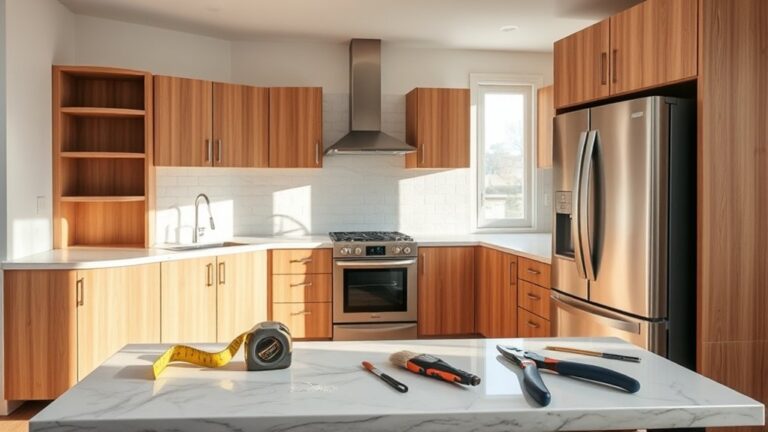
You’ll need a few reliable tools to measure your kitchen cabinets accurately, including a tape measure and a level. Using precise equipment can help you avoid costly mistakes later. Before you begin, make sure your tools are in good condition and ready to use.
Essential Measuring Tools
Although measuring kitchen cabinets might seem straightforward, having the right tools makes a significant difference in accuracy and ease. You’ll want a reliable tape measure to get precise dimensions, especially since cabinet material thickness varies and impacts fit.
A level helps guarantee your measurements account for any uneven walls or floors, preventing misalignment. Don’t forget a pencil and notepad to jot down measurements clearly. Accuracy here supports proper color coordination when choosing complementary finishes later.
A stud finder also comes in handy to locate secure mounting points for your cabinets. Using these essential tools lets you measure confidently, ensuring your kitchen cabinets fit perfectly and blend seamlessly with your design.
This helps you avoid costly mistakes linked to incorrect sizing or mismatched cabinet material and color coordination.
Choosing Accurate Equipment
When measuring kitchen cabinets accurately, selecting the right equipment is essential to avoid errors that can throw off your entire project. Choose tools made from durable materials, like stainless steel tape measures that resist bending and wear.
This helps guarantee consistent readings over time, especially when measuring multiple cabinets. You can also consider tools that complement your design aesthetic, as sleek, modern measuring devices can make the process feel more professional and enjoyable.
Don’t overlook digital calipers or laser measures for precise dimensions, especially in tight spaces. These tools combine accuracy with ease of use, helping you capture exact measurements without guesswork.
Preparing Tools Properly
Before taking any measurements, make sure your tools are clean, calibrated, and ready to use. You’ll need a reliable tape measure, a level, a pencil, and a notepad or digital device to record your findings.
A laser measure can be helpful for precision, especially with different cabinet styles. Check that your tape measure retracts smoothly and your level shows accurate readings to avoid errors.
Preparing your tools properly guarantees you capture exact dimensions, which is essential for matching your kitchen decor seamlessly. Accurate measurements help you select cabinets that fit perfectly and complement your chosen style.
How to Measure Cabinet Width, Height, and Depth Correctly
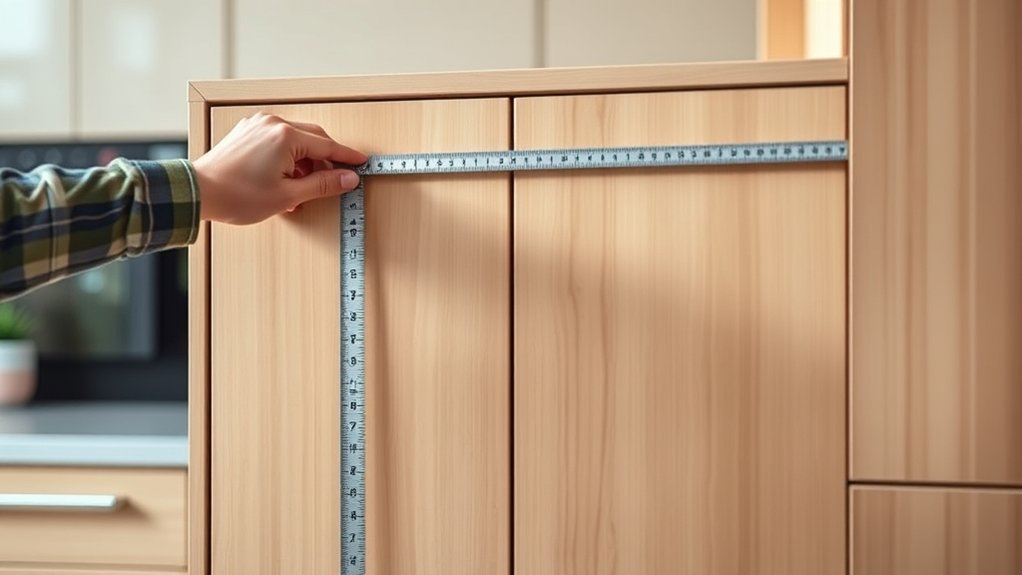
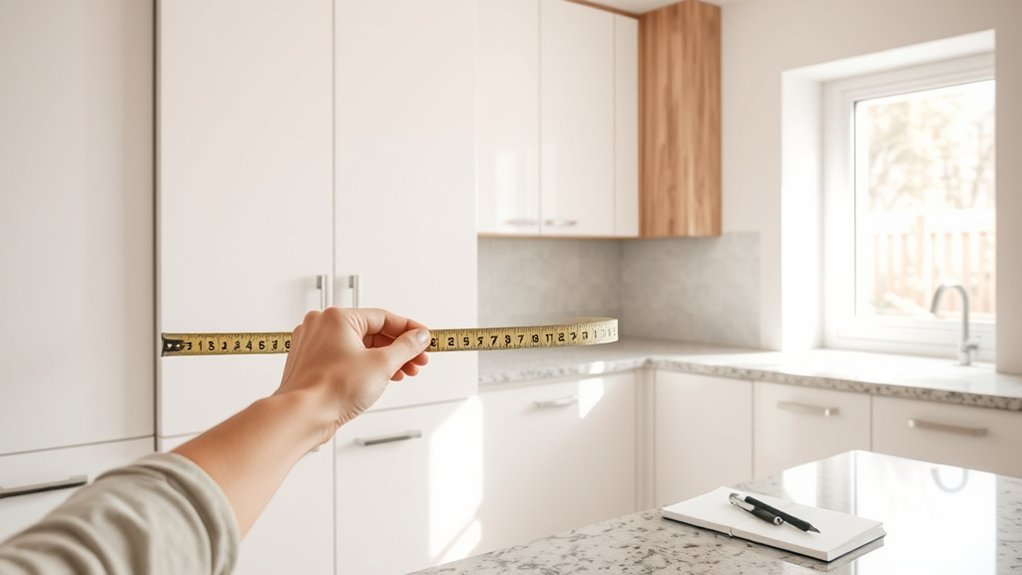
Start by measuring the cabinet’s width from one edge to the other, including any trim. Then, measure the height from the base to the top, making sure to account for any molding. Finally, measure the depth from the front face to the back wall or panel.
Measuring Cabinet Width
Although measuring cabinet width might seem straightforward, getting it right requires careful attention to detail. The cabinet material and cabinet style can affect the measurement process, so consider these as you work. Here’s how to measure width accurately:
- Use a tape measure to record the full width from one outer edge to the other, including any decorative molding or trim inherent to the cabinet style.
- Measure at multiple points (top, middle, and bottom) because cabinet material may warp or vary slightly.
- Note any obstructions or built-in features that affect usable width, ensuring your measurement reflects the actual cabinet space.
Determining Cabinet Height
How exactly do you determine the height of your kitchen cabinets to guarantee a perfect fit? First, identify the cabinet style since it influences standard heights—wall cabinets often range from 12 to 42 inches tall, while base cabinets typically stand around 34.5 inches.
Next, consider the cabinet material, as thicker materials may slightly alter the final dimensions. Use a tape measure to record the height from the floor to the bottom of wall cabinets or from the cabinet base to the top edge.
Measure multiple cabinets if they vary in size or style. Finally, double-check your measurements against the available wall space and ceiling height to confirm your chosen cabinet height fits seamlessly into your kitchen layout without gaps or overcrowding.
Assessing Cabinet Depth
When measuring cabinet depth, where should you start to guarantee accuracy? Begin by identifying the cabinet material and finish, as these can affect thickness and measurement. Use a tape measure for precision, measuring from the front edge to the back wall.
Follow these steps:
- Remove any doors or drawers to measure the interior depth without obstruction.
- Measure from the outer front edge of the cabinet finish to the back wall or panel.
- Note any variations caused by cabinet material thickness or decorative finishes.
Keep in mind that different cabinet materials like plywood or MDF and various finishes might add subtle differences in depth.
How to Measure Wall and Base Cabinets Differently
Because wall and base cabinets serve different purposes and occupy distinct spaces in your kitchen, you’ll need to measure them using different approaches. When measuring wall cabinets, focus on the wall cabinet framing.
Wall and base cabinets require distinct measuring methods due to their different functions and locations.
Measure the height from the countertop or base cabinet top to the ceiling, and note the width and depth based on the framing dimensions. Since these cabinets hang on the wall, precise framing measurements help ensure proper installation and alignment.
For base cabinets, you’ll want to pay attention to base cabinet clearance. Measure the width and depth of the cabinet footprint on the floor, including the toe kick area, and check the clearance around appliances or plumbing.
Also, measure the height from the floor to the countertop surface, accounting for any countertop overhang. Keeping these distinctions in mind helps you capture accurate measurements tailored to each cabinet type’s unique installation needs.
Handling Obstacles Like Appliances and Trim When Measuring Kitchen Cabinets
Although measuring kitchen cabinets can be straightforward, obstacles like appliances and trim often complicate the process. When you encounter these challenges, account for appliance clearance and make necessary trim adjustments to guarantee a perfect fit.
Here’s how to handle these obstacles effectively:
- Measure the space around appliances carefully. Factor in appliance clearance so doors and drawers can open freely without obstruction.
- Identify any decorative or baseboard trim that overlaps cabinet edges. Adjust your measurements by subtracting or adding the trim thickness to avoid misfits.
- Use a flexible tape measure to navigate around irregular shapes or protrusions. This helps you capture accurate dimensions despite obstacles.
How to Record and Organize Your Kitchen Cabinet Measurements
After steering around obstacles like appliances and trim, the next step is to record and organize your kitchen cabinet measurements clearly. Grab a notebook or use a digital app to jot down each cabinet’s height, width, and depth. Label every measurement accurately, noting its position in the kitchen. This way, you’ll avoid confusion later.
As you record, consider your design style preferences, whether you’re aiming for modern, rustic, or traditional cabinets. These choices will influence how you interpret your measurements. Also, keep material options in mind. Different materials might require slight adjustments in dimensions, so noting your preferred material alongside each measurement can streamline the selection process.
Organizing your data in a simple chart or spreadsheet makes it easier to review and share with cabinet makers or designers. Clear records help your kitchen remodel flow smoothly, matching your vision and material choices without costly mistakes.
Key Measurements to Double-Check Before Ordering Cabinets
Before you place your cabinet order, double-checking key measurements makes sure everything fits perfectly and prevents costly errors. Taking a moment now saves you from headaches later, especially when considering your design inspiration and material options.
Focus on these three critical measurements before finalizing your order:
- Wall and Ceiling Dimensions: Measure the height, width, and depth of the walls and ceiling where cabinets will be installed. This ensures your chosen cabinet sizes align with the space and design style.
- Clearance Spaces: Double-check walkways, appliance openings, and countertop heights. Proper spacing maintains functionality and complements your design inspiration.
- Door and Window Placement: Accurately measure distances from cabinets to doors and windows. This prevents interference and helps you select material options that suit lighting and ventilation.
Frequently Asked Questions
What Materials Are Best for Custom Kitchen Cabinets?
You’ll want to choose cabinet door materials like solid wood, plywood, or MDF for durability and style. Solid wood offers a classic look, while plywood resists warping better.
MDF is smooth and perfect for painted finishes. For finish options, consider stains to highlight wood grain or paint for vibrant colors.
Laminate and thermofoil are great for easy cleaning and modern looks. Pick materials and finishes that fit your kitchen’s style and budget.
How Long Does It Take to Install New Kitchen Cabinets?
It usually takes about one to three days to install new kitchen cabinets, but if you’re also planning cabinet painting and cabinet hardware selection, it might stretch a bit longer.
Coincidentally, the time spent choosing hardware can influence how smoothly the installation flows. If you pick your finishes and handles early, you’ll speed things up.
Can I Measure Cabinets for a Kitchen Island Differently?
Yes, you can measure cabinets for a kitchen island differently because island dimensions often vary from wall cabinets. Focus on measuring the island’s length, width, and height carefully to make certain of measuring accuracy. Don’t forget to account for overhangs, seating areas, and appliance placements. Accurate measurements help you avoid costly mistakes and guarantee the cabinets fit perfectly within your kitchen island’s layout and design.
What Is the Average Cost of Kitchen Cabinet Installation?
You can expect to pay between $3,000 and $7,000 for kitchen cabinet installation, depending on your cabinet type and kitchen size. If you’re considering cabinet painting instead, that might save money but still freshen your space.
Don’t forget to factor in cabinet hardware options like knobs or pulls, which can affect costs. Choosing affordable hardware and doing some prep work yourself can help keep your project within budget.
How Do I Choose the Right Cabinet Style for My Kitchen?
You know what they say, “Beauty is in the eye of the beholder.” To choose the right cabinet style, start by considering your kitchen’s overall vibe—modern, rustic, or traditional.
Don’t forget cabinet hardware; it can enhance your cabinets’ look instantly. Also, think about interior lighting to highlight your cabinet’s functionality and design.
Ultimately, pick a style that feels right to you and fits your kitchen’s personality perfectly.
Conclusion
Now that you’ve prepped your space, gathered your tools, and measured every cabinet’s width, height, and depth, you’re ready to tackle wall and base cabinets with confidence. You’ve accounted for obstacles, recorded your numbers clearly, and double-checked your key measurements.
By following these steps carefully, you’ll avoid costly mistakes, save time, and ensure your new kitchen cabinets fit perfectly. With accurate measurements, your renovation can be smooth, successful, and satisfying.