How Tall Is a Kitchen Table?
Finding the right kitchen table height can be frustrating, especially when you want comfortable meals without cramped legs or awkward posture. You’re not alone—many people struggle to choose a table that works well with their chairs, space, and daily routine.
You’ll want a kitchen table that’s about 28 to 30 inches tall to fit most chairs comfortably and support good posture while eating. This height provides enough legroom and helps keep your elbows at a natural angle, making meals more enjoyable.
Depending on your space and style, counter or bar-height tables might suit you better. If you’re curious about how different heights impact comfort, usability, and design, there’s more to explore.
Key Takeaways
- Standard kitchen tables typically measure between 28 and 30 inches in height.
- Recommended chair seat height for these tables is usually 17 to 19 inches.
- Counter height tables range from 34 to 36 inches, while bar height tables are 40 to 42 inches tall.
- Proper table height supports good posture and comfortable elbow positioning during meals.
- Table height choices depend on style, material, room layout, and user comfort preferences.
What Is the Standard Height for a Kitchen Table?
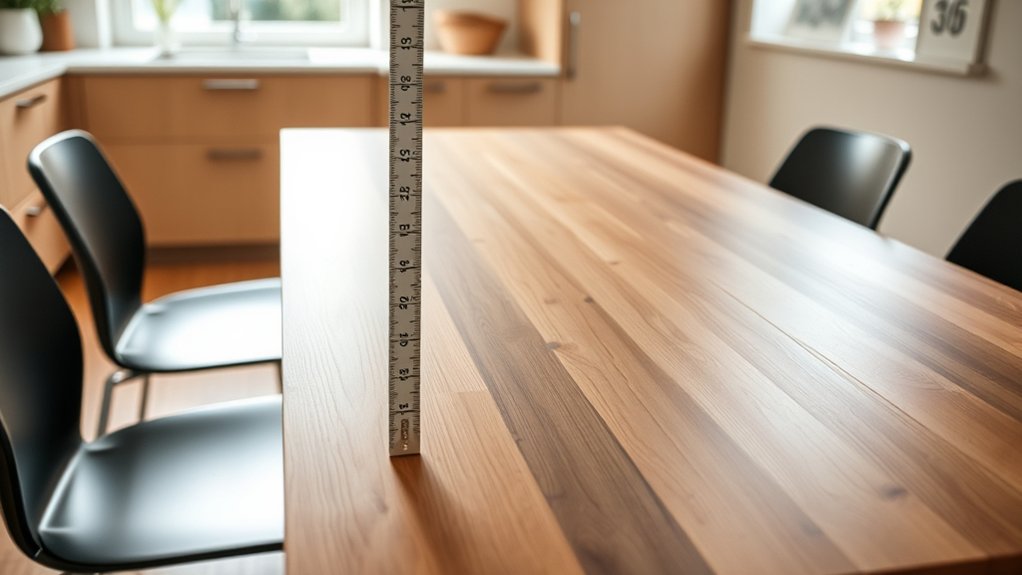
Although kitchen tables come in various styles and sizes, the standard height typically measures around 28 to 30 inches. When you’re choosing a kitchen table, this height works well with most chairs and fits comfortably for everyday use.
You’ll find that material choices like wood, metal, or glass can influence both the table’s look and its durability. For example, solid wood often feels warm and sturdy, while metal might offer a sleek, modern vibe.
You can also improve your kitchen table with decorative accents such as a centerpiece, placemats, or even a unique finish on the tabletop. These details let you personalize the table without affecting its height or functionality.
Keeping the standard height assures your table remains versatile and practical. This allows you to focus on style and materials that match your kitchen’s design rather than worrying about awkward proportions.
How Does Kitchen Table Height Affect Comfort and Usability?

You want a kitchen table that promotes good posture, so you can sit comfortably without straining your back or shoulders. It should also be accessible to everyone, from children to adults, making mealtimes more inclusive. Choosing the right height can make dining more comfortable, enjoyable, and practical for everyone.
Optimal Seating Posture
When your kitchen table sits at the right height, it considerably improves your seating posture, making mealtimes more comfortable and enjoyable. An ergonomic design guarantees your elbows rest naturally at the table, reducing strain on your shoulders and back.
Proper table height supports seating comfort, helping you maintain a relaxed yet attentive posture during meals or work.
| Table Height (inches) | Posture Effect | Seating Comfort Level |
|---|---|---|
| 28-30 | Slouches, cramped | Low |
| 30-32 | Upright, natural | High |
| 32+ | Shoulders raised | Moderate |
Choosing the right height keeps your spine aligned and prevents discomfort, enhancing both usability and experience.
Accessibility for All
Because kitchen tables serve as central gathering spots, their height plays a crucial role in ensuring comfort and usability for everyone. You want to avoid accessibility barriers that exclude family members or guests with different needs.
An inclusive design considers varying heights and mobility levels, making sure everyone can sit comfortably without strain.
Here are four ways kitchen table height affects accessibility:
- Prevents discomfort by matching chair and table heights for easier sitting and standing.
- Accommodates wheelchair users with enough leg clearance under the table.
- Reduces strain for children or shorter individuals by offering adjustable or varied seating options.
- Improves social interaction by ensuring no one feels physically separated due to height differences.
Choosing the right height breaks down barriers and welcomes all to share the space equally.
Impact on Meal Experience
Ensuring a kitchen table’s height supports accessibility naturally improves the overall meal experience. When your table is at the right height, you’ll find it easier to sit comfortably, reducing strain on your back and shoulders.
This comfort encourages longer, more enjoyable meals and conversations. The table’s height also influences the dining ambiance, as a well-proportioned table creates a welcoming atmosphere that invites connection.
Beyond comfort, the right height *boosts* the kitchen’s aesthetic appeal, making the space feel balanced and intentional. If your table is too tall or too low, it disrupts both usability and visual harmony, affecting how you and your guests perceive the space.
Choosing the correct height ensures every meal feels cozy, stylish, and effortless.
Common Height Ranges for Kitchen Tables

Most kitchen tables fall within a height range of 28 to 30 inches, which suits the average chair and provides comfortable seating for most people.
Most kitchen tables stand between 28 and 30 inches, fitting standard chairs for comfortable everyday seating.
When choosing your table, you’ll notice that material choices like wood, metal, or glass can influence the table’s feel and durability.
Decorative accents such as carved edges or inlaid patterns also add character without affecting the height, but they impact the overall design appeal.
Here are common height ranges you should know:
- Standard Height (28-30 inches): Fits most dining chairs and suits everyday meals.
- Counter Height (34-36 inches): Offers a casual feel, ideal if you prefer stools over chairs.
- Bar Height (40-42 inches): Great for entertaining, pairs with bar stools.
- Custom Heights: Designed for specific needs, like accommodating kids or accessibility.
Understanding these ranges helps you pick the perfect kitchen table height for comfort and style.
How Kitchen Table Height Varies by Style
While you might expect kitchen table heights to be fairly uniform, the style you choose can considerably influence the table’s height and how you use it. For example, traditional farmhouse tables often stand around 30 inches tall but might feature thicker legs and sturdy construction, emphasizing material durability. In contrast, modern minimalist tables may be slightly lower or higher depending on design emphasis, incorporating sleek lines and decorative finishes that complement contemporary kitchens.
If you prefer a rustic style, you’ll find tables with robust materials and natural finishes that might add a few inches to the standard height for visual impact. Meanwhile, industrial-style tables often use metal frames and reclaimed wood, balancing durability with unique decorative finishes. Knowing these style variations helps you pick a kitchen table height that fits both your space and aesthetic preferences, ensuring comfort and functionality without compromising on design.
Measuring Your Kitchen for Table Height
To find the right kitchen table height, start with the standard range—usually 28 to 30 inches. Then, measure your space carefully with a tape measure to ensure an accurate fit. This helps you choose a table that feels comfortable and works well in your kitchen.
Standard Kitchen Table Heights
When measuring your kitchen for the right table height, you’ll find that standard kitchen tables typically range between 28 and 30 inches tall. Choosing the right height guarantees comfort and functionality while allowing you to incorporate decorative accessories and effective storage solutions. Here’s what to take into account:
- Height range: 28-30 inches suits most adults for dining and tasks.
- Chair compatibility: Match your chairs’ seat height to maintain comfort.
- Space for accessories: Make sure there’s enough clearance for items like centerpieces or storage baskets.
- Storage solutions: Tables with built-in storage or shelves can maximize kitchen space without compromising height.
Measuring Techniques For Accuracy
Although choosing the right kitchen table height is essential, measuring your space accurately guarantees the table fits perfectly. Start by using a tape measure to check the height from the floor to your chair seat, ensuring comfortable legroom.
Measure the width and length of your kitchen area to avoid overcrowding. Don’t forget to take into account space for movement around the table.
While measuring, think about color coordination and material durability. These factors influence your table’s style and lifespan.
For example, if you have hardwood floors, a durable metal or solid wood table in a complementary color can boost the room’s look.
Taking precise measurements helps you select a table height that balances comfort, aesthetics, and function, making your kitchen both practical and inviting.
Best Chair Heights for Standard Kitchen Tables
Choosing the best chair height for your kitchen table guarantees comfort and proper posture while dining or working. When selecting chairs, factor in decorative accents and material durability to complement your table’s style and guarantee long-lasting use.
Here are four key points to weigh:
- Standard kitchen tables are usually 28-30 inches tall, so chair seats should be about 17-19 inches high for maximum comfort.
- Measure the distance between the chair seat and the underside of the table. Leave at least 10-12 inches of clearance for easy movement.
- Choose chairs with durable materials like hardwood or metal to withstand daily wear and maintain their look alongside your table’s decorative accents.
- Consider adjustable-height chairs if you want flexibility for different users or table heights without sacrificing ergonomics.
Following these guidelines helps you maintain a balanced and stylish kitchen setup that never compromises on comfort.
Choosing Kitchen Table Heights for Different Uses
Selecting the right chair height is just one part of creating a comfortable kitchen space; you also need to take into account the table height based on how you plan to use it. For casual dining, a standard kitchen table height of around 28 to 30 inches works best, offering a comfortable fit with most chairs.
If you’re using the table for work or crafts, consider a slightly higher surface to reduce strain. When choosing your table, think about how its height complements your kitchen’s color schemes and material choices.
Lighter woods and pastel color schemes often suit standard heights, while modern metal or glass tables can pair well with taller, bar-style seating. You want the table height and its materials to blend seamlessly with your kitchen’s overall look while supporting your daily activities.
Ultimately, matching table height to use improves comfort and functionality without sacrificing style.
Benefits of Adjustable and Custom Kitchen Tables
When you want flexibility in your kitchen setup, adjustable and custom tables offer significant advantages. These options let you tailor your space precisely to your needs, ensuring comfort and functionality.
Adjustable features allow you to easily change the table height, making it perfect for different activities, from casual meals to food prep. Custom designs give you the freedom to match your kitchen’s style and size perfectly.
Here are four key benefits you’ll enjoy:
- Versatility: Switch heights quickly to suit various tasks and users.
- Comfort: Find the ideal height that reduces strain during meals or work.
- Personalization: Choose materials, shapes, and sizes that fit your kitchen’s unique look.
- Longevity: Adaptable tables grow with your family and changing needs, offering long-term value.
Matching Your Kitchen Table Height to Your Layout
Although matching your kitchen table height to your layout might seem straightforward, it requires careful consideration of your space and how you use it. First, think about the room’s size and flow.
If your kitchen is compact, a standard-height table around 28 to 30 inches works well without overcrowding. For open layouts, you have more flexibility and can choose taller tables that complement bar stools or lower tables for casual dining.
Don’t forget to factor in storage options beneath the table, like drawers or shelves, which can influence the height you pick. Also, consider how decorative accents fit into the overall design.
A taller table might pair better with bold lighting or statement chairs, while a lower table might highlight subtle decor. Matching your table height to your layout guarantees comfort and style, making your kitchen both functional and inviting.
Testing Kitchen Table Height Before Buying
How do you know if a kitchen table’s height will feel right before you buy it? Testing it out is key. You want a table that suits your comfort, kitchen layout, and style preferences, including color options and material choices.
Here’s how to test a kitchen table’s height effectively:
- Sit at the table: Use a chair similar to what you have or plan to buy. Your elbows should rest comfortably at about a 90-degree angle.
- Check legroom: Make sure there’s enough space under the table for your legs without feeling cramped.
- Assess movement: Try sliding your chair in and out to confirm the height allows easy movement.
- Visualize style: Consider how the table’s material and color options will blend with your kitchen’s design.
Testing these factors before buying guarantees your kitchen table is both functional and visually appealing.
Frequently Asked Questions
What Materials Are Best for Kitchen Tables?
You’ll want materials that balance durability and style, especially since table height impacts comfort and usability. Solid wood is a great choice for its sturdiness and timeless look.
Metal frames offer excellent durability, resisting wear over time. Glass tops can add elegance but need careful maintenance.
Consider materials like laminate for easy cleaning and scratch resistance. Choosing the right material guarantees your kitchen table stays functional and attractive, matching your lifestyle perfectly.
How Do You Clean and Maintain Kitchen Tables?
Cleaning routines should be as regular as clockwork, like brushing your teeth daily. Wipe your kitchen table with a damp cloth and mild soap to remove spills and crumbs.
For maintenance tips, avoid harsh chemicals that damage finishes and use coasters to prevent stains. Polish wooden tables occasionally to keep them shiny.
What Are Popular Kitchen Table Shapes?
Popular kitchen table shapes include rectangular, round, square, and oval. You’ll often find rectangular tables paired with bench seating, which saves space and offers a casual vibe.
If you need flexibility, extendable options are great. They let you adjust the size for guests or everyday use. Round tables encourage conversation, while square and oval shapes fit well in smaller or *distinctively* shaped kitchens, giving you plenty of style and functionality choices.
Can Kitchen Tables Fit in Small Spaces?
Yes, kitchen tables can definitely fit in small spaces. You just need to choose space saving solutions like foldable or extendable tables. Compact furniture designed for tight areas lets you maximize your kitchen without feeling cramped.
Look for tables with slim profiles or built-in storage to keep things tidy. By picking the right style, you’ll create a functional and inviting kitchen even if space is limited.
Are Kitchen Tables Environmentally Friendly?
Yes, kitchen tables can be environmentally friendly if you choose ones made from sustainable wood and finished with eco-friendly coatings. When you pick sustainable wood, you’re supporting responsible forestry practices that help preserve ecosystems.
Eco-friendly coatings reduce harmful chemicals, making your table safer for your home and the planet. By opting for these materials, you’re actively reducing your environmental impact while enjoying a stylish and functional kitchen space.
Conclusion
Now that you know the standard heights and how they impact comfort, choosing the right kitchen table height is like finding the perfect dance partner. It makes every meal flow smoothly.
Whether you opt for a classic, adjustable, or custom table, matching it to your kitchen’s layout and your needs guarantees both style and usability. Take the time to measure and test before buying, so your kitchen table feels just right every time you gather around it.