Can You Paint Kitchen Cabinets?
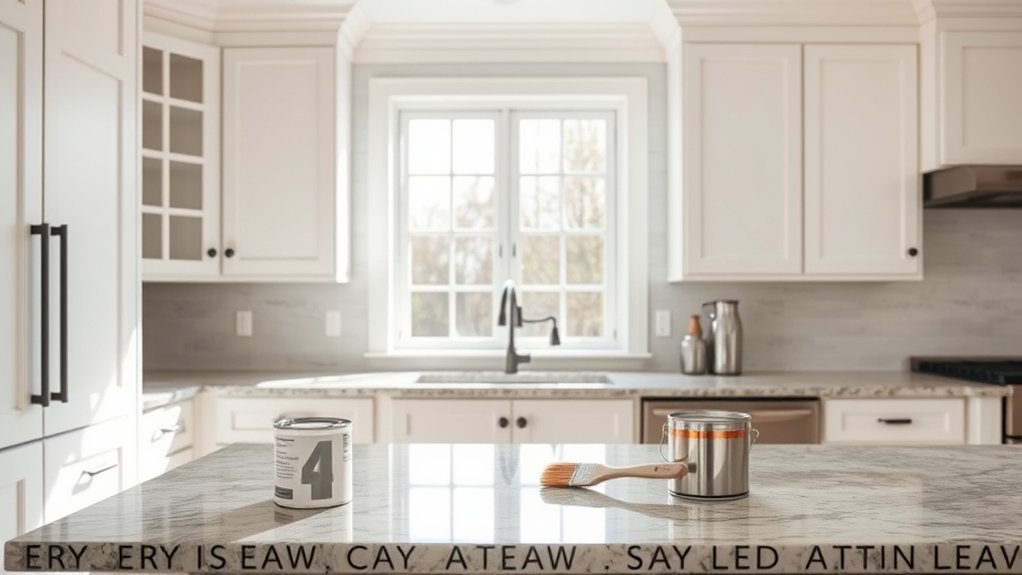
Tired of outdated kitchen cabinets but don’t want to spend thousands on a full remodel? You’re not alone—many homeowners want a fresh, modern look without replacing everything. If you’re wondering, “Can you paint kitchen cabinets?” the answer is yes, and the right products can make the process much easier.
Yes, you can definitely paint kitchen cabinets to give your space a fresh, updated look without spending a lot. Start by removing doors and hardware, cleaning surfaces thoroughly, and sanding them smooth.
Use a high-quality primer, especially on laminate or veneer, then apply durable acrylic or oil-based paint in thin coats. Proper prep and paint selection guarantee a long-lasting finish.
If you want to transform your kitchen effectively, there’s plenty more to know about technique and tips.
Key Takeaways
- Yes, kitchen cabinets can be painted to refresh and enhance their appearance cost-effectively.
- Proper surface preparation, including cleaning, sanding, and priming, is essential for paint adhesion and durability.
- Use high-quality, durable paints like acrylic latex or oil-based paint with satin or semi-gloss finishes for the best results.
- Painting is ideal for cabinets in good structural condition, but replacement is recommended for those with major damage.
- Painted cabinets can dramatically change a kitchen’s aesthetics by brightening the space or adding depth while highlighting the hardware.
Materials and Tools for Painting Kitchen Cabinets
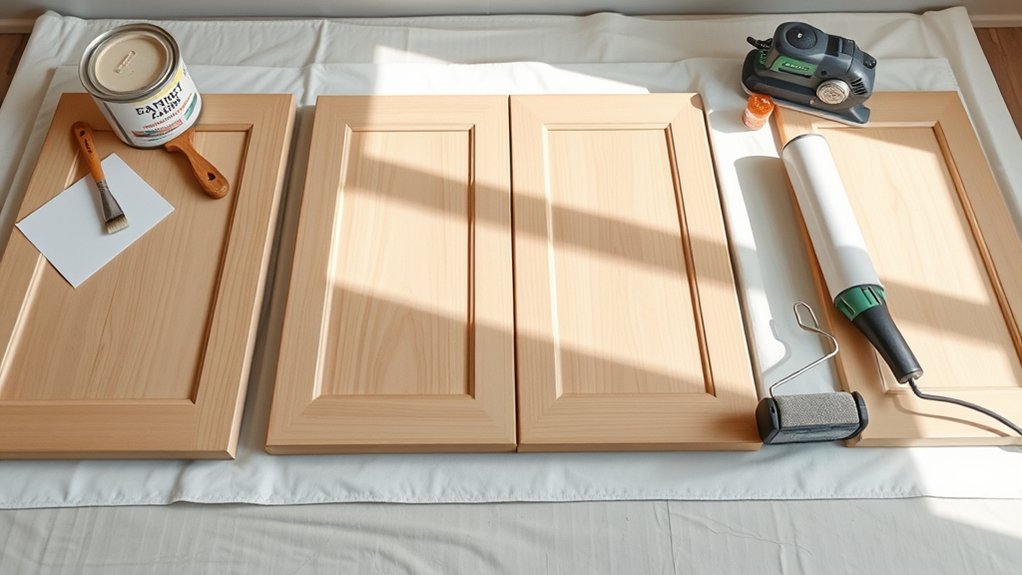
Before you begin painting your kitchen cabinets, gather the right materials and tools to guarantee a smooth process. Start with quality paint suited for cabinetry, considering your preferred color schemes to complement your kitchen’s style.
You’ll need brushes, rollers, or even a paint sprayer for an even coat. Sandpaper and a tack cloth are essential for prepping surfaces and removing dust between coats. Don’t forget primer, which helps paint adhere better and improves durability.
For finishing techniques, choose between matte, satin, or glossy finishes depending on your desired look and durability needs. A clear topcoat or sealant can add extra protection and a professional touch.
Having painter’s tape and drop cloths ready will protect surrounding areas. These tools and materials set the foundation for a successful project, ensuring your cabinets not only look great but stand up to daily use.
With everything prepped, you’re ready to move on to the next step confidently.
How to Properly Prepare Kitchen Cabinets for Painting
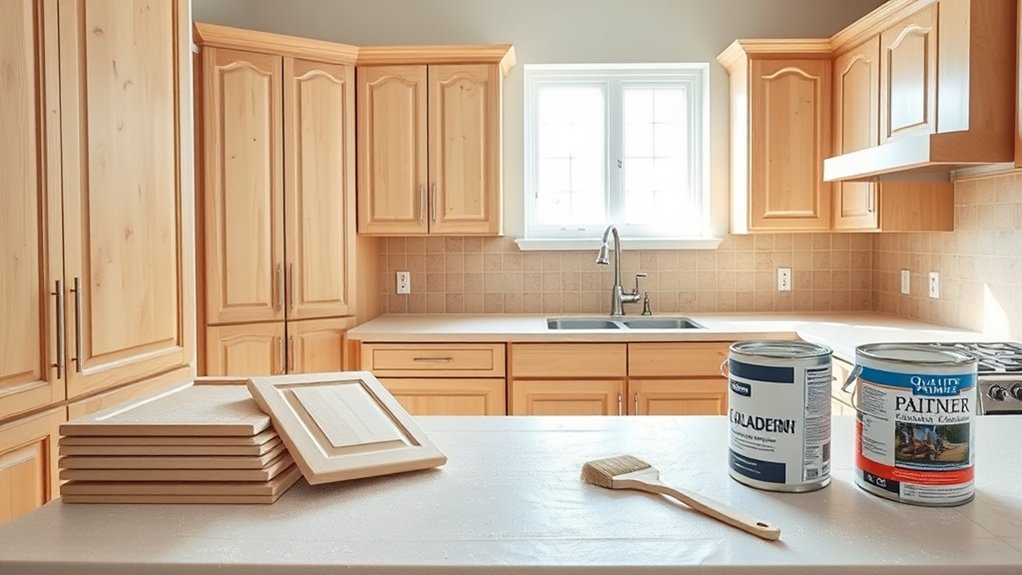
Once you have gathered all your materials and tools, the next step is to prepare your kitchen cabinets properly for painting. Start by removing all cabinet doors, drawers, and hardware.
Clean every surface thoroughly to remove grease and dirt; a degreaser works best. Lightly sand the cabinets to create a smooth base, helping the paint adhere better.
Pay attention to any dents or scratches and fill them with wood filler, then sand again once dry.
Next, focus on primer selection. Choose a primer compatible with your cabinet material and the paint type you’ll use.
This step is vital for guaranteeing durability and proper adhesion. When you prime, apply thin, even coats to avoid drips.
If you’re aiming for specific color matching, pick a primer that won’t alter your chosen paint’s hue. Proper preparation guarantees a professional-looking finish and extends the life of your paint job.
Can You Paint Over Laminate or Veneer Cabinets?
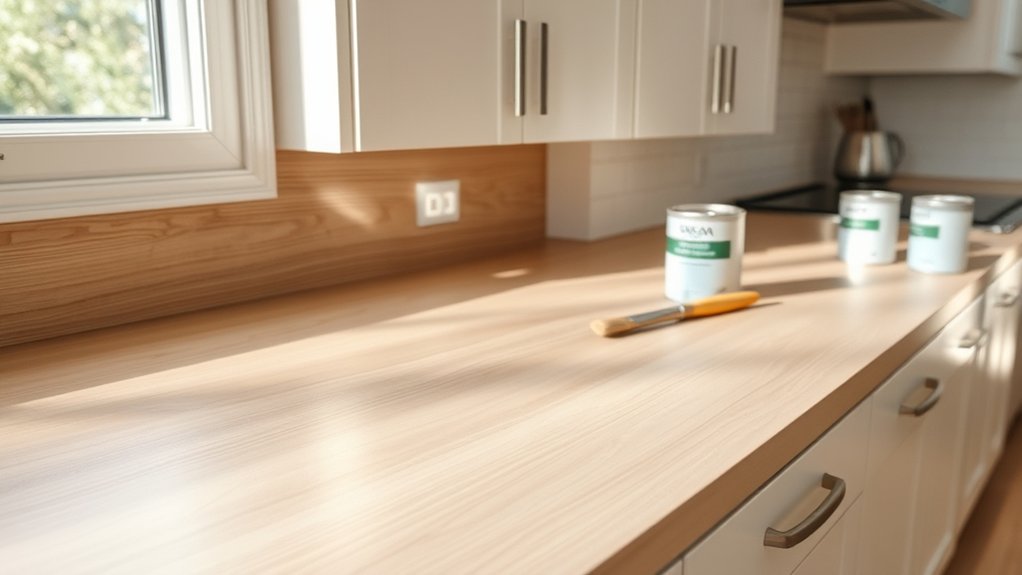
Although painting laminate or veneer cabinets can be challenging, you can achieve great results with the right preparation and materials. Both surfaces are smooth and non-porous, making paint adhesion tricky without proper steps.
To guarantee your paint sticks well and lasts, focus on these key points:
- Laminate Adhesion: Clean the cabinets thoroughly, then use a high-quality bonding primer designed for laminate surfaces. This step is essential to promote strong laminate adhesion and prevent peeling.
- Veneer Sanding: Lightly sand veneer cabinets to roughen the surface and improve paint grip. Use fine-grit sandpaper, and avoid over-sanding to protect the thin veneer layer.
- Surface Cleaning: After sanding, wipe the cabinets down with a damp cloth to remove dust and oils that can interfere with paint bonding.
Best Paint Types for Kitchen Cabinets
When choosing paint for your kitchen cabinets, you’ll want a finish that stands up to frequent use and resists moisture, stains, and scratches. Acrylic latex and oil-based paints are top choices because they provide durability and smooth coverage.
Acrylic latex dries faster and cleans up with water, while oil-based paints offer a harder finish but take longer to dry. Consider your kitchen’s color palette carefully. Neutral tones create timeless looks, while bold colors make a statement.
Selecting the right paint sheen is just as important. Satin and semi-gloss finishes are ideal since they balance durability with easy cleaning.
Semi-gloss gives a bit more shine and is excellent for high-traffic areas, while satin offers a softer look but still holds up well. Avoid flat or matte finishes, as they tend to stain and chip more easily.
Step-by-Step Guide to Painting Kitchen Cabinets
Before you start painting your kitchen cabinets, prepare the area thoroughly to guarantee a smooth, long-lasting finish. Begin by removing cabinet doors and hardware, then clean all surfaces to eliminate grease and grime. Sand the cabinets lightly to help the paint adhere better.
Thorough preparation ensures a smooth, durable finish—remove doors, clean surfaces, and sand lightly before painting.
Follow these key steps:
- Prime the Cabinets: Apply a quality primer to seal the wood and ensure your paint finish lasts. This step also helps with color matching, especially if you’re covering dark wood or stains.
- Choose the Right Paint Finish: Opt for a durable, easy-to-clean finish like semi-gloss or satin, perfect for kitchen cabinets exposed to moisture and frequent use.
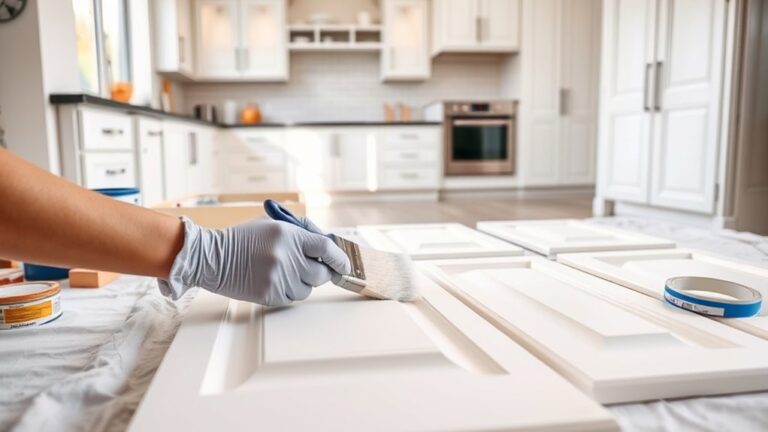
- Paint Carefully: Use a high-quality brush or paint sprayer to apply thin, even coats. Work with the grain and avoid overloading your brush to prevent drips and uneven texture.
Following these steps sets you up for a professional-looking result you’ll enjoy for years.
Drying Time Between Paint Coats
Since proper drying time between paint coats affects the final finish, you’ll want to wait until each layer is fully dry before applying the next. Rushing this step can cause uneven paint sheen and make color matching difficult, as wet layers may blend unpredictably.
Typically, allow at least 4 to 6 hours for drying, but check the paint manufacturer’s guidelines since drying times vary by paint type and humidity.
When you wait patiently, you’ll notice a smoother transition between coats and a consistent paint sheen that highlights your cabinets’ beauty. Skipping or shortening drying times can lead to streaks, bubbles, or color inconsistencies that are tough to fix later.
To ensure accurate color matching, always confirm the first coat is completely dry so the second coat applies evenly and reflects the true color. Taking your time here guarantees a professional-looking finish that lasts.
Tips for Achieving a Smooth, Durable Paint Finish
To achieve a smooth, durable finish, start by properly preparing the surface. Clean your cabinets thoroughly, then sand them to create a smooth base for the paint.
Next, choose a high-quality paint, such as an enamel or acrylic formula. Taking these steps will help your cabinets look great and stay beautiful over time.
Surface Preparation Techniques
Although painting kitchen cabinets might seem straightforward, achieving a smooth, durable finish requires thorough surface preparation. Proper prep guarantees your decorative techniques stand out and that color matching stays true over time.
Here are three essential surface preparation techniques:
- Clean and degrease: Remove all grease and dirt using a degreaser or mild soap. This helps paint adhere better.
- Sand surfaces: Lightly sand cabinets to create a smooth base. Focus on rough spots and glossy finishes for even paint application.
- Fill imperfections: Use wood filler on dents or scratches, then sand again for a flawless surface.
Choosing Durable Paint Types
When you pick the right paint for your kitchen cabinets, you guarantee a finish that not only looks great but also stands up to daily wear and tear. Opt for durable paints like acrylic latex or alkyd-based options, which offer excellent adhesion and resistance to chipping.
Don’t overlook semi-gloss or satin finishes. They’re easier to clean and more durable than flat paints. Color matching is essential; choose a paint that complements your kitchen’s overall palette to create a cohesive look.
Keep budget considerations in mind. While premium paints cost more upfront, their durability saves you money on touch-ups or repainting later. Balancing quality and cost ensures your cabinets stay beautiful and resilient, making your investment worthwhile.
Troubleshooting Common Cabinet Painting Problems
If your kitchen cabinets don’t look quite right after painting, you’re not alone. Many DIYers face common issues like uneven coverage, peeling, or brush marks. Here’s how you can troubleshoot these problems effectively:
Many DIYers struggle with uneven paint coverage, peeling, or brush marks on kitchen cabinets—here’s how to fix them.
1. Uneven Coverage or Poor Color Matching: Make sure you prep the surface well by sanding and cleaning off stains. Use a primer designed for cabinets to improve paint adhesion and achieve consistent color matching.
If stains peek through, apply a stain-blocking primer before painting.
2. Peeling Paint: Peeling often happens when the surface isn’t clean or dry. Remove loose paint, sand the area, and clean thoroughly before repainting.
Avoid painting in high humidity or on a dirty surface.
3. Brush Marks and Drips: Use a high-quality synthetic brush or a foam roller for smoother finishes. Apply thin, even coats and avoid overbrushing.
Let each coat dry fully before adding the next to prevent drips and marks.
When to Replace Instead of Paint Kitchen Cabinets
Deciding whether to replace your kitchen cabinets instead of painting them depends on their condition and your long-term goals. If your cabinets have structural damage, warped doors, or broken hinges, painting won’t fix those issues. In this case, replacement is a smarter investment.
Also, if your kitchen layout feels inefficient or cramped, swapping out cabinets gives you a chance to improve flow and storage, something painting alone can’t achieve.
Consider cabinet hardware too. If you’re planning a complete style overhaul that includes modernizing handles and knobs, new cabinets might better suit your vision. Painting is great for revitalizing existing cabinetry, but it won’t change the fundamental design or functionality.
Ultimately, if you want a crisp look without altering the kitchen layout or dealing with major repairs, painting is ideal. But when damage is extensive or you want a new kitchen flow, replacing cabinets will save you time and frustration in the long run.
How Painted Cabinets Can Refresh Your Kitchen’s Look
Though kitchen renovations can feel overwhelming, painting your cabinets offers a quick and affordable way to transform the entire space. You can refresh your kitchen’s look without the mess and cost of a full remodel.
By choosing the right paint color, you set the tone for the entire room.
Here are three ways painted cabinets can revitalize your kitchen:
- Color Coordination: Pick a paint color that complements your walls, countertops, and flooring for a cohesive, stylish look.
- Highlight Cabinet Hardware: New or polished hardware stands out beautifully against a fresh coat of paint, adding personality and charm.
- Brighten and Open Space: Lighter shades can make your kitchen feel larger and more inviting, while darker hues add depth and sophistication.
Frequently Asked Questions
How Long Does Painted Cabinetry Typically Last Before Needing a Refresh?
You can expect painted cabinetry to maintain its look for about 5 to 10 years before needing a refresh. Cabinet durability depends on the quality of paint, prep work, and daily use.
Paint longevity improves if you use durable, high-quality paint and properly seal the cabinets. Regular cleaning and avoiding harsh chemicals also extend the finish.
When you see chips or fading, it’s time to touch up or repaint to keep your kitchen fresh.
Can You Paint Kitchen Cabinets Yourself or Should You Hire a Professional?
You can absolutely paint kitchen cabinets yourself, much like a craftsman shaping his masterpiece. With a bit of patience and the right tools, you’ll transform your cabinet design to reflect your style.
Exploring various paint finish options, from matte to glossy, lets you customize the look. However, if precision or time’s tight, hiring a professional guarantees a flawless, durable finish that elevates your kitchen’s charm effortlessly.
Are There Specific Colors That Work Best for Kitchen Cabinets?
Yes, some colors work best for kitchen cabinets depending on your style and space. You’ll want to think about current color trends like soft grays, navy blue, and warm whites that add timeless appeal.
Don’t forget paint finishes. Satin or semi-gloss are popular since they’re durable and easy to clean. Choosing the right color and finish helps your cabinets stand out while complementing your kitchen’s overall design.
How Do Painted Cabinets Hold up to Moisture and Heat?
Painted cabinets with the right paint finish options can boost cabinet durability by resisting moisture and heat up to 30% better than untreated wood. You’ll want to choose semi-gloss or high-gloss finishes, as they create a hard, protective layer that stands up well to kitchen humidity and temperature changes. If you prep and seal properly, your painted cabinets will maintain their look and last longer, even in a busy kitchen environment.
What Is the Average Cost to Paint Kitchen Cabinets?
You can expect to spend between $1,200 and $4,000 to paint kitchen cabinets, depending on size and prep work. Don’t forget, updating your cabinet hardware can add to the cost but really freshens the look.
Choosing the right paint finish, like semi-gloss or satin, also impacts durability and price. If you do it yourself, you’ll save money but invest more time and effort for a smooth, lasting finish.
Conclusion
Now that you’ve learned how to paint kitchen cabinets, you’re ready to transform your space with a rejuvenating finish, no Renaissance painter’s brush required!
With the right prep, paint, and patience, you can achieve a smooth, durable look that breathes new life into your kitchen. Whether you’re revitalizing old cabinets or tackling laminate surfaces, painting kitchen cabinets is a cost-effective way to update your kitchen without a full remodel. Happy painting!