How to Get Rid of Cockroaches in Your Kitchen Fast
A kitchen roach problem can feel stressful and embarrassing, especially when you spot one near your food or appliances. You’re not alone—many people struggle with finding the right solution to get rid of cockroaches in the kitchen fast.
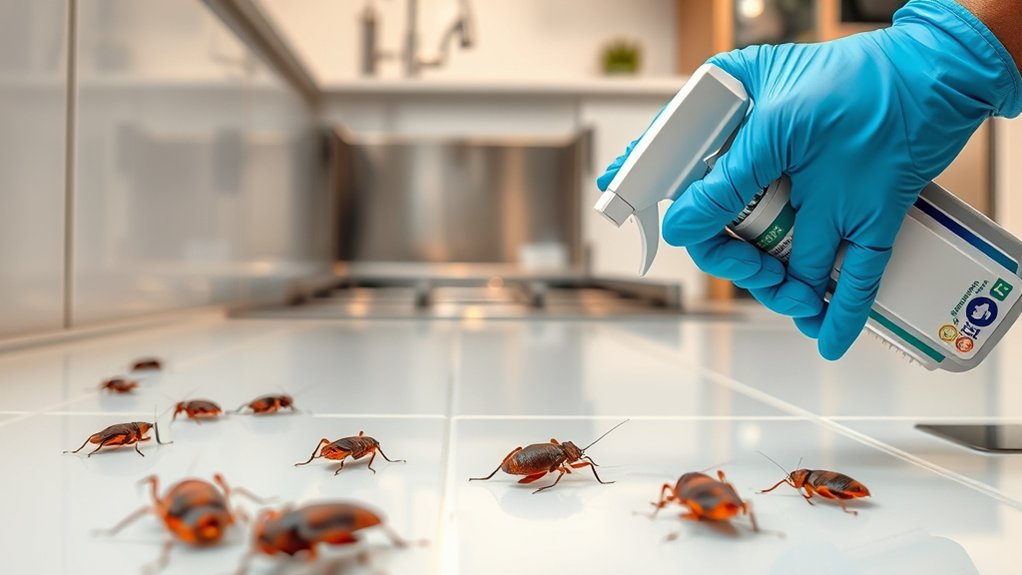
To get rid of cockroaches in your kitchen fast, start by thoroughly cleaning countertops, sinks, and floors to remove crumbs and spills. Seal cracks and gaps where they enter.
Use baits or traps near hiding spots like under appliances and inside cabinets. Try natural repellents like peppermint oil or baking soda for extra deterrence.
Keep food sealed and trash emptied regularly to avoid attracting them. Stick around to find effective long-term ways to keep your kitchen roach-free.
Key Takeaways
- Clean countertops, sinks, and floors thoroughly to remove food crumbs and spills that attract cockroaches.
- Use bait stations or homemade baits with boric acid and sugar near cockroach hiding spots for quick elimination.
- Seal cracks, gaps, and entry points around pipes, cabinets, and walls to block cockroach access.
- Set glue traps in dark corners and under appliances to monitor and catch active cockroaches fast.
- Apply natural repellents like peppermint oil spray or use insecticides safely following label instructions for immediate control.
How to Identify a Cockroach Infestation in Your Kitchen
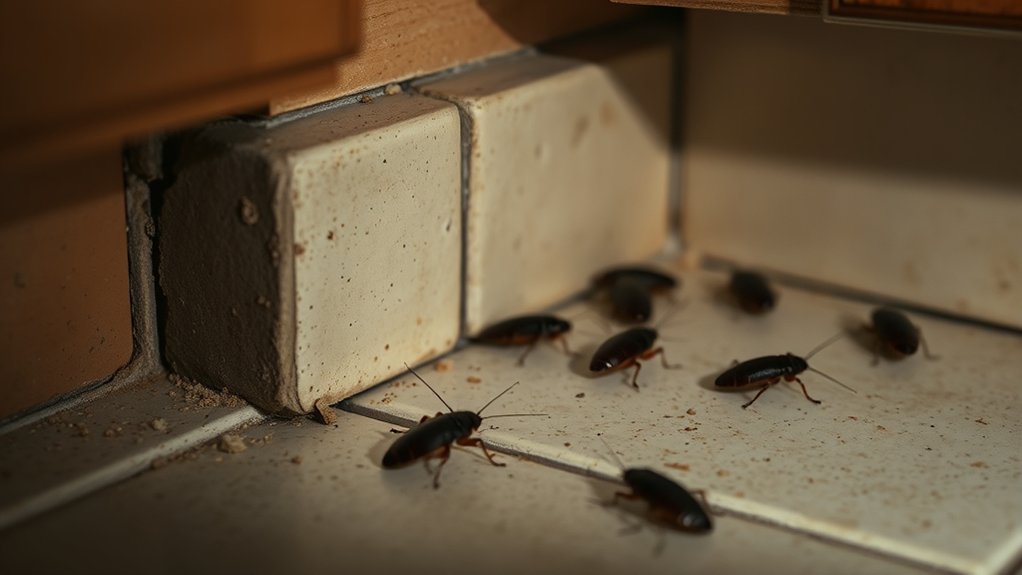
Although cockroaches are nocturnal and skilled at hiding, you can still spot signs of an infestation in your kitchen. Understanding pest behavior helps you catch these early warning signs before the problem worsens.
Cockroaches hide well, but knowing their habits helps you detect early signs before infestations grow.
Cockroaches tend to hide in dark, warm areas near food and water sources, like under sinks, behind appliances, or inside cabinets. You might notice small, dark droppings that look like pepper grains or shed skins from molting.
Another common infestation sign is a musty, oily odor, especially when the population grows. You could also spot egg cases, known as oothecae, stuck in hidden places.
Seeing a live cockroach during the day usually means the infestation is severe, as they typically avoid light. Paying close attention to these infestation signs and pest behavior allows you to act quickly, preventing the infestation from spreading further in your kitchen.
Why Are Cockroaches Dangerous?
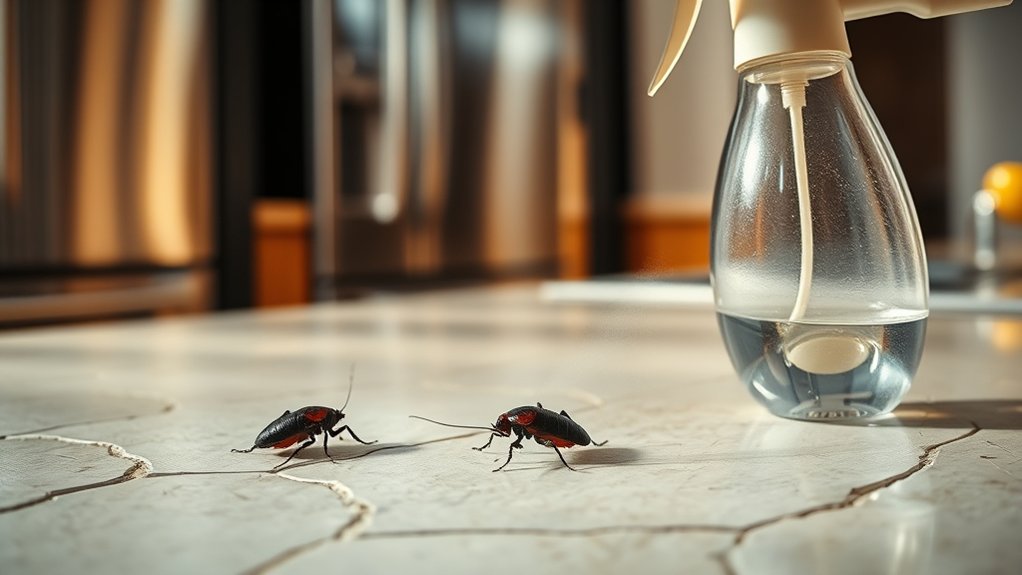
Because cockroaches carry harmful bacteria and allergens, they pose serious health risks in your kitchen. Their cockroach behavior, including scavenging in dirty areas, spreads germs across surfaces where you prepare food. Understanding the pest lifecycle helps you realize how quickly they multiply, increasing contamination risks.
Here are four reasons why cockroaches are dangerous:
- They transmit bacteria like Salmonella and E. coli, causing food poisoning.
- Their droppings and shed skins trigger asthma and allergic reactions.
- They contaminate food and utensils by crawling on them during their nocturnal activity.
- Their rapid pest lifecycle means an infestation can grow exponentially if ignored.
You need to act fast because cockroaches don’t just pose a nuisance. They seriously threaten your health by spreading pathogens and allergens throughout your kitchen.
How to Clean Your Kitchen to Remove Cockroach Food Sources
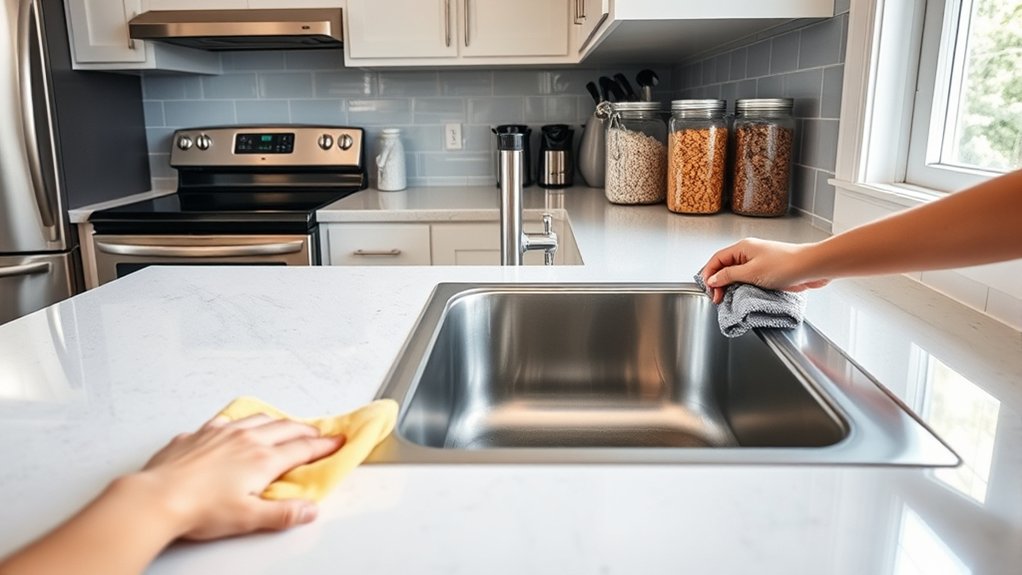
To stop cockroaches from invading your kitchen, eliminate their food sources by cleaning thoroughly and regularly. Wipe down countertops, stovetops, and sinks daily to remove crumbs and spills.
Pay special attention to hidden spots, such as areas under appliances and cabinet corners. Proper kitchen organization also helps limit cockroach access.
Focus on hidden areas like under appliances and cabinets; good organization limits cockroach entry points.
Store food in airtight containers instead of leaving it exposed in bags or boxes. This helps prevent odors and crumbs that attract pests.
Clean pantry shelves periodically, checking for expired or spilled items. Also, empty the trash frequently and clean the bin to remove lingering food residue.
Maintaining a clutter-free kitchen reduces hiding spots for cockroaches. By combining consistent cleaning with smart food storage and organization, you can make your kitchen uninviting to pests and help prevent infestations.
Best DIY Cockroach Baits and Traps
You can make effective cockroach baits at home with a few simple ingredients, or choose a reliable store-bought trap. Where you place these traps matters just as much as what you use, so put them near areas where roaches hide and travel. Let’s look at a few easy recipes, popular trap options, and smart placement tips to help keep your kitchen roach-free.
Homemade Bait Recipes
When cockroaches invade your kitchen, homemade baits offer an effective and affordable way to control them. Understanding cockroach biology helps you create baits that attract and kill these pests efficiently, dispelling common pest control myths like “roaches won’t eat poison.” Try these DIY bait recipes:
- Boric Acid and Sugar: Mix 1 part boric acid with 2 parts sugar for a deadly, irresistible bait.
- Baking Soda and Sugar: Combine equal parts baking soda and sugar; roaches eat it and perish.
- Peanut Butter and Boric Acid: Blend peanut butter with boric acid for a sticky, toxic trap.
- Flour, Sugar, and Water: Make a dough with flour, sugar, and water, which roaches consume and carry back to nests.
These homemade baits target roaches directly, helping you reclaim your kitchen quickly.
Effective Store-Bought Traps
Although homemade baits can be effective, store-bought traps offer a convenient and often more powerful solution for catching cockroaches in your kitchen. These traps are designed to exploit cockroach behavior, using attractants that lure them in and sticky surfaces or bait stations that kill efficiently.
Many commercial traps contain slow-acting poisons that cockroaches carry back to their nests, helping reduce infestations beyond just the caught roaches. Be aware, though, that some cockroach populations develop pest resistance to certain chemicals, so rotating trap types or combining methods can increase success.
You’ll find a variety of traps available, from glue boards to bait stations, making it easier to pick one that fits your needs and kitchen setup. Store-bought traps save you time while targeting cockroaches effectively.
Placement Tips For Traps
Since cockroaches tend to hide in dark, warm, and moist areas, placing traps strategically in these spots increases their effectiveness. Proper trap placement and bait positioning are key to quickly reducing their numbers. Here’s how to optimize your setup:
- Near Appliances: Place traps around the refrigerator, stove, and dishwasher where warmth attracts roaches.
- Under Sinks: Moisture here makes it a prime hiding spot; set traps close but out of reach of pets.
- Cabinet Corners: Cockroaches love tight spaces, so position traps inside and near cabinet corners.
- Along Baseboards: Roaches follow walls; placing traps here intercepts their paths effectively.
Natural, Non-Toxic Remedies to Repel Cockroaches
You can keep cockroaches away with natural, non-toxic remedies instead of harsh chemicals. Essential oils such as peppermint and eucalyptus may help repel them, while everyday kitchen items like bay leaves and cucumber peels can also be useful. Let’s look at how to use these simple solutions effectively in your kitchen.
Essential Oils That Work
When dealing with cockroaches in your kitchen, essential oils offer a natural and non-toxic way to repel these pests effectively. These oils act as strong natural repellents, disrupting the roaches’ sense of smell and keeping them at bay. Here are four essential oils you can use:
- Peppermint oil: Its strong scent confuses and repels cockroaches.
- Tea tree oil: Known for antimicrobial properties, it also deters roaches.
- Eucalyptus oil: Its powerful aroma drives cockroaches away.
- Lavender oil: Besides smelling pleasant, it works as a natural cockroach deterrent.
To use, mix 10-15 drops of any oil with water in a spray bottle and apply around entry points and kitchen corners. This keeps your kitchen pest-free without harmful chemicals.
Common Kitchen Ingredients
Although essential oils are effective, common kitchen ingredients can offer comparably powerful, natural solutions to repel cockroaches. Understanding cockroach behavior and their pest lifecycle helps you use these ingredients strategically.
Cockroaches dislike strong smells and tend to avoid areas treated with natural deterrents. Here’s a quick guide:
| Ingredient | How to Use | Why It Works |
|---|---|---|
| Baking Soda | Sprinkle in corners | Disrupts digestive system |
| Bay Leaves | Place in cabinets | Emits a scent cockroaches avoid |
| Lemon Peels | Rub on surfaces | Masks food scents attracting pests |
| Garlic | Crush and leave near entryways | Repels due to strong odor |
Use these remedies consistently to interrupt the pest lifecycle and keep your kitchen roach-free naturally.
Using Insecticides Safely Against Cockroaches
Since cockroaches can carry harmful bacteria, using insecticides safely is essential to protect your health and home. You want to tackle these pests without risking your family’s safety or encouraging chemical resistance. Here’s how to do it right:
- Choose the right insecticide: Use products labeled for indoor cockroach control and follow the instructions closely to maintain insecticide safety.
- Apply sparingly and strategically: Target cracks, crevices, and hiding spots rather than broad surfaces to reduce unnecessary exposure.
- Rotate insecticides: Switching between different active ingredients helps prevent cockroaches from developing chemical resistance.
- Keep kids and pets away: Store insecticides out of reach and ventilate areas well after use to avoid harmful exposure.
Common Mistakes That Attract Cockroaches
If you unknowingly leave food crumbs or standing water around, you’ll create a perfect invitation for cockroaches. One common mistake is neglecting proper food storage. Leaving snacks or leftovers uncovered encourages roaches to feast and multiply.
Always store food in airtight containers to cut off their access. Another frequent error is ignoring clutter reduction. Piles of papers, cardboard, or unused items provide ideal hiding spots for cockroaches.
Keeping your kitchen tidy and minimizing clutter removes these shelters and makes your space less attractive to pests. Furthermore, failing to clean up spills promptly or leaving pet food out overnight can also lure roaches.
How to Seal Cracks and Hideouts to Prevent Roach Entry
Start by looking for common entry points, such as cracks around pipes and gaps in walls, where roaches may sneak in. Seal these openings with a durable sealant, like silicone caulk, to help keep them out. Check the area regularly and seal any new cracks before they become a problem.
Identify Common Entry Points
Although cockroaches can squeeze through tiny gaps, you can keep them out by carefully identifying and sealing their common entry points. Start by inspecting areas where your kitchen decor meets walls or floors, as gaps often hide there.
Look under sinks and behind pest resistant furniture, since roaches love dark, undisturbed spots. Don’t forget to check around pipes and vents, as these create easy access.
Finally, examine door frames and window sills where cracks might let pests slip in.
- Gaps around kitchen decor edges
- Spaces beneath sinks and behind pest resistant furniture
- Openings near pipes and vents
- Cracks in door frames and window sills
Use Effective Sealants
When you spot cracks or gaps in your kitchen, sealing them promptly stops cockroaches from sneaking inside. Effective sealant application is a key pest proofing strategy to block these entry points.
Focus on areas around pipes, baseboards, and cabinets. Use silicone or acrylic sealants for durability and flexibility.
Here’s a quick guide for sealant application:
| Area to Seal | Recommended Sealant |
|---|---|
| Pipe openings | Silicone sealant |
| Cabinet edges | Acrylic latex sealant |
| Baseboards | Silicone or acrylic |
| Wall cracks | Acrylic latex sealant |
| Window gaps | Weatherproof sealant |
Maintain Regular Inspections
After sealing cracks and gaps, you need to keep an eye on your kitchen regularly to catch any new openings before roaches find them. Maintaining regular inspections is essential for effective pest control and kitchen hygiene.
Here’s how you can stay proactive:
- Check baseboards, cabinets, and pipes weekly for new cracks or holes.
- Inspect behind appliances and under sinks where moisture attracts roaches.
- Use a flashlight to spot small gaps in corners and walls.
- Immediately seal any identified openings with quality sealants or caulk.
When to Call a Professional Exterminator for Cockroach Control
If you’ve tried DIY methods but still spot cockroaches scurrying around, it’s time to think about calling a professional exterminator. Professionals understand pest behavior deeply, allowing them to target cockroach nests and entry points you might miss.
When infestations persist despite your efforts, or when you notice signs like droppings, egg cases, or a strong odor, it indicates a more serious problem that requires expert intervention.
A professional exterminator also helps with long-term pest prevention by identifying vulnerabilities in your kitchen’s structure and advising on effective control measures.
If you’re dealing with a large infestation or need quick, lasting results, don’t hesitate to call for help. Handling cockroach control alone can sometimes make the problem worse if you overlook key aspects of pest behavior or use ineffective treatments.
Getting professional support ensures thorough elimination and peace of mind.
How to Maintain a Cockroach-Free Kitchen Long Term
Keeping your kitchen cockroach-free requires consistent habits and regular attention. Understanding the pest lifecycle and cockroach behavior helps you break their breeding cycle and avoid infestations.
Maintaining a cockroach-free kitchen demands ongoing care and insight into their lifecycle to prevent infestations.
To maintain a cockroach-free kitchen long term, focus on these key steps:
- Seal Entry Points: Cockroaches enter through cracks and gaps. Seal these to block their access.
- Eliminate Food and Water Sources: Clean up crumbs, spills, and fix leaks. Cockroaches seek food and moisture to survive.
- Regularly Clean and Declutter: Cockroaches hide in clutter. Keep counters, cabinets, and floors clean to reduce hiding spots.
- Use Preventive Baits or Traps: Place baits and traps strategically to monitor and control cockroach activity before it escalates.
Frequently Asked Questions
Can Cockroaches Survive Without Food for Several Days?
Yes, cockroaches can survive food deprivation for quite a while. Typically, their survival duration without food ranges from a week to a month, depending on conditions like humidity.
Even without food, they can endure by slowing their metabolism. However, they still need water to survive longer.
Do Cockroaches Carry Diseases That Affect Pets?
You might be surprised to learn that cockroaches can pose a real threat to pet safety. Yes, they do carry diseases that can affect your domesticated companions through disease transmission.
These pests pick up bacteria and pathogens on their bodies, which can contaminate your pet’s food or living space.
To protect your pets, you need to act quickly and keep your home clean, sealing any entry points to stop these unwelcome visitors.
How Fast Do Cockroaches Reproduce in a Kitchen?
Cockroach mating happens quickly, and their reproduction cycle is rapid, especially in your kitchen. Once they mate, females can produce hundreds of eggs in just a few weeks.
Each egg case contains multiple eggs, and cockroaches hatch in about a month. This means their population can explode if you don’t act fast.
You’ll notice an infestation growing within weeks due to this fast reproduction cycle.
Are Certain Kitchen Appliances More Attractive to Cockroaches?
Appliances act like magnets for cockroaches, especially those that generate heat or hold food residue. Your toaster, microwave, and refrigerator can be prime spots since leftover crumbs or warmth lure them in.
Kitchen clutter around these appliances only makes things worse by providing hiding places. To keep roaches away, clean appliances regularly, clear clutter, and seal any cracks where they might sneak inside.
Don’t let your kitchen become their perfect playground!
Can Cockroaches Cause Allergic Reactions in Humans?
Yes, cockroaches can cause allergic reactions in humans. When you come into contact with cockroach allergens, proteins found in their saliva, feces, and shed skin, you might experience symptoms like sneezing, itchy eyes, or even asthma attacks.
If you’re sensitive, these allergens can trigger more severe allergic reactions. So, it’s important you control cockroach presence to reduce exposure and protect your health from these irritating allergens.
Conclusion
You might think getting rid of cockroaches is too tough or time-consuming, but with these simple steps, you can tackle them quickly and effectively. By cleaning thoroughly, sealing entry points, and using natural remedies or DIY traps, you’ll see results fast.
Remember, consistency is key to keeping your kitchen roach-free long term. Don’t wait. Start now and enjoy a cleaner, safer kitchen without the hassle of expensive treatments. Follow these steps to get rid of cockroaches in your kitchen fast.