10 Tips to Organize Kitchen Cabinets and Drawers Efficiently
A cluttered kitchen can make even simple tasks feel frustrating, and many people struggle to keep cabinets and drawers organized. You’re not alone—finding the right storage solutions can make every item easier to access.
Start by decluttering your kitchen cabinets and drawers—toss expired or broken items and group similar ones together. Use drawer dividers to separate utensils and install pull-out shelves to maximize space.
Keep daily essentials at eye level and store seasonal or rarely used items in less accessible spots. Stackable organizers will help you make the most of vertical space, and don’t forget to designate a cabinet for cleaning supplies.
Quick regular check-ins will keep everything tidy and functional. Uncover more smart strategies ahead.
Key Takeaways
- Declutter cabinets by removing expired, broken, and duplicate items before organizing for better space and efficiency.
- Group similar items and label containers and shelves to maintain clarity and quick identification.
- Store frequently used cookware near the stove and keep small appliances accessible while placing seasonal items in less reachable spots.
- Use drawer dividers, pull-out shelves, and stackable organizers to maximize vertical space and prevent clutter.
- Schedule regular quick check-ins to discard expired items, reorganize misplaced tools, and maintain kitchen order consistently.
Declutter Your Kitchen Cabinets and Drawers First
Before you begin organizing, you need to declutter your kitchen cabinets and drawers first. Start by emptying everything out so you can see what you have. This step is essential for effective pantry organization and utensil sorting.
Begin by emptying your kitchen cabinets and drawers to see everything clearly before organizing.
As you remove items, toss expired goods, broken utensils, and duplicates you no longer use. This clears space and helps you focus on what truly belongs in your kitchen.
Next, group similar items together outside the cabinets. Regarding utensil sorting, separate cooking tools, cutlery, and specialty gadgets. Doing this lets you make better decisions about storage solutions later on.
Decluttering also gives you a fresh perspective, making it easier to plan your layout and avoid overcrowding. By clearing out the clutter first, you set a strong foundation for a streamlined, efficient kitchen that works for your daily needs.
Group Kitchen Items by Type for Easy Access
Once you’ve decluttered, group your kitchen items by type to make everyday tasks smoother. Start by separating cookware, bakeware, utensils, and appliances.
Organize pots and pans near the stove since they’re essential for your cooking techniques. Keep baking sheets and mixing bowls together in a cabinet close to your prep area.
For small appliances, store them according to how often you use them. Daily items should be easily accessible, while seasonal gadgets can go in less reachable spots.
Grouping items this way saves you time and reduces kitchen chaos.
Don’t forget to place cleaning supplies and appliance maintenance tools, like descaling solutions or replacement filters, in a designated cabinet.
This way, you’ll remember to maintain your appliances properly, extending their lifespan. By grouping related items efficiently, you’ll streamline meal prep and cleanup, making your kitchen a more functional and enjoyable space.
Use Drawer Dividers to Organize Kitchen Utensils
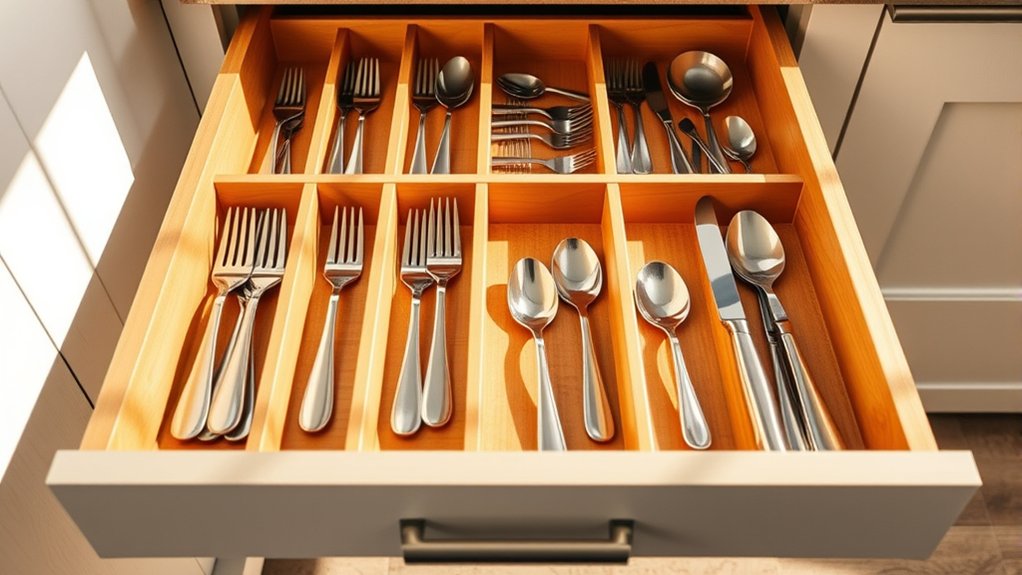
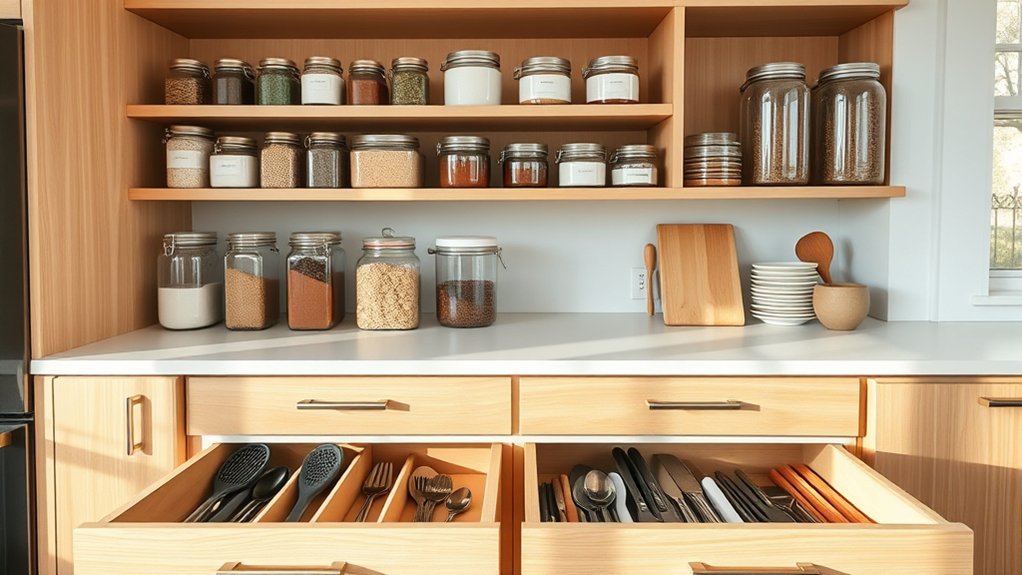
Although utensils often get tossed together in drawers, using dividers can transform that clutter into order. Drawer dividers help you separate spoons, forks, knives, and other utensils, making them easy to find and grab.
With proper utensil categorization, you’ll save time during meal prep and avoid frustrating searches. Choose adjustable dividers so you can customize compartments based on your utensil collection.
For example, assign sections for cooking tools, measuring spoons, and everyday cutlery. This way, everything has a designated spot.
Plus, drawer dividers prevent utensils from sliding around, keeping your drawers neat longer. When you organize this way, you’ll notice your kitchen feels more efficient and inviting.
Start by emptying your drawers, sorting utensils into groups, and then placing your drawer dividers to fit those groups. You’ll quickly realize that investing in drawer dividers improves both functionality and tidiness in your kitchen.
Install Pull-Out Shelves to Maximize Cabinet Space
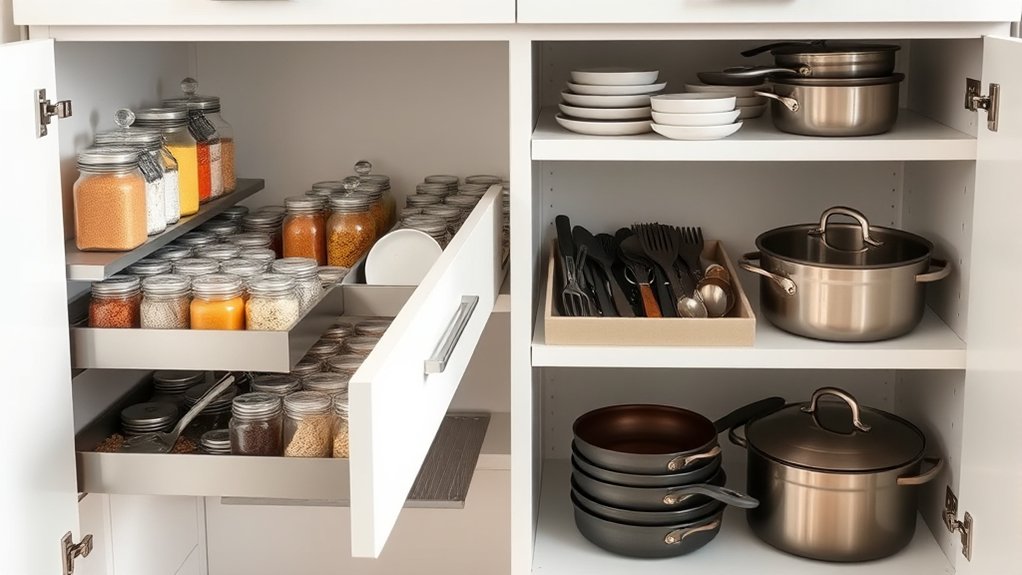
If you want to make the most of your cabinet space, installing pull-out shelves is a smart move. These shelves slide out smoothly, giving you easy access to items stored at the back of your cabinets.
With pull-out shelves, you won’t have to dig around or move things twice to reach what you need, greatly improving cabinet accessibility. They’re perfect for storing pots, pans, spices, or pantry goods, helping you keep everything organized and within reach.
Pull-out shelves eliminate digging and double moving, keeping pots, pans, spices, and pantry items organized and accessible.
You can install pull-out shelves in almost any cabinet, customizing them to fit your storage needs. This upgrade maximizes vertical space too, allowing you to stack items neatly without losing accessibility.
By improving your cabinet accessibility, pull-out shelves save you time and reduce frustration during meal prep. They make the most of every inch inside your cabinets, turning cluttered spaces into efficient storage zones.
Consider adding them to transform your kitchen organization instantly.
Store Frequently Used Kitchen Items at Eye Level
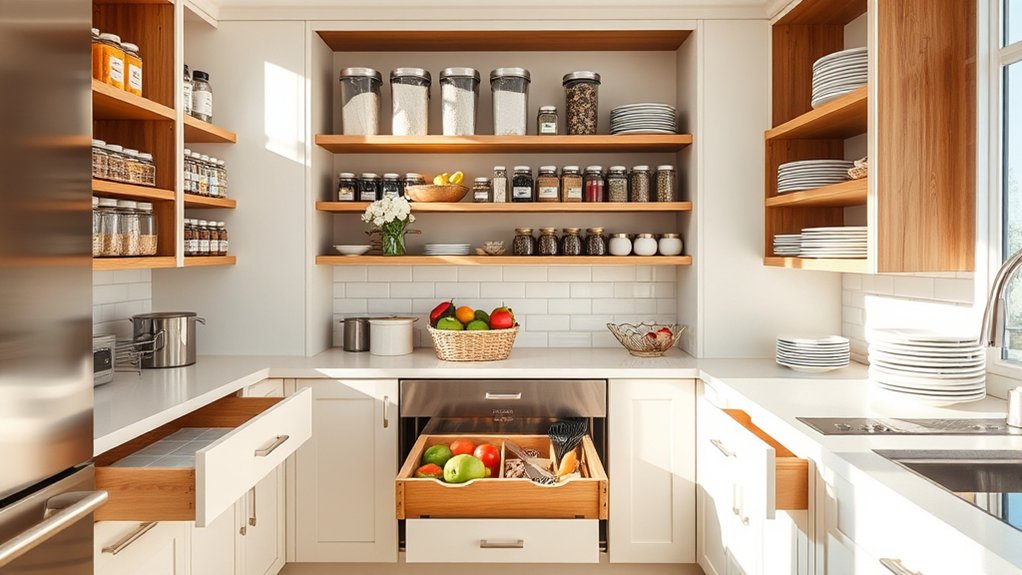
When you store frequently used kitchen items at eye level, you save time and reduce hassle during cooking. This simple adjustment lets you grab essentials like spices, utensils, and coffee mugs without unnecessary bending or searching. Keep these items in clear view to maintain efficiency and streamline your workflow.
Besides functionality, placing items at eye level enhances kitchen aesthetics. It creates a clean, organized look that complements your overall design. Use uniform containers or matching jars to add a cohesive feel.
Don’t forget to install good cabinet lighting to illuminate these frequently accessed areas. Proper lighting not only highlights your organized setup but also makes it easier to find what you need quickly.
Label Containers and Shelves for Quick Identification
Since you frequently reach for various ingredients and tools, labeling containers and shelves helps you find what you need instantly. When you label containers, you reduce time spent searching and avoid mix-ups.
Shelf labeling complements this by clearly marking storage zones, making the entire kitchen more intuitive.
Use clear, easy-to-read labels for containers and shelves to speed up your workflow. Whether you use a label maker, chalkboard stickers, or printable tags, consistency matters.
Group similar items together and label each shelf accordingly. This system not only keeps your kitchen tidy but also encourages everyone in your household to maintain order.
| Container Type | Suggested Label | Shelf Location |
|---|---|---|
| Spices | Basil, Oregano, Thyme | Top Left Shelf |
| Baking Supplies | Flour, Sugar, Cocoa | Middle Right Shelf |
| Snacks | Nuts, Granola Bars | Lower Left Shelf |
| Pasta & Grains | Rice, Pasta | Middle Left Shelf |
| Cleaning | Dish Soap, Sponges | Under Sink Shelf |
Use Stackable Organizers to Make the Most of Vertical Space
Although kitchen cabinets often have ample vertical space, many people overlook it, leading to cluttered shelves. To maximize this area, use stackable organizers that let you build upward instead of outward.
Stacking containers are perfect for storing dry goods, snacks, or spices, freeing up shelf space below. By incorporating vertical storage solutions like tiered racks or stackable bins, you can neatly separate items and access everything easily without digging through piles.
These organizers help you customize your cabinet layout, making the most of every inch. Plus, they prevent items from toppling over, keeping your kitchen tidy and efficient.
When choosing stackable organizers, opt for transparent or labeled containers to quickly identify contents and save time while cooking.
Embracing vertical storage transforms your cabinets into well-ordered spaces, reducing clutter and improving accessibility. Don’t let unused vertical space go to waste. Start stacking smartly to keep your kitchen organized and functional.
Designate a Cabinet for Cleaning Supplies
To keep your kitchen safe and clutter-free, designate a specific cabinet exclusively for cleaning supplies. This helps prevent accidental mixing with food items and keeps hazardous products out of reach from children and pets.
Designate a cabinet solely for cleaning supplies to keep your kitchen safe and free from clutter.
Choose a lower cabinet near the sink or trash area for easy access during cleanup tasks. Use clear bins or caddies inside the cabinet to group similar cleaning supplies together, making it easier to find what you need quickly.
Label each container to streamline your routine further. Regular cabinet maintenance ensures spills don’t cause stains or odors. Wipe down the shelves monthly and check for expired or empty bottles to discard.
Avoid overcrowding the cabinet. Keeping it organized reduces clutter and makes it simpler to restock supplies.
Rotate Seasonal and Rarely Used Items to Infrequent Storage
Start by identifying the kitchen items you use only seasonally or rarely. Move them to a less accessible storage area to free up space for the things you use every day. Then, set a rotation schedule so you’ll remember when to bring them back out.
Identify Seasonal Items
When do you typically use those holiday-themed cookie cutters or your summer picnic dishes? Chances are, only once or twice a year.
Identifying seasonal items like seasonal decor and holiday cookware helps you decide which things don’t need everyday cabinet space. By pinpointing these items, you can free up valuable room for daily essentials.
Look for items that come out only during special occasions or certain seasons, such as Thanksgiving platters or winter-themed mugs.
Once you recognize these, you’ll know which pieces to rotate out when reorganizing. This way, your kitchen stays clutter-free and functional.
Keep seasonal items in mind when sorting through your cabinets and drawers. It’s a smart step toward a more efficient kitchen setup.
Choose Infrequent Storage
Although you don’t use seasonal or rarely needed items every day, you still need a designated place for them. Choose infrequent storage spots like high pantry shelving or the back of deep cabinets.
This keeps your everyday kitchen essentials within reach while maintaining order. For example, holiday bakeware or specialty utensils fit well in these spots.
Spice rack organization also benefits by rotating less-used spices to less accessible shelves, freeing prime spots for daily flavors.
| Item Type | Ideal Infrequent Storage |
|---|---|
| Seasonal Bakeware | Top pantry shelving |
| Rare Appliances | Deep cabinet corners |
| Specialty Spices | Lower spice rack shelves |
Establish Rotation Schedule
Since your kitchen needs change with the seasons, you’ll want to establish a rotation schedule that moves seasonal and rarely used items to infrequent storage areas. Start by conducting inventory tracking to identify which items you use less frequently or only during certain times of the year.
Label these items and set specific dates to swap them out, ensuring your everyday essentials stay within easy reach. This rotation not only keeps your cabinets clutter-free but also improves storage optimization by freeing up prime space for items you use regularly.
Regularly revisiting your inventory helps you adjust the schedule as needed, preventing forgotten or expired items. By rotating your kitchen items systematically, you maintain a tidy, efficient space tailored to your current cooking needs.
Keep Your Kitchen Cabinets Organized With Quick Check-Ins
To keep your kitchen cabinets tidy, make quick check-ins a regular habit. Spend just a few minutes weekly scanning your cabinets and drawers.
This helps you spot expired items, reorganize misplaced tools, and clear clutter before it piles up. Quick check-ins also support effective meal planning by ensuring you know what ingredients are on hand and preventing unnecessary purchases.
While you’re at it, glance over your appliances to confirm they’re clean and functioning properly. Good appliance maintenance extends their lifespan and keeps your kitchen running smoothly.
These brief routines save you from overwhelming deep cleans and keep your kitchen efficient. Make them part of your kitchen rhythm because a small time investment now avoids big hassles later.
Frequently Asked Questions
How Do I Choose the Best Materials for Kitchen Cabinet Organization?
You’ll want to choose durable, moisture-resistant materials for cabinet shelving, like bamboo or metal, to withstand kitchen humidity. Look for storage baskets made of breathable materials such as wire or woven fabric to keep items visible and ventilated.
Consider the weight of what you’ll store. Heavy cookware needs sturdy shelves, while lighter utensils can go in flexible baskets. Prioritize easy-to-clean surfaces to keep your kitchen fresh and organized effortlessly.
What Are the Most Durable Drawer Dividers Available?
Think of durable drawer dividers as the sturdy roots that keep your kitchen organized tree standing strong. You’ll want adjustable dividers made from high-quality materials like bamboo or metal. They bend to fit any drawer size without breaking.
Pair these with non-slip trays to prevent slipping and sliding, giving you stability and ease. Together, they create a lasting foundation that keeps your utensils neatly in place, saving you time and frustration every day.
Can I Organize Kitchen Cabinets Without Professional Help?
Yes, you can definitely organize your kitchen cabinets without professional help. Start by evaluating your kitchen layout to identify the best spots for frequently used items.
Use smart storage solutions like adjustable shelves, clear bins, and drawer dividers to maximize space. With a bit of planning and creativity, you’ll create an efficient, clutter-free kitchen that suits your needs perfectly without spending extra on professionals.
How Often Should I Replace Old Kitchen Storage Containers?
You should replace kitchen storage containers every 1 to 3 years, depending on their material and condition. The container lifespan varies: plastic containers may degrade faster, while glass lasts longer.
Pay attention to cracks, stains, or odors, which signal it’s time for container replacement. Regularly checking your containers helps guarantee food stays fresh and safe.
Adjust the container replacement frequency based on how often you use and clean them.
What Are Eco-Friendly Options for Kitchen Cabinet Organization?
You can choose eco-friendly options for kitchen cabinet organization by opting for sustainable materials like bamboo or reclaimed wood. These not only look great but reduce environmental impact.
Look for recycling options when disposing of old organizers, and consider containers made from recycled plastic or glass. Avoid single-use plastics and go for durable, reusable products.
This way, you keep your kitchen tidy while supporting a greener planet.
Conclusion
If you don’t organize your kitchen cabinets and drawers now, you might as well prepare for a chaotic food fight every time you cook! By decluttering, grouping items, and using smart organizers, you’ll transform your kitchen into a stress-free zone where everything has a place.
Imagine never digging through a mess again—your future self will thank you for this simple, game-changing step. So, get started now and use these kitchen cabinet and drawer organization tips to keep kitchen chaos at bay!