How to Dispose of Old Kitchen Knives Safely
Old kitchen knives can be difficult to dispose of safely. If you’re unsure what to do with dull, damaged, or unwanted blades, you’re not alone—many people struggle to balance convenience with safety. These simple tips for how to dispose of old kitchen knives safely can help protect you and sanitation workers.
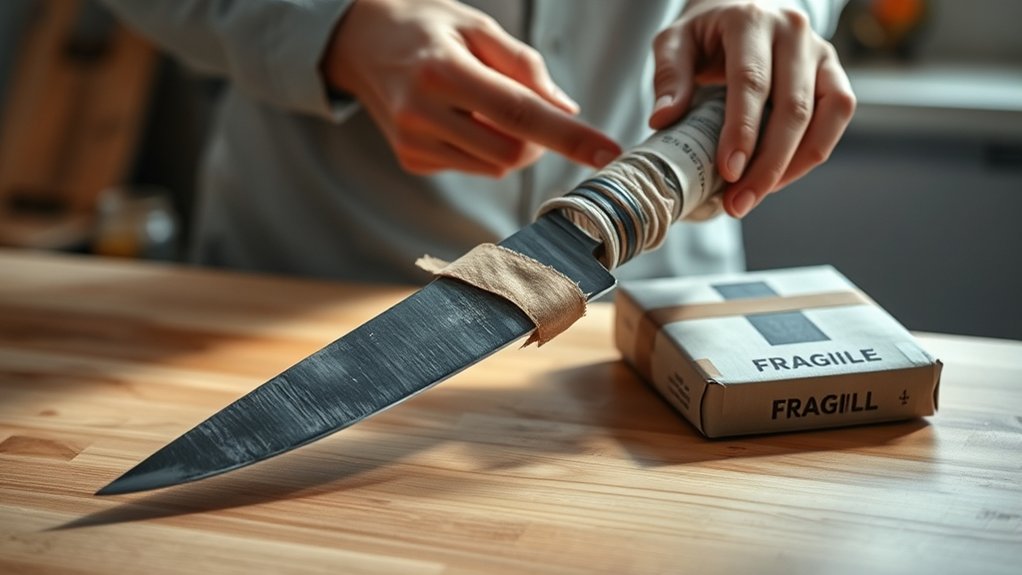
To dispose of old kitchen knives safely, always wear cut-resistant gloves and clean the blades first. Wrap them securely using thick materials like bubble wrap or sturdy cardboard, then tape tightly to prevent injuries.
Check your local disposal rules. Many areas require knives to be taken to designated drop-off or recycling centers. Avoid tossing them in regular trash to protect sanitation workers.
If you’re curious about ways to recycle or repurpose knives responsibly, there’s more helpful info ahead.
Key Takeaways
- Wear cut-resistant gloves and securely wrap knives in thick materials like bubble wrap or cardboard before disposal.
- Check and follow local disposal guidelines for sharp objects and use designated drop-off or recycling centers.
- Do not discard knives directly in regular trash bins to avoid injuries and legal issues.
- Consider donating or repurposing knives in good condition to reduce waste and promote sustainability.
- Always handle knives carefully during preparation, packaging, and transport to prevent accidental cuts or injuries.
Why You Should Dispose of Kitchen Knives Safely
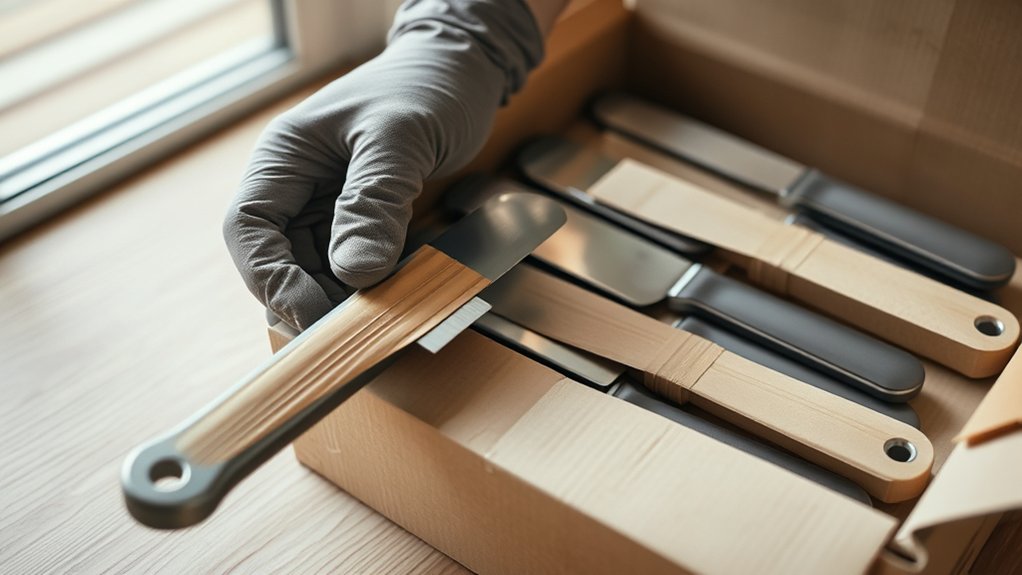
Because kitchen knives are sharp and potentially dangerous, you need to dispose of them carefully to prevent injuries. When you throw away old knives carelessly, you risk causing harm to sanitation workers or anyone handling the trash.
Proper knife safety means choosing disposal methods that minimize accidental cuts or punctures. You can’t just toss knives into regular garbage bags without protection, as the blades remain hazardous even when dull.
Always use protective measures when disposing of knives to prevent accidental cuts or injuries.
Safe disposal methods help prevent accidents and keep your environment secure. Furthermore, safely disposing of knives avoids liability issues if someone gets hurt by your discarded items.
By understanding the importance of knife safety and selecting appropriate disposal methods, you’re actively reducing risks for yourself and others.
How to Prepare Kitchen Knives for Safe Disposal
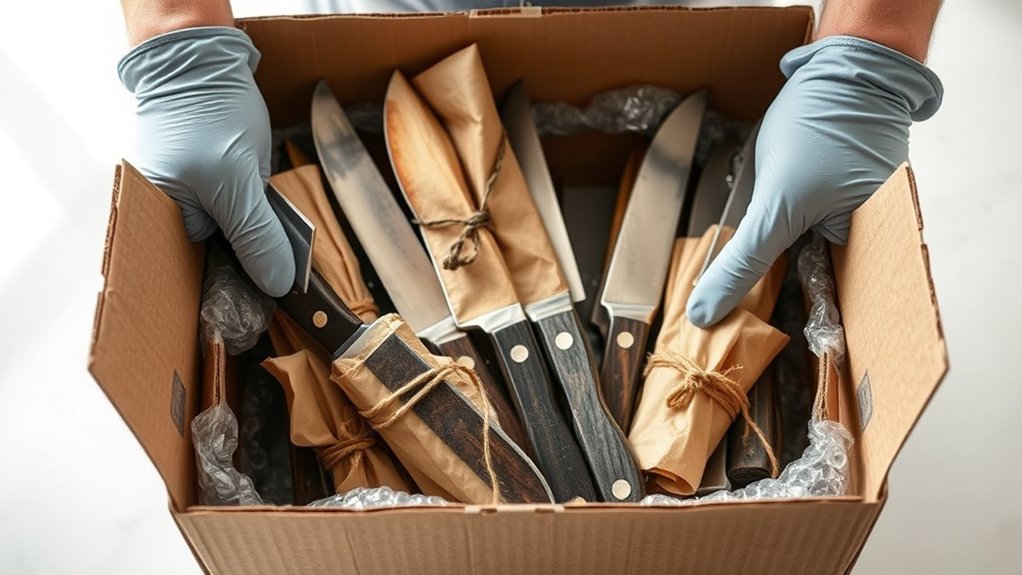
Now that you understand why disposing of kitchen knives safely matters, you need to know how to get them ready for disposal. First, always prioritize knife safety by handling the blades carefully. Wear cut-resistant gloves to protect your hands from accidental cuts during blade handling.
Next, clean the knives thoroughly to remove food residue, which prevents contamination and makes the disposal process safer for everyone involved. After cleaning, dry the blades completely to avoid rust, which can weaken the metal and increase the risk of injury.
If possible, use a tool like pliers to hold the knife securely while working on the blade, minimizing direct contact. Avoid wrapping the blade in flimsy materials at this stage, as that comes next.
How to Package Knives to Protect Waste Handlers
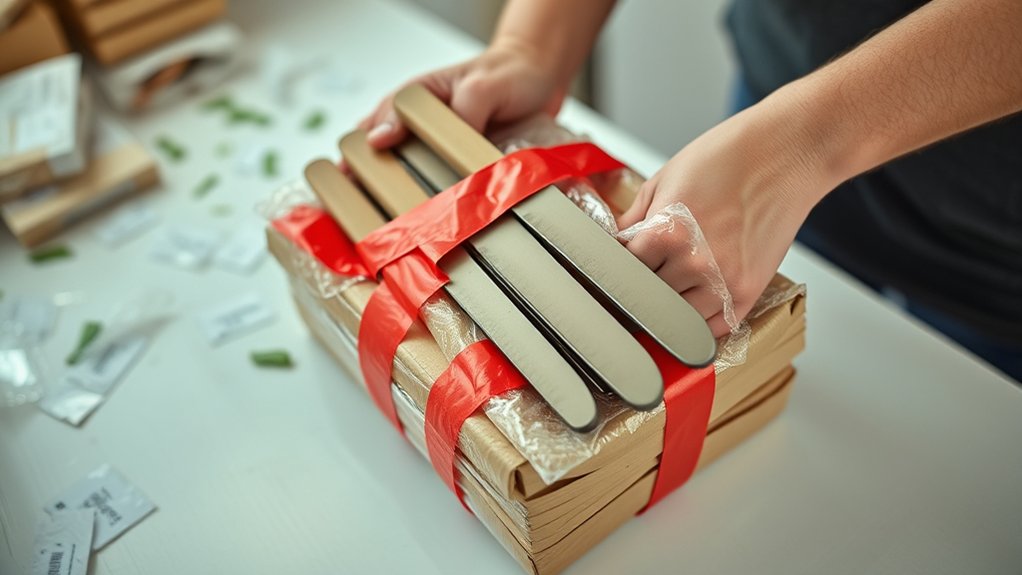
Here’s a quick guide on packaging materials and their benefits:
| Packaging Material | Blade Safety Level | Notes |
|---|---|---|
| Bubble Wrap | High | Cushions and covers sharp edges |
| Cardboard | Medium | Adds rigidity and protection |
| Thick Paper | Low | Provides minimal protection |
| Plastic Container | High | Prevents punctures entirely |
| Tape (Strong) | N/A | Secures packaging firmly |
Using the right packaging materials is key to ensuring blade safety during disposal.
Know Your Local Rules for Knife Disposal
Before you dispose of your old kitchen knives, check your local regulations to guarantee you follow the proper procedures. Knife safety is essential, and understanding your area’s disposal guidelines helps prevent accidents during waste collection.
Some communities treat knives as sharp objects requiring special handling, while others may have restrictions on disposing of blades in regular trash. You might need to separate knives from general waste or use designated containers.
Where to Recycle Kitchen Knives
Wondering where you can safely recycle your old kitchen knives? Proper knife safety means handling sharp edges carefully, even when recycling.
You can’t just toss knives in the trash because those edges pose risks to sanitation workers and the environment. Instead, check out these options for recycling:
- Local recycling centers: Many accept metal items but call ahead to confirm they take knives.
- Scrap metal facilities: These specialize in metal recycling and handle sharp objects safely.
- Knife manufacturers or retailers: Some offer take-back programs to recycle or repurpose old blades.
- Household hazardous waste events: Occasionally, communities hold special collection days for items with sharp edges.
Before recycling, wrap the knives securely in heavy-duty materials like cardboard or bubble wrap to prevent injury during transport.
How to Donate Kitchen Knives When Still Usable
If your kitchen knives still have plenty of life left, donating them can give them a second chance while helping others equip their kitchens.
Before you donate, confirm each knife is clean and free from rust or damage to promote cooking safety. Wrap blades securely to prevent accidents during transport and handling.
When selecting a donation recipient, consider local shelters, community centers, or culinary schools that accept kitchen tools. Inform them about the knives’ condition and provide basic instructions about knife handling to help recipients use them safely.
Donating knives encourages responsible reuse and supports those who may not afford quality kitchen tools. Remember, safe knife handling is essential for everyone, so including a brief note about proper use can make a big difference.
Use Kitchen Knife Sharpening Instead of Disposal
Although old kitchen knives might seem worn out, sharpening them can restore their edge and extend their lifespan considerably. Instead of tossing your blades, you can bring them back to life with proper sharpening techniques, ensuring kitchen knife safety and saving money.
To sharpen your knives effectively, keep these tips in mind:
- Use a whetstone or sharpening rod to maintain a consistent angle.
- Start with a coarse grit and finish with a fine grit for a razor-sharp edge.
- Sharpen both sides evenly to prevent blade warping.
- Regularly hone your knives between sharpenings to keep edges aligned.
Creative Ways to Repurpose Old Knives
When your old kitchen knives no longer hold a sharp edge, you don’t have to throw them away. Instead, get creative and repurpose them!
For example, turn blades into unique garden markers by engraving plant names on the metal. You can also transform handles into stylish hooks or drawer pulls, giving your kitchen a rustic charm.
If you’re into DIY projects, consider making a knife blade into a letter opener or a craft tool for carving. These ideas let you respect knife safety by removing sharp edges or clearly designating repurposed blades as non-cooking tools.
Remember, repurposing old knives encourages safer cooking techniques by keeping dull knives out of your food prep. Plus, it reduces waste and adds a personal touch to your home.
Common Mistakes to Avoid When Disposing of Knives
If you toss knives without wrapping them properly, you could injure sanitation workers. Be sure to notify your waste service if you’re disposing of sharp objects, and check your local disposal rules to avoid fines or other problems.
Improper Wrapping Risks
Since kitchen knives have sharp edges, failing to wrap them properly can cause serious injuries to sanitation workers and anyone handling the trash. You need to guarantee proper wrapping to keep those edges covered and reduce risks.
Improper wrapping is a common mistake that puts others in danger and can lead to cuts or punctures.
Avoid these wrapping errors:
- Using flimsy materials that tear easily
- Leaving blades exposed or loosely wrapped
- Wrapping knives individually without securing them
- Disposing of knives in bags without labeling or protection
Discarding Without Notification
Properly wrapping your knives is just one part of disposing of them safely. Another common mistake is discarding knives without any community notification.
When you throw sharp objects into regular trash bins without a hazardous notification, you put waste handlers and others at risk of injury. You should always inform your local waste disposal service or facility when you’re getting rid of knives, especially if they’re broken or damaged.
This community notification ensures that those handling the trash know to take extra precautions. Skipping this step can lead to accidents and complicate waste processing.
Ignoring Local Regulations
Failing to follow local regulations can lead to fines, delays, or even unsafe disposal practices when you get rid of old kitchen knives. Many areas have specific rules about how sharp objects should be handled, and ignoring them puts you and others at risk. Always check your municipality’s guidelines before disposing of knives.
To stay safe and compliant, remember to:
- Wear proper safety gear like gloves to avoid cuts
- Use approved disposal methods such as knife recycling programs or designated drop-off points
- Securely wrap knives in thick materials to prevent injuries during handling
- Avoid tossing knives directly into regular trash bins, which may violate local laws
Following these steps ensures you dispose of knives responsibly and legally.
Eco-Friendly Alternatives for Disposing of Kitchen Knives
You can reduce waste by recycling the metal from your old kitchen knives at a local scrap facility. If the knives are still usable, you might consider donating them to a community center or shelter. You could also repurpose the blades as tools or use them in art projects, giving them a second life.
Recycling Kitchen Knife Materials
Although kitchen knives may seem small, their metal and wooden components can be recycled to reduce waste. By recycling, you help protect the environment while promoting kitchen safety and proper tool maintenance.
Before recycling, detach the handle from the blade if possible, as different materials require separate processing.
Here’s how to recycle your kitchen knife materials effectively:
- Separate metal blades from wooden or plastic handles.
- Take metal parts to a scrap metal recycling center.
- Check if local facilities accept wooden handles, or compost them if untreated.
- Wrap blades securely to prevent injury during transport.
Recycling this way keeps harmful materials out of landfills and supports sustainable practices. It also helps create safer kitchens and extend the life of your tools.
Donating or Repurposing Knives
Recycling old kitchen knives helps keep harmful materials out of landfills, but there are other eco-friendly options to consider before discarding them. You can donate knives that are still in decent shape to community centers, culinary schools, or charities.
This gives them a new life and supports those who need proper kitchen tools. If your knives are dull or damaged, consider repurposing them into art, garden tools, or hardware for DIY projects.
Before donating or repurposing, verify proper knife maintenance by sharpening and cleaning the blades thoroughly. This not only extends their usefulness but also promotes cutting safety for new users.
Taking these steps reduces waste and encourages responsible disposal while benefiting others.
Frequently Asked Questions
Can Kitchen Knives Be Disposed of in Regular Household Trash?
You shouldn’t just toss kitchen knives in regular household trash because it risks cuts and injuries. Knife safety matters, so you need to check your local disposal regulations first.
Many places require you to wrap blades securely or take knives to a recycling center. Following these rules protects sanitation workers and prevents accidents.
Don’t underestimate proper disposal—it keeps everyone safe while complying with local guidelines.
Is It Safe to Throw Knives in the Recycling Bin?
Throwing knives in the recycling bin isn’t safe, as they symbolize sharp dangers that require respect. You need to prioritize knife safety by following your local recycling guidelines, which often prohibit sharp objects.
Knives can damage sorting machines or injure workers. Instead, wrap blades securely or use designated disposal programs. Treat knives like secrets: handle them carefully, so they don’t harm anyone during the recycling process.
How Long Does It Take for Knives to Decompose in Landfills?
Knives can take hundreds of years to decompose in landfills because metals have a slow biodegradation timeline. If you leave them there, you’re contributing to long-term landfill environmental impact, including soil contamination from rust and metal leaching.
To reduce this, you should consider recycling or donating knives instead of tossing them in the trash. This way, you help minimize environmental harm and support sustainable waste management.
Are There Specific Knives That Require Special Disposal Methods?
Yes, certain knives like ceramic blades or those with electronic components require special disposal methods. You’ll want to follow knife safety guidelines to avoid injury during disposal.
Check your local disposal regulations because some areas treat these knives as hazardous waste or electronics. Always wrap the blade securely to prevent accidents, and consider recycling programs designed for sharp or electronic kitchen tools to dispose of them responsibly and safely.
Can Dull Knives Be Sharpened at Home or Should They Be Discarded?
You can definitely sharpen dull knives at home using proper sharpening techniques like whetstones or honing rods. Regular knife maintenance helps keep your blades effective and safe to use.
Discarding dull knives isn’t always necessary unless they’re damaged beyond repair. By sharpening your knives, you save money and reduce waste while ensuring your kitchen tools stay in top shape. Just remember to follow safety tips during the process.
Conclusion
Disposing of old kitchen knives safely isn’t just about protecting yourself—it’s about keeping others safe too. You might think tossing them in the trash is fine, but waste handlers face real risks.
By prepping, packaging, and following local rules, you help guarantee safety all around. Plus, exploring recycling or repurposing can be surprisingly rewarding.
So, next time you retire a knife, remember: safe disposal is smart disposal. Follow these steps for safe disposal of old kitchen knives and help protect yourself and your community.