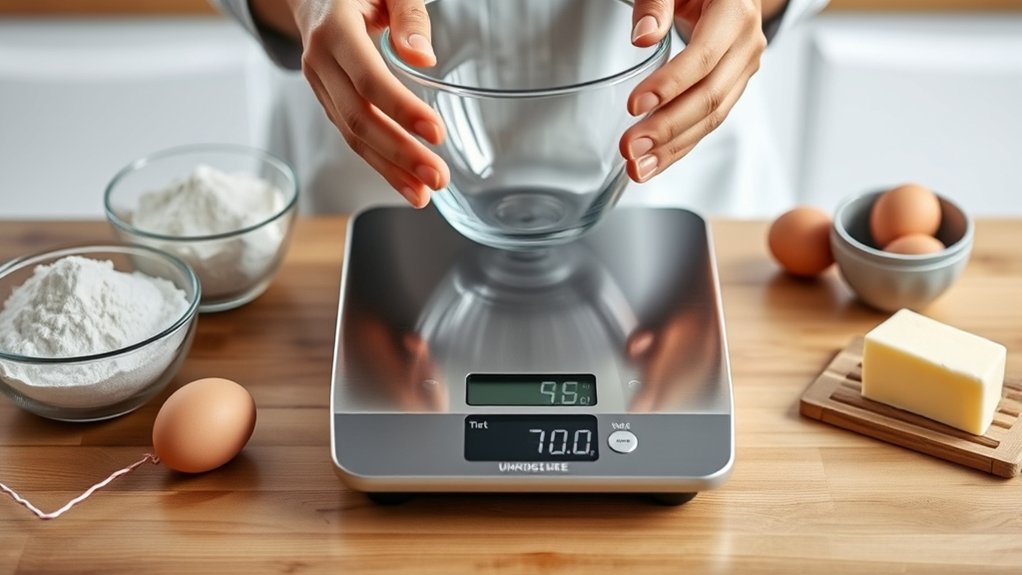
How to Use a Kitchen Scale in 10 Easy Steps
Struggling to measure ingredients accurately or wondering how to use a kitchen scale without making a mess? You’re not alone—many home cooks find digital scales confusing at first. The right technique can make baking, meal prep, and portion control much easier.
Choose a kitchen scale with a smooth surface and place it on a stable, flat spot. Power it on and calibrate following the manual. Select your preferred measurement units, then place an empty bowl and press tare to zero the scale.
Add ingredients gradually for accurate weights, taring between layers if needed. Clean gently after use and replace batteries as necessary. Master these basics, and you’ll boost your cooking precision and ease, revealing more kitchen scale tips ahead.
Key Takeaways
- Place the scale on a flat, stable surface and power it on before use.
- Put an empty container on the scale and press the tare button to zero the weight.
- Add ingredients gradually, using the tare function to measure multiple items in one container.
- Select the appropriate measurement unit and toggle if needed for recipe accuracy.
- Clean the scale regularly, replace batteries, and calibrate monthly or after moving it.
Choose the Right Kitchen Scale
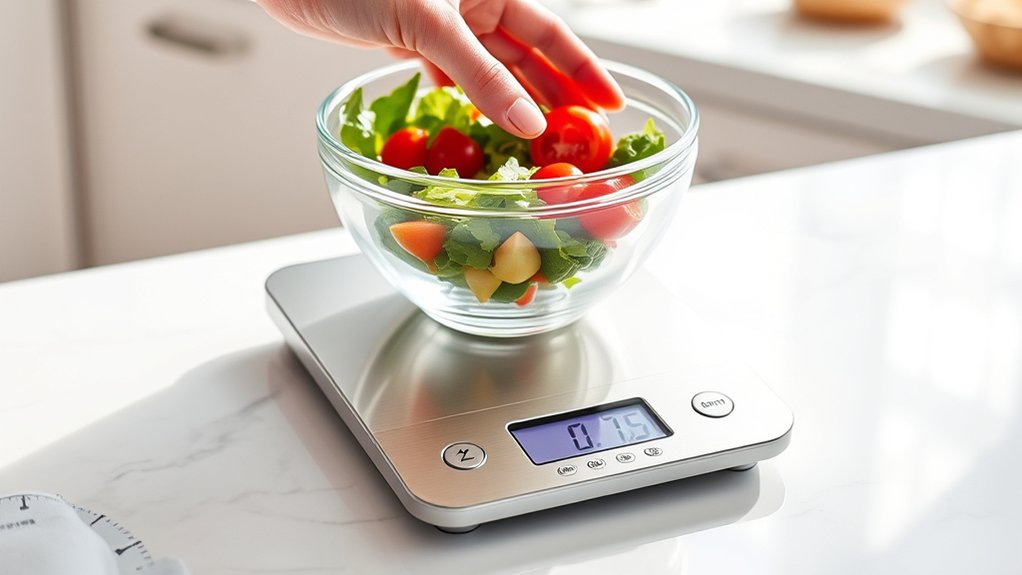
Before you begin weighing ingredients, you need to choose the right kitchen scale for your needs. First, consider food safety: select a scale with a smooth, non-porous surface that’s easy to clean and won’t harbor bacteria. Stainless steel or tempered glass platforms are excellent choices.
Next, think about ergonomic design. Pick a scale that feels comfortable to use and fits well in your kitchen space. A scale with a clear digital display and intuitive buttons lets you work efficiently without strain.
Also, check for features like tare functions to subtract container weight and units that switch easily between grams, ounces, and pounds. Don’t overlook the scale’s capacity and precision; make sure it matches the types of recipes you prepare most.
Set Up and Calibrate Your Kitchen Scale
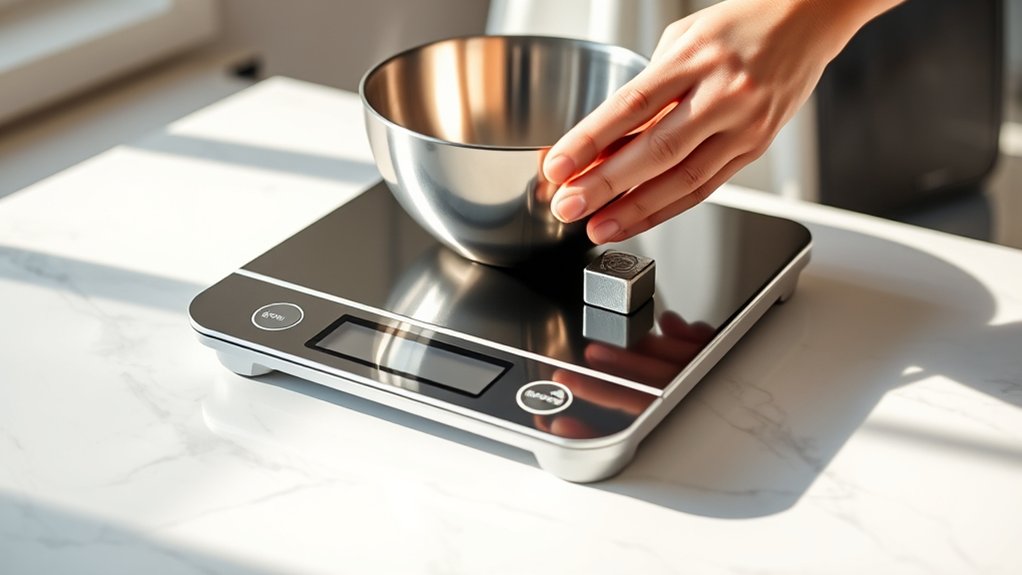
Once you’ve unboxed your kitchen scale, place it on a flat, stable surface. Turn it on, then zero it before each use to ensure accurate measurements. If your model needs calibration, follow the instructions in the manual so you get precise results every time.
Unboxing and Placement Tips
Although unboxing your kitchen scale might seem straightforward, handling it carefully guarantees accuracy and longevity. When you open the box, remove all protective materials gently, avoiding any pressure on the weighing platform.
Check for any damage or missing parts before proceeding. Place your scale on a flat, stable surface free from vibrations or drafts, as uneven placement can affect precision when measuring spices or preparing ingredients.
Avoid areas near sinks or stoves to prevent moisture and heat damage. Keep the scale away from clutter to make certain you have enough space to work comfortably.
Powering On Correctly
How do you guarantee your kitchen scale is ready for accurate measurements? First, locate the power button placement—usually on the front or side for easy access.
Press it once to turn your scale on. If it doesn’t power up, check the battery compartment. Battery replacement might be necessary if the scale shows no signs of life or erratic readings.
Here’s a quick guide to powering on your kitchen scale:
| Step | Action |
|---|---|
| 1. Locate Power Button | Find it on the front or side |
| 2. Press Power Button | Press once to turn it on |
| 3. Battery Check | Replace the battery if the scale won’t start |
Following these steps ensures your scale is ready to provide precise weights every time you use it.
Zeroing and Calibration Steps
After powering on your kitchen scale, the next step is to make sure it measures accurately by zeroing and calibrating it.
First, place your empty container or bowl on the scale, then press the tare or zero button to reset the display to zero. This step guarantees zeroing accuracy, so your measurements only reflect the ingredient’s weight, not the container’s.
For calibration, refer to your scale’s manual to find the recommended calibration frequency, usually once a month or after moving the scale.
Use a known weight, like a calibration weight or a packaged item with a precise weight, to adjust the scale if needed.
Regular zeroing and calibration keep your kitchen scale reliable and your recipes consistent every time.
Get to Know Your Scale’s Measurement Units
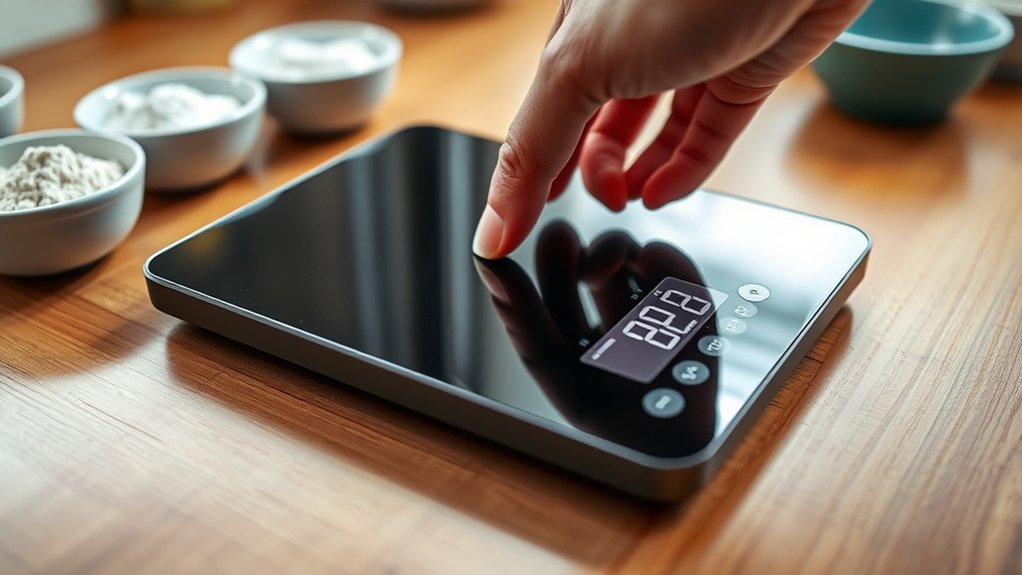
Since kitchen scales come with various measurement units, you’ll want to familiarize yourself with them before weighing your ingredients.
Most scales offer units like grams, ounces, pounds, and milliliters, allowing you to switch depending on your recipe or preference.
Understanding these measurement units helps you avoid mistakes and saves time by eliminating manual conversions.
Some scales even display conversion factors, so you can easily toggle between units.
Here’s a quick reference table to help you understand common units and their conversions:
| Unit | Abbreviation | Conversion Factor |
|---|---|---|
| Gram | g | Base unit |
| Ounce | oz | 1 oz = 28.35 g |
| Pound | lb | 1 lb = 16 oz = 453.59 g |
| Milliliter | ml | 1 ml = 1 g (water approx.) |
| Cup (US) | cup | 1 cup = 240 ml |
Knowing these will make your measuring precise and efficient every time.
Zero (Tare) Your Kitchen Scale Easily
Knowing your scale’s measurement units sets the stage for accurate weighing, but to get precise readings when adding multiple ingredients, you’ll want to zero or tare your scale. This feature lets you subtract the weight of containers or previously added ingredients, allowing you to measure each component individually without hassle.
Simply place your empty bowl or container on the scale, then press the tare button to reset the display to zero. As you add ingredients, the scale will show only their weight, making it easier to follow recipes exactly.
Mastering this step is essential for effective cooking techniques, especially when measuring small amounts or making ingredient substitutions. Taring helps you adjust quantities accurately if you swap one ingredient for another, ensuring your dish maintains the right balance.
Weigh Dry Ingredients Accurately
When you weigh dry ingredients, using your kitchen scale guarantees you get exact amounts every time, which can make a big difference in the outcome of your recipe. Precise measurements ensure consistent texture and flavor, making your dishes turn out just right. Start by placing your empty bowl on the scale and zeroing it out (tare function). Then, add your dry ingredients slowly until you reach the desired weight.
Accurate weighing helps when experimenting with flavor pairing, as you can precisely balance spices, herbs, or other components to improve your dish. It also makes ingredient substitutions easier. You can match quantities by weight rather than volume for better results, especially with items like flour or nuts that vary in density. Using your kitchen scale this way saves you from guesswork and guarantees your recipes are reliable and delicious every time.
Measure Liquids With Your Kitchen Scale
Although measuring liquids by volume is common, using your kitchen scale can be more accurate and less messy. To measure liquids, place a container on the scale and zero it out (tare).
Then, slowly pour your liquid until you reach the desired weight. This method eliminates the guesswork of reading meniscus lines on measuring cups.
When measuring spices that come in liquid form, like vanilla extract, using the scale guarantees precise amounts, enhancing your recipe’s balance.
You can also assess oil viscosity by weighing different oils; heavier oils have higher viscosity, which affects cooking results. Your kitchen scale helps you compare and control oil usage more effectively.
Weigh Multiple Ingredients in One Bowl
Save time by weighing multiple ingredients in the same bowl with your kitchen scale. After adding each ingredient, tare the scale to reset it to zero. That way, you can add everything efficiently without creating extra dishes to wash.
Taring The Scale
Since cooking often involves combining several ingredients, taring your kitchen scale lets you measure each one accurately without dirtying multiple bowls. Place your empty bowl on the scale, then press the tare button to reset the display to zero.
This way, the scale subtracts the bowl’s weight, letting you add and weigh ingredients one by one. Taring not only saves time but also supports cooking safety by reducing cross-contamination risks.
You won’t need to transfer ingredients between containers. Plus, it fits neatly into an efficient kitchen design, minimizing clutter and cleanup.
Layering Ingredients Efficiently
Taring your scale before adding each ingredient sets the stage for layering multiple items efficiently in one bowl. This method simplifies ingredient layering, letting you measure precisely without dirtying extra containers.
You’ll appreciate how it streamlines your workflow and reduces cleanup. Using smart packaging techniques, you can also layer ingredients that won’t mix until cooking, preserving texture and flavor.
| Step | Action | Tip |
|---|---|---|
| 1 | Place bowl on scale | Tare to zero |
| 2 | Add first ingredient | Note weight |
| 3 | Tare scale again | Reset to zero |
| 4 | Add next ingredient | Repeat taring |
| 5 | Continue layering | Use packaging techniques |
With this approach, you’ll measure accurately and save time in the kitchen.
Clean and Maintain Your Kitchen Scale
Although your kitchen scale is designed for regular use, keeping it clean and well-maintained guarantees accurate measurements and extends its lifespan. Follow simple cleaning tips and maintenance routines to assure your scale stays in top shape.
Here’s what you should do regularly:
- Wipe the surface with a damp cloth and mild detergent to remove spills and crumbs.
- Avoid submerging your scale in water or using harsh chemicals that can damage the electronics.
- Check and replace batteries as needed to maintain consistent power and performance.
How to Fix Common Kitchen Scale Problems
If your kitchen scale isn’t giving accurate readings, it may need to be recalibrated. A few common measurement errors could also be affecting your results. Let’s go through some simple steps to get your scale working properly again.
Calibrating Your Kitchen Scale
When your kitchen scale starts showing inconsistent or incorrect measurements, recalibrating it can quickly solve the problem. Keeping up with the right calibration frequency ensures your scale accuracy stays reliable for all your recipes.
To calibrate your kitchen scale, follow these steps:
- Place the scale on a flat, stable surface and turn it on.
- Use a known calibration weight or an item with a precise weight, like a packaged food item.
- Follow your scale’s manual instructions to enter calibration mode and adjust the reading to match the known weight.
Regular calibration keeps your scale precise, so your ingredients are always measured correctly. Don’t skip this step, especially if you use your scale often or move it around frequently.
Troubleshooting Measurement Errors
Because kitchen scales rely on sensitive sensors, occasional measurement errors can happen even with proper calibration. If you notice measurement discrepancies, first check that your scale is on a flat, stable surface, as uneven placement can affect accuracy.
Recalibrate your scale regularly to fix calibration issues, following the manufacturer’s instructions carefully. Also, make sure nothing else touches the scale while weighing, and avoid overloading it beyond its maximum capacity.
If readings still seem off, try replacing the batteries, as low power can cause inconsistent results. Finally, clean the scale’s surface to remove dust or residue that might interfere with sensors.
Taking these steps should help you troubleshoot common kitchen scale problems and maintain precise measurements for your cooking.
Kitchen Scale Tips to Improve Your Recipes
Although many cooks rely on measuring cups, using a kitchen scale can dramatically improve the accuracy of your recipes. Precision is key in cooking techniques, and a scale lets you measure ingredients by weight, ensuring consistent results every time.
Using a kitchen scale enhances recipe accuracy by measuring ingredients precisely for consistent cooking results.
To get the most from your kitchen scale, keep these tips in mind:
- Zero out your scale (tare) before adding each ingredient to maintain accuracy and avoid multiple containers.
- Organize your kitchen by keeping the scale in an easy-to-reach spot, so you won’t skip this essential step.
- Use grams for dry ingredients and milliliters for liquids when possible, as volume measurements can vary.
Frequently Asked Questions
Can a Kitchen Scale Help With Portion Control for Dieting?
Yes, a kitchen scale can definitely help with portion control for dieting. When you’re meal prepping, it lets you measure exact serving sizes, so you don’t accidentally overeat.
This precision makes calorie counting much easier and more accurate, helping you stay on track with your diet goals. By using a scale, you’ll get consistent portions every time, which is key to managing your intake and reaching your health targets efficiently.
Are Kitchen Scales Safe to Use With Hot Ingredients?
You should avoid placing hot ingredients directly on your kitchen scale because they can damage it and compromise cooking safety. Instead, let the food cool slightly or use a heatproof container on the scale.
This approach protects your scale and helps ensure accurate measurements. Always prioritize safety and extend your scale’s lifespan by preventing exposure to extreme heat during weighing.
Can I Use a Kitchen Scale for Non-Food Items?
Yes, you can definitely use your kitchen scale for non food measurements. It’s perfect for crafting projects where precise amounts of materials like clay, beads, or resin are needed.
Just make sure the scale is clean before and after use to avoid contamination. Using a kitchen scale this way helps you get accurate measurements every time, making your crafting projects easier and more professional.
How Do Kitchen Scales Differ From Bathroom Scales?
Kitchen scales differ from bathroom scales mainly in precision and purpose. You’ll find kitchen scales offer finer measurement conversions, perfect for grams and ounces, while bathroom scales measure larger weights, usually in pounds or kilograms.
Calibration techniques also vary; kitchen scales often require frequent zeroing for accuracy, while bathroom scales need occasional calibration to ensure consistent results. So, when you use either, keep their specific functions and calibration needs in mind.
What Are the Best Brands of Kitchen Scales Available?
You’ll find the best brands for kitchen scales include OXO, Etekcity, and Escali, all known for food prep precision and baking accuracy. OXO offers user-friendly designs, while Etekcity provides affordable, reliable options.
Escali scales are praised for their durability and accuracy, perfect for perfecting recipes. Choosing any of these brands guarantees you’ll get consistent measurements, helping you nail your baking and cooking every time.
Conclusion
Using a kitchen scale can boost your cooking accuracy by up to 90%, helping your recipes turn out better every time. Choose the right scale, calibrate it, and master the tare function to weigh ingredients like a pro.
Remember to clean and maintain your scale to keep it reliable. With these simple steps, you’ll save time, reduce waste, and enjoy perfectly measured meals that impress every time.
Give it a try and see how using a kitchen scale can make a difference!