How Deep Are Upper Kitchen Cabinets?
Struggling to choose the right cabinet depth without making your kitchen feel cramped? You’re not alone—many homeowners want more storage but still need easy access and an open, comfortable space.
Upper kitchen cabinets are usually 12 inches deep, giving you a good mix of storage and easy access. You can go deeper, around 15 inches, if you need more space, but that might make your kitchen feel crowded.
Shallower cabinets open things up but hold less. The right depth depends on your storage needs, appliance setups, and style preferences.
If you want to find the perfect balance, there’s plenty more to think about regarding design and functionality.
Key Takeaways
- Standard upper kitchen cabinets typically have a depth of 12 inches for balanced storage and accessibility.
- Custom upper cabinets can reach 15 inches deep for extra storage, but they may make the space feel crowded.
- Shallower cabinets improve accessibility and keep the kitchen feeling open, but they limit storage capacity.
- Cabinet depth affects appliance fit, requiring adjustments around microwaves, range hoods, and door clearances.
- Accurate measurements and consistent depths ensure proper installation and a cohesive kitchen design.
Standard Depths of Upper Kitchen Cabinets
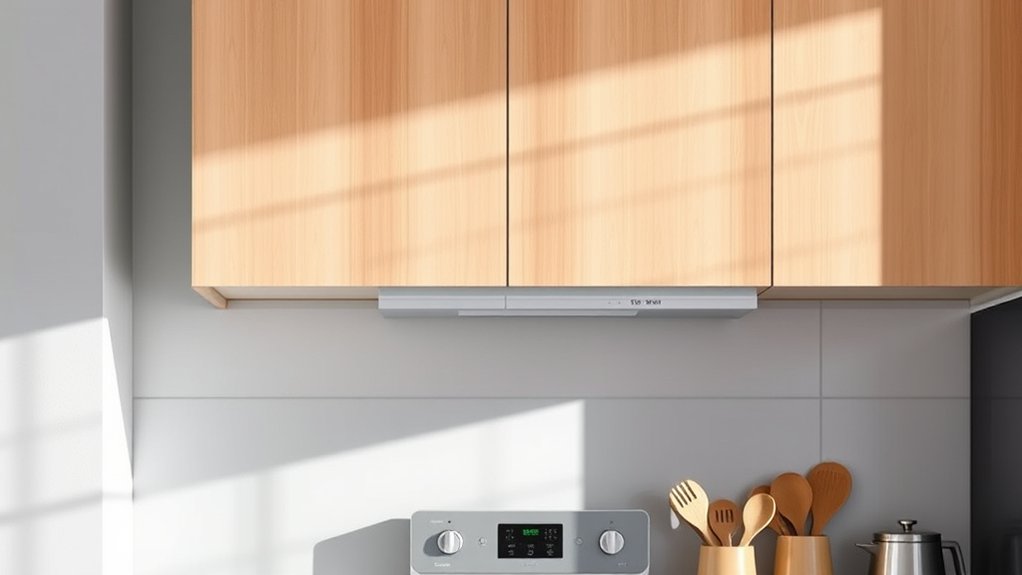
Although kitchen cabinet sizes can vary, upper cabinets typically come in standard depths to help you plan your space efficiently. The most common depth for upper kitchen cabinets is 12 inches, which balances storage capacity with accessibility.
This size ensures you have enough room for plates, glasses, and pantry staples without protruding too far into your kitchen workspace. When you choose this standard depth, you can also consider creative storage solutions like pull-out shelves or spice racks that fit perfectly.
If you want a slightly deeper option, 15 inches is another standard depth, offering more storage while still maintaining kitchen aesthetics. This depth works well if you have larger items or want to maximize space above your countertops.
Why Cabinet Depth Matters for Storage and Accessibility
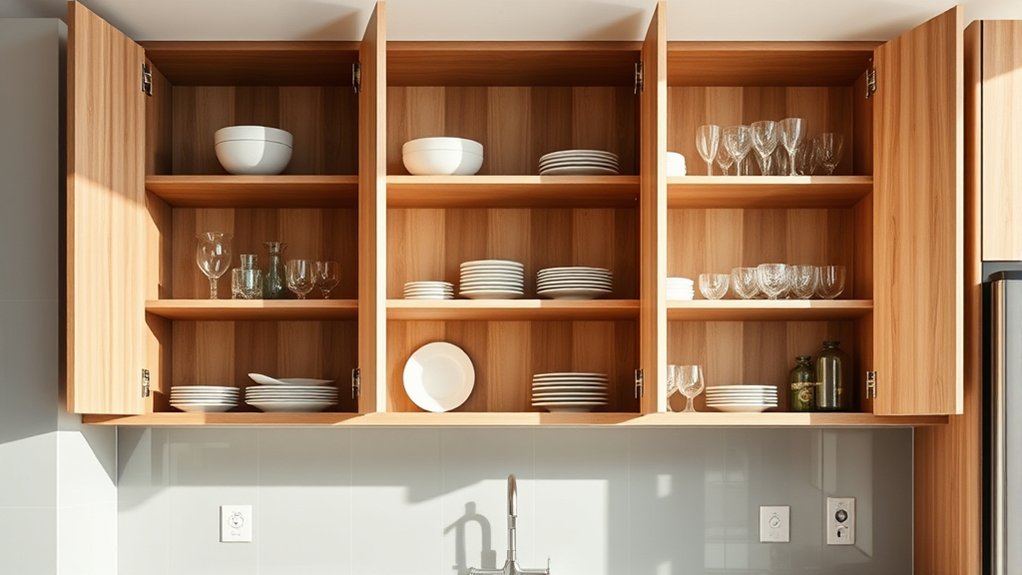
Think carefully about cabinet depth to maximize storage without making items difficult to reach. The right balance keeps everything accessible while maintaining a sleek kitchen design. Let’s look at how depth affects both storage and ease of use.
Maximizing Storage Space
When you choose the right depth for your upper kitchen cabinets, you directly impact how much you can store and how easy it is to reach items. Deeper cabinets offer more room, letting you keep bulkier kitchenware without cluttering your counters.
However, if they’re too deep, items in the back can become hard to see and grab. That’s where good kitchen lighting plays a vital role. Proper illumination inside or under cabinets helps you find what you need quickly.
Also, selecting the right cabinet hardware, like pull-out shelves or adjustable racks, can maximize storage efficiency without compromising accessibility. By balancing depth with thoughtful lighting and hardware choices, you create a kitchen that’s both functional and organized, making cooking and cleanup smoother every day.
Enhancing Accessibility Options
Why does cabinet depth matter so much for accessibility? When upper cabinets are too deep, reaching items at the back becomes a struggle, reducing their usability. You want cabinets designed with ergonomic ergonomics in mind, so everything is within easy reach without straining.
Shallower cabinets improve accessibility, letting you grab what you need quickly and safely.
At the same time, cabinet depth affects the aesthetics appeal of your kitchen. Deep cabinets can overwhelm a smaller space and make it look cluttered, while the right depth balances practicality with visual harmony.
Balancing Depth and Design
How do you strike the perfect balance between cabinet depth, storage capacity, and accessibility? Understanding historical trends helps here—older kitchens often featured shallower upper cabinets, limiting storage but improving reach. Today, deeper cabinets maximize storage but can make accessing items harder.
You’ll want to consider how deep your cabinets should be to store your essentials without sacrificing ease of use. Furthermore, color coordination plays a subtle but vital role; lighter cabinet colors can make deeper units feel less bulky, maintaining an open, inviting kitchen vibe.
How Cabinet Depth Affects Storage Capacity
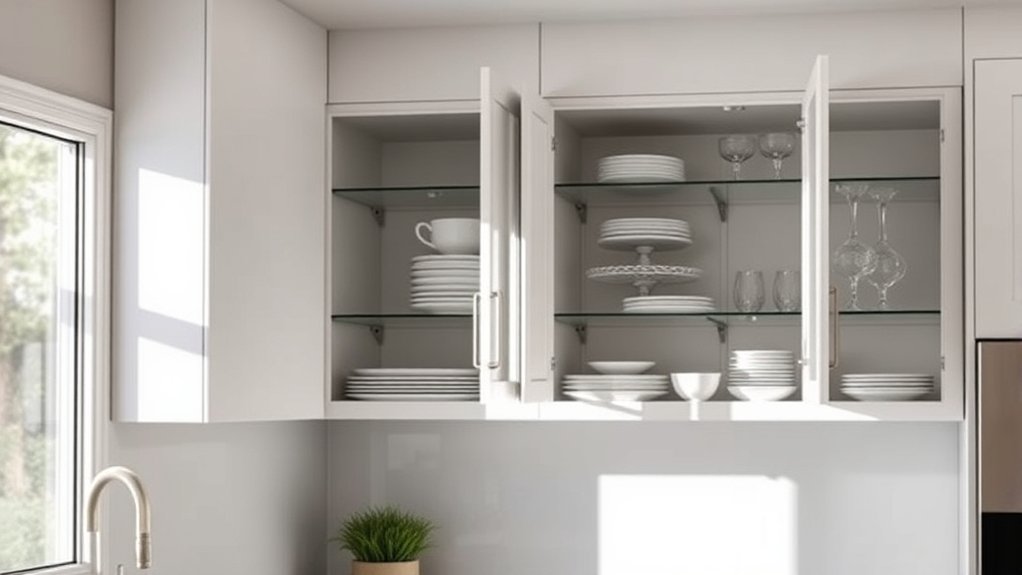
Although upper kitchen cabinets may seem similar at first glance, their depth plays a crucial role in determining how much storage space you actually get. When you choose deeper cabinets, you gain more room to store bulky items like pots, pans, and small appliances.
Shallower cabinets, on the other hand, limit storage but can make your kitchen feel more open. Keep in mind that adding decorative accents, such as crown molding or glass doors, may slightly reduce interior space but improve the cabinet’s overall appeal.
You also want to take into account cabinet durability when selecting depth. Deeper cabinets require sturdier construction to handle heavier loads without sagging or warping.
How to Measure Your Kitchen for Cabinet Depth
Choosing the right depth for your upper kitchen cabinets depends on accurate measurements of your space. Start by measuring the height from your countertop to the ceiling or soffit to ensure your cabinets fit well without crowding kitchen lighting fixtures.
Next, measure the distance from the wall to any appliances or backsplash edges, so your cabinet depth won’t interfere with your workspace or lighting placement.
When measuring, keep in mind where you plan to install your cabinets, as proper cabinet installation requires clearance for doors and handles. Use a tape measure to check the wall’s flatness too, because uneven surfaces can affect how deep your cabinets sit.
Taking these precise measurements helps you choose a cabinet depth that balances storage with functionality, lighting, and style. Accurate measurements make cabinet installation smoother and ensure your kitchen lighting isn’t blocked or overshadowed by overly deep cabinets.
Common Upper Kitchen Cabinet Depth Options
What cabinet depth suits your kitchen best? Typically, upper kitchen cabinets come in depths of 12, 15, or 18 inches. The 12-inch depth is popular when you want a sleek look that doesn’t overwhelm your space, perfect if your kitchen decor leans toward minimalism.
Fifteen inches is the standard depth, offering enough storage without protruding too far from the wall, blending well with most cabinet finishes. If you need extra storage, the 18-inch depth gives you room for larger items but can affect the kitchen’s flow, so consider your layout carefully.
Keep in mind how each depth option complements your kitchen decor and the overall balance of your space. Cabinet finishes also play a role; deeper cabinets with glossy or reflective finishes can make your kitchen feel more expansive, while matte finishes on shallower cabinets offer subtle elegance.
Choose the depth that aligns with your storage needs and style preferences.
Choosing the Right Depth for Your Kitchen Layout
When choosing the right depth for your upper cabinets, start with standard sizes to keep things simple. Think about how much storage you need and how much room you have to move around. The right depth can help you make the most of your kitchen layout without making the space feel crowded.
Standard Cabinet Depths
How deep should your upper kitchen cabinets be to maximize both storage and accessibility? Standard depths typically range from 12 to 15 inches, balancing space without overwhelming your room.
Choosing the right depth complements your kitchen’s color schemes and lighting fixtures, ensuring a cohesive, functional design.
Here’s a quick look at standard cabinet depths:
| Cabinet Type | Depth (inches) |
|---|---|
| Shallow Upper | 12 |
| Standard Upper | 13 |
| Deep Upper | 15 |
| Wall Pantry | 12-15 |
| Specialty Cabinets | Varies |
Selecting a depth depends on your kitchen layout and how you want your storage to complement your decor and lighting.
Space Optimization Tips
Selecting the right cabinet depth plays a big role in making your kitchen both functional and comfortable. When choosing the depth, consider your kitchen layout and how much storage you need without compromising walkway space.
Shallower cabinets can open up the room, while deeper ones provide extra storage but may feel bulky. Use color coordination to improve the flow. Lighter colors on deeper cabinets can prevent the space from feeling cramped.
Don’t forget lighting integration. Under-cabinet lights work best with standard depths, ensuring your countertops are well-lit for tasks. If you opt for deeper cabinets, adjust lighting placement to avoid shadows.
How Upper Kitchen Cabinet Depth Impacts Accessibility
Because upper kitchen cabinet depth varies, it directly affects how easily you can reach and organize your items. When cabinets are too deep, you might struggle to find what’s at the back, reducing accessibility and usability.
Upper cabinet depth impacts how easily you can reach and organize items, with deeper cabinets reducing accessibility.
Conversely, shallower cabinets make it easier to grab everyday essentials but might limit storage. Balancing cabinet aesthetics with practical interior lighting can improve visibility, helping you locate items without extra effort.
Consider these points to improve accessibility:
- Choose a depth that fits your reach comfortably without overcrowding.
- Incorporate interior lighting to brighten cabinet interiors, reducing the need to shuffle through items.
- Organize by frequency of use, placing daily items in easy-to-reach spots.
Designing Upper Cabinets for Visual Balance
When you design upper cabinets with visual balance in mind, you create a kitchen that feels harmonious and inviting. Start by considering color coordination between your cabinets, walls, and countertops to guarantee everything flows smoothly.
Choose cabinet finishes that complement your overall kitchen palette without overwhelming the space. Next, focus on lighting integration—incorporate under-cabinet lighting or interior cabinet lights to highlight your cabinetry’s design and improve functionality.
Proper lighting adds depth and dimension, making the upper cabinets appear balanced with the rest of the kitchen. Also, pay attention to the size and spacing of your cabinets; consistent dimensions help maintain a cohesive look.
Adjusting Cabinet Depth for Appliances and Fixtures
How deep should your upper kitchen cabinets be to fit around appliances and fixtures? Consider both functionality and style to maintain cabinet aesthetics while accommodating essential kitchen elements. Appliances like microwaves or range hoods may require shallower or specialized cabinet depths to fit properly without crowding the space.
Keep these points in mind when adjusting cabinet depth:
- Ensure enough clearance for appliance doors or handles to open fully.
- Choose durable materials that can withstand heat or moisture near fixtures.
- Maintain consistent cabinet aesthetics by aligning depths with adjacent cabinets.
Practical Tips for Customizing Cabinet Depth
Start by getting familiar with standard cabinet depths so you know your baseline. From there, consider how much space you have and which appliances or fixtures you need to accommodate. You’ll also want to think about your material and design choices, since they can affect both functionality and style.
Standard Cabinet Depths
Although standard upper kitchen cabinets typically measure 12 inches deep, you can customize this depth to better fit your space and storage needs. Sticking to standard depths often simplifies installation and ensures compatibility with most appliances and countertops. However, you have options to tweak the depth to improve functionality and style.
Consider these points when deciding:
- Match cabinet depth with your kitchen’s color schemes for a cohesive look.
- Incorporate lighting options inside or beneath cabinets to brighten your workspace.
- Choose deeper cabinets if you need extra storage without overcrowding your kitchen.
Adjusting For Space
When optimizing your kitchen layout, adjusting upper cabinet depth can make a big difference in both space and function. You can customize cabinet depth to fit your kitchen’s unique dimensions, ensuring you don’t overcrowd countertops or lose valuable storage.
Think about how deeper cabinets offer more storage but may visually crowd the space, while shallower ones keep things open but limit capacity. To maintain a cohesive look, focus on color coordination between your cabinets and surrounding elements.
This helps balance depth changes without disrupting the overall design flow. Also, choose durable materials since adjusting depth might expose cabinet edges or corners more, requiring sturdy finishes to withstand wear.
Material And Design Choices
Since cabinet depth directly affects both function and style, selecting the right materials and design elements becomes crucial. You want cabinets that not only look great but last long and fit your space perfectly.
When customizing depth, keep these practical tips in mind:
- Choose durable materials, like hardwood or plywood, to ensure your cabinets withstand daily use.
- Consider finishes and colors that enhance cabinet aesthetics and complement your kitchen’s overall design.
- Opt for design features such as recessed panels or glass inserts to add style without increasing depth unnecessarily.
Frequently Asked Questions
What Materials Are Best for Durable Upper Kitchen Cabinets?
You’ll want to choose materials like solid wood, plywood, or medium-density fiberboard (MDF) with a durable veneer for your upper kitchen cabinets. These options offer excellent material durability and make cabinet maintenance easier over time.
Solid wood is sturdy but may need occasional upkeep, while plywood resists warping better. MDF with a high-quality finish can also hold up well.
Picking the right material means your cabinets will stay strong and look great for years.
How Do Cabinet Door Styles Affect Kitchen Aesthetics?
Cabinet door designs directly impact your kitchen’s vibe by setting the tone and complementing your kitchen style coordination. Choosing sleek, flat panels gives you a modern, minimalist look, while raised or shaker styles add classic charm or rustic warmth.
The materials, colors, and finishes you pick for your cabinet doors help tie everything together, making your kitchen feel cohesive and inviting. Your choice really shapes the room’s overall personality.
Are Soft-Close Hinges Available for Upper Kitchen Cabinets?
Yes, you can definitely get soft-close hinges for upper kitchen cabinets. They help reduce noise and prevent cabinet doors from slamming shut. You’ll appreciate how much easier hinge maintenance becomes since these hinges tend to last longer and require less adjustment.
If you’re considering cabinet replacement, opting for soft-close hinges can add value and improve your kitchen’s functionality. They’re a smart upgrade that makes everyday use smoother and quieter.
What Is the Average Cost of Installing Upper Kitchen Cabinets?
You can expect to spend between $200 and $700 per cabinet for installing upper kitchen cabinets, depending on size and materials. If you want to freshen them up, cabinet paint adds a cost-effective upgrade, while cabinet accessories like soft-close hinges or pull-outs increase your budget slightly.
Labor fees vary, so get multiple quotes. Remember, investing in quality paint and accessories can boost both function and style without breaking the bank.
Can Upper Cabinets Be Installed Without Professional Help?
You know what they say, “Measure twice, cut once.” Yes, you can install upper cabinets without professional help if you’re careful and patient.
Just make sure to properly secure the cabinets to studs and check for level. Don’t forget to plan for cabinet lighting and consider your paint finishing to match your kitchen style.
Taking your time guarantees a smooth installation and a polished, professional look.
Conclusion
Think of your upper kitchen cabinets like the shelves of a well-packed bookshelf. You wouldn’t cram all your favorite novels onto a shallow shelf, and the same goes for your kitchen essentials.
With standard upper kitchen cabinet depths usually around 12 inches, choosing the right size helps keep your kitchen functional, accessible, and inviting—like a perfectly organized story enjoyed every day.