3 Simple Tips to Organize Your Kitchen Cabinets
Cluttered kitchen cabinets can make cooking feel frustrating, especially when you can’t find what you need quickly. You’re not alone—many people struggle to keep their storage space tidy and efficient. These simple tips to organize your kitchen cabinets can help you create a setup that works better every day.
Start by emptying your cabinets completely to sort items into clear categories like baking supplies or snacks, which makes organizing simpler.
Next, use smart storage solutions such as pull-out shelves and clear, labeled containers to maximize space and keep everything visible.
Finally, develop daily habits like returning items to their spots and checking expiration dates regularly for lasting order.
Keep going, and you’ll uncover even easier ways to maintain a tidy, efficient kitchen.
Key Takeaways
- Empty cabinets completely to remove expired or duplicate items and start fresh.
- Group kitchen items by category like spices, snacks, or baking supplies for easy access.
- Use clear, labeled containers and stackable storage to maximize space and visibility.
- Install pull-out shelves to easily reach items stored in the back of cabinets.
- Maintain daily habits by returning items to their spots and regularly checking expiration dates.
Empty Cabinets and Sort Items by Category
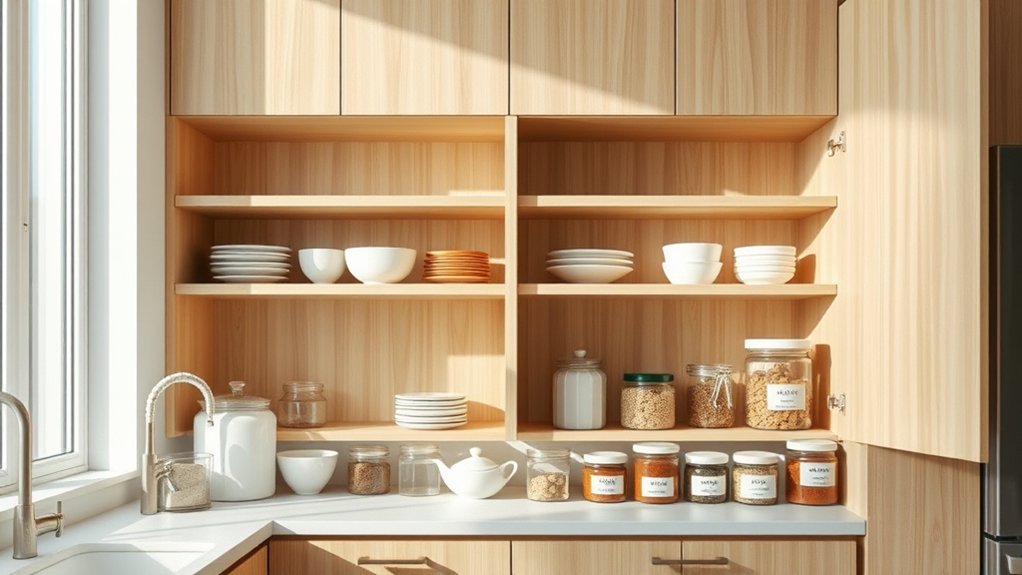
Before you can organize your kitchen cabinets effectively, you need to empty them completely. This step gives you a fresh start and helps you see exactly what you have.
Start by emptying your kitchen cabinets to gain a clear view of what you have.
As you remove everything, take time for cabinet decluttering. Discard expired items, broken containers, or duplicates you no longer need.
Once your cabinets are empty, sort your items by category: baking supplies, canned goods, spices, snacks, and so on. Grouping similar items together makes it easier when you start putting things back.
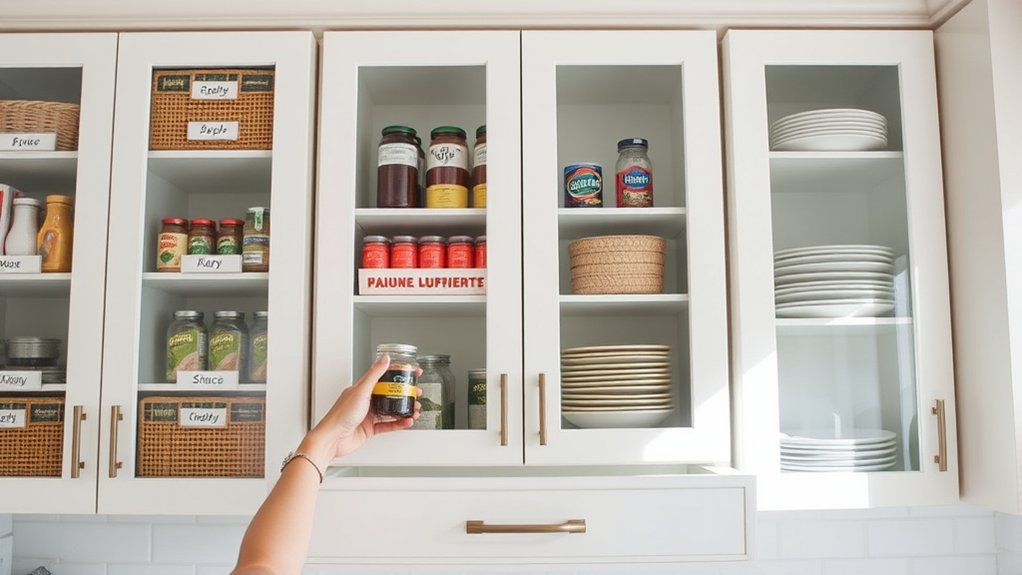
Using pantry labels can be a game-changer here. They help you and your family quickly identify where things belong, keeping your cabinets neat over time.
Labeling also simplifies restocking since you’ll know exactly what’s running low. By emptying, decluttering, and categorizing, you set a strong foundation for a more organized and functional kitchen that saves you time and frustration daily.
Use Smart Storage Solutions for Kitchen Cabinets
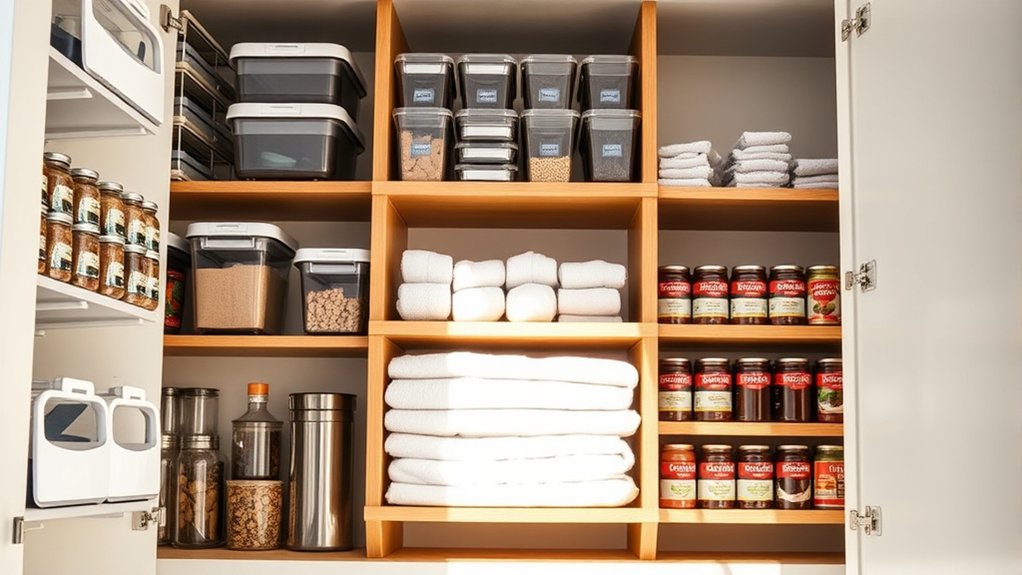
Once you’ve emptied and sorted your kitchen cabinets, it’s time to maximize the space with smart storage solutions. Start by installing innovative pull outs that slide smoothly, letting you access items in the back without digging through clutter.
These pull outs are perfect for pots, pans, or pantry goods, making every inch functional. Next, use clear container options to store dry ingredients and snacks.
Clear containers not only keep food fresh but also let you see what you have at a glance, saving you time and reducing waste. Choose stackable and uniform containers to keep things neat and easy to reach.
Don’t forget to label each container clearly for faster identification. By combining innovative pull outs with clear container options, you’ll transform your cabinets into organized, efficient storage spaces.
This approach helps you maintain order and makes cooking more enjoyable every day.
Simple Habits to Keep Cabinets Organized Daily
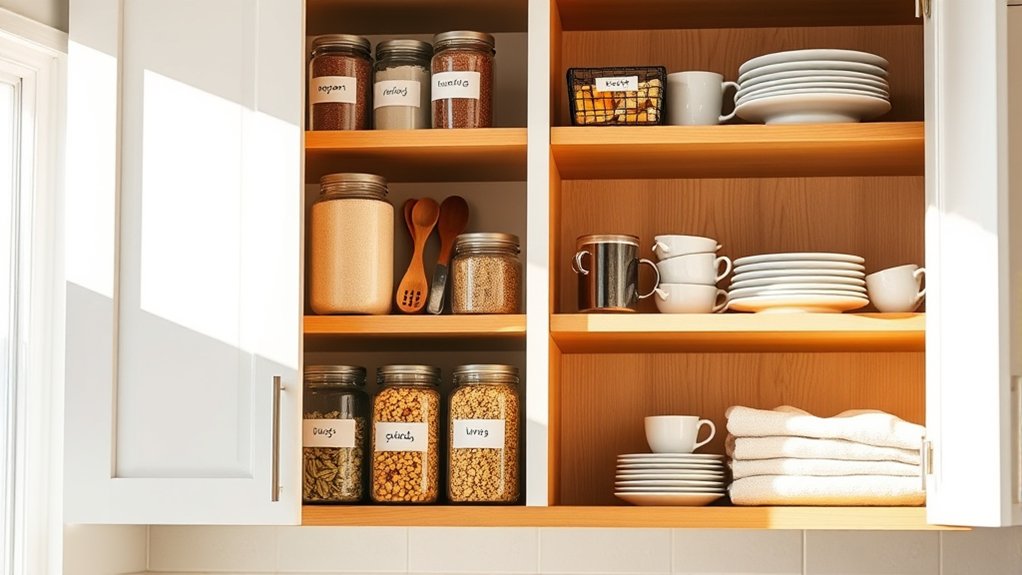
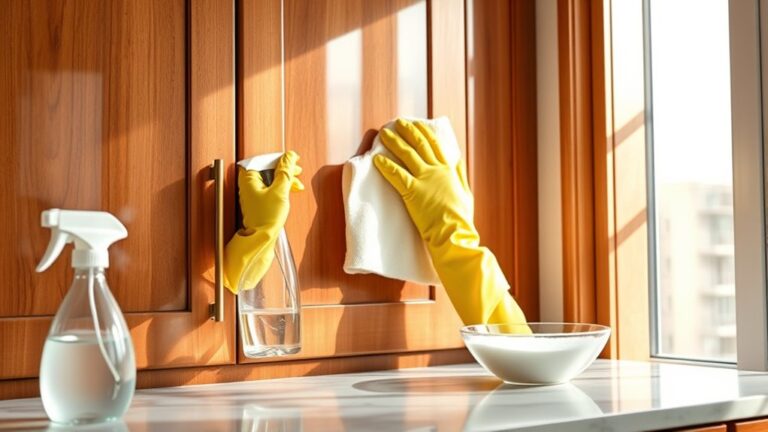
Although organizing your kitchen cabinets takes effort initially, maintaining that order daily is much easier when you develop simple habits. Incorporate quick cleaning routines after meal prep to prevent clutter buildup.
Always return items to their designated spots right after use. This habit saves you time and keeps your cabinets tidy effortlessly.
Regularly check expiration dates and remove unused items to create space for essentials.
| Habit | Benefit |
|---|---|
| Return items promptly | Keeps cabinets clutter-free |
| Quick cleaning after meal prep | Prevents mess accumulation |
| Regularly check expiry dates | Ensures freshness and space |
| Store similar items together | Simplifies finding what you need |
| Use clear containers | Easy to see contents |
Frequently Asked Questions
How Often Should I Clean the Inside of Kitchen Cabinets?
You should aim for a cleaning frequency of every three to six months to keep your kitchen cabinets in good shape. Regular cabinet maintenance helps prevent buildup of dust, grease, and crumbs, making your space more hygienic and organized.
If you cook often or notice spills, clean more frequently. Wiping down shelves and checking for expired items during these cleanings will keep your cabinets fresh and functional without much hassle.
What Materials Are Best for Cabinet Liners?
You don’t want your cabinets turning into a sticky, crumb-filled disaster zone! For the best materials, choose cabinet lining options like cushioned vinyl, shelf liner paper, or even bamboo mats.
These protect surfaces from spills and scratches while making cleanup a breeze. Vinyl is waterproof, shelf liner paper is easy to cut, and bamboo adds a natural vibe.
Pick what fits your style and needs, but don’t skip this simple protective step!
Can Organizing Cabinets Improve Kitchen Safety?
Yes, organizing cabinets can improve kitchen safety by reducing safety hazards like spills, broken glass, or heavy items falling. When you keep everything tidy, you elevate cabinet accessibility, making it easier to reach what you need without stretching or knocking things over.
How Do I Handle Expired Food in Cabinets?
Handling expired food in cabinets is like clearing out dead leaves from a garden—you want to remove anything past its prime promptly. Start by checking cabinet expiration dates regularly and toss expired items immediately for proper expired food disposal.
This keeps your kitchen safe and clutter-free. Use clear labels to spot expiration dates easily, and consider a “first in, first out” system to prevent future waste and keep your food fresh and organized.
Are There Eco-Friendly Options for Kitchen Organization Products?
Yes, you can definitely choose eco-friendly options for kitchen organization. Look for reusable storage solutions like glass jars or silicone bags that reduce waste.
Biodegradable containers made from bamboo or cornstarch are also great for organizing your cabinets sustainably. These choices help you keep your kitchen tidy while minimizing your environmental impact.
You’ll feel good knowing you’re using products that break down naturally and can be reused multiple times.
Conclusion
Empty your cabinets and sort your items by category. Use smart storage solutions to maximize space and keep everything accessible.
Develop simple habits to maintain order every day. By taking these steps, you’ll create a kitchen that’s tidy, functional, and inviting.
Imagine opening your cabinets to find everything in its place, grabbing what you need with ease, and enjoying cooking without clutter holding you back. Keep your kitchen cabinets organized, keep it simple, and keep it enjoyable.