10 Tips to Organize Your Kitchen Pantry Efficiently
A cluttered pantry can make meal prep feel harder than it needs to be. If you struggle to find ingredients, keep track of expiration dates, or make the most of limited space, you’re not alone. These practical tips for organizing your kitchen pantry efficiently can help you create a setup that feels simple and manageable.
To organize your kitchen pantry efficiently, start by clearing everything out and discarding expired items. Use clear, durable containers and consistent labels to see what you have at a glance.
Group similar foods together and arrange items by how often you use them, keeping daily essentials within easy reach. Rotate stock regularly to avoid waste, and create a quick-meal zone for convenience.
Maintain order with brief weekly checks, and you’ll find even more ways to optimize your pantry space ahead.
Key Takeaways
- Remove expired items and declutter regularly to maintain a clean and organized pantry.
- Use clear, labeled containers for easy visibility and to keep similar items grouped together.
- Arrange frequently used items at eye level and less-used items on higher or lower shelves.
- Maximize space with adjustable shelves, door racks, and vertical stacking techniques.
- Create functional zones like snack or quick-meal areas for streamlined access and efficient meal prep.
Clear Out and Categorize Everything

Where do you begin when organizing your kitchen pantry? Start by clearing out everything. Pull all the items off the shelves so you can see what you have. This step is essential for effective kitchen organization because it gives you a fresh perspective and helps you identify expired or duplicate products to discard. Once empty, clean the shelves thoroughly before putting anything back.
Next, categorize everything into groups like baking supplies, canned goods, snacks, and spices. Grouping similar items together makes it easier to find what you need and reduces clutter.
After categorizing, consider storage solutions that fit each group’s needs. For example, use baskets for snacks or stackable bins for canned goods. This approach maximizes your pantry space and keeps everything accessible.
Use Clear Pantry Containers to Keep Ingredients Visible

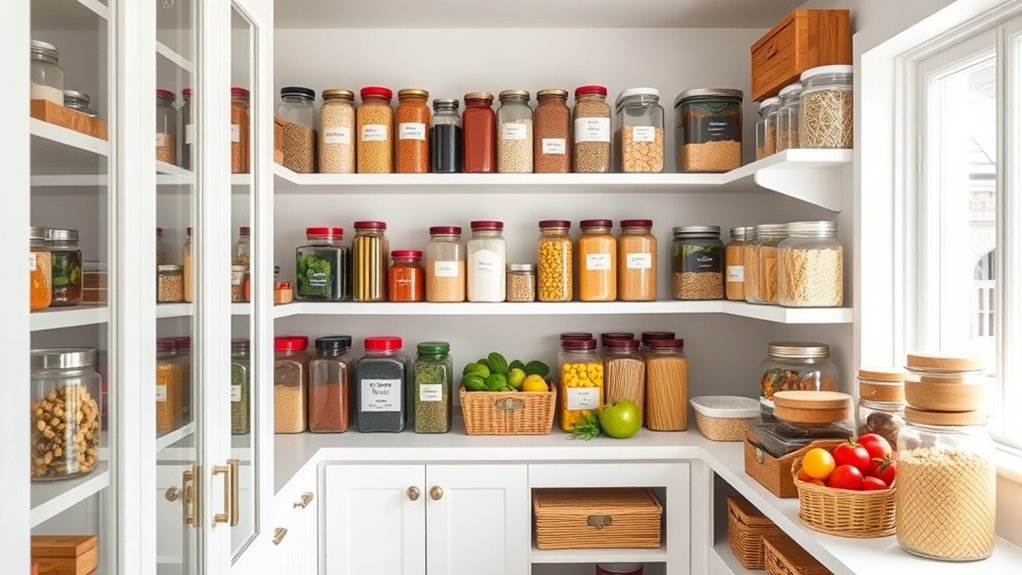
Using clear pantry containers lets you see exactly what you have, helping you avoid duplicates and reduce waste. Choose durable, food-safe containers that fit your space and style. With this simple switch, your pantry can stay more organized and efficient every day.
Benefits of Clear Containers
Why guess what’s inside your pantry containers when you can see everything at a glance? Clear containers boost ingredient visibility, helping you quickly spot what you need without opening each one. This saves time and reduces food waste since you won’t forget items tucked away in opaque boxes.
Plus, clear containers encourage better organization because you can easily monitor quantities and refill before running out. When you choose high-quality clear containers, you also benefit from excellent container durability. They withstand daily use and resist cracks or cloudiness, keeping your pantry looking neat and tidy longer.
Choosing the Right Materials
Although selecting pantry containers may seem straightforward, choosing the right materials can make a big difference in durability and visibility. Using clear pantry containers helps you spot ingredients quickly, reducing waste.
Opt for sustainable materials like BPA-free plastic or glass to protect both your food and the environment. Don’t hesitate to add decorative accents, such as wooden lids or colorful labels, to personalize your pantry while keeping it functional.
| Material | Benefit |
|---|---|
| Glass | Durable, eco-friendly |
| BPA-Free Plastic | Lightweight, clear |
| Wood (lids/accents) | Adds warmth, decorative |
| Metal (labels) | Stylish, long-lasting |
Choosing wisely means your pantry stays organized, attractive, and sustainable.
Label Pantry Shelves and Storage Bins
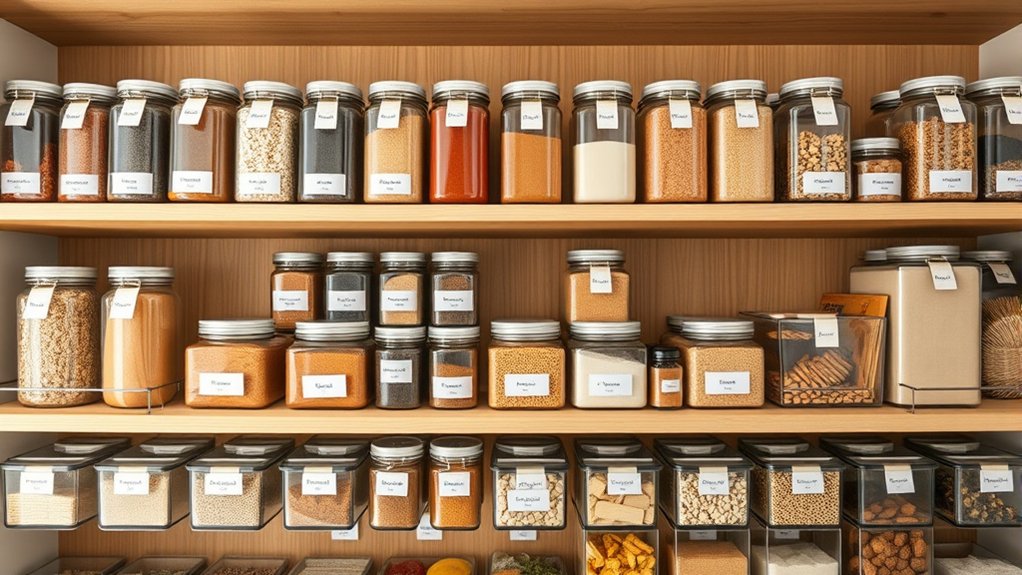
Choose clear, easy-to-read labels so you can find items quickly and easily. Place each label in the same spot on every shelf and bin for a neat, cohesive look. It’s a small step, but it can make staying organized—and grabbing ingredients—much easier.
Clear Label Design
When you label pantry shelves and storage bins with clear, easy-to-read designs, you’ll streamline your kitchen routine and reduce the time spent searching for ingredients.
Focus on label consistency by using the same font style, size, and color scheme across all labels. This uniformity helps your eyes quickly identify categories and improves visual clarity.
Choose contrasting colors between text and background to make labels stand out. Avoid overly decorative fonts that can be hard to read. Simple, bold lettering works best.
Also, consider using waterproof or laminated labels to keep them looking neat despite kitchen humidity.
With clear label design, you’ll enjoy a more organized pantry where everything is easy to find, making meal prep faster and less stressful.
Consistent Label Placement
Since clear labels help you find items quickly, placing them consistently on pantry shelves and storage bins guarantees you don’t waste time searching for what you need. Label consistency creates visual harmony, making your pantry look organized and easier to navigate.
Decide on a uniform spot—like the front center of each shelf or bin—and stick to it. This simple habit improves your pantry’s flow and reduces frustration.
| Placement Area | Label Location |
|---|---|
| Top Shelf | Center front |
| Middle Shelf | Center front |
| Bottom Shelf | Center front |
| Large Storage Bin | Front middle |
| Small Storage Bin | Front middle |
Arrange Items by How Often You Use Them
Although it might seem simple, arranging your pantry items based on how often you use them can save you a lot of time and frustration. Start by placing the ingredients you reach for daily or weekly at eye level or within easy reach.
This way, your meal prep becomes smoother, and you won’t waste time digging through shelves. Items you use less frequently, like specialty sauces or baking ingredients, can be stored on higher or lower shelves.
Store Similar Pantry Foods Together
Grouping similar pantry foods together makes it easier to find what you need quickly and keeps your space organized. Using clear bins, labels, and baskets can help you maintain order.
When you store items such as baking supplies, canned goods, and snacks in dedicated sections, you save time and reduce clutter.
Here’s a simple example of food grouping in your pantry:
| Baking Supplies | Canned Goods | Snacks |
|---|---|---|
| Flour | Beans | Chips |
| Sugar | Soups | Nuts |
| Baking powder | Vegetables | Granola bars |
| Chocolate chips | Tomato sauce | Cookies |
| Vanilla extract | Fruit preserves | Popcorn |
Maximize Pantry Space With Adjustable Shelves and Door Racks
You can make the most of your pantry with adjustable shelves that fit your storage needs. Add door racks for small items, so everything stays organized and easy to reach. And don’t forget to use vertical space—it’s a simple way to store more without creating clutter.
Benefits Of Adjustable Shelves
When you adjust your pantry shelves, you can customize the space to fit items of all shapes and sizes, making every inch count. Adjustable shelving benefits include maximizing storage capacity, enhancing accessibility, and allowing you to reorganize as your needs change.
Customizable storage means you won’t waste space on items that don’t fit standard shelf heights. You can easily store tall cereal boxes, short spice jars, or bulky appliances by simply moving shelves up or down.
| Benefit | Description | Impact |
|---|---|---|
| Space Optimization | Tailor shelf height and width | More items fit, less clutter |
| Versatility | Adjust for changing pantry needs | Long-term usability |
| Easy Access | Organize by size and frequency | Find items quickly |
Adjustable shelves help you keep your pantry tidy and efficient.
Installing Door Rack Solutions
Although adjustable shelves optimize your pantry’s interior, installing door rack solutions can release even more storage potential by using often-overlooked space on the pantry door.
Door rack installation is one of the most effective space saving solutions, giving you quick access to frequently used items without cluttering shelves.
When choosing racks, consider:
- Adjustable racks to fit different item sizes
- Sturdy materials for heavier jars
- Easy installation options, like adhesive or screw mounts
- Clear visibility to quickly find what you need
- Racks with multiple tiers for maximum storage
Maximizing Vertical Pantry Space
Maximizing vertical pantry space can transform your storage capacity and keep everything within easy reach. Start by installing adjustable shelves so you can customize the height based on your needs.
This flexibility lets you fit taller items without wasting overhead space. Use stacking techniques to layer cans, boxes, and jars, making the most of every inch.
Don’t forget to add door racks for extra storage of spices or smaller items, freeing up shelf space. Shelf labeling plays a crucial role here. Clearly marked labels help you quickly find what you need and maintain order.
Rotate Pantry Stock Regularly
Since pantry items can expire or go stale over time, you should rotate your stock regularly to keep everything fresh and reduce waste. Proper rotation helps you manage expiration dates and makes room for seasonal stock changes.
Regularly rotating pantry stock keeps items fresh, reduces waste, and helps manage expiration dates effectively.
Start by checking expiry dates and placing newer items behind older ones, so you use the oldest first.
Here’s how to rotate your pantry stock efficiently:
- Label items with purchase or expiration dates.
- Move older products to the front.
- Remove expired or stale items immediately.
- Adjust your stock based on seasonal availability.
- Keep a separate area for seasonal stock to swap in and out.
Create a Pantry-Based Shopping List
Keeping your pantry well-organized and rotated makes it easier to know exactly what you have on hand. When creating a pantry-based shopping list, start by checking your current supplies and noting what’s running low or expired.
This helps you avoid buying duplicates and guarantees you only get what you need. Tailor your list to support meal prep by including ingredients you frequently use, so you’re always ready to whip up quick, healthy meals.
If you or your family have dietary restrictions, highlight those specific items on your shopping list to avoid accidental purchases. For example, if gluten-free products are a must, make sure those staples stay stocked.
Use a digital app or a simple notebook to track your pantry inventory and update your list regularly. This system saves time, reduces food waste, and keeps your meal planning efficient and aligned with your dietary needs.
Designate a Snack and Quick-Meal Zone
When you designate a specific area for snacks and quick meals, you make it easier to grab what you need without rummaging through the entire pantry. This zone should be accessible and stocked with items that support both healthy snack ideas and quick meal prep tips.
Grouping these items together saves time and encourages better food choices.
Here’s what to include in your snack and quick-meal zone:
- Pre-portioned nuts, seeds, and dried fruit for easy healthy snacks
- Whole-grain crackers and rice cakes for quick bites
- Canned beans and ready-to-eat grains for fast meal bases
- Shelf-stable hummus or nut butter packets for added protein
- Quick-cook pasta or instant soups for minimal prep meals
Keep Your Pantry Tidy With Weekly Quick Checks
Although it might seem like a small task, doing a quick pantry check every week helps you stay on top of expired items, restock essentials, and maintain overall order. By setting aside just 10 minutes weekly, you can streamline meal prep and avoid last-minute grocery runs. Pay close attention to allergy labels to keep your pantry safe and accessible for everyone.
Use this simple checklist to guide your weekly pantry quick check:
| Task | Focus Area | Notes |
|---|---|---|
| Expired items | All shelves | Remove and discard |
| Restock essentials | Staples section | Check flour, rice, oils |
| Allergy labels | Packaged goods | Ensure clear visibility |
| Meal prep readiness | Quick-meal zone | Confirm ingredient supply |
Frequently Asked Questions
How Do I Prevent Pests in My Pantry?
To prevent pests in your pantry, focus on pest prevention by keeping storage hygiene excellent. Always store food in airtight containers to block access.
Regularly clean shelves and wipe up crumbs or spills promptly. Check expiration dates and discard old items to avoid attracting pests.
Keep your pantry dry and well-ventilated, as moisture invites bugs. Finally, inspect new groceries for pests before storing them to maintain a pest-free pantry.
What Are the Best Materials for Pantry Containers?
The best materials for pantry containers are glass, BPA-free plastic, and stainless steel because they offer airtight seals that keep food fresh and pests out. You’ll want containers with clear labeling to quickly identify contents and avoid confusion.
Glass is great for visibility and durability, while BPA-free plastic is lightweight and affordable. Stainless steel is sturdy and stylish but opaque, so clear labeling becomes even more important for easy access.
How Can I Make My Pantry More Eco-Friendly?
You can make your pantry more eco-friendly by choosing eco friendly storage options like glass jars or bamboo containers instead of plastic. Look for sustainable packaging when buying pantry staples, and opt for products with minimal or compostable packaging.
Reuse containers and bags whenever possible, and consider buying in bulk to reduce waste. These simple swaps help you cut down on plastic use and create a greener, more sustainable pantry space.
What Lighting Options Work Best in a Pantry?
You’ll want to choose LED fixtures for your pantry because they’re energy-efficient and provide bright, clear light without heating up the space. Installing motion sensors is a smart move too, so the lights turn on automatically when you open the door and shut off after you leave.
This saves energy and makes your pantry more convenient to use, especially when your hands are full or it’s late at night.
How Do I Childproof My Pantry Storage?
Childproofing your pantry storage is like building a fortress of child safety. Start by installing childproof locks on all doors and drawers.
Use clear container labels so you can quickly spot where everything is without opening multiple containers, reducing temptation.
Store hazardous items like cleaning supplies or sharp tools on high shelves, out of reach. By taking these steps, you’ll protect your little explorers while keeping your pantry organized and safe.
Conclusion
Think of your kitchen pantry as the heart of your home. When it’s well-organized, everything flows smoothly, just like a steady heartbeat.
By clearing clutter, labeling shelves, and grouping items thoughtfully, you create a space where efficiency and ease thrive. Regularly tending to it keeps your culinary rhythm alive and makes everyday cooking more enjoyable.
Adopt these tips, and watch your pantry transform into a symbol of order and inspiration for all your meals. With an organized kitchen pantry, preparing food becomes simpler and more satisfying.