How to Organize a Small Kitchen in 10 Easy Steps
Small kitchens can quickly feel cramped, cluttered, and difficult to work in. If you’re struggling to keep counters clear and find space for everything, you’re not alone. The right tools can make organizing a small kitchen much easier.
To organize your small kitchen in 10 easy steps, start by decluttering expired items and bulky packaging to free space. Create distinct zones for cooking, prepping, and cleaning to streamline tasks. Use vertical shelves, hooks, and racks to maximize storage without crowding counters. Incorporate drawer dividers and shelf risers to organize utensils and pantry items efficiently.
Keep daily essentials within reach and choose multi-functional appliances to save space. Following these tips will help you transform your kitchen into a functional, stress-free area.
Key Takeaways
- Declutter by removing expired items and bulky packaging, then group and label similar items in clear containers for easy identification.
- Create functional zones for cooking, prepping, cleaning, and storage to streamline workflow and keep essentials organized.
- Maximize vertical space with wall-mounted racks, hooks, and shelves to free up counter and cabinet areas.
- Use adjustable drawer dividers, shelf risers, and pull-out organizers to increase storage capacity and maintain order.
- Keep frequently used utensils and spices within arm’s reach, using countertop jars, magnetic strips, and under-cabinet lighting.
Declutter Your Small Kitchen to Free Up Space
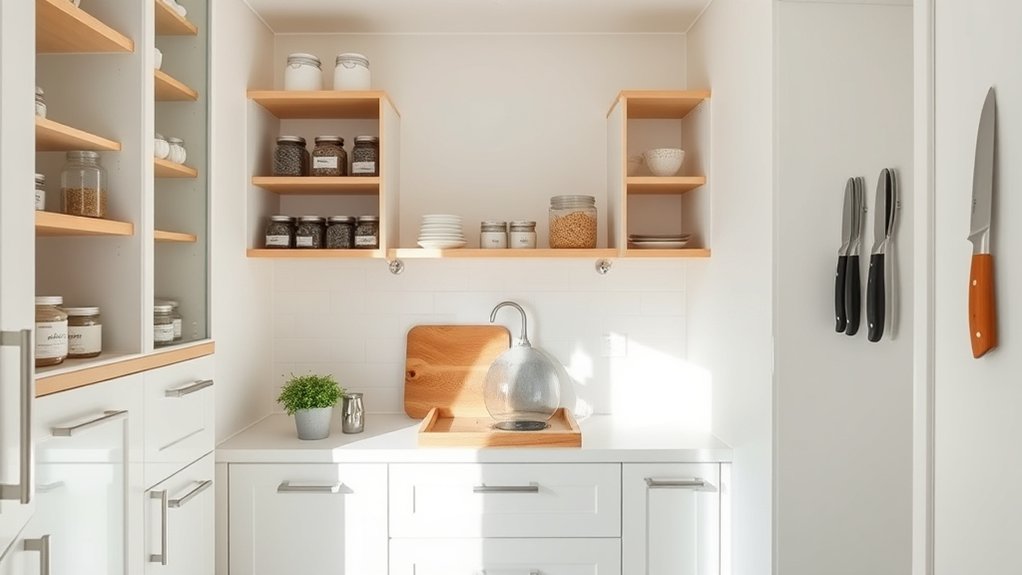
Although it can feel overwhelming at first, decluttering your small kitchen is essential to create more usable space. Start by tackling your pantry organization. Remove expired items, group similar products, and use clear containers to keep everything visible and accessible.
Decluttering your small kitchen starts with organizing the pantry—remove expired items and use clear containers for easy access.
This approach not only opens up shelf space but also helps you avoid buying duplicates. Next, focus on appliance storage. Only keep the appliances you use regularly on your counters, and store the rest in cabinets or pantry shelves.
Consider investing in stackable storage solutions or appliance garages to maximize vertical space. By streamlining what you keep and where you store it, you’ll make your kitchen feel larger and more functional.
Decluttering also reduces stress, making cooking more enjoyable. Remember, every item you remove or neatly organize frees up precious real estate in your small kitchen, allowing you to make the most of every inch without feeling cramped or cluttered.
Set Up Zones for Cooking, Prep, and Cleaning
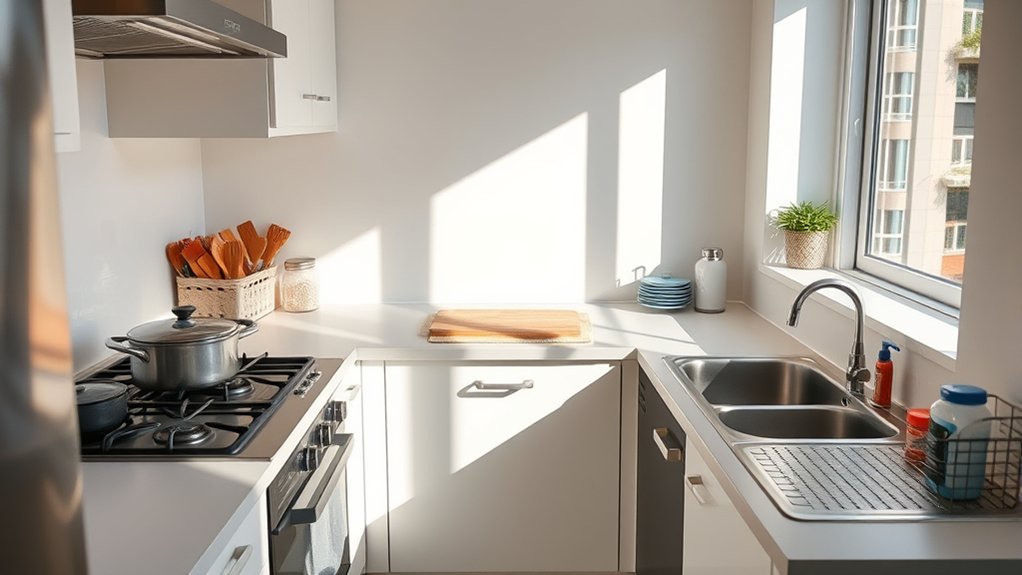
Create clear zones for cooking, prepping, and cleaning to keep your workflow running smoothly. When each area has a defined purpose, you can move from one task to the next more easily without wasting time or space. Here’s how to organize each zone for maximum convenience.
Define Functional Work Areas
Creating three clear zones—cooking, prep, and cleaning—makes your small kitchen more efficient and enjoyable to use. Focus on kitchen lighting and appliance placement to define these areas effectively.
Bright, task-focused lighting helps you work safely and comfortably in each zone. Position your stove, oven, and microwave in the cooking zone, while keeping knives and cutting boards handy in the prep zone.
The cleaning zone should include your sink, dishwasher, and trash bins.
| Zone | Key Appliances | Lighting Tip |
|---|---|---|
| Cooking | Stove, oven, microwave | Bright overhead light |
| Prep | Counter, knives, mixer | Focused task lighting |
| Cleaning | Sink, dishwasher, bin | Soft, indirect light |
| Storage | Pantry, cabinets | Ambient lighting |
| Serving | Counter, plates | Under-cabinet lights |
Optimize Workflow Efficiency
Now that you’ve defined clear zones for cooking, prep, and cleaning, focus on arranging these areas to support a smooth workflow. Good kitchen lighting is essential—bright, focused light over prep and cooking zones helps you work efficiently and safely.
Keep frequently used appliances within easy reach, and maintain them regularly to avoid disruptions. Arrange tools and ingredients logically to minimize movement between zones.
- Place prep tools near the prep zone for quick access.
- Position cleaning supplies close to the sink for easy cleanup.
- Store pots and pans near the stove to speed up cooking.
Use Vertical Shelves and Hooks to Maximize Cabinet Space
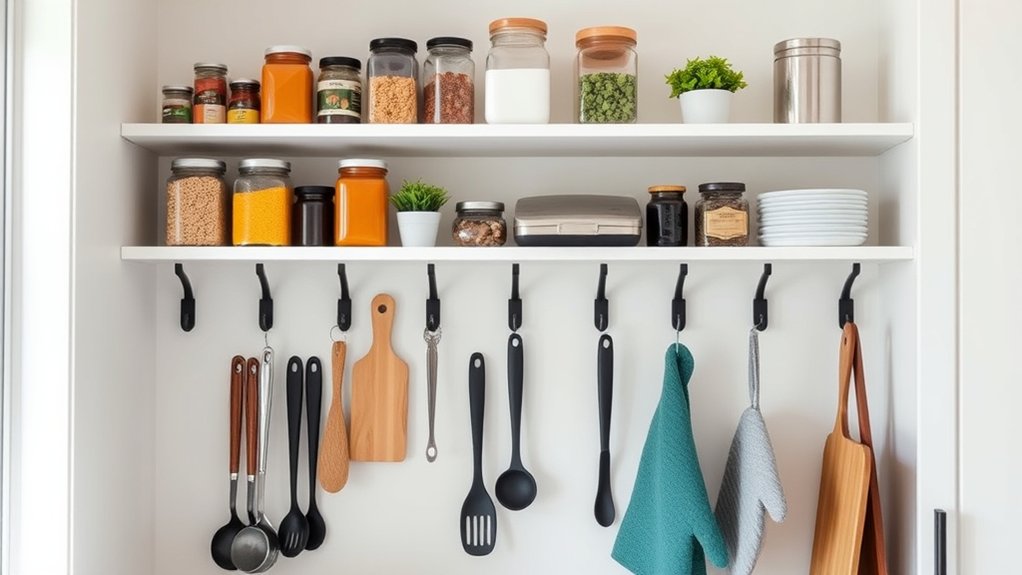
You can free up a lot of cabinet space by adding vertical shelves and hooks. They help you organize items more efficiently while keeping everything easy to reach. Let’s look at the benefits, explore different types of hooks, and go over a few simple installation tips to help you make the most of your space.
Benefits of Vertical Storage
How can you make the most of every inch in a small kitchen? Vertical storage offers a smart solution by freeing up counter and cabinet space.
By using vertical shelves and hooks, you can transform unused wall areas into efficient storage zones. Think beyond cabinets—ceiling storage can hold items you seldom use, while vertical gardening allows you to grow fresh herbs without sacrificing counter space.
Here’s why vertical storage benefits you:
- Maximizes limited cabinet space for better organization
- Keeps frequently used items within easy reach
- Creates room for fresh ingredients with vertical gardening
Embracing vertical storage means your small kitchen feels bigger, stays clutter-free, and works better for your daily needs.
Types of Hooks Available
Which hook style suits your small kitchen best? When using vertical shelves and hooks to maximize cabinet space, consider the types of hooks available.
You’ll find S-hooks, adhesive hooks, magnetic hooks, and screw-in hooks, each serving different needs. S-hooks are great for hanging pots or utensils and are easily moveable.
Adhesive hooks stick to surfaces without drilling, making them perfect for renters. Magnetic hooks attach to metal surfaces, offering flexible storage options.
Screw-in hooks provide sturdy support for heavier items but require installation. Different hook materials, such as stainless steel, plastic, or coated metal, affect durability and appearance.
Stainless steel hooks resist rust, making them ideal for humid kitchen environments. Plastic hooks offer a lightweight, budget-friendly choice.
Choose hooks that match your kitchen’s style and the weight of the items you want to hang for efficient organization.
Installation Tips and Tricks
Selecting the right hooks is only half the battle; proper installation guarantees they serve your small kitchen efficiently. Start by measuring your cabinet space carefully to make certain vertical shelves and hooks fit without crowding your appliance placement.
Use adhesive hooks or screw-in types based on the cabinet material for durability. Don’t forget to improve your lighting solutions near these storage areas to make items easily visible.
Keep these tips in mind:
- Position hooks on the cabinet’s interior sides to free up shelf space.
- Mount vertical shelves above appliances to maximize unused vertical space.
- Ensure lighting complements your setup for quick access and safety.
Install Hooks and Racks for Easy Access and Extra Storage
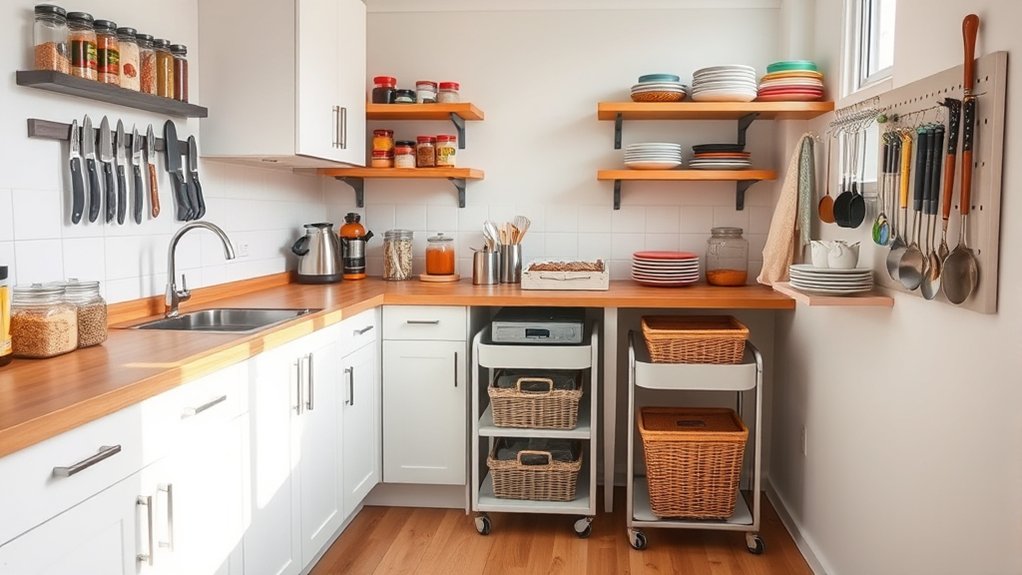
Although small kitchens offer limited space, installing hooks and racks can transform your storage options and keep essentials within reach. Start by adding wall mounted racks to free up countertop clutter; these racks are perfect for storing spices, utensils, or even pots and pans.
They create vertical storage, making the most of empty wall space. Magnetic hooks are another smart addition, letting you hang metal tools like scissors or measuring spoons on your fridge or a metal backsplash.
You can easily move them around to fit your needs. Hooks and racks keep frequently used items visible and accessible, saving time during meal prep.
Plus, they add an organized, tidy look without crowding your small kitchen. When installing, pick spots near your cooking or prep areas for convenience.
Maximize Under-Sink Storage With Organizers and Bins
When you organize the space under your sink with the right organizers and bins, you reveal valuable storage that often goes unused. Under-sink organization can transform this cluttered area into a neat, accessible spot for cleaning supplies, sponges, and extra dish soap. Using storage bins helps separate items, making it easier to find what you need without digging through a mess.
To maximize under-sink storage, consider these tips:
- Use stackable storage bins to utilize vertical space efficiently.
- Add pull-out organizers or sliding trays to access items at the back effortlessly.
- Group similar items in labeled bins to keep everything orderly and quick to find.
Organize Pantry Items Using Clear Containers
Because pantry clutter can make meal prep frustrating, using clear containers helps you see everything at a glance and keeps items fresh longer. When you transfer dry goods like flour, rice, or pasta into airtight clear containers, you improve food preservation by reducing exposure to air and pests. This simple step also eliminates bulky packaging, creating more space.
To stay organized, add pantry labels to each container. Labeling not only speeds up finding ingredients but also helps you track expiration dates and avoid waste. Use waterproof, easy-to-read labels or a chalk marker for flexibility. Group similar items together, with grains in one section and snacks in another, to streamline your workflow.
Choose Multi-Functional Appliances and Tools for Small Kitchens
To maximize your limited kitchen space, focus on choosing multi-functional appliances and tools that handle several tasks at once. Smart appliances designed for small kitchens combine features, saving you room and reducing clutter.
Maximize small kitchen space with multi-functional, smart appliances that combine features and reduce clutter.
Compact tools also help by performing multiple functions without taking up extra drawer or counter space.
Look for items like:
- A blender that doubles as a food processor
- An Instant Pot that can pressure cook, slow cook, and sauté
- A hand mixer with detachable beaters and whisk attachments
These choices not only save space but also simplify your cooking process. By investing in versatile, compact tools and smart appliances, you’ll keep your kitchen efficient and organized without sacrificing functionality.
This way, you free up storage for other essentials and maintain a clean, streamlined workspace.
Make the Most of Your Counter Space With Smart Layouts
You can free up counter space by making the most of your walls. Add shelves or hooks to store items vertically and keep essentials within easy reach. You can also use multipurpose surfaces, like cutting boards that fit over the sink or stove. With a few smart layout choices, your workspace will stay clear, organized, and efficient.
Maximize Vertical Storage
How can you make the most of your limited counter space in a small kitchen? By maximizing vertical storage, you free up valuable surfaces and keep things organized. Use your walls and unused vertical areas creatively to store items and even add greenery.
Try these ideas:
- Install shelves or racks to hold spices, utensils, or small appliances.
- Use hanging baskets for fruits, vegetables, or kitchen tools, saving counter space.
- Create a vertical gardening spot for fresh herbs that’s both practical and decorative.
Vertical gardening not only brightens your kitchen but also provides fresh ingredients at your fingertips. Hanging baskets add charm and storage without cluttering your counters.
Embrace vertical storage to keep your kitchen efficient and visually appealing.
Utilize Multi-Functional Surfaces
Maximizing vertical storage clears up your counters, but making the most of the surfaces you do have takes your kitchen organization further. Choose multi-functional surfaces like cutting boards that fit over the sink or stove, creating extra workspace without cluttering your kitchen.
Install under-cabinet kitchen lighting to brighten these areas, making tasks easier and safer. Use countertops for more than meal prep. Place small appliances on movable carts or shelves that double as extra workspace.
Keep appliance maintenance in mind by regularly cleaning and inspecting these devices. This ensures they stay efficient and don’t take up unnecessary space.
Use Drawer Dividers and Shelf Risers to Boost Storage
Although small kitchens offer limited space, using drawer dividers and shelf risers can transform cluttered areas into organized storage spots.
You can improve drawer organization by separating utensils, gadgets, and other tools, making everything easy to find.
Shelf risers help maximize vertical space, allowing you to stack items without creating a chaotic mess.
Together, these tools strengthen your shelf arrangement and keep your kitchen tidy.
Try these tips to boost storage efficiently:
- Use adjustable drawer dividers to customize compartments for different items.
- Add shelf risers to double your vertical storage space in cabinets.
- Group similar items together for quick access and better organization.
Keep Daily Kitchen Essentials Within Reach
Since you use certain kitchen items every day, keeping them within easy reach saves time and reduces frustration. Arrange your most-used utensils, spices, and cookware where you can grab them quickly, such as countertop jars for spoons or magnetic strips for knives.
This setup not only streamlines your cooking techniques but also improves your kitchen decor by making it look intentional and tidy. Consider installing open shelves or hooks near your prep area to keep essentials visible and accessible.
Avoid clutter by limiting what you store here to daily necessities, rotating items as your routine changes. When everything has a designated spot within arm’s reach, you move more efficiently and enjoy cooking more.
This practical organization boosts not only your workflow but also your overall kitchen vibe, blending function with style. By thoughtfully placing daily essentials, you create a small kitchen that feels spacious and welcoming without sacrificing convenience or aesthetic appeal.
Frequently Asked Questions
How Often Should I Deep Clean a Small Kitchen?
You should deep clean your small kitchen at least once a month to keep it spotless and hygienic. Sticking to a cleaning schedule helps you maintain order without feeling overwhelmed.
Along with regular daily tidying, focus on maintenance tips like wiping down appliances, scrubbing countertops, and decluttering cabinets during your deep clean. This routine guarantees your kitchen stays fresh, functional, and ready for meal prep without constant stress.
What Lighting Is Best for Small Kitchen Spaces?
You’ll want lighting fixtures that provide bright, even ambient illumination to make your small kitchen feel open and inviting. LED recessed lights or flush mounts work great without taking up space.
Under-cabinet lights add focused brightness to your countertops, improving visibility while cooking. Combining ambient illumination with task lighting guarantees your kitchen stays well-lit and functional, helping you cook safely and comfortably in a compact area.
How Can I Reduce Kitchen Noise While Cooking?
You can reduce kitchen noise while cooking by using soundproofing techniques like adding rugs, curtains, or acoustic panels to absorb sound. Did you know that noise levels in busy kitchens can reach up to 85 decibels, similar to heavy traffic?
Investing in noise canceling appliances also helps cut down on clatter. By combining these methods, you’ll create a quieter, more pleasant cooking environment without sacrificing efficiency.
What Colors Make a Small Kitchen Look Bigger?
You can make your small kitchen look bigger by choosing the right color schemes. Light colors like whites, soft grays, and pastels create visual illusions that open up the space, making it feel airy and larger than it is.
Avoid dark, heavy hues, which can make the room feel cramped. Using consistent, light color schemes on walls, cabinets, and countertops helps reflect more light, enhancing the illusion of a more spacious kitchen.
How Do I Childproof a Small Kitchen Effectively?
Imagine a medieval castle protecting its treasures—that’s how you should view child safety in your small kitchen. To childproof effectively, secure sharp objects and cleaning supplies in high or locked kitchen storage.
Use cabinet locks and corner guards to prevent injuries. Keep dangerous items out of reach, and create designated safe zones for your little ones.
This way, you’ll protect them while maintaining a tidy, functional space.
Conclusion
By following these steps, you’ll transform your cramped kitchen into a functional, inviting space. Imagine Sarah, who once struggled with clutter, now effortlessly cooking in her organized kitchen thanks to vertical shelves and smart zones.
You can do the same. Just declutter, use every inch wisely, and keep essentials handy. With a little effort, your small kitchen will feel spacious and efficient, making every meal prep a breeze.
These small kitchen organization tips can help you create a space that works beautifully for your everyday needs.