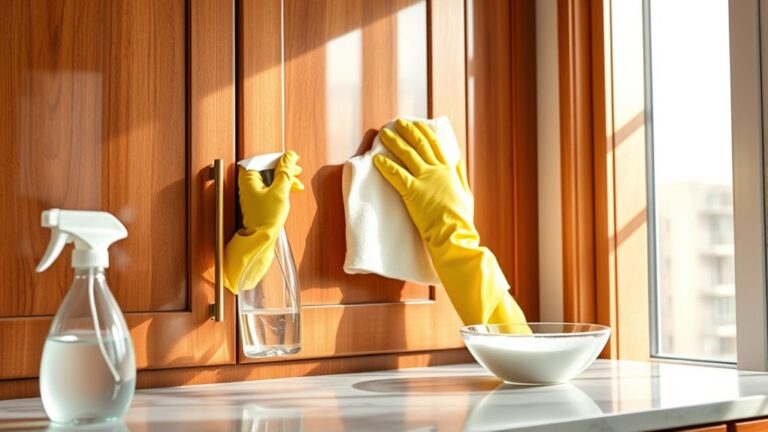
7 Essential Tips to Organize Your Kitchen
A cluttered kitchen can make even simple meals feel stressful, and you’re not alone—many people struggle to keep counters, cabinets, and drawers organized. These practical tips will help you create a more functional space with less effort.
To organize your kitchen, start by clearing out clutter and discarding expired items. Create designated zones for cooking, prep, and cleaning to streamline your workflow. Arrange cabinets by how often you use items and group by category.
Use vertical storage like wall racks to free counter space. Store small appliances smartly to reduce clutter, and label containers and shelves for easy access.
Develop simple daily habits to maintain order, ensuring your kitchen stays functional and stress-free. Keep going to reveal more efficient organization ideas.
Key Takeaways
- Declutter your pantry by removing expired items and grouping similar products for easy access and inventory control.
- Create functional zones for cooking, prepping, and cleaning to streamline workflow and improve kitchen efficiency.
- Maximize vertical and cabinet storage with labeled containers, multi-tier shelves, and wall-mounted racks to save counter space.
- Reduce countertop clutter by storing small appliances in cabinets or on adjustable shelves and using multifunctional storage solutions.
- Maintain organization with durable labels on containers and shelves, and adopt daily habits of tidying and inventory checks.
Clear Out Clutter to Create More Kitchen Space

Start by clearing out clutter to instantly make your kitchen feel more spacious and functional. Begin with pantry decluttering—pull everything out, check expiration dates, and toss anything expired or unused.
Clearing clutter, starting with your pantry, instantly opens up your kitchen and boosts functionality.
Group similar items together to spot what you really need and what’s just taking up space. Next, tackle utensil sorting by emptying your utensil drawer and separating items by function.
Get rid of duplicates or broken tools to free up room. Use drawer organizers or small containers to keep utensils tidy and accessible.
When you clear clutter, you make way for a kitchen that works better for you, reducing stress and saving time. Keeping only what you use daily and storing the rest neatly means you won’t feel overwhelmed or cramped.
Create Designated Zones for Cooking, Prep, and Cleaning
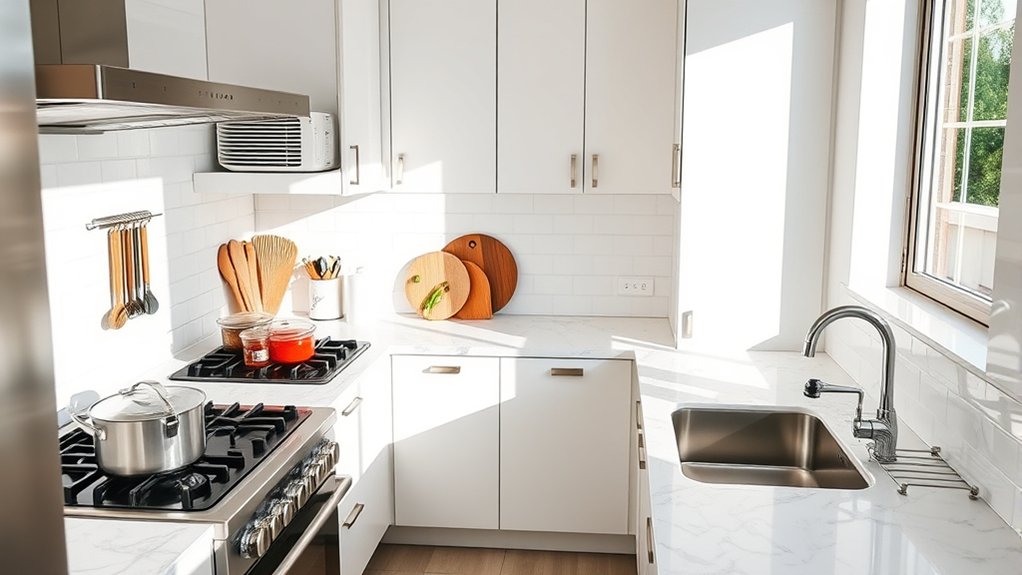
When you create designated zones for cooking, prep, and cleaning, you streamline your kitchen workflow and reduce unnecessary movement. Start by identifying your cooking zones—where your stove, oven, and frequently used pots and pans are located.
Keep utensils, spices, and oils close by so you can grab what you need without breaking your rhythm.
Next, establish clear prep areas with ample counter space, cutting boards, and knives within easy reach. This setup makes chopping and mixing more efficient and keeps your workflow smooth.
Finally, designate your cleaning zone around the sink and dishwasher. Store cleaning supplies, dish racks, and trash bins nearby to simplify cleanup.
Organize Cabinets by Frequency of Use and Category

After setting up clear zones for cooking, prep, and cleaning, organize your cabinets to support these areas effectively. Start by sorting items based on how often you use them and their category. This approach minimizes clutter and maximizes efficiency.
- Frequency first: Store daily-use items like plates and utensils in the most accessible cabinets. Place less frequently used items, such as specialty cookware, higher or lower in your cabinets.
- Group by category: Keep similar items together. For example, group baking tools in one spot and cooking utensils in another to stay organized.
- Label clearly: Use pantry labeling to identify cabinet contents at a glance. This saves time and keeps your kitchen orderly.
Use Vertical Kitchen Storage to Free Up Counter Space
You can free up valuable counter space by making the most of your walls with vertical storage. Multi-tier shelves keep kitchen essentials within easy reach while clearing clutter from your countertops. It’s a simple way to stay organized and make your kitchen feel more open.
Maximize Wall Space
Three simple ways to maximize wall space can transform your kitchen’s functionality. By using vertical storage, you free up counter space and keep essentials within reach.
- Install wall mounted racks to store spices, jars, or cookbooks. These racks keep items organized and off your counters.
- Use hanging utensil organizers to neatly display your cooking tools. This keeps utensils accessible and adds a decorative touch.
- Hang magnetic strips for knives or metal tools. This saves drawer space and ensures safety by keeping sharp objects visible.
Maximizing your walls makes your kitchen feel more open and efficient. With these simple steps, you’ll enjoy a clutter-free countertop and a tidier cooking space every day.
Install Multi-Tier Shelves
Adding multi-tier shelves can instantly boost your kitchen’s storage capacity by taking full advantage of vertical space. When you install these shelves, you free up your counters, making meal prep much easier.
Start by measuring your available wall space and choose shelves that fit well without overcrowding. Be sure to adjust shelf height to accommodate different items like spices, jars, or small appliances.
This flexibility ensures you utilize every inch efficiently. Also, choose durable materials such as metal or solid wood to support heavier kitchen tools and withstand daily wear.
Secure the shelves properly to keep everything stable and accessible. By installing multi-tier shelves thoughtfully, you’ll create a cleaner, more organized kitchen that maximizes storage without sacrificing style or function.
Smart Ways to Store Small Appliances and Reduce Clutter
You can free up counter space by making the most of your cabinets for small appliances. Try using multifunctional storage solutions to keep your gadgets organized and easy to grab. This will help reduce clutter and make your kitchen more efficient.
Maximize Cabinet Space
Maximizing cabinet space starts with smartly storing your small appliances to keep countertops clear and reduce clutter. To make the most of your cabinets, try these tips:
- Use adjustable pantry shelving to customize the height between shelves, so your appliances fit perfectly without wasted space.
- Install drawer dividers to organize appliance accessories like cords and attachments, making everything easy to find and preventing tangles.
- Store frequently used small appliances on lower shelves for quick access, while less-used items can go on higher shelves or in deep cabinets.
Use Multi-Functional Storage
Three-in-one solutions can transform your kitchen storage by combining functionality and efficiency. When you use multifunctional furniture, you get more than just a place to set things down—you gain versatile storage options that help reduce clutter.
For example, an island with built-in shelves or drawers lets you store small appliances out of sight yet within easy reach. Wall-mounted racks with hooks can hold mixers or blenders without taking up counter space.
You can also use stackable containers or nesting baskets to organize gadgets in cabinets or pantries. By choosing pieces that serve multiple purposes, you streamline your kitchen and keep it tidy.
This smart approach not only saves space but also makes your kitchen easier to navigate and more enjoyable to use every day.
Label Containers and Shelves for Easy Access
How quickly could you find what you need if every container and shelf had a clear, visible label? Label containers and shelves to speed up your kitchen routine and reduce frustration. Here’s how to get started:
- Choose durable labels: Use waterproof, smudge-proof labels to ensure they last through spills and frequent handling.
- Be specific and consistent: Clearly state the contents and use the same font or style to keep everything uniform and easy to scan.
- Label both containers and shelves: Shelf labels help you return items to their exact spots, while container labels make identifying ingredients quick and effortless.
Maintain Kitchen Organization With Simple Daily Habits
Even if you’ve spent time organizing your kitchen, it’s easy for clutter to creep back in without daily care. To keep things running smoothly, adopt simple daily habits that support your meal prep and ingredient inventory.
Spend a few minutes each day wiping surfaces, putting away ingredients, and checking your inventory. This helps you avoid overbuying or running out of essentials.
Here’s a quick guide to daily habits that help maintain your kitchen organization:
| Habit | Benefit |
|---|---|
| Clean as You Cook | Minimizes mess and clutter |
| Update Ingredient Inventory | Prevents expired or missing items |
| Prep Ingredients Early | Speeds up meal prep and reduces stress |
Frequently Asked Questions
How Do I Choose the Best Kitchen Layout for My Space?
You choose the best kitchen layout by focusing on kitchen zoning to separate cooking, prepping, and cleaning areas efficiently. Consider your space size and workflow to decide between layouts like L-shape, U-shape, or galley.
Incorporate smart storage solutions to maximize every inch, such as pull-out shelves or vertical racks. Think about traffic flow and accessibility, making sure your zones are well-defined and storage keeps everything within easy reach.
What Are the Most Durable Materials for Kitchen Countertops?
Think of your kitchen countertop as the battlefield where daily cooking wars are won. For durability, quartz and granite stand tall, resisting scratches and stains with minimal countertop maintenance.
Compared to marble, which demands more care, quartz offers a low-maintenance shine. Laminate’s cheaper but less tough, while concrete can crack over time.
When you compare materials, choose one that balances durability with your lifestyle to keep your kitchen looking fresh and functional.
How Can I Improve Kitchen Lighting for Better Visibility?
You can improve kitchen lighting for better visibility by combining kitchen ambient lighting with task lighting. Start with bright, even ambient lights to illuminate the whole space.
Then, add task lighting under cabinets or above work areas like countertops and the stove to focus light where you need it most. This layered approach reduces shadows and helps you see clearly while cooking, chopping, or cleaning, making your kitchen safer and more efficient.
What Are Eco-Friendly Cleaning Products Safe for Kitchen Use?
Did you know 65% of people prefer eco-friendly cleaning products?
You can use biodegradable cleaners like vinegar-based sprays and baking soda, which break down naturally without harming the environment.
Natural disinfectants such as tea tree oil and lemon juice kill germs effectively while keeping your kitchen safe.
These options reduce chemical exposure, making your space healthier and greener.
You’ll enjoy a cleaner kitchen without compromising the planet’s well-being.
How Do I Childproof My Kitchen Effectively?
To childproof your kitchen effectively, focus on child safety by securing cabinets with locks to keep sharp objects and cleaning products out of reach. Use stove knob covers and appliance locks to guarantee appliance safety, preventing little hands from turning them on.
Keep electrical cords and small items away from edges, and install corner guards on counters. By taking these steps, you’ll create a safer kitchen environment where your child can’t access dangerous areas or appliances.
Conclusion
By clearing clutter and creating designated zones, you’ll turn your kitchen into a well-oiled machine. Organizing cabinets by use and going vertical will free up precious space, while smart appliance storage keeps counters clear.
Labeling containers makes finding things a breeze, and simple daily habits keep everything in check. Remember, a tidy kitchen isn’t just neat—it’s the heart of your home beating smoothly, ready to inspire your next culinary adventure with these kitchen organization tips.