How to Clean Kitchen Cabinets Grease in 3 Easy Steps
Greasy kitchen cabinets can make your entire kitchen feel dirty, even when you clean regularly. You’re not alone—many people struggle to remove stubborn buildup without damaging their cabinet finishes. The good news is that cleaning kitchen cabinets grease can be simple with the right supplies and a few easy steps.
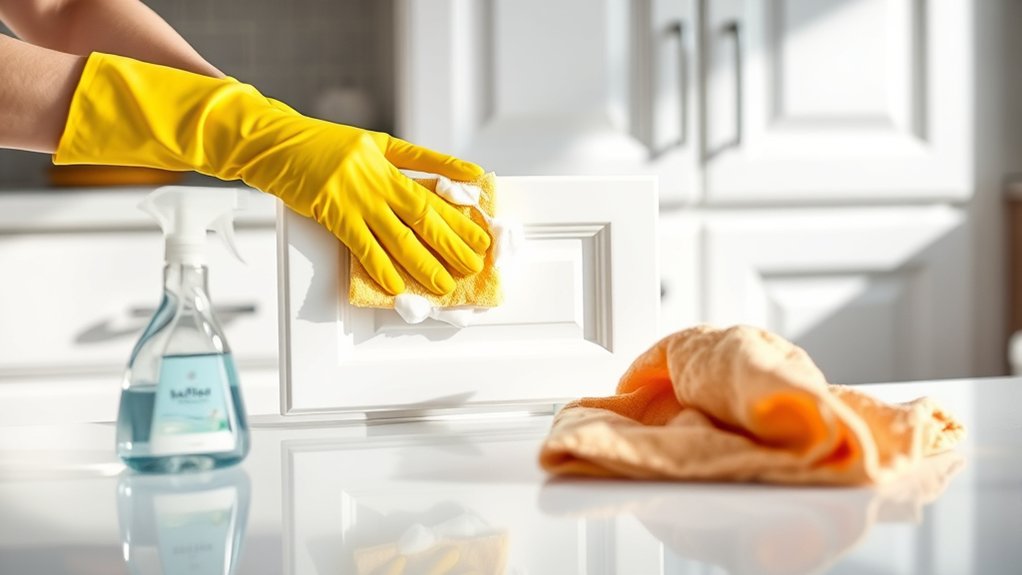
First, gather your cleaning supplies like microfiber cloths, a soft sponge, mild detergent, and gloves to protect your hands. Next, mix equal parts warm water and white vinegar in a spray bottle, apply it to greasy cabinets, let it sit a few minutes, then wipe clean.
Finally, prevent buildup by wiping cabinets after cooking and applying a suitable sealant to protect surfaces. Keep going to find more tips for maintaining your kitchen cabinets’ shine.
Key Takeaways
- Identify your cabinet material to choose the right cleaning products and avoid damage.
- Mix equal parts warm water and white vinegar in a spray bottle for an effective grease remover.
- Spray the solution on greasy areas, let it sit for a few minutes, then wipe with a microfiber cloth.
- For stubborn grease, apply a baking soda paste, gently scrub with a soft sponge, and rinse with a damp cloth.
- Wipe cabinets regularly after cooking and apply a suitable sealant to protect surfaces from future grease buildup.
Get Your Cleaning Supplies Ready for Kitchen Cabinet Grease
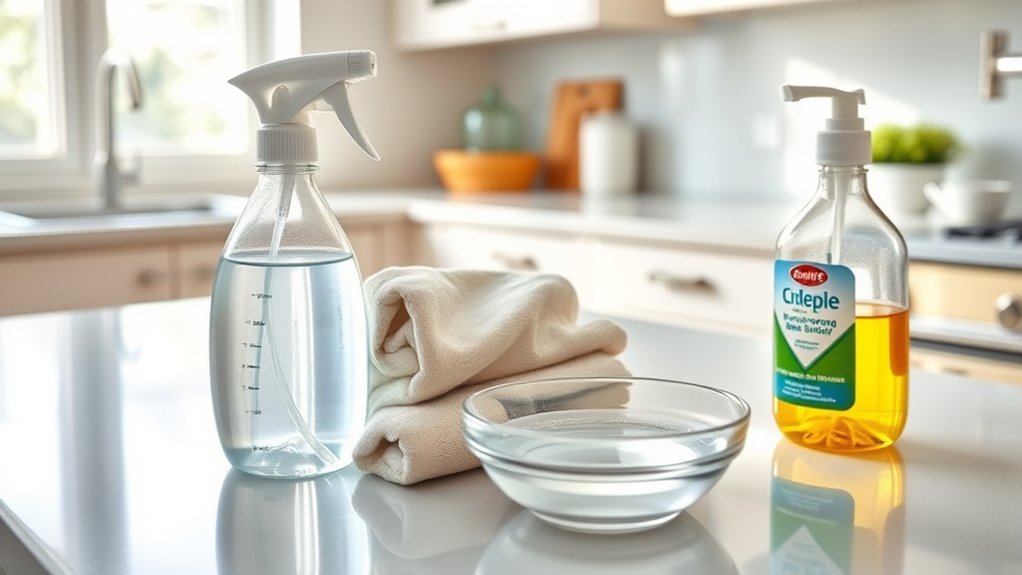
Before you start tackling the grease on your kitchen cabinets, gather all the cleaning supplies you’ll need. Knowing your cabinet material is essential because different surfaces require specific products.
For example, wood cabinets need gentle cleaners that won’t strip the finish, while laminate or metal cabinets can handle stronger solutions. Grab microfiber cloths, a soft sponge, mild detergent, and a spray bottle for easy application. You might also want gloves to protect your hands.
Consider your cleaning frequency to keep grease buildup manageable. If you cook often, you’ll want to clean your cabinets weekly or biweekly. Less frequent cooking means monthly cleanings can suffice.
Having your supplies ready guarantees you won’t skip or delay cleaning, which can cause grease to become stubborn and harder to remove. Staying consistent with your routine and using the right tools based on your cabinet material makes grease removal more effective and keeps your kitchen looking fresh.
Use DIY Cleaners to Remove Kitchen Cabinet Grease
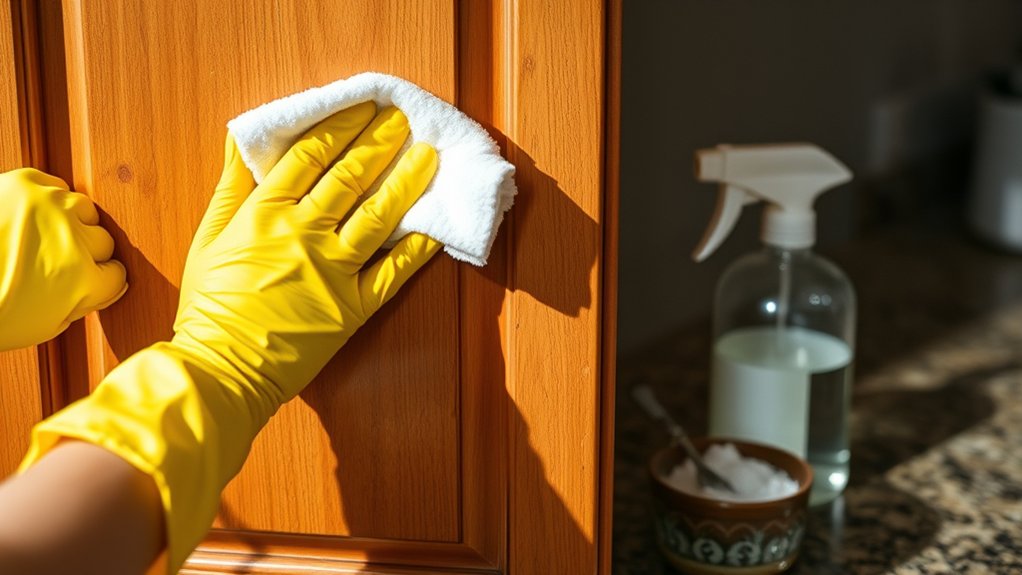
Once you have your supplies ready, you can start tackling grease with simple DIY cleaners that are both effective and budget-friendly. For kitchen cabinet degreasing, mix equal parts of warm water and white vinegar in a spray bottle.
This natural solution breaks down grease without harsh chemicals. Spray it onto the greasy surfaces and let it sit for a few minutes before wiping it off with a microfiber cloth.
Another great DIY cleaning solution is a paste made from baking soda and water. Apply the paste to stubborn greasy spots, gently scrub with a soft sponge, then rinse with a damp cloth.
These DIY cleaners are safe, easy to make, and perfect for regular maintenance. Remember, using these solutions consistently will keep your kitchen cabinets fresh and grease-free without the need for expensive products.
You’ll save money and avoid exposure to harsh chemicals while effectively removing built-up kitchen cabinet grease.
Wipe and Seal Kitchen Cabinets to Prevent Grease Buildup
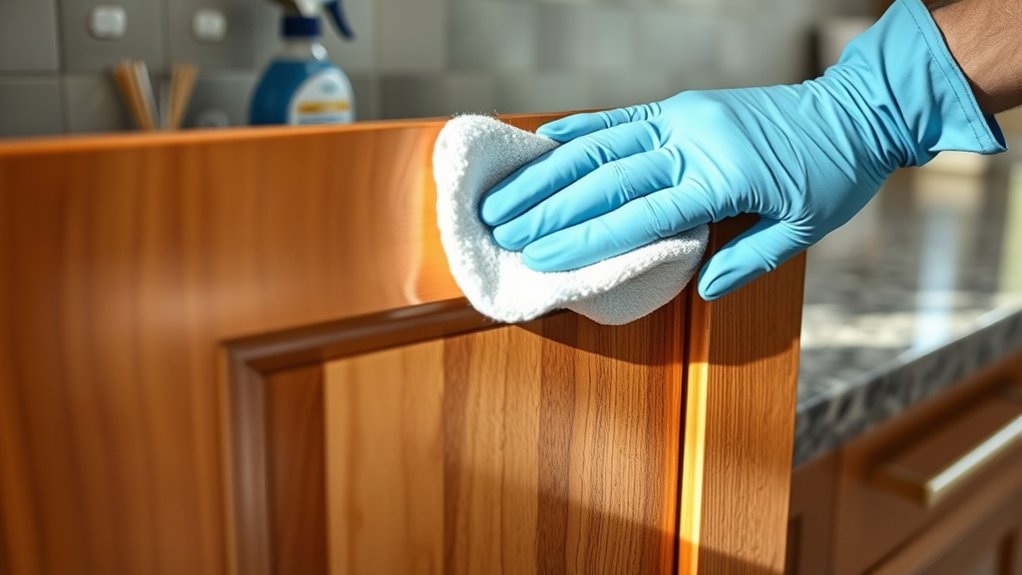
To keep grease from building up again, regularly wipe down your kitchen cabinets with a damp cloth after cooking. This simple habit prevents stubborn residue and keeps your cabinets looking fresh.
Applying a sealant suited to your cabinet material can also create a protective barrier against grease and moisture.
Using a sealant matched to your cabinet material helps shield surfaces from grease and moisture buildup.
Here’s how to effectively wipe and seal your cabinets:
- Identify your cabinet material, such as wood, laminate, or metal, to choose the right cleaning method and sealant.
- Use a mild detergent solution and a soft cloth to gently wipe down surfaces. Avoid abrasive tools that can damage the finish.
- Select a sealant compatible with your cabinet material, such as polyurethane for wood or clear acrylic for laminate.
- Apply the sealant evenly, following the manufacturer’s instructions. Allow it to cure fully before regular use.
Frequently Asked Questions
How Often Should I Clean Kitchen Cabinets to Prevent Grease Buildup?
You should clean your kitchen cabinets at least once a week to keep grease buildup under control. Regular cabinet maintenance helps prevent stubborn grease stains and keeps your kitchen looking fresh.
If you cook often, especially frying, you might want to wipe them down more frequently, like every few days. Consistent grease prevention stops grime from hardening, making cleaning easier and protecting your cabinets’ finish over time.
Can Professional Cleaning Services Remove Kitchen Cabinet Grease Effectively?
You might imagine a superhero with a dry cloth and vinegar solution swooping in to banish cabinet grease. That’s basically what professional cleaning services do.
They have the know-how and tools to tackle stubborn grime that a quick wipe-down can’t handle. While you can DIY, pros can remove even hard-to-reach greasy spots, leaving your cabinets sparkling.
Are There Any Harmful Chemicals in Commercial Grease Removers?
Yes, many commercial grease removers contain harsh chemical ingredients like ammonia, bleach, and solvents that can irritate your skin, eyes, and respiratory system. You should always check labels before use.
These chemicals also have a significant environmental impact, often contributing to pollution and harming aquatic life. To protect yourself and the planet, consider using greener alternatives or natural cleaners whenever possible.
Always ventilate your space well during cleaning.
What Types of Kitchen Cabinets Are Most Prone to Grease Accumulation?
Think of your kitchen cabinets as magnets in a greasy battlefield—those made from unfinished wood or laminate surfaces attract more grease like soldiers drawn to the front lines.
If you want to win the war on grime, you’ll focus on cabinet materials like sealed wood or metal, which resist grease better.
For grease prevention, you should regularly wipe cabinets and use protective finishes to keep your kitchen looking fresh and clean.
Can Grease on Cabinets Attract Pests or Cause Health Issues?
Yes, grease on cabinets can lead to pest attraction because it provides food sources and breeding grounds for insects like ants and cockroaches. You don’t want pests invading your kitchen, as they carry bacteria that increase health risks.
Leaving grease buildup unchecked also creates a sticky surface where germs can thrive, potentially causing contamination. So, keeping your cabinets clean helps prevent pest problems and protects your family’s health.
Conclusion
Now that you’ve tackled the grease like a true kitchen knight, you’ll enjoy sparkling cabinets that feel fresh and inviting. Just remember, keeping your cleaning supplies handy and using those DIY cleaners regularly makes all the difference.
Wiping and sealing your cabinets isn’t just a final step. It’s your secret weapon against future grime. Stick to these easy steps for cleaning kitchen cabinets grease, and your kitchen will stay as bright and timeless as a classic jukebox tune.