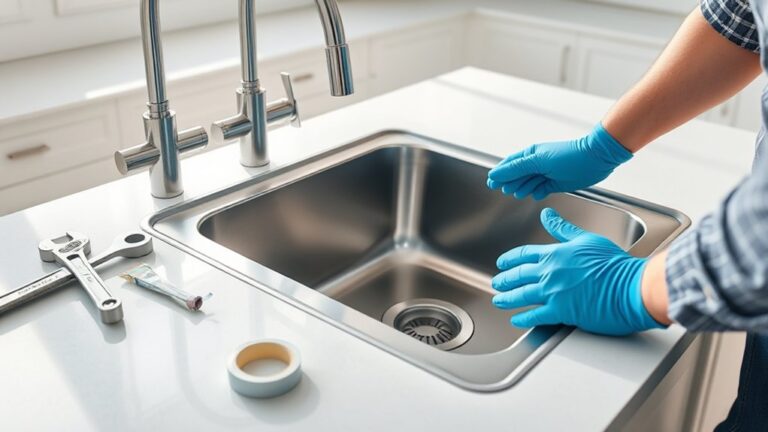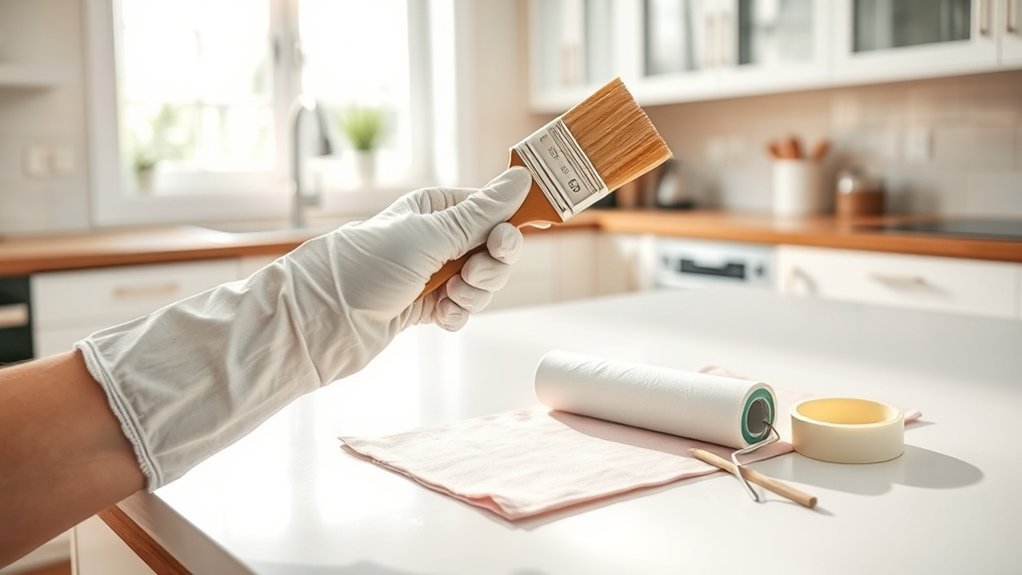
How to Paint Kitchen Countertops in 3 Easy Steps
Tired of looking at worn, outdated countertops but not ready for the cost and mess of a full replacement? You’re not alone—many homeowners struggle with finding an affordable way to refresh their kitchens. Learning how to paint kitchen countertops can give your space a stylish update without a major renovation.
To paint your kitchen countertops in three easy steps, start by choosing high-quality, moisture-resistant paint and tools like foam rollers and painter’s tape. Next, clean and sand your countertops thoroughly, then apply a suitable primer for better paint adhesion.
Finally, paint in thin, even coats and seal with a clear polyurethane sealer for durability. Following these steps guarantees a stylish, long-lasting finish that can withstand daily kitchen use. Keep going to uncover tips for perfecting your project.
Key Takeaways
- Clean and sand countertops thoroughly to ensure paint adheres well and surfaces are smooth.
- Apply a high-quality primer to enhance paint adhesion and surface durability.
- Use water-based epoxy or acrylic paint, applying two to three thin, even coats with a foam roller.
- Let each coat dry completely before applying the next to avoid streaks and ensure full coverage.
- Seal the painted surface with two thin coats of clear polyurethane for protection against moisture and wear.
Choose the Best Paint and Tools for Kitchen Countertops
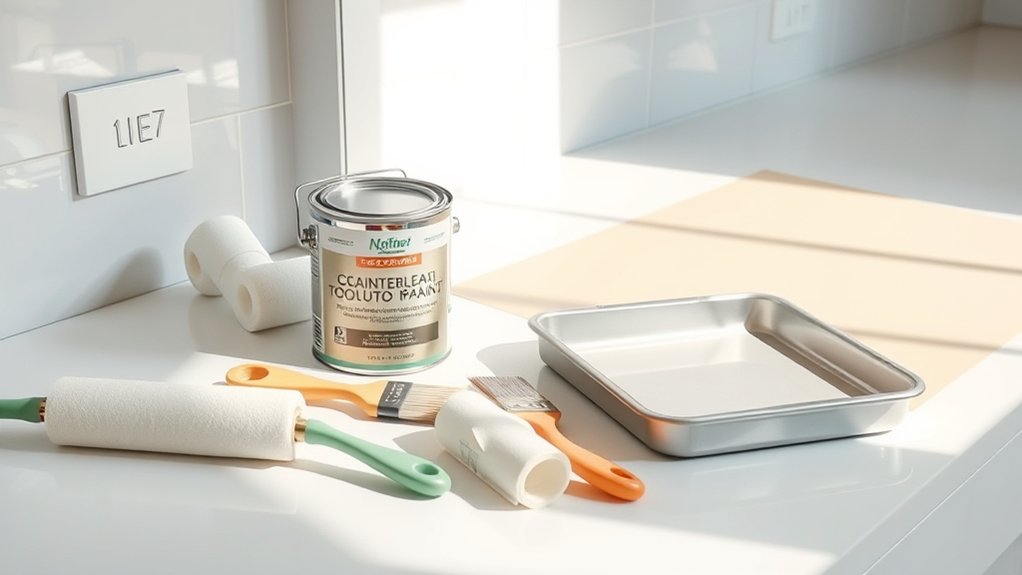
Before you begin, select the right paint and tools to ensure a durable, smooth finish on your kitchen countertops. Start by exploring color options that complement your kitchen’s style while hiding stains and wear.
Choose the perfect paint and tools to achieve a durable, smooth finish that enhances your kitchen countertops.
Neutral tones like gray or beige suit most kitchens, but don’t hesitate to choose bolder colors if you want a statement surface. Next, consider paint finishes carefully.
Satin and semi-gloss finishes work best for countertops because they resist moisture and are easy to clean. Avoid flat or matte finishes, as they can show stains and are harder to maintain.
For tools, choose high-quality brushes and foam rollers designed for smooth surfaces to avoid streaks and bubbles. You’ll also need painter’s tape to protect the edges.
Clean, Sand, and Prime Your Countertops for Painting
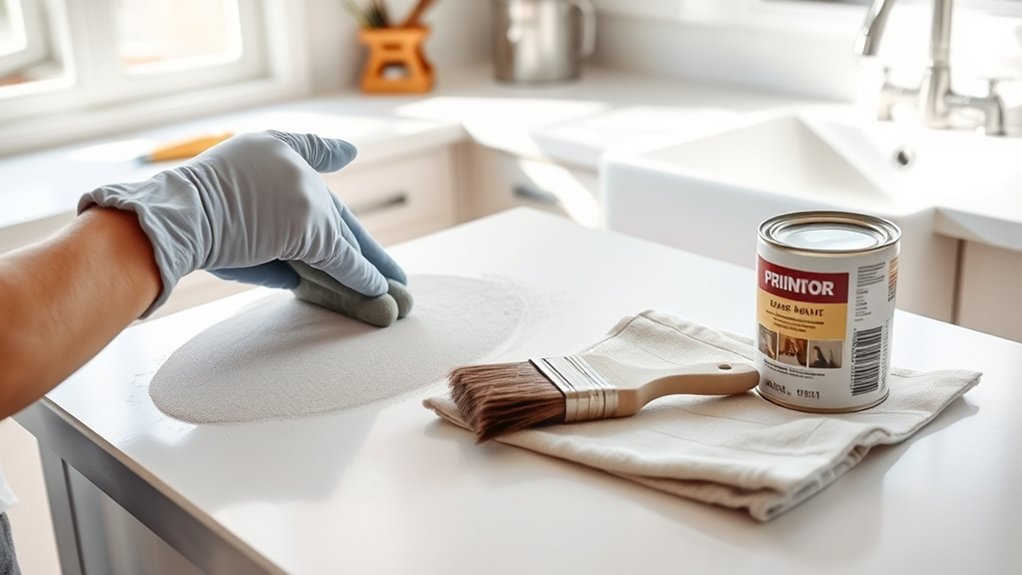
Although selecting the right paint is essential, you must first clean, sand, and prime your countertops to guarantee the new finish adheres properly and lasts longer. Start by thoroughly cleaning the surface with a degreaser to remove dirt, oils, and residues.
Once dry, sand the countertops with fine-grit sandpaper to create a slightly rough texture. This helps the primer grip better. After sanding, wipe away dust with a damp cloth.
Next, apply a high-quality primer designed for kitchen surfaces. Priming not only prepares the countertop for paint but also *improves* the vibrancy of your chosen color options.
It creates a smooth base, making it easier to experiment with decorative techniques later on, such as stenciling or sponging.
Taking these prep steps seriously *assures* your painted countertops will look professional and endure daily use, setting the stage perfectly for the final painting and sealing process.
Paint and Seal Your Countertops for a Durable Finish
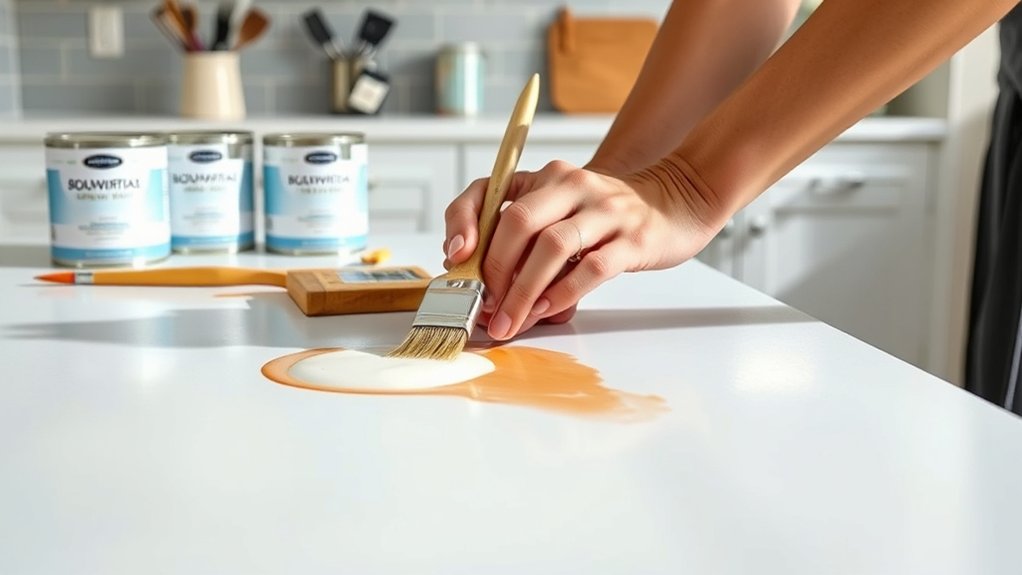
With your countertops properly primed, you’re ready to apply paint that will provide both beauty and durability. Begin by choosing a paint that matches your countertop design ideas and complements your kitchen’s color palette selection.
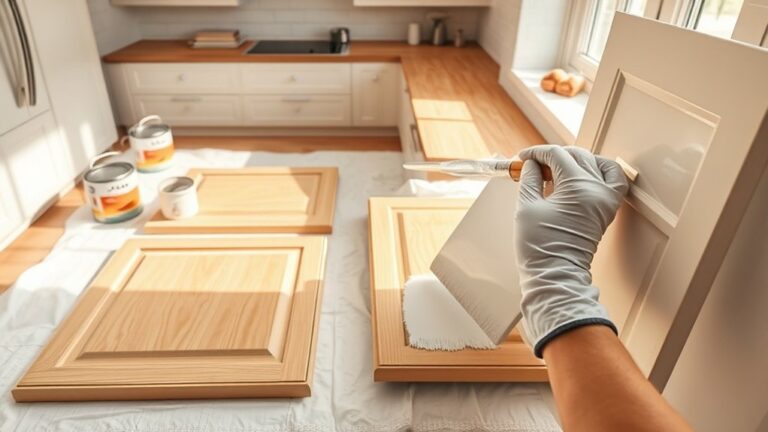
Use a high-quality, water-based epoxy or acrylic paint for the best results. Apply the paint evenly with a foam roller, working in thin layers to avoid drips and guarantee smooth coverage.
Allow each coat to dry completely before applying the next. Two to three coats usually suffice.
Once the paint is fully dry, seal your countertops with a clear polyurethane sealer designed for kitchen surfaces. This step protects your work from scratches, stains, and moisture, extending the life of your finish.
Apply two thin coats of sealer, letting each dry as recommended. By carefully painting and sealing, you’ll transform your kitchen countertops with a durable, stylish finish that reflects your personal design vision.
Frequently Asked Questions
How Long Does the Paint Take to Fully Cure on Countertops?
The paint on your countertops usually takes about 7 days to fully cure, ensuring maximum paint durability. During this time, avoid heavy use or placing hot items on the surface.
Proper surface prep before painting plays a huge role in how well the paint adheres and lasts. If you skip thorough cleaning and sanding, the paint might chip or peel sooner.
Can I Use Regular Wall Paint on Kitchen Countertops?
You shouldn’t use regular wall paint on kitchen countertops. Did you know that 70% of countertop paints are specially formulated for durability?
Wall paint lacks the durability and stain resistance needed for this high-traffic area. Instead, choose paints designed for countertops, which offer better material compatibility and a wider range of color options that won’t chip or peel easily.
This guarantees your countertop stays beautiful and functional longer.
How Do I Remove Paint Mistakes From Countertops?
To remove paint mistakes from countertops, start with proper surface preparation by gently sanding the affected area with fine-grit sandpaper. This helps smooth out drips or uneven spots.
Next, clean the surface to remove dust and debris. For small errors, use a damp cloth or a gentle scraper carefully.
Once corrected, apply paint touch up with a small brush to blend the fix seamlessly. Patience during this process guarantees a flawless finish.
Is It Safe to Prepare Food on Newly Painted Countertops?
You absolutely can’t just start chopping veggies on freshly painted countertops. They need time to become food-safe!
Paint durability isn’t instant. Rushing means risking paint chips and toxic exposure.
To guarantee food safety, wait at least 72 hours and apply a clear, food-safe topcoat. This seals the surface, making it durable and safe for prep.
How Often Will I Need to Repaint Kitchen Countertops?
You’ll likely need to repaint your kitchen countertops every 3 to 5 years, depending on wear and tear. Your choice of color can impact how often you repaint. Darker colors may show scratches more, while lighter tones hide imperfections.
Using proper painting techniques, like thorough surface prep and quality sealants, helps extend the paint’s life. Regular maintenance also keeps them looking fresh longer, so don’t rush to repaint unless you notice significant damage.
Conclusion
Painting your kitchen countertops is like planting a garden. First, choose the right seeds—paint and tools—then prepare the soil by cleaning, sanding, and priming. Finally, nurture the plants with paint and sealer for lasting beauty.
With each careful step, you’ll create a kitchen that blossoms with personality and charm. Roll up your sleeves, follow these steps, and watch your painted kitchen countertops transform into a vibrant masterpiece that stands the test of time.