How Tall Should Kitchen Counters Be?
Choosing the right kitchen counter height can be frustrating, especially if standard counters leave you bending, reaching, or straining. You’re not alone—many people struggle to find a setup that feels comfortable for everyday cooking.
You’ll want your kitchen counters between 34 and 40 inches tall, depending on your height and tasks. If you’re under 5’2”, aim for around 34 inches; if you’re taller than 6 feet, closer to 40 inches works better.
Standard 36 inches suits most standing tasks like chopping, but mixing or baking might need slight tweaks. Adjusting counter height improves comfort and reduces strain.
Keep going to find out how task types and layout choices can shape your perfect kitchen setup.
Key Takeaways
- Standard kitchen counters are typically 36 inches tall, suitable for most standing food prep tasks.
- Counter height should be customized based on user height, ranging from 34 to 40 inches for ergonomic comfort.
- Task-specific zones benefit from varying heights: chopping (36–38 inches), mixing (34–36 inches), and seated work (28–30 inches).
- Consider appliance height and counter material thickness to ensure ergonomic use and prevent strain.
- Multi-level counters and adjustable surfaces improve workflow, reduce fatigue, and accommodate diverse user needs.
What Is the Standard Height for Kitchen Counters?

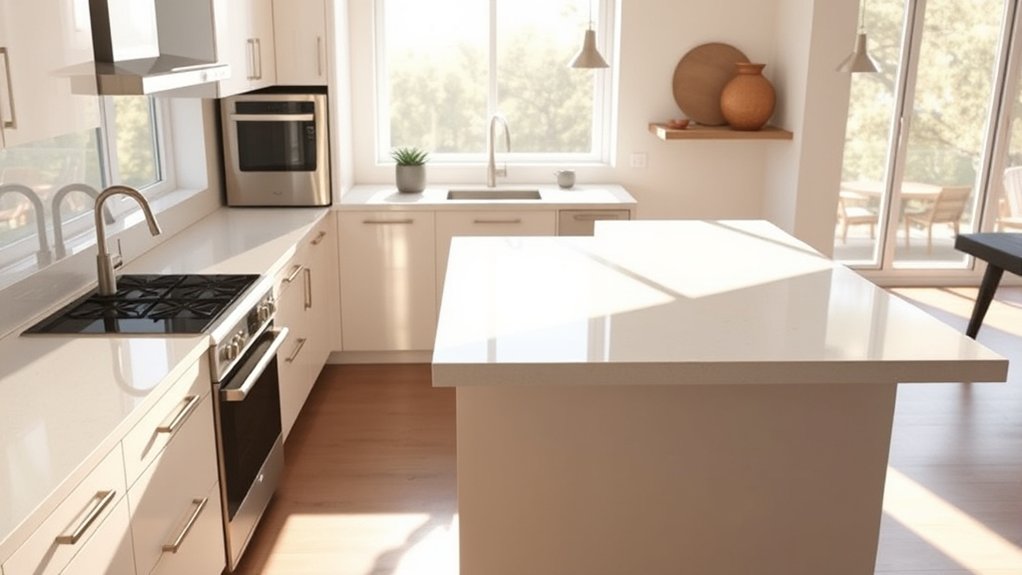
While kitchen counter heights can vary, the standard height typically falls around 36 inches from the floor. This measurement suits most kitchen tasks, offering a comfortable workspace for chopping, mixing, and prepping without straining your back.
The standard 36-inch kitchen counter height provides a comfortable, ergonomic workspace for all your cooking needs.
When planning your kitchen, you’ll find this height works well with most appliances and cabinetry, making it a practical choice.
Modern decor trends don’t just focus on style; they emphasize functionality too. You’ll notice counters at this height complement open layouts and minimalist designs effortlessly.
Plus, with various material options available, from sleek quartz to rustic butcher block, you can customize your counters to fit your aesthetic and practical needs.
Whether you prefer the durability of granite or eco-friendly bamboo, the 36-inch standard provides a versatile base.
Sticking to this height ensures your kitchen looks cohesive while giving you the flexibility to investigate the latest decor trends and material options without compromising comfort or usability.
How Your Height Changes the Best Counter Height for You
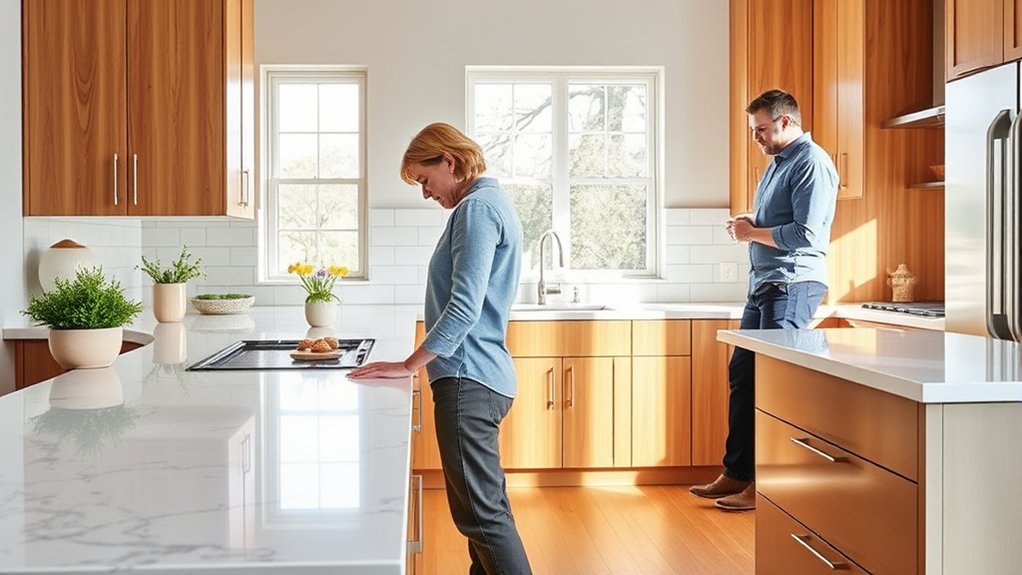
Your height plays a big role in finding the ideal counter height for your needs. The right height can reduce strain and make everyday tasks more comfortable. Let’s look at how to adjust your counters so they fit you better and support good ergonomics.
Ideal Height Based On
Because everyone’s height varies, the best kitchen counter height should adapt to your specific measurements to guarantee comfort and efficiency. You want a surface that fits your reach and posture, preventing strain during cooking.
Consider these ideal height guidelines based on your height:
- If you’re under 5’2″, counters around 34 inches work best.
- For heights between 5’2″ and 5’8″, 36 inches is ideal.
- Taller individuals (5’8″ to 6′) benefit from 38-inch counters.
- Above 6 feet, 40-inch counters provide better ergonomics.
While selecting your counter height, also think about color schemes and material choices. Lighter colors and smooth materials can visually improve space and comfort, making your custom height both functional and stylish.
Ergonomic Benefits Explained
When you choose a kitchen counter height that matches your stature, you reduce strain on your back, shoulders, and wrists. This ergonomic alignment helps you work comfortably for longer periods.
Your height directly influences the ideal counter height, ensuring tasks like chopping or mixing don’t cause unnecessary fatigue. Besides comfort, consider color coordination and material durability to maintain a pleasant, long-lasting workspace.
| Your Height (in) | Recommended Counter Height (in) | Benefits |
|---|---|---|
| 5’0” – 5’3” | 34 – 35 | Reduces wrist strain |
| 5’4” – 5’7” | 36 | Supports proper back posture |
| 5’8” – 6’0” | 37 – 38 | Improves shoulder comfort |
| 6’1”+ | 39+ | Prevents bending and fatigue |
Choosing well-matched colors and durable materials complements ergonomic design.
Adjusting For Comfort
Although standard counter heights suit many kitchens, adjusting them based on your height guarantees greater comfort and efficiency. When you customize your counter height, you reduce strain and make cooking more enjoyable.
Here’s how to tailor your kitchen counters for your height:
- Measure your elbow height while standing to find the ideal counter height.
- Add decorative accents at eye level to keep the space inviting without sacrificing functionality.
- Incorporate smart storage solutions like pull-out shelves or drawers that complement the adjusted height.
- Test different counter heights with temporary supports before final installation to guarantee comfort.
Which Kitchen Tasks Should Affect Your Counter Height

When choosing your counter height, think about the kitchen tasks you do most, such as chopping, kneading, or mixing. The right height should keep your wrists in a natural position and reduce strain on your back during food prep.
Also, consider how you use your appliances. Items like stand mixers, blenders, and countertop ovens may need extra clearance or a slightly different height for easier access.
Food Preparation Ergonomics
Since you spend a lot of time preparing food, your kitchen counter height should match the tasks you perform most often. Ergonomic design guarantees comfort and efficiency, so consider the following:
- Chopping and slicing require a counter height that prevents back strain, usually around 36 to 38 inches.
- Mixing and stirring benefit from counters slightly lower, around 34 to 36 inches, allowing better leverage.
- Rolling dough or kneading calls for a sturdy surface at an ideal height to avoid wrist fatigue.
- Decorative accents and material selection impact not only aesthetics but also your comfort during food prep. Choose materials that feel good under your hands and suit your style.
Adjusting your counter height based on these tasks will improve your kitchen’s functionality and reduce fatigue.
Appliance Usage Considerations
How do your appliances influence the ideal counter height in your kitchen? Consider the appliance placement carefully, as it directly impacts your comfort and efficiency.
For example, if you frequently use a stand mixer or blender, having a counter height that matches the appliance’s best operating level reduces strain.
Similarly, appliances built into the counter, like ovens or dishwashers, should align with your countertop height for seamless use.
Don’t forget that counter materials can affect your choice too. Thicker materials raise the surface, altering the overall height.
When planning, think about which kitchen tasks you perform most and how your appliances fit into those workflows.
Adjusting counter height based on appliance usage ensures you work comfortably and safely, making your kitchen a more functional space.
Selecting Counter Heights for Seated and Standing Activities
Although kitchen counters often serve multiple purposes, selecting the right height for both seated and standing activities guarantees comfort and efficiency. You’ll want to balance functionality with style, ensuring your counters accommodate tasks like meal prep, dining, and even displaying decorative accents.
Here’s how to choose the best counter heights for your needs:
- For standing tasks, such as chopping or cooking, aim for counters around 36 inches high, which suits most people comfortably.
- If you plan to sit while working or eating, consider a lower height, typically 28 to 30 inches, ideal for stools or chairs.
- Incorporate storage solutions beneath seated counters to maximize space without sacrificing usability.
- Use decorative accents to differentiate zones, making the progression between sitting and standing areas visually appealing.
How to Measure Your Ideal Kitchen Counter Height
To find your ideal kitchen counter height, start by measuring your height and considering how you’ll use the space. Will you mostly be chopping and mixing, or do you also plan to sit while working at the counter?
Next, use a tape measure or adjustable tools to test different heights. This lets you see what feels most comfortable before making a final decision.
Assess Your Height
Why does your height matter when choosing kitchen counter height? Because your comfort and efficiency depend on it. Counter height myths often suggest a one-size-fits-all approach, but kitchen height trends show customization is key.
To assess your ideal counter height:
- Stand upright with your arms bent at 90 degrees.
- Measure from the floor to your bent elbow.
- Note this measurement as your ideal counter height.
- Adjust it slightly for specific tasks like chopping or baking.
Consider Counter Functions
Your height sets a baseline, but the tasks you’ll perform shape the ideal kitchen counter height even more. If you spend lots of time chopping vegetables, you’ll want counters at a height that reduces strain on your wrists and back.
Consider the countertop materials, too. Hard surfaces like granite or quartz won’t flex, so the height must feel comfortable for extended use. For baking, a slightly lower counter can make rolling dough easier.
Also, think about kitchen lighting. Good illumination can reduce eye strain and improve precision tasks, so confirm your counter height works well with your existing or planned lighting setup.
Use Measuring Tools
Three simple tools can help you find the perfect kitchen counter height: a tape measure, a level, and a step stool. Using these tools, you can apply effective measuring techniques and make an accurate height comparison to suit your needs. Here’s how to proceed:
- Stand on the step stool to mimic your usual cooking position.
- Use the tape measure to record the height from the floor to your elbows.
- Compare this measurement with standard counter heights using your level to ensure surfaces are even.
- Modify your ideal counter height based on comfort and task requirements.
Adjusting Counter Heights for Accessibility and Ergonomics
When you adjust kitchen counter heights for accessibility and ergonomics, you create a space that works better for everyone. Tailoring your counters to fit various heights reduces strain during food prep, making cooking more enjoyable and safer.
Consider the needs of all users, whether someone uses a wheelchair or prefers standing, to decide on the ideal height. Incorporating decorative accents and color schemes that complement these adjustments can improve both function and style.
For example, lower counters in a vibrant color can highlight accessibility zones, while taller areas maintain a cohesive look with matching accents. Paying attention to ergonomics helps prevent back and wrist pain, especially if you spend a lot of time cooking or baking.
Small changes, like varying heights or adding pull-out surfaces, can greatly improve comfort. By thoughtfully adjusting counter heights, you ensure your kitchen is welcoming, efficient, and visually appealing for everyone who uses it.
Why Custom Kitchen Counter Heights Might Work Better for You
Although standard counter heights suit many kitchens, custom kitchen counter heights can better match your specific needs and habits. Tailoring the height can improve comfort and functionality, especially when paired with the right countertop materials and thoughtful color coordination.
Custom kitchen counter heights enhance comfort and functionality, especially when combined with ideal materials and coordinated colors.
Consider these reasons to opt for custom heights:
- Personal Comfort: Choose heights that reduce strain during meal prep or cooking.
- Task-Specific Zones: Customize areas for chopping, baking, or seating based on your routine.
- Aesthetic Harmony: Match countertop materials and colors with cabinetry and backsplash to create a cohesive look.
- Family Needs: Accommodate everyone, from kids to tall adults, ensuring usability for all.
How Counter Height Impacts Kitchen Workflow and Efficiency
Because your kitchen counter height directly affects how comfortably and efficiently you work, choosing the right measurement can streamline your workflow. When you focus on kitchen height ergonomics, you reduce strain on your back and wrists, making food prep faster and less tiring. Counter height customization lets you tailor surfaces to your needs, boosting productivity and comfort.
Here’s how different counter heights impact common tasks:
| Task | Ideal Counter Height | Workflow Benefit |
|---|---|---|
| Chopping | 36 inches | Reduces wrist strain |
| Mixing | 34 inches | Easier arm movement |
| Rolling dough | 38 inches | Prevents bending |
| Washing dishes | 36 inches | Comfortable posture |
Design Considerations for Multi-Level Kitchen Counters
Choosing the right counter height for each task helps you work comfortably, but kitchens often need to accommodate multiple activities and users. Multi-level kitchen counters solve this by offering tailored heights, enhancing both function and style.
When designing these counters, consider these key factors:
- Task-specific heights – Set prep areas lower (34-36 inches) and baking or seating zones higher (40-42 inches) to suit different activities.
- Material durability – Select materials that withstand varied uses; for example, quartz for prep areas and wood for breakfast bars.
- Aesthetic appeal – Use complementary colors and textures across levels to maintain a cohesive, elegant look.
- User diversity – Account for varying heights and accessibility needs to ensure comfort for all household members.
Tips for Testing Kitchen Counter Heights Before Installation
When you’re planning your kitchen counters, testing different heights before installation can save you from discomfort and costly adjustments later. Start by setting up temporary surfaces at various counter heights, including standard (36 inches), lower, and higher options, using sturdy boxes or adjustable tables.
Spend time performing daily kitchen tasks like chopping, stirring, and washing dishes at each height to see which feels most comfortable. Pay attention to your posture. An ergonomic design supports your natural stance and reduces strain on your back and wrists.
Invite family members to try these setups too, as varying heights may be necessary for a multi-user kitchen. Use a tape measure to note the heights you prefer and consider your primary cooking tasks.
Testing in real conditions helps you decide on the most practical counter height for your needs. By prioritizing comfort and function now, you can ensure your kitchen counters improve your cooking experience for years to come.
Frequently Asked Questions
What Materials Are Best for Kitchen Countertops?
You’ll want materials that balance countertop durability with aesthetic appeal. Quartz is great—it’s tough, low-maintenance, and looks sleek.
Granite offers natural beauty and strong durability but needs occasional sealing. If you want a classic look, marble’s stunning but can scratch easily.
For budget-friendly options, laminate provides decent durability and a wide range of styles. Ultimately, choose what fits your lifestyle and design goals best.
How Do I Maintain and Clean Kitchen Counters?
Imagine your kitchen counters sparkling like new every day—that’s the power of good countertop maintenance. You’ll want to clean spills immediately with a gentle cleanser and soft cloth to avoid stains.
For stubborn spots, use baking soda or a mild abrasive suited to your material. Avoid harsh chemicals and abrasive pads.
Regularly sealing stone countertops protects them too. Follow these cleaning tips, and your counters will stay beautiful and durable for years to come.
What Is the Cost Difference Between Standard and Custom Counters?
When you consider counter height adjustments, custom counters usually cost more than standard ones. Standard counters typically fall within a fixed price range, while custom options vary based on materials and design.
The cost comparison often shows custom counters can be 20-50% higher due to personalized dimensions and features. If you want a perfect fit or unique style, expect to spend extra, but it’s worth it for tailored functionality and aesthetics.
Can I Install Kitchen Counters Myself or Hire a Professional?
Of course, you can perform a DIY installation and instantly become the world’s most celebrated countertop hero—unless you enjoy hours of frustration and uneven surfaces.
If you prefer your counters level and your sanity intact, professional assistance is worth every penny. While DIY installation saves money upfront, pros bring expertise, proper tools, and efficiency.
How Do Kitchen Counter Heights Affect Resale Value?
You’ll find that counter height ergonomics play a big role in resale value impact. If your counters are too low or too high, potential buyers might see the kitchen as less functional or outdated.
Conclusion
Choosing the right kitchen counter height can transform your cooking experience. Imagine Sarah, who adjusted her counters to fit her height perfectly. She now cooks comfortably without back pain.
By considering your height, tasks, and workflow, you’ll create a kitchen that feels just right. Don’t settle for standard; customize your counters to match your needs.
Testing heights before installation guarantees your kitchen works with you, making every meal prep a joy rather than a strain. The right kitchen counter height can make all the difference.