7 Steps to Clean Grease Off Kitchen Cabinets
Greasy kitchen cabinets can make your entire kitchen feel dirty, even after you’ve cleaned everything else. You’re not alone—many people struggle to remove stubborn buildup without damaging the cabinet finish. These simple tips for how to clean grease off kitchen cabinets can help.
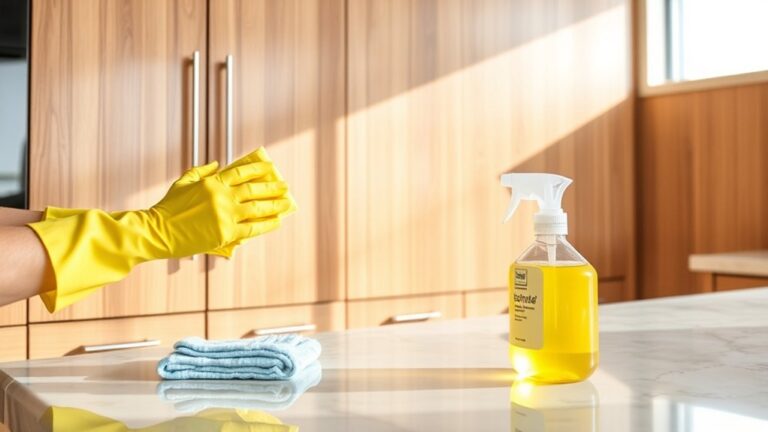
To clean grease off your kitchen cabinets, first gather tools like a microfiber cloth, soft brush, and a mild cleaner. Begin by removing dust and loose dirt with a cloth or vacuum.
Choose a gentle cleaner, such as a vinegar and soap mix, and spray it on greasy spots. Let it sit to break down grime, then wipe with a soft cloth.
Rinse and dry thoroughly to avoid residue buildup. Keep your cabinets clean regularly, and you’ll soon uncover even more tips to maintain a fresh kitchen.
Key Takeaways
- Gather a microfiber cloth, soft brush, mild cleaning solution, rubber gloves, and warm water for effective grease removal.
- Remove dust and loose dirt with a microfiber cloth, vacuum brush, or compressed air to prevent grime from embedding.
- Use gentle cleaners like diluted vinegar with dish soap, baking soda, or lemon juice to safely dissolve grease.
- Apply the cleaner generously to greasy spots and let it sit for several minutes to soften and break down the grease.
- Wipe away the grease with a soft cloth, rinse to remove residue, and dry immediately to prevent water spots.
Gather Tools to Clean Grease Off Kitchen Cabinets
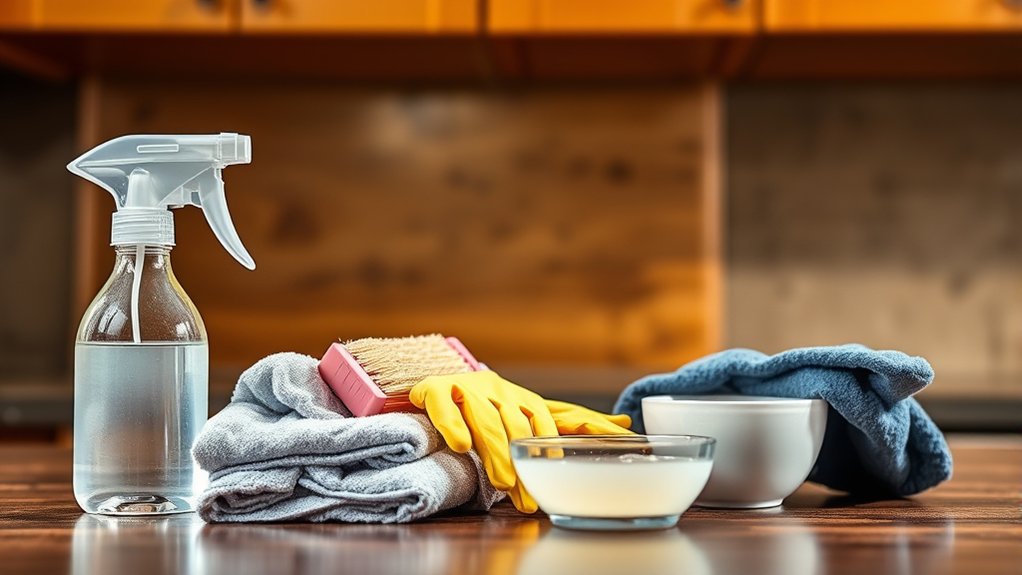
Before you start scrubbing, gather five essential tools to clean grease off your kitchen cabinets efficiently. First, grab a microfiber cloth; it’s gentle enough to protect the paint finish but effective at lifting grease.
Next, use a soft-bristle brush or an old toothbrush to get around cabinet hardware without scratching surfaces. You’ll also need a spray bottle filled with a mild cleaning solution, like diluted dish soap, to break down grease without damaging the paint finish.
Don’t forget rubber gloves to protect your hands from harsh cleaners, and finally, have a bucket of warm water ready for rinsing.
Remove Dust and Loose Dirt Before Cleaning
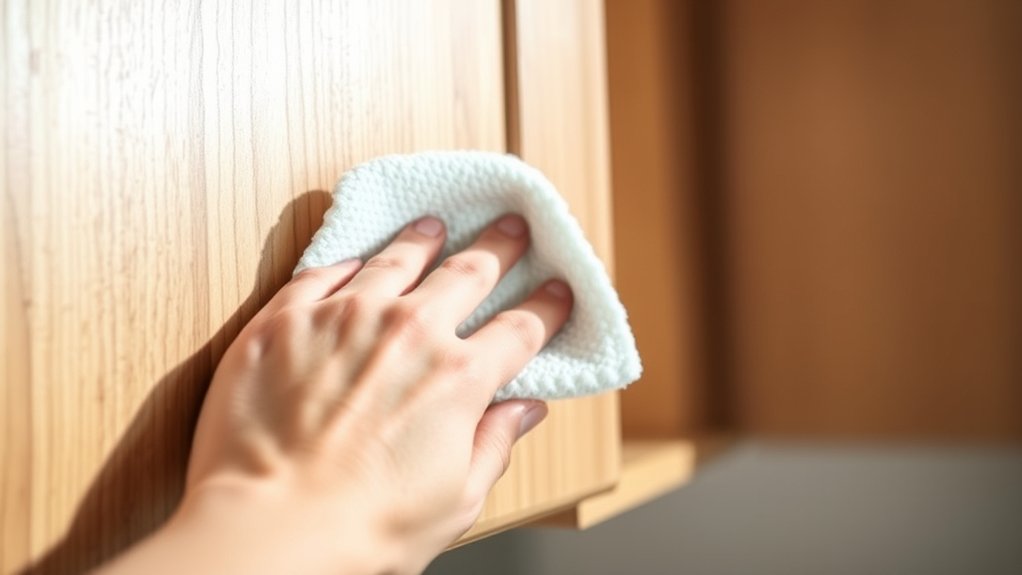
Since grease tends to stick to dust and dirt, you’ll want to remove any loose particles from your kitchen cabinets first. Effective dust removal and dirt elimination prevent grime from embedding deeper during cleaning.
Start by using a microfiber cloth or a soft brush to gently wipe down surfaces, focusing on corners and edges where dust collects. Vacuuming can also help, especially on textured cabinet surfaces.
Here’s a simple checklist to guide your dust removal process:
| Tool | Purpose | Tip |
|---|---|---|
| Microfiber Cloth | Captures dust gently | Use dry or slightly damp |
| Soft Brush | Dusts crevices | Choose natural bristles |
| Vacuum Cleaner | Removes loose dirt | Use brush attachment |
| Feather Duster | Quick surface dusting | Avoid spreading dust into air |
| Compressed Air | Blows out dirt | Use for hard-to-reach spots |
This step ensures your cabinets are prepped for thorough grease cleaning without spreading dirt around.
Pick a Cleaner That Cuts Grease Without Harsh Chemicals
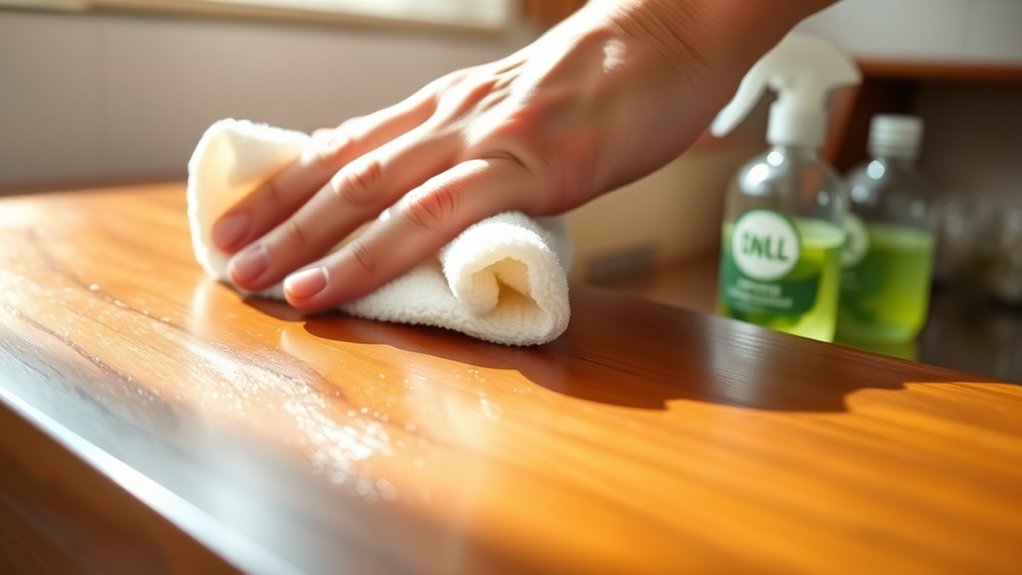
Although grease can be tough to remove, you don’t have to rely on harsh chemicals to get your kitchen cabinets clean. Instead, choose a cleaner that effectively cuts grease while being gentle on surfaces and safe for your home.
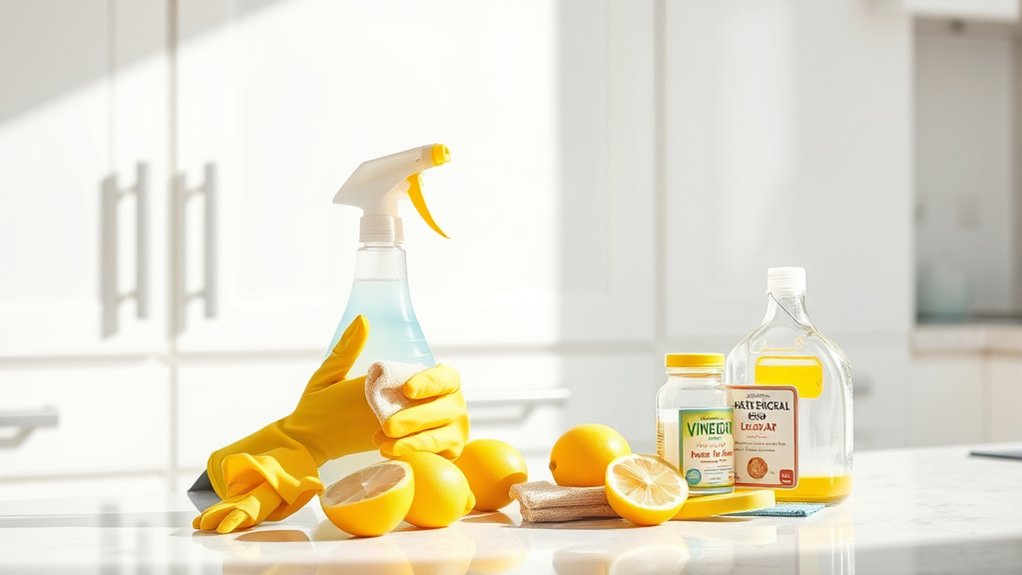
Natural alternatives like white vinegar, baking soda, and lemon juice work wonders as homemade solutions. These ingredients break down grease without leaving behind harmful residues or strong odors.
To make a simple homemade cleaner, mix equal parts water and white vinegar in a spray bottle. Add a few drops of dish soap for extra grease-cutting power.
Baking soda can be sprinkled on a damp cloth to scrub stubborn spots gently. Lemon juice’s acidity also helps dissolve grease and leaves a fresh scent.
Apply the Cleaner and Let It Soften Grease
Once you’ve chosen your cleaner, spray or apply it generously to the greasy areas of your kitchen cabinets. Cover every spot where oil residue has built up, especially near the stove and handles.
Let the cleaner sit for several minutes. This waiting period softens stubborn stains and breaks down the grease, making it easier to remove later.
Don’t rush this step. The longer the cleaner works, the more effectively it loosens the grime without requiring heavy scrubbing.
For extremely tough oil residue, consider applying a second layer after the first has had time to penetrate. This helps target persistent spots without damaging your cabinet’s finish.
Wipe Away Grease Using Gentle, Effective Techniques
After letting the cleaner soften the grease, grab a soft cloth or sponge and gently wipe the cabinet surfaces. Avoid harsh scrubbing, which can damage the grease resistant finish that protects your cabinets.
Instead, use light, circular motions to lift away grime without harming the protective layer. Pay close attention to corners and edges where grease tends to build up.
If your cabinets have proper cabinet sealing, this will help prevent grease from penetrating deeper, making your cleaning efforts more effective. Be careful not to saturate the wood, as excess moisture can weaken the sealing over time.
Using gentle techniques preserves both the look and function of your cabinets, ensuring the grease resistant finish remains intact.
Rinse and Dry Cabinets to Avoid Sticky Residue
To prevent sticky residue from forming on your kitchen cabinets, you need to rinse away any leftover cleaner thoroughly. After wiping down the grease, use a clean, damp cloth to rinse the surface, ensuring no cleaner remains.
Rinse thoroughly with a damp cloth after cleaning to avoid sticky residue on your kitchen cabinets.
This step is essential because residue can attract more dirt and create a sticky film. Keep in mind that different cabinet materials respond differently—wood cabinets require gentler rinsing with minimal water to avoid damage, while laminate or metal can handle more moisture.
Once rinsed, dry the cabinets immediately with a soft, dry cloth or microfiber towel. This prevents water spots and further buildup.
Your cleaning frequency plays a key role here: the more often you clean, the less chance residue has to accumulate. So, stick to a regular schedule that suits your kitchen’s use, and always rinse and dry thoroughly.
This simple step keeps your cabinets looking fresh and grease-free without risking sticky leftover grime.
Keep Cabinets Clean to Prevent Future Grease Build-Up
How often you clean your kitchen cabinets directly affects how much grease builds up over time. To keep your cabinets looking fresh, make cleaning part of your routine.
Depending on your cabinet material, whether wood, laminate, or metal, choose the right cleaner that won’t damage the finish. Wipe down surfaces regularly with a mild detergent or a vinegar-water solution to prevent grease from settling in.
Implementing preventative maintenance is key. After cooking, quickly wipe splatters and spills to stop grease from hardening.
Use a microfiber cloth to avoid scratching delicate cabinet surfaces. For wood cabinets, consider applying a protective polish occasionally to create a barrier against grease.
Frequently Asked Questions
Can I Use Vinegar to Clean Grease off Kitchen Cabinets?
Yes, you can use vinegar to clean grease off kitchen cabinets, but keep vinegar safety in mind. It’s acidic, so avoid using it on natural stone or unsealed wood surfaces.
Mix vinegar with water to dilute it and protect your cabinets. If you’re worried about vinegar, consider alternative cleaning methods like baking soda paste or mild dish soap with warm water. These options effectively cut grease without risking damage.
How Often Should I Deep Clean My Kitchen Cabinets?
You know what they say, “A stitch in time saves nine.” You should deep clean your kitchen cabinets every three to six months, depending on cabinet materials and how often you cook.
Wood cabinets may need gentler care and less frequent cleaning, while laminate or painted ones tolerate more. Adjust your cleaning frequency based on grease buildup and kitchen activity to keep your cabinets looking fresh and lasting longer.
Are There Specific Cleaners Safe for Painted Cabinets?
Yes, you should use cleaners specifically designed for painted finishes to protect your cabinets. Avoid harsh chemicals that can damage the paint or cause discoloration.
Look for gentle, non-abrasive cleaners with good chemical compatibility for painted surfaces. Mild dish soap mixed with water or cleaners labeled safe for painted wood work well.
Always test a small area first to guarantee the cleaner won’t harm your cabinet’s finish.
What Should I Do if Grease Stains Persist After Cleaning?
If grease stains persist after cleaning, try alternative stain removal methods like baking soda paste or vinegar solutions. You can also use a gentle degreaser designed for kitchen surfaces.
Don’t scrub too hard to avoid damaging the finish. Instead, apply the cleaner and let it sit for a few minutes before wiping.
Adjust your cleaning techniques by repeating the process or combining methods for stubborn stains until your cabinets look fresh again.
Can Grease Damage the Cabinet Finish Over Time?
You might be surprised to learn that grease buildup can indeed damage your cabinet finish over time. Depending on your cabinet material, whether wood, laminate, or painted surfaces, grease can seep in, causing discoloration, warping, or peeling.
If you don’t address it promptly, the damage worsens, making your cabinets look worn and harder to repair. So, keeping grease at bay isn’t just about cleanliness; it’s essential for preserving your cabinets’ lifespan and beauty.
Conclusion
You might think cleaning grease off your kitchen cabinets is a formidable chore, but the right tools and a gentle cleaner make all the difference. Funny enough, the same steps you use to tackle stubborn grease can also keep your cabinets shining longer.
By staying consistent with these simple habits, you’ll not only clean but also protect your cabinets, making your kitchen a fresher, more inviting space every day. These tips for cleaning grease off kitchen cabinets can help keep them looking their best.