How Much Does a New Kitchen Cost?
Planning a new kitchen can feel overwhelming, especially when you’re unsure how much everything will cost. You’re not alone—many homeowners struggle to balance their dream design with a realistic budget.
This guide breaks down the typical new kitchen cost and highlights where you may be able to save.
You’ll typically spend between $12,000 and $35,000 on a new kitchen, depending on your choices for cabinets, countertops, and appliances. Smaller kitchens cost less, while high-end materials and structural changes push prices up.
You can save by choosing quality stock cabinets or laminate countertops and handling simple tasks yourself. Budgeting extra for unexpected expenses is smart.
If you want to investigate how different upgrades and materials affect your costs, keep exploring these details.
Key Takeaways
- A new kitchen typically costs between $12,000 and $35,000, depending on size, materials, and appliances.
- Cabinets and countertops are the largest expenses, with costs varying by material and customization level.
- Structural changes and premium fixtures significantly increase renovation costs.
- DIY can reduce labor expenses but is best for simple tasks. Professionals are needed for plumbing and electrical work.
- Always budget an extra 10–20% for unexpected costs like repairs or upgrades.
Typical Kitchen Renovation Costs: What to Expect
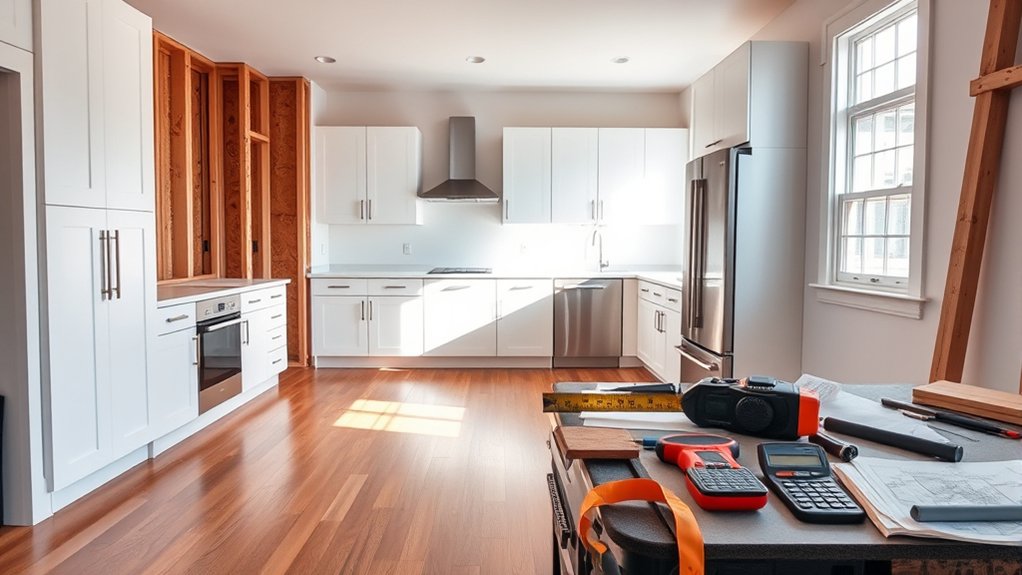
When you plan a kitchen renovation, understanding typical costs helps you set a realistic budget. On average, a kitchen remodel can cost anywhere from $12,000 to $35,000, depending on the size and materials you choose.
You’ll likely spend a significant portion on cabinets and countertops, which vary widely in price. Don’t forget essential updates like lighting fixtures, which improve both functionality and ambiance. Choosing modern, energy-efficient fixtures can be a smart investment.
Color schemes also play a subtle role in costs. While paint itself is affordable, selecting premium finishes or coordinating multiple tones may add to expenses.
Plus, if you opt for custom cabinetry or specialized backsplashes to complement your color scheme, the price rises.
Which Factors Influence Kitchen Renovation Costs?
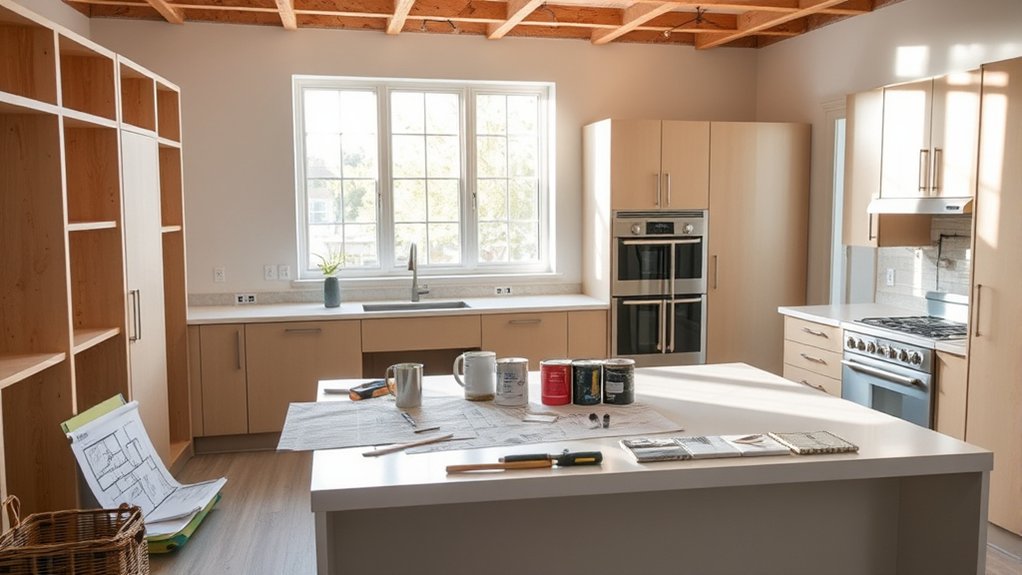
Although many elements affect your kitchen renovation budget, several key factors play the biggest role in determining the final cost. One major influence is kitchen lighting. Choosing high-end fixtures or custom designs can substantially increase expenses, while basic lighting options help keep costs down.
Appliance brands also impact your budget. Premium brands with advanced features come at a higher price compared to standard models.
Beyond lighting and appliances, the scope of your renovation matters. Structural changes like moving plumbing or walls add labor and material costs. Your choice of materials for countertops, flooring, and backsplashes influences pricing too.
Labor rates in your area and whether you hire specialists or general contractors also affect your overall spend. By understanding these factors, you can make informed decisions that balance style, function, and your budget effectively.
How Much Do Kitchen Cabinets Usually Cost?
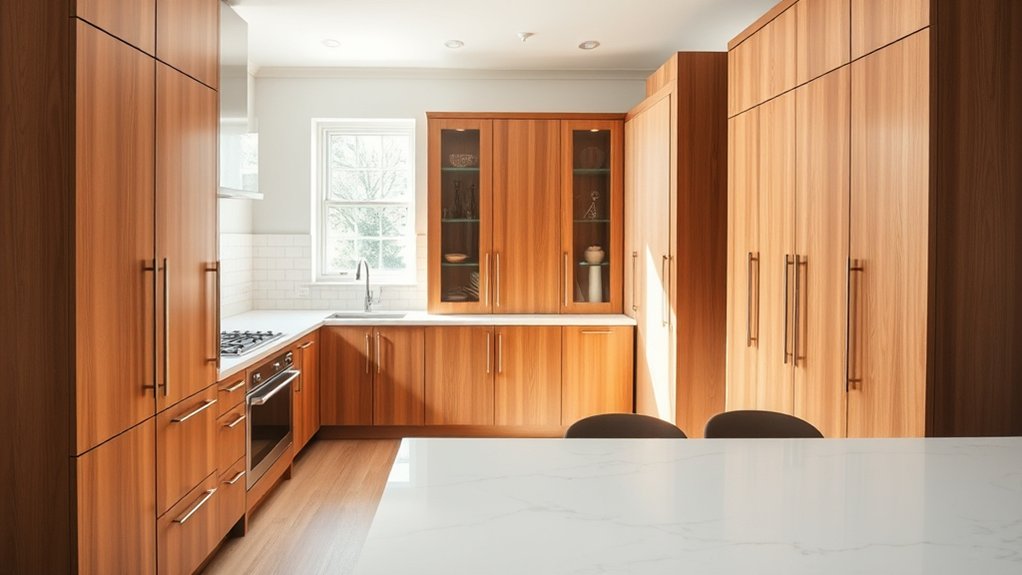
How much you’ll spend on kitchen cabinets depends largely on the materials, design, and quality you choose. Basic stock cabinets are the most affordable, often costing between $100 to $300 per linear foot.
Semi-custom cabinets offer more design flexibility and run around $150 to $650 per linear foot. For high-end, custom cabinets, expect to pay $500 to $1,200 or more per linear foot.
Your choice impacts not just cost but also how your kitchen lighting highlights the space and complements your flooring options. For instance, sleek cabinets with under-cabinet lighting can brighten your countertops and make your flooring stand out.
Keep in mind that quality craftsmanship guarantees durability, which saves money long-term. When budgeting, consider how your cabinets will integrate with other elements like kitchen lighting and flooring options to create a cohesive, functional kitchen that fits your style and budget.
Kitchen Countertop Price Ranges
When choosing a kitchen countertop, you’ll want to consider popular materials like granite, quartz, and laminate, each with its own price range. The overall cost can also vary depending on factors such as countertop size, edge style, and installation. Let’s take a closer look at what you can expect to spend based on these variables.
Popular Countertop Materials
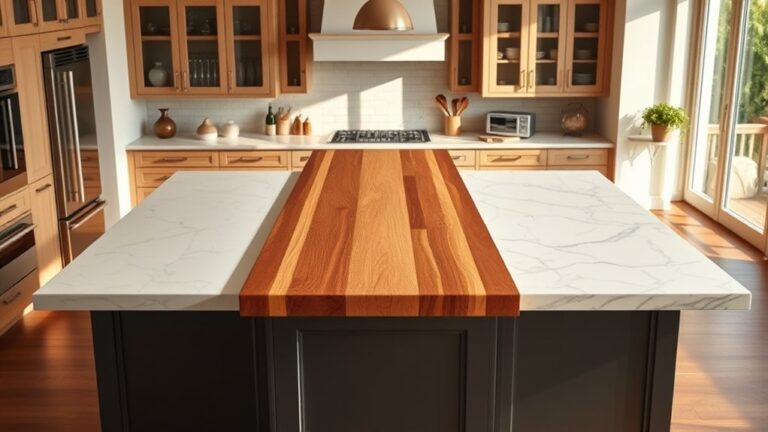
Since your kitchen countertop plays a crucial role in both functionality and style, choosing the right material is necessary. You can find popular options like granite and quartz, known for durability and sleek looks.
If you want something unique, consider vintage styles such as butcher block or soapstone, which add character and warmth. For eco friendly options, recycled glass or bamboo countertops offer sustainability without sacrificing beauty.
Laminate remains a budget-friendly choice, with modern designs that mimic pricier materials. Each option impacts how your kitchen feels and functions, so think about your lifestyle and design preferences.
Picking the right countertop material guarantees your kitchen is both practical and visually appealing for years.
Cost Factors and Estimates
Choosing your countertop material sets the tone for your kitchen, but understanding the cost behind each option helps you budget effectively. Granite and quartz range from $50 to $100 per square foot, offering durability with moderate appliance maintenance.
Laminate counters, priced between $10 and $40 per square foot, are budget-friendly but less resistant to heat and scratches. Marble, while elegant, often costs $75 to $150 per square foot and requires more upkeep.
How Kitchen Appliances Affect Your Budget
Although kitchen appliances might seem like just another line item, they can considerably impact your overall budget. When choosing appliances, you’ll want to balance quality, brand reputation, and energy efficiency.
Premium appliance brands often come with a higher upfront cost but can save you money in the long run through lower energy bills and longer lifespans. Energy-efficient models may cost more initially but reduce your monthly utility expenses, making them a smart investment.
Here’s a quick comparison of typical appliance costs based on brand and efficiency:
| Appliance | Standard Brand Cost | Energy-Efficient Brand Cost |
|---|---|---|
| Refrigerator | $800 | $1,200 |
| Oven | $700 | $1,100 |
| Dishwasher | $500 | $800 |
Keep in mind that selecting the right appliances affects both your kitchen’s functionality and your budget, so choose wisely to get the best value.
How Your Kitchen Size Affects the Budget
Your kitchen size can have a big impact on your overall budget. Smaller kitchens typically cost less because they require fewer materials and appliances. Larger kitchens, however, need more of everything, so expenses can add up quickly.
Small Kitchens Cost Less
Because smaller kitchens require fewer materials and less labor, they typically cost less to renovate or build. When you opt for a small kitchen, you can focus on cost-effective solutions without sacrificing style or functionality.
These kitchens often allow you to:
- Use fewer cabinets and countertops, lowering material expenses.
- Choose compact appliances that consume less energy and cost less upfront.
- Simplify the layout, reducing labor time and complexity.
Small kitchens also let you invest in quality finishes since you’re working with a smaller space overall. By prioritizing efficiency and smart design, you can create a beautiful kitchen that fits your budget.
If you’re aiming to renovate or build without overspending, small kitchens offer a practical and affordable path forward.
Larger Kitchens Require More
When you choose a larger kitchen, expect your costs to rise since more materials and labor are involved. Bigger spaces demand extra cabinetry, countertops, and appliances, all adding up quickly.
You’ll also need more kitchen lighting to adequately illuminate the expanded area, which can increase electrical work and fixture expenses.
Moreover, your flooring options will impact the budget. Covering a larger floor with high-end materials like hardwood or tile costs substantially more than flooring a smaller kitchen.
Keep in mind that installation time grows with kitchen size, pushing labor costs higher.
To manage your budget, prioritize essential upgrades and consider cost-effective materials for flooring and lighting.
Ultimately, the bigger your kitchen, the more you’ll invest, but thoughtful choices can help you stay within your financial goals.
Which Kitchen Upgrades Are Worth the Splurge?
Although it’s tempting to cut costs on every detail, investing in certain kitchen upgrades can considerably boost both functionality and home value. When deciding where to splurge, focus on features that combine style, efficiency, and durability.
Investing wisely in kitchen upgrades enhances both functionality and home value with style and durability.
Upgrading to eco friendly fixtures not only reduces your environmental footprint but also lowers utility bills over time. Modern lighting improves the kitchen’s ambiance and amplifies visibility, making cooking safer and more enjoyable.
Consider these key upgrades worth your investment:
- High-quality countertops: Durable surfaces like quartz or granite add elegance and stand up to daily wear.
- Energy-efficient appliances: Save money long-term with appliances that use less energy and provide better performance.
- Custom cabinetry: Tailored storage solutions maximize space and keep your kitchen organized.
How to Save Money Without Sacrificing Quality
You can save money on your kitchen remodel by choosing smart materials that look great without breaking the bank. Consider which tasks you can handle yourself, and hire a professional when needed to avoid costly mistakes. Most importantly, focus your budget on the upgrades that make the biggest difference in both quality and style.
Smart Material Choices
How can you choose materials that keep your kitchen looking fresh without breaking the bank? Start by exploring smart material choices that blend style, durability, and cost-effectiveness. Consider these options:
- Opt for eco friendly materials like bamboo or recycled glass. They save money long-term and support sustainability.
- Incorporate vintage design elements using reclaimed wood or antique fixtures. They add timeless charm without high costs.
- Choose laminate countertops with modern finishes that mimic expensive stone. They’re budget-friendly and easy to maintain.
DIY Versus Professional
When deciding between tackling your kitchen renovation yourself or hiring a professional, weighing the potential savings against the quality of the final result is key. Doing it yourself can save labor costs, but mistakes with kitchen lighting or appliance installation may cost more in the long run.
Professionals guarantee proper wiring and setup, protecting your appliance warranties and preventing costly repairs. If you have experience and the right tools, handling simpler tasks like painting or cabinet assembly can cut expenses without sacrificing quality.
However, for electrical work or plumbing, hiring experts is safer and preserves warranties. Carefully assess your skills and the project’s complexity to decide when DIY makes sense and when professional help guarantees a durable, well-functioning kitchen.
Prioritize Key Upgrades
Although it’s tempting to upgrade every feature in your kitchen, focusing on key improvements delivers the best value. You can save money without sacrificing quality by prioritizing what truly impacts your kitchen’s look and function. Start with these essentials:
- Kitchen lighting: Good lighting improves ambiance and usability, so invest in energy-efficient, well-placed fixtures.
- Flooring options: Choose durable, affordable flooring like vinyl or laminate that withstands wear and complements your style.
- Cabinet hardware: Swapping out handles and knobs refreshes cabinets without a full replacement.
Should You Hire a Pro or DIY to Save on Costs?
Deciding whether to hire a pro or tackle your kitchen remodel yourself depends largely on your skills, time, and budget. If you’re confident in handling tasks like kitchen lighting installation or appliance placement, DIY can save you money.
However, pros bring expertise, ensuring safety and quality, especially with electrical and plumbing work.
| Option | Pros | Cons |
|---|---|---|
| Hiring a Pro | Expert advice on lighting & layout | Higher upfront cost |
| DIY | Saves labor costs | Time-consuming, potential errors |
| Hybrid | Handle simple tasks yourself | Hire pros for complex work |
Choosing a hybrid approach often strikes the best balance. You can install fixtures like kitchen lighting yourself while leaving appliance placement and wiring to professionals.
This way, you control costs without compromising safety or design. Consider your schedule and skill set carefully before deciding.
Planning Your Kitchen Budget for Unexpected Costs
Balancing DIY efforts with professional help can keep your kitchen remodel on budget, but unexpected costs may still pop up. To avoid surprises, plan for contingencies, especially when choosing kitchen lighting or flooring options.
Old wiring might require upgrades, or you could uncover subfloor damage when installing new flooring. Set aside a buffer of 10–20% of your total budget to cover these expenses.
Here’s what you should consider:
- Hidden repairs: Plumbing or electrical fixes often arise once work begins.
- Material upgrades: You might decide to switch to higher-end kitchen lighting or premium flooring options.
- Labor adjustments: Additional expert help may be necessary if DIY tasks get complicated.
Frequently Asked Questions
How Long Does a Typical Kitchen Renovation Take?
A typical kitchen renovation takes about 6 to 12 weeks, depending on the project’s complexity. When you’re setting your renovation timeline, keep in mind that budget planning plays a huge role in how smoothly things go.
Delays can happen if you don’t plan for unexpected costs or material availability. Stay organized, communicate with your contractor, and keep your budget flexible to help your renovation finish on time and within your financial limits.
What Permits Are Required for a Kitchen Renovation?
You’ll need permits for electrical, plumbing, and sometimes structural changes during your kitchen renovation. The permit process varies by location, so check with your local building department early.
If you’re altering your kitchen layout substantially, like moving walls or changing plumbing, permits are almost always required. Getting these approved ensures your work meets safety codes and prevents costly delays.
Don’t skip this step. It keeps your renovation smooth and compliant.
How Do I Choose the Right Kitchen Lighting?
Choosing the right kitchen lighting feels like trying to light up the entire universe! Focus on balancing lighting styles: ambient for overall light, task for work areas, and accent to highlight features.
When selecting fixtures, consider your kitchen’s size, style, and functionality. Don’t forget energy-efficient options and dimmers to regulate brightness.
Mixing pendant lights, recessed lighting, and under-cabinet fixtures ensures your kitchen looks stunning and works perfectly for you.
What Are the Best Materials for Kitchen Flooring?
When choosing kitchen flooring, you’ll want durable, stylish options. Kitchen tile options like porcelain or ceramic are great because they resist moisture and are easy to clean.
If you prefer warmth and classic looks, hardwood flooring styles such as oak or maple provide timeless beauty and durability.
You can mix both: tiles near wet areas and hardwood elsewhere—to get the best of both worlds. Pick materials that match your lifestyle and design taste.
How Can I Make My Kitchen More Energy-Efficient?
You can kill two birds with one stone by upgrading your kitchen with energy saving appliances and eco friendly fixtures. Swap out old bulbs for LED lights, and install low-flow faucets to reduce water use.
Choose Energy Star-rated refrigerators and dishwashers to cut electricity bills. Sealing windows and adding insulation keeps the space cozy, so your kitchen stays efficient without costing a fortune.
These simple moves make a big difference!
Conclusion
Renovating your kitchen is like painting a masterpiece—you’ll want to blend style, function, and budget seamlessly. Remember, every choice you make, from cabinets to appliances, shapes your final canvas.
By balancing quality with smart savings, you’ll craft a space that feels both fresh and timeless. Whether you hire a pro or roll up your sleeves, planning for surprises keeps your vision bright.
Ultimately, understanding how much a new kitchen costs helps turn your dream into a reality that sizzles with charm and value.