How to Sharpen a Kitchen Knife in 5 Easy Steps
Dull kitchen knives can make simple meal prep feel frustrating and unsafe. You’re not alone—many people struggle to keep their blades sharp, but learning how to sharpen a kitchen knife can make cooking easier and more enjoyable.
To sharpen your kitchen knife in five easy steps, first gather tools like a sharpening stone or honing rod and make certain your blade is clean and dry. Set up a safe, stable workspace for sharpening.
Use the stone at a 15-20 degree angle to restore the edge, then hone the blade smoothly to realign it.
Test sharpness carefully and store your knife properly.
Keep going to find tips for maintaining that razor-sharp finish longer.
Key Takeaways
- Clean and dry the knife before sharpening to ensure effective edge restoration.
- Soak a sharpening stone or apply honing oil, then hold the knife at a 15-20 degree angle.
- Use steady, even strokes from heel to tip on both sides of the blade until sharp.
- Hone the blade with a ceramic or steel rod using controlled strokes to realign the edge.
- Test sharpness carefully by slicing paper or lightly running the blade on a thumbnail.
Get the Tools You Need
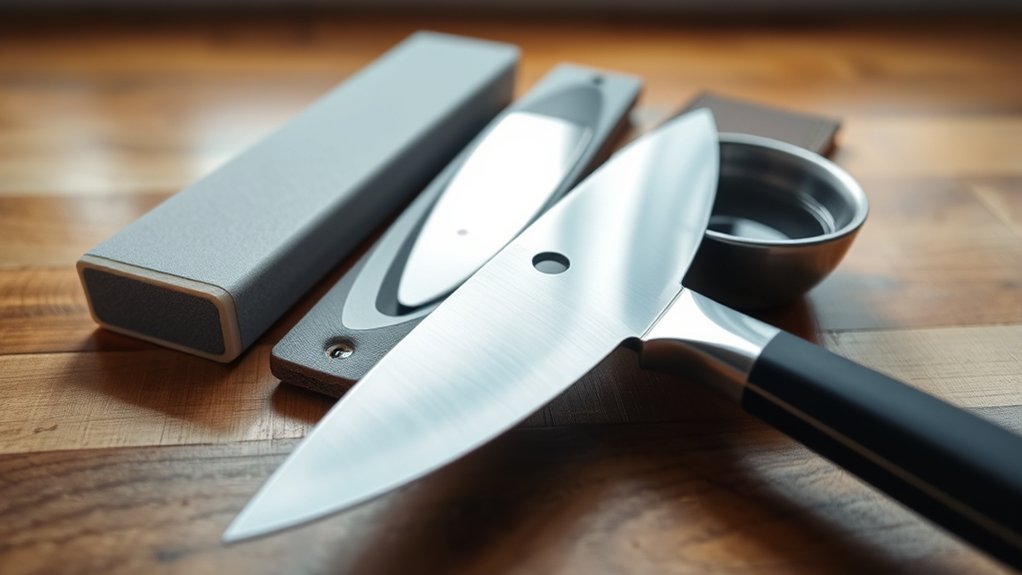
Before you begin sharpening your kitchen knife, gather the essential tools to make the process smooth and effective. You’ll need a sharpening stone or a honing rod, both of which help maintain your blade’s edge. Don’t forget a damp cloth to clean your knife after sharpening.
Gather sharpening tools like a stone or honing rod and a damp cloth for a smooth, effective process.
Prioritizing knife safety is vital. Always handle your blade carefully to avoid accidents during the sharpening process.
Additionally, consider storage solutions for your tools and knives once you’re done. A magnetic strip or a dedicated knife block keeps your sharpened knives safe and accessible, reducing the risk of dulling or injury.
Proper storage also protects your sharpening tools, ensuring they stay in good condition for future use. By preparing these essentials upfront, you’ll sharpen your kitchen knife efficiently while maintaining a safe and organized workspace.
Prepare Your Knife and Workspace
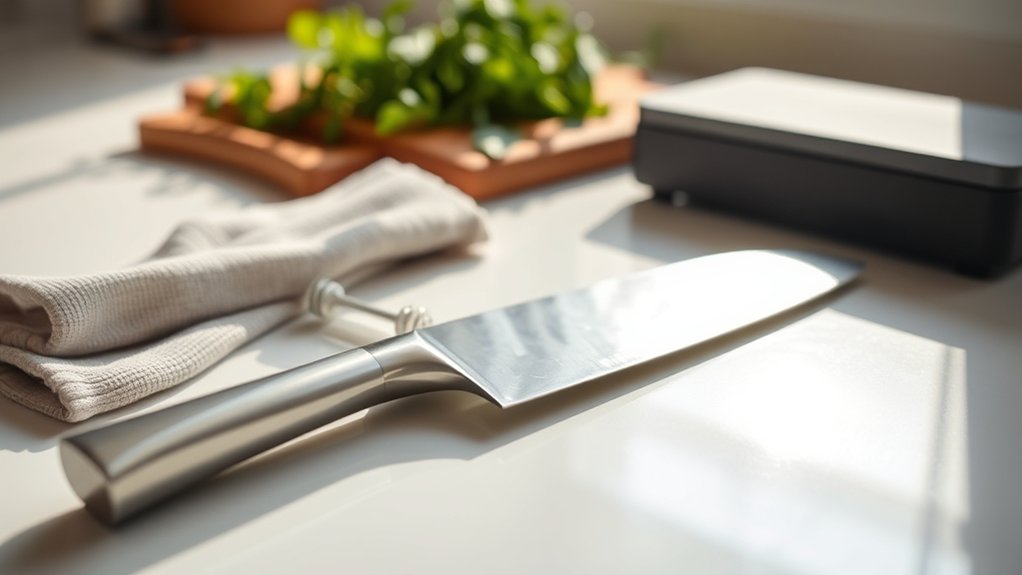
While preparing your knife and workspace, make certain your blade is clean and dry to guarantee effective sharpening. Residue or moisture can interfere with the sharpening process and damage the blade materials, especially if your knife has a carbon steel or high-carbon stainless steel blade.
Wipe the blade gently with a soft cloth and dry it thoroughly before you begin.
Next, clear your workspace to avoid accidents and make sure you have enough room to work comfortably. Lay down a non-slip mat or a damp towel to keep the sharpening stone or tool stable.
Remember, safety precautions are essential: always handle the knife carefully, keeping your fingers away from the edge, and wear cut-resistant gloves if you’re unsure.
Confirm your sharpening tools are within easy reach so you don’t have to stretch or reach awkwardly, which could lead to slips. Taking these steps sets you up for a safe and efficient sharpening session.
Use a Sharpening Stone to Restore the Edge
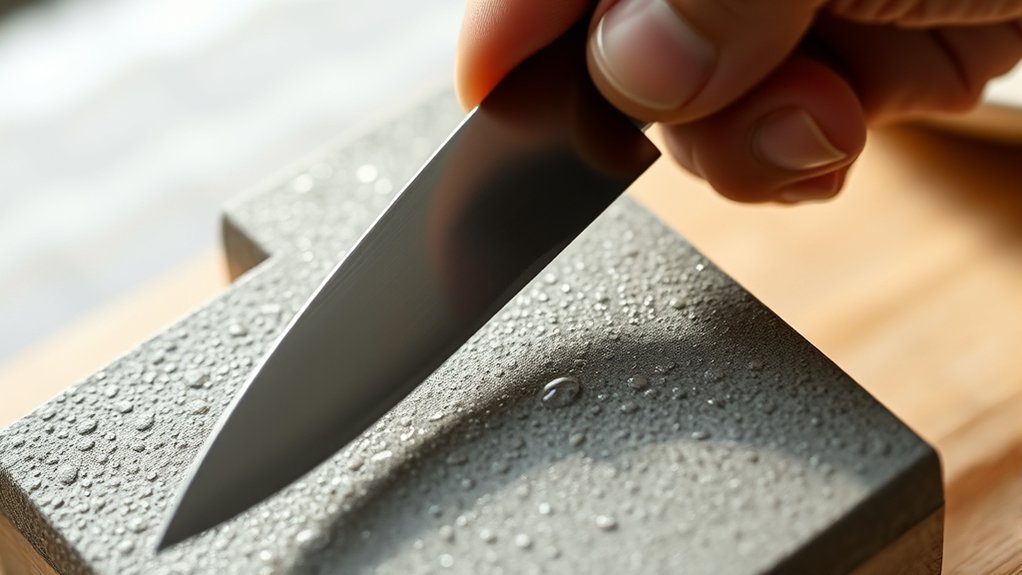
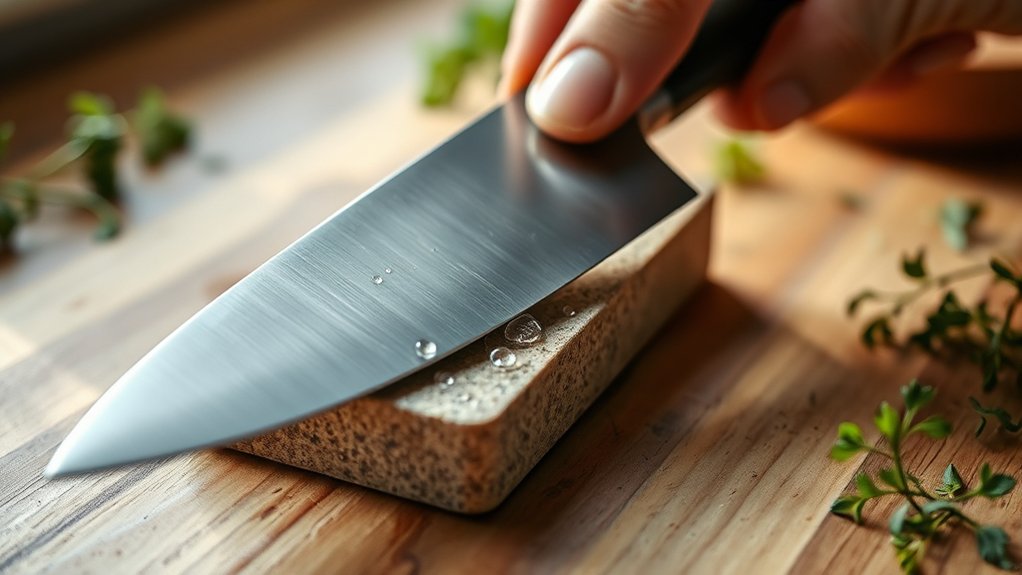
Although using a sharpening stone might seem intimidating at first, it’s a straightforward way to restore your knife’s edge effectively. Start by soaking the stone in water for about 10 minutes if it’s a water stone, or apply honing oil if it’s an oil stone. This lubrication helps with smoother sharpening.
Hold your knife at a consistent 15-20 degree angle against the stone. Using steady pressure, slide the blade across the stone in a sweeping motion, moving from heel to tip. Repeat this sharpening technique evenly on both sides of the blade to maintain balance.
Hone Your Kitchen Knife for a Razor-Sharp Finish
After restoring your knife’s edge with a sharpening stone, you’ll want to hone it to perfect the blade’s sharpness. Honing realigns the blade’s microscopic teeth, ensuring ideal blade alignment and a razor-sharp finish. Here’s how to hone effectively:
Honing realigns microscopic teeth for a razor-sharp finish after sharpening your knife’s edge.
- Choose the right honing rod – Select a ceramic or steel rod that suits your knife type.
- Maintain the sharpening angle – Hold the knife at the same angle you used on the stone, usually 15-20 degrees.
- Use smooth, controlled strokes – Starting at the base of the blade, draw the knife down and across the rod, moving toward the tip. Repeat on both sides, about 5-10 times each.
- Check blade alignment frequently – Feel for smoothness along the edge, ensuring the blade is straight and properly aligned.
Honing doesn’t remove metal but sharpens by refining blade alignment, making your knife safer and more efficient for daily use.
Test and Maintain Your Kitchen Knife’s Sharpness
To keep your kitchen knife performing at its best, you need to regularly test and maintain its sharpness. Start by carefully checking the blade’s edge using simple tests like slicing through paper or gently running the blade along your thumbnail. Never press too hard to prioritize blade safety.
If the knife struggles to cut cleanly, it’s time to sharpen it again. Keep a record of your knife’s sharpening history to know when maintenance is due.
Frequent honing can extend the time between full sharpenings, preserving the blade’s integrity. Furthermore, store your knife properly using a magnetic strip or blade guard to prevent dulling and accidents.
Frequently Asked Questions
Can I Use a Sharpening Rod Instead of a Stone?
Yes, you can use sharpening rods instead of a stone for knife maintenance. Sharpening rods, especially ceramic or steel ones, help realign your knife’s edge quickly and keep it sharp between more thorough sharpenings.
They’re great for regular upkeep but won’t remove as much metal as a stone, so don’t rely on them for restoring really dull blades. Using both tools together can keep your knives in top shape longer.
How Often Should I Sharpen My Kitchen Knife?
You should sharpen your kitchen knife every 1 to 3 months, depending on how often you use it. For regular home cooking, sharpening frequency might be once every 6 to 8 weeks.
Proper knife maintenance includes honing your blade more frequently to keep it aligned. If you notice your knife struggling to cut, it’s time to sharpen.
Staying consistent with this helps maintain sharpness and extends your knife’s lifespan.
Is It Safe to Sharpen Serrated Knives at Home?
Yes, you can sharpen serrated knives at home, but you need to follow safety precautions carefully. Use a special sharpening rod designed for serrated edges to maintain proper knife maintenance.
Work slowly and wear cut-resistant gloves to protect your hands. Avoid using regular sharpening stones, as they can damage the serrations.
What Angle Is Best for Sharpening Different Knives?
Think of the sharpening angle like the wings of a bird: too wide or too narrow affects its flight. For knife maintenance, use a 20-degree angle for kitchen knives to preserve sharpness and durability.
For pocket knives or hunting knives, 25 degrees works well, offering toughness. Serrated knives need special sharpening techniques and often require less angle precision.
Sticking to the right angle helps keep your blades sharp and makes them last longer.
Can I Sharpen Knives With Electric Sharpeners?
Yes, you can sharpen knives with electric sharpeners, and they’re great for quick knife maintenance. These devices use motorized abrasive wheels to restore your blade’s edge efficiently.
However, you’ll want to follow proper sharpening techniques to avoid removing too much metal or damaging the blade. Electric sharpeners work best for standard kitchen knives, but be cautious with specialty or very thin blades, as they might require more delicate methods.
Conclusion
Now that you’ve mastered these five simple steps, your kitchen knife will slice through ingredients like a hot knife through butter. Remember, sharpening isn’t just a chore; it keeps your tools ready for your next culinary masterpiece.
Keep your knife sharp, and it’ll reward you with precision and ease every time you cook. With just a little care, your kitchen knife will always feel like an extension of your own hand. Sharpening a kitchen knife regularly helps maintain that effortless performance.