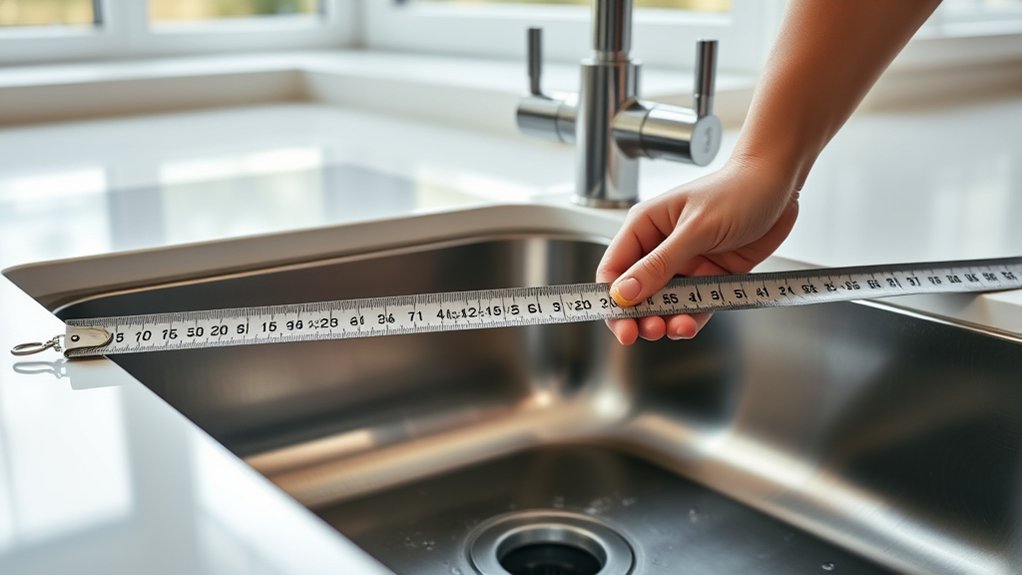
How to Measure Kitchen Sink in 5 Easy Steps
Measuring a kitchen sink can feel surprisingly tricky, especially when you’re trying to choose a replacement that fits perfectly. You’re not alone—many people struggle with confusing dimensions, tight countertop cutouts, and unexpected installation issues.
This guide makes learning how to measure a kitchen sink simple and stress-free.
To measure your kitchen sink in five easy steps, first gather tools like a tape measure, notepad, and flashlight, and prep your workspace by clearing and cleaning the area.
Measure the sink’s length and width at its longest and widest points, then check the depth and number of bowls.
Next, measure the countertop cutout precisely, noting any curves.
Finally, double-check all measurements and prepare for installation.
Keep going if you want tips on ensuring a perfect fit and smooth setup.
Key Takeaways
- Measure the sink’s length from the longest left-to-right point and width from the widest front-to-back point.
- Identify the sink style and count the number of bowls to guide accurate measurements.
- Measure the depth from the top edge to the deepest point of each bowl.
- Measure the countertop cutout’s length and width precisely, noting any curves or rounded corners.
- Double-check all measurements and confirm sink material thickness before installation.
Gather Essential Tools and Prep Your Workspace
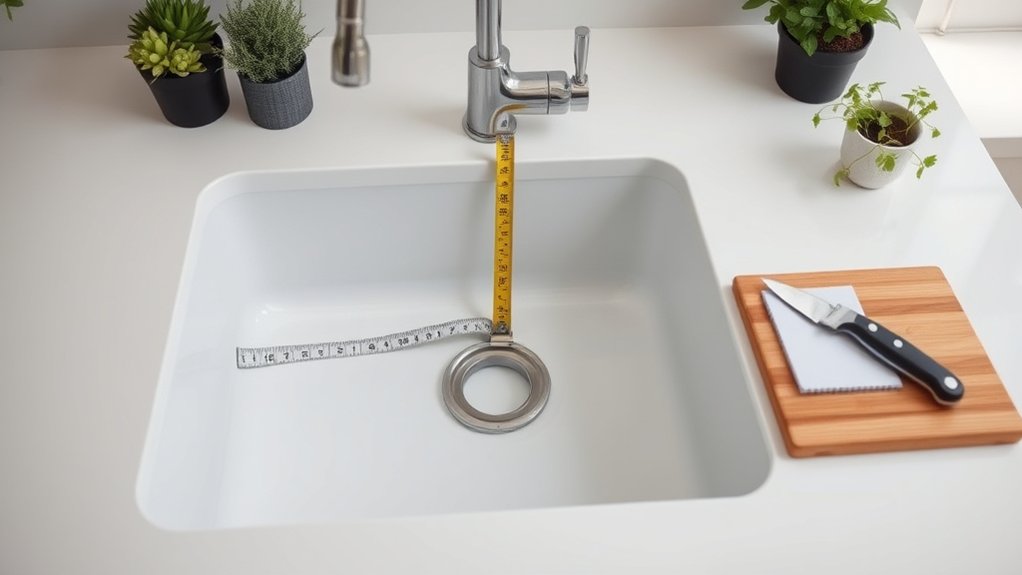
Before you begin measuring your kitchen sink, make sure you have all the essential tools on hand and clear your workspace. Grab a tape measure, a notepad, and a pen to jot down your dimensions.
Having a flashlight can help you see under the sink or in tight corners. Clearing the area around your sink gives you room to work and makes it easier to spot dirt or grime.
Use this opportunity to follow some cleaning tips. Wipe down the sink surface and check for stains or buildup. A clean sink will give you more accurate measurements and help you spot any wear or damage.
Incorporate maintenance routines by inspecting the faucet and drain for leaks or rust. Taking these small steps before measuring helps keep your sink in good condition and makes the process smoother and more efficient.
Measure the Length and Width of Your Kitchen Sink
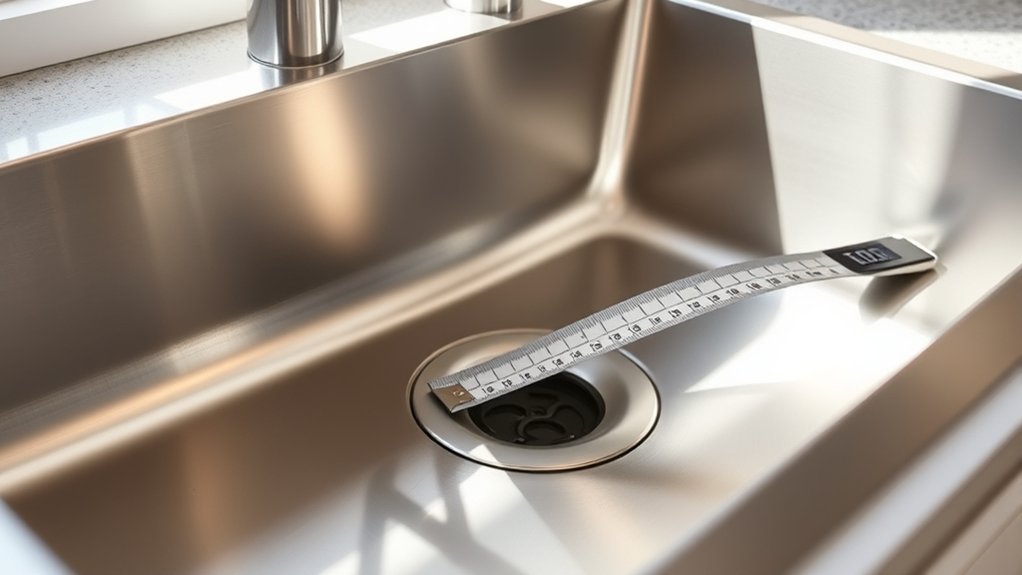
With your workspace prepared and tools ready, you can now measure the length and width of your kitchen sink. Start by identifying your sink style, whether it’s a single bowl, double bowl, farmhouse, or undermount, as this affects how you measure.
Using a tape measure, record the longest point from left to right for the length. Then, measure the width from front to back at the widest point.
Be sure to measure along the edges, especially if your sink has rounded corners or an irregular shape due to its material type, such as stainless steel, cast iron, or composite granite.
Each material can influence the sink’s thickness and outer dimensions, so precise measurements are essential. Double-check your numbers to avoid errors that could affect fitting or replacement.
Measure Depth and Bowl Configuration of Your Kitchen Sink
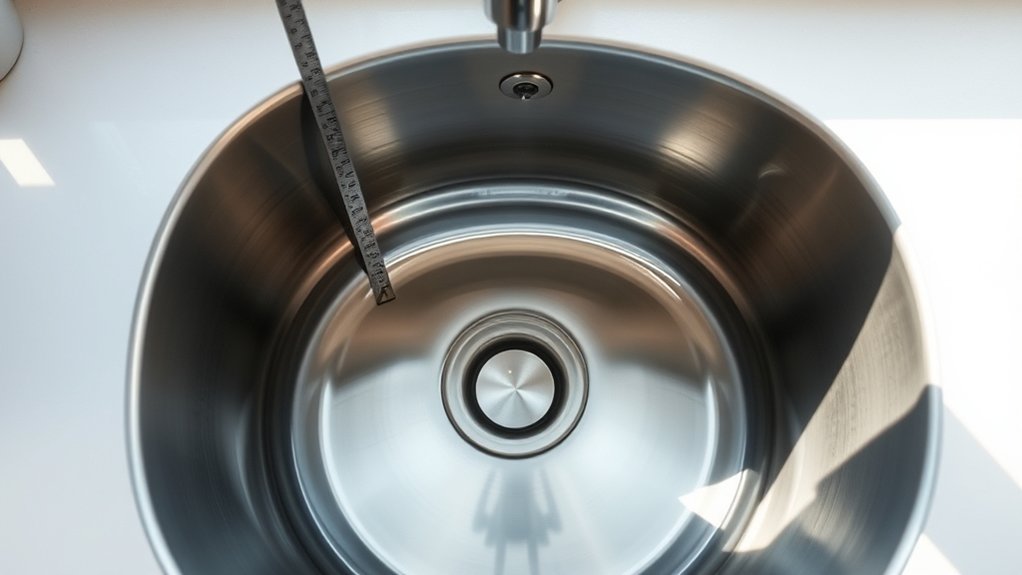
Although measuring length and width is essential, you’ll also need to measure the depth and understand your sink’s bowl configuration. Depth affects the sink’s capacity and comfort, while the bowl configuration influences daily tasks and faucet compatibility.
Different sink materials, such as stainless steel or granite composite, have standard depths, but always double-check. Knowing whether your sink has one, two, or three bowls also helps you plan an efficient workspace.
Here’s a quick guide:
| Bowl Configuration | Typical Depth (inches) |
|---|---|
| Single Bowl | 8 to 10 |
| Double Bowl | 7 to 9 |
| Triple Bowl | 6 to 8 |
Measure from the top edge to the deepest point of each bowl. This information helps you choose the right faucet and ensures it works well with your sink material.
Measure the Cutout Space on Your Kitchen Countertop
After measuring your sink’s depth and bowl configuration, turn your attention to the cutout space on your kitchen countertop. This step is essential because your sink must fit perfectly within the existing or planned cutout to guarantee a proper sink installation.
Start by identifying the countertop material, as this affects how you measure and handle the space. Use a tape measure to record the length and width of the cutout, measuring from edge to edge inside the opening.
Begin by noting the countertop material, then measure the cutout’s length and width from edge to edge.
Note any curves or rounded corners, as these details impact the sink’s fit and sealing. If your countertop material is stone or solid surface, be especially careful with measurements since alterations can be costly.
Write down the dimensions clearly and compare them with your sink’s specifications. Accurate measurement of the cutout space will save you time and prevent complications during installation.
Taking these steps confirms your new sink will fit seamlessly and function properly in your kitchen.
Double-Check Your Measurements and Get Ready to Install
Before you start the installation, double-check all your measurements to guarantee accuracy and avoid costly mistakes. Revisit the cutout dimensions, sink width, length, and depth.
Confirm the sink material’s thickness, since it affects how the sink fits and seals against the countertop. Compare these measurements with the manufacturer’s specifications to assure a perfect match.
Next, review installation tips specific to your sink material, whether stainless steel, granite composite, or porcelain, as each requires different sealing and mounting techniques.
Make sure you have the right tools and supplies, like plumber’s putty or silicone sealant, along with the appropriate mounting clips.
Finally, clear your workspace and prepare for installation. Having everything ready minimizes disruptions and streamlines the process.
Taking these careful steps will help you install your kitchen sink confidently and avoid common issues.
Frequently Asked Questions
What Materials Are Kitchen Sinks Commonly Made Of?
Kitchen sinks are commonly made from stainless steel, cast iron, composite granite, and fireclay. Stainless steel offers great durability and a sleek, modern look, while cast iron provides a classic aesthetic with a durable enamel coating.
Composite granite blends durability with varied colors, giving you more aesthetic options. Fireclay sinks offer a traditional, glossy finish and strong resistance to scratches and stains. Choose a material that fits your style and will last.
How Do I Choose the Best Faucet for My Sink?
Choosing the best faucet for your sink is like finding the perfect dance partner: smooth and in sync. First, consider faucet installation; make sure the number of holes in your sink matches the faucet’s design. Next, think about water flow and opt for a faucet that offers adjustable pressure to suit your needs. Don’t forget style and finish, as they should complement your kitchen’s look while providing reliable function every day.
Can I Install a Kitchen Sink Myself or Hire a Professional?
You can install a kitchen sink yourself if you have basic plumbing skills and the right tools, making DIY installation a budget-friendly option. However, if you’re unsure about plumbing connections or want to avoid leaks, seeking professional assistance is wise.
Professionals guarantee proper fitting, prevent damage, and save time. Weigh your confidence and skills against the complexity; when in doubt, hiring a pro guarantees a smooth, hassle-free installation.
What Are Common Sink Drain Sizes and Types?
Common sink drain sizes usually have a drain diameter of 1.25 to 1.5 inches. You’ll often find 1.5 inches is the standard for kitchen sinks because it handles water flow better.
When choosing pipe fittings, make sure they match your sink’s drain diameter to avoid leaks and guarantee a proper fit. Knowing these sizes helps you pick the right parts for a smooth installation or repair process.
How Do I Maintain and Clean My Kitchen Sink Effectively?
Think of your kitchen sink as the heart of your cooking space. It needs regular care to keep working well. For effective sink cleaning, rinse it after every use and wipe it down with a gentle cleanser to prevent buildup.
Use maintenance tips like scrubbing the drain with baking soda and vinegar monthly to help prevent clogs. Avoid harsh chemicals, and keep your sink dry to maintain its shine and longevity.
Conclusion
Now that you’ve nailed the numbers and noted every nook, you’re perfectly poised to proceed. Measuring your kitchen sink might seem tricky, but these simple steps guarantee a seamless setup.
Remember, reliable results require repeated readings. Double-checking every detail delivers dependable data and helps you avoid costly mistakes.
With careful calculations and confident cuts, you’ll conquer countertop challenges and create a clean, crisp culinary corner you’ll cherish. Happy handiwork and hassle-free handling await as you complete your kitchen sink measurement.