3 Price Ranges for How Much a Kitchen Island Costs
Choosing the right kitchen island can feel overwhelming, especially when you’re balancing space, style, and budget. You’re not alone—many homeowners struggle to find an option that fits their needs without overspending.
You’ll find kitchen islands in three main price ranges to fit your needs. Under $1,000, you get basic, compact models with simple materials and limited customization.
Between $1,000 and $3,000, you can choose mid-range islands offering better durability, custom shapes, built-in storage, and seating options.
Beyond that, custom islands use high-end materials and add-ons that boost cost and style. Keep exploring to uncover which option matches your kitchen best.
Key Takeaways
- Budget kitchen islands under $1,000 are compact, use basic materials, and offer limited customization and mobility features.
- Mid-range islands priced $1,000 to $3,000 feature custom materials, built-in storage, seating, and electrical outlets for enhanced functionality.
- High-end kitchen islands use premium materials like natural stone and include extensive customization, increasing overall cost significantly.
- Material choice, customization options, and design complexity are primary factors influencing kitchen island pricing across all ranges.
- Balancing aesthetics, durability, and budget is crucial when selecting a kitchen island within any price range.
Factors That Affect Kitchen Island Prices
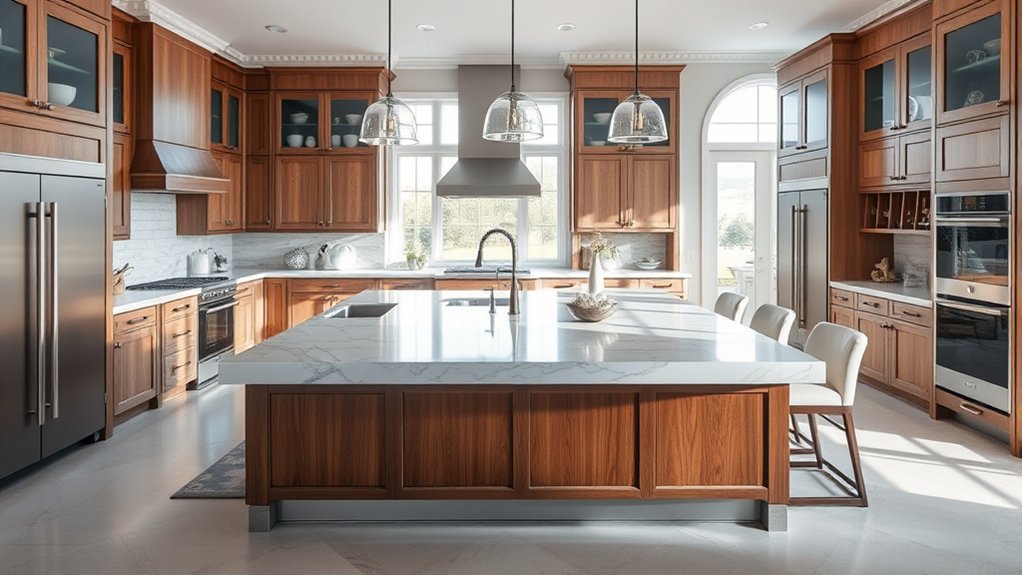
While several elements influence the cost of a kitchen island, understanding the main factors can help you make informed choices. One key aspect is material variations. Different materials like wood, granite, or stainless steel come with distinct price points.
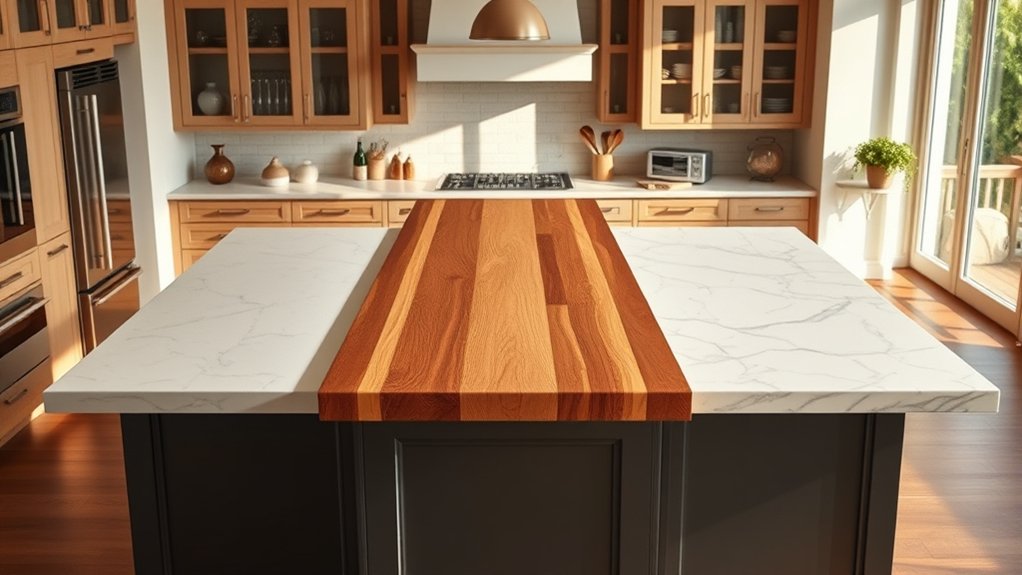
For example, natural stone countertops tend to be pricier than laminate or butcher block options. You’ll want to balance aesthetics and durability with your budget when selecting materials.
Customization options also affect the price considerably. Adding features such as built-in appliances, extra storage, or unique shapes increases costs. The more personalized your island, the higher the price tag.
Even finishes, hardware, and lighting choices contribute to the final figure.
Budget Kitchen Island Prices Under $1,000
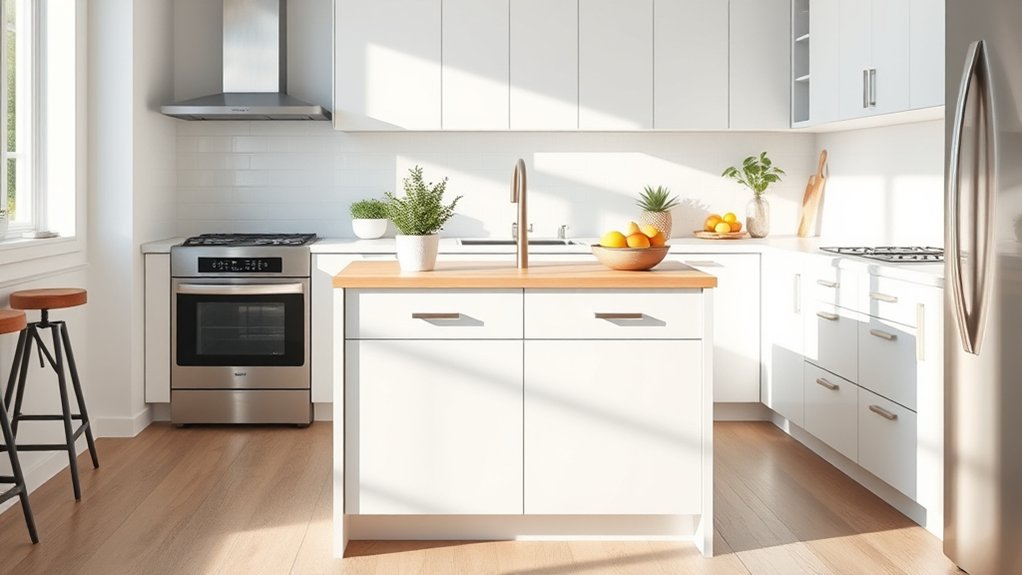
You can find several budget-friendly kitchen islands under $1,000 that still offer functionality and style. These options often come in compact sizes, perfect for smaller kitchens or as supplementary prep space.
While the price limits extensive customization options, you’ll still come across models with adjustable shelving or simple add-ons like towel racks and hooks.
Material choices in this price range typically include laminate, MDF, or basic wood finishes, which keep costs low without sacrificing durability.
Some islands feature wheels, making them easy to move and versatile in your kitchen layout. Although you won’t get luxury materials or complex designs, many budget islands deliver clean, practical looks that fit modern or traditional kitchens.
If you’re looking to personalize further, consider painting or adding your own hardware. With a budget under $1,000, you can still achieve a functional kitchen island that boosts workspace and storage without breaking the bank.
Mid-Range Kitchen Island Costs Between $1,000 and $3,000
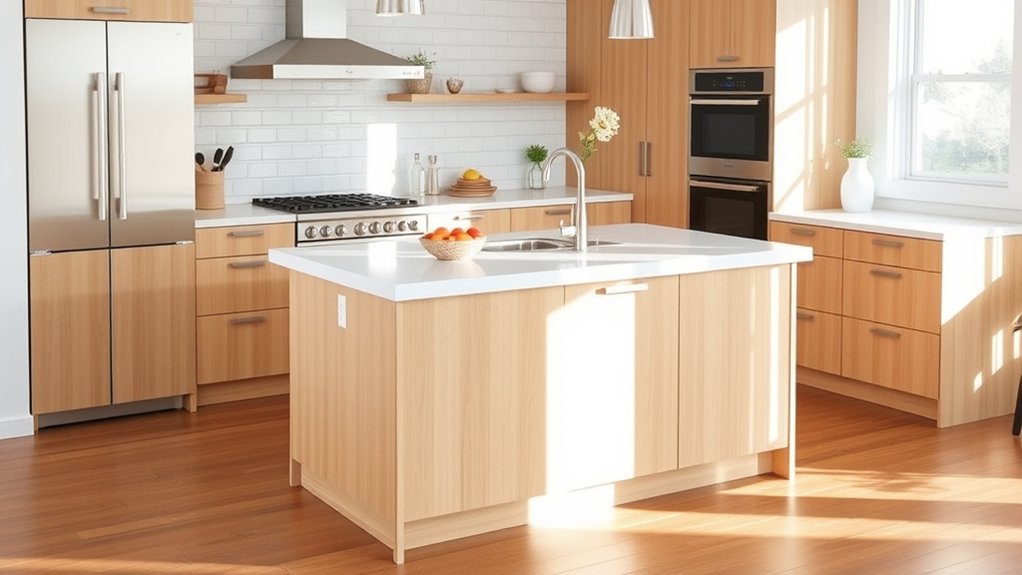
Stepping up from budget options, mid-range kitchen islands between $1,000 and $3,000 offer greater versatility and quality. You’ll find that these islands often use custom materials, providing a more personalized look.
The design complexity increases, allowing for unique shapes, built-in storage, and upgraded features like seating or electrical outlets. This price range suits homeowners who want balance: better durability without breaking the bank.
Here’s what you can expect from mid-range kitchen islands:
| Feature | Benefit |
|---|---|
| Custom materials | Tailored look, better durability |
| Design complexity | Unique shapes, added storage |
| Size options | Fits small to medium kitchens |
| Built-in features | Seating, outlets, cookware storage |
| Finish quality | Smooth edges, refined surfaces |
Choosing a mid-range island means investing in both function and style, enhancing your kitchen’s appeal and usability.
Frequently Asked Questions
What Materials Are Best for a Durable Kitchen Island?
For a durable kitchen island, you’ll want materials that combine durability with aesthetic appeal. Hardwood like maple or oak offers great strength and timeless beauty.
Quartz countertops resist scratches and stains while looking sleek. Stainless steel provides industrial durability and a modern vibe.
If you want something natural, granite is tough and visually striking. Choosing these materials helps ensure your island stays sturdy and stylish for years to come.
How Long Does Installation Usually Take?
When it comes to kitchen island installation, the timeline usually takes a few days to a week, depending on complexity. If you’re choosing budget options, expect a quicker turnaround since simpler designs require less work.
Custom or high-end islands might stretch the installation timeline. You’ll want to keep an eye on the schedule to avoid any surprises, but with proper planning, you’ll have your new island ready before you know it.
Can Kitchen Islands Be Customized for Small Spaces?
Yes, you can customize kitchen islands for small spaces by focusing on compact design and maximizing space efficiency. You’ll find options like narrow islands, rolling carts, or multi-functional pieces with storage and seating.
Are There Maintenance Costs for Kitchen Islands?
Yes, you’ll encounter some maintenance costs for kitchen islands, especially depending on the materials used. Compared to other kitchen elements, these costs are usually low but vary with wear and tear.
To keep expenses down, follow maintenance tips like sealing wood surfaces regularly and cleaning stone countertops properly. Doing a cost comparison before choosing materials will help you pick options that balance durability and upkeep, saving you money in the long run.
Do Kitchen Islands Increase Home Resale Value?
You might be surprised, but yes, kitchen islands can definitely increase your home’s resale value. When you add a luxury upgrade like a stylish island, you create a focal point buyers love.
This often leads to a noticeable resale boost because it makes your kitchen more functional and attractive. So, if you want to stand out in the market, investing in a well-designed kitchen island is a smart move that can pay off when selling your home.
Conclusion
Choosing the right kitchen island is like finding the perfect centerpiece for your home’s heart—it sets the tone and brings everything together. Whether you’re working with a budget under $1,000 or aiming for a mid-range option between $1,000 and $3,000, understanding the factors that affect prices helps you make the best choice.
With the right island, you’ll create a space that’s both functional and inviting, turning your kitchen into a true gathering spot. Understanding these 3 price ranges for how much a kitchen island costs can help you choose the best option for your home.