How to Organise a Kitchen Cupboard for Maximum Efficiency
Organising a kitchen cupboard begins with sorting items by frequency of use and category to create a system that is easy to maintain. Start by emptying the cupboard completely, discarding expired products, and wiping down shelves for a fresh start. Allocate zones for daily essentials, baking supplies, and rarely used items to streamline your cooking process.
A well-organised kitchen cupboard can reduce clutter, speed up meal preparations, and help prevent buying unnecessary duplicates. Understanding how to arrange items properly makes a difference not only visually but also functionally, turning a chaotic shelf into a practical workspace.
This article explores practical methods to organise your kitchen cupboard including zoning techniques, the best storage containers to use, space-saving hacks, and maintenance tips. We will also compare different organisational tools to help you decide what suits your kitchen layout and cooking habits.
Sorting and Categorizing Contents
Decluttering and Prioritizing Essentials
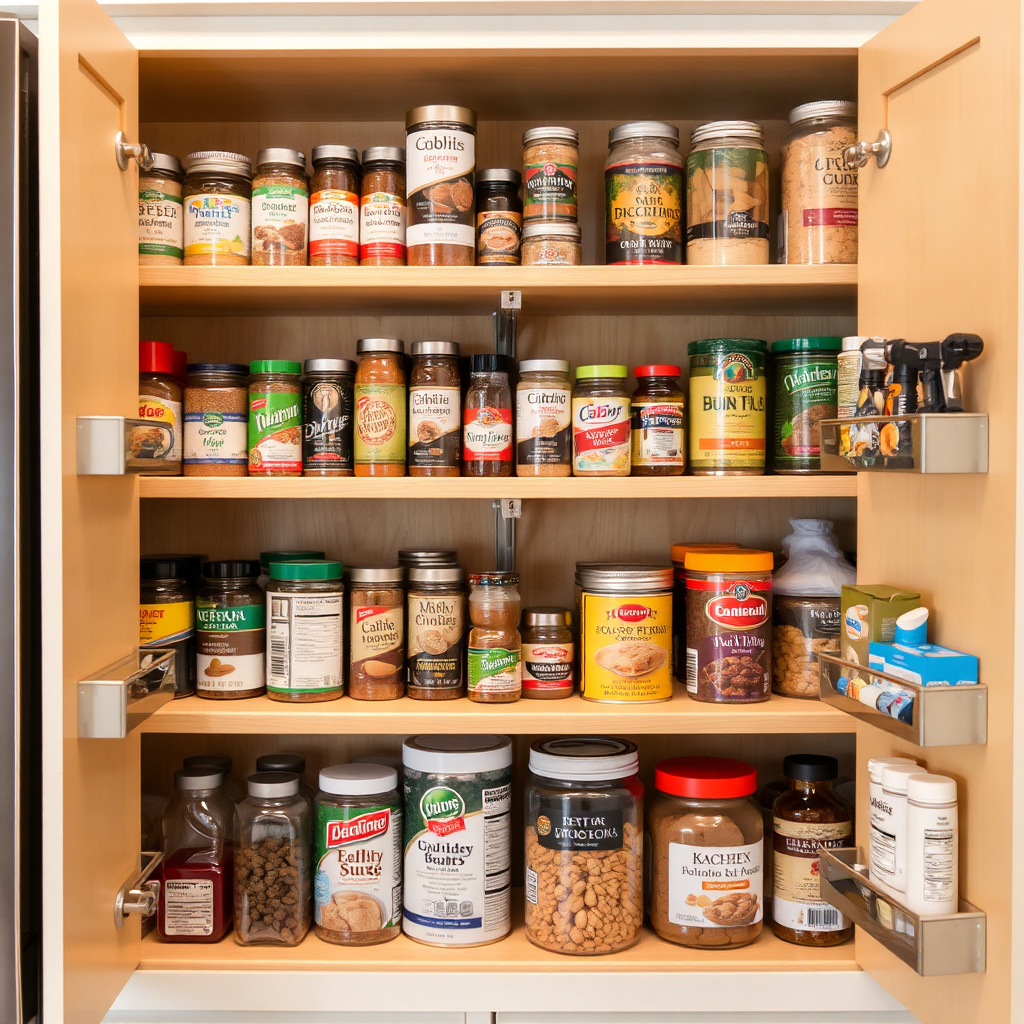
Start organising your kitchen cupboard by removing all items, then sort them into categories such as spices, canned goods, dry foods, and cookware. Discard any expired or spoiled items to free up space.
Once sorted, prioritize keeping everyday essentials at eye level for easy reach, while less frequently used items can be stored on higher or lower shelves. This approach minimizes the effort spent searching for ingredients.
Grouping Similar Items Together
Grouping similar items together helps improve accessibility and makes inventory management simpler. You might group baking supplies in one container of your cupboard and canned foods in another area.
Use clear containers or labeled baskets to visually reinforce categories. This creates a straightforward system to track what you have and what needs replenishing.
Choosing the Right Storage Containers
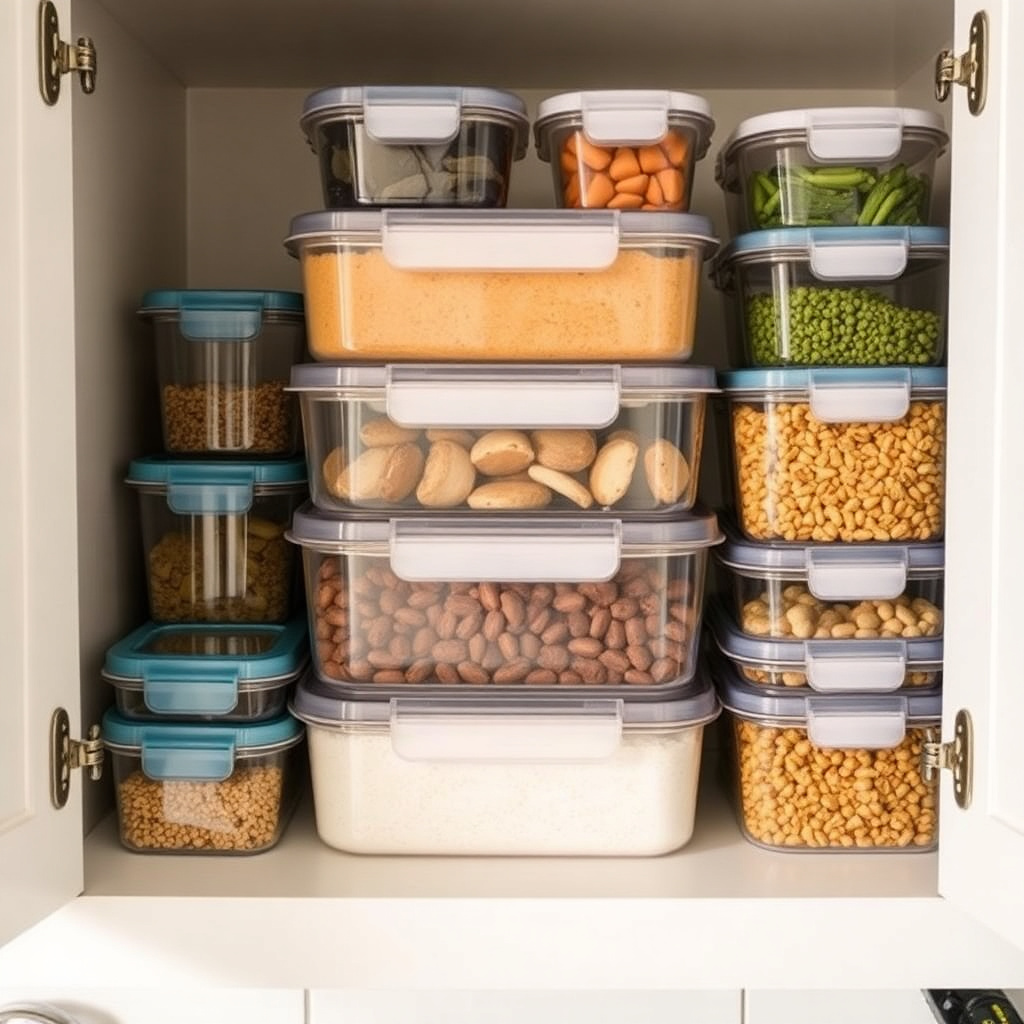
Benefits of Airtight Containers
Using airtight containers preserves the freshness of dry goods like flour, sugar, and cereals. They prevent moisture, pests, and odors from compromising contents while also helping stack items efficiently.
Select containers that fit your cupboard’s dimensions and organization style, ensuring they are easy to open and clean. Transparent options allow quick identification of contents, saving time during cooking.
- Prevents spoilage
- Maximizes shelf space
- Easy content recognition
Using Baskets and Bins for Grouping
Baskets and bins simplify organising smaller packets and loose items such as spices, snacks, or seasoning sachets. They also keep the cupboard tidy by containing spills and crumbs.
Choose stackable and pull-out bins to make use of vertical space and improve access to items at the back of deeper shelves.
- Contain small items neatly
- Improve accessibility
- Easy to clean and move
Maximizing Space in Your Kitchen Cupboard
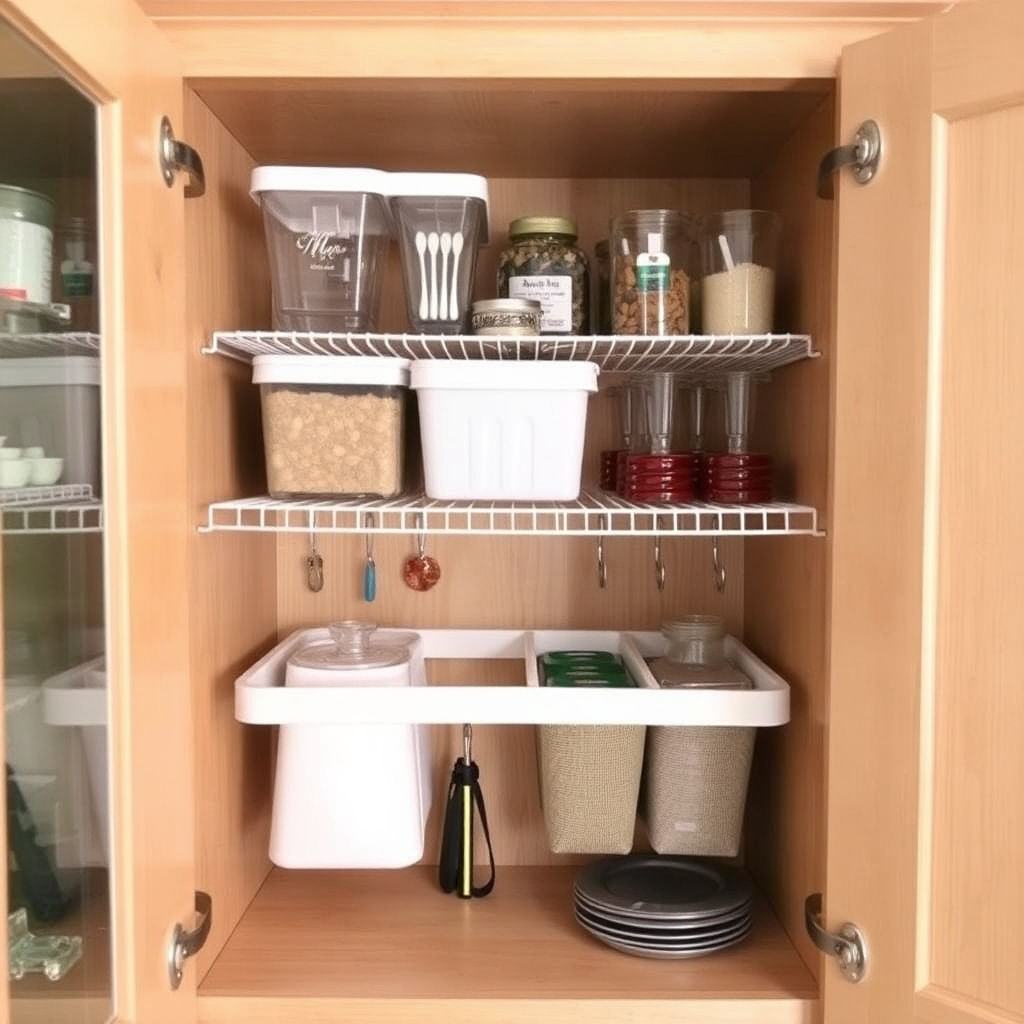
Using Shelf Risers and Tiered Organizers
Shelf risers increase usable vertical space by allowing two layers of items, especially useful for canned goods and spices stacked in rows. Tiered organizers display items clearly, making it easier to spot what you need.
Look for adjustable shelves or risers to customize height based on your items, as this flexibility can accommodate containers of different sizes.
- Expand vertical storage
- Keep items visible
- Customize shelf height
Incorporating Door Storage Solutions
Utilize the inside of cupboard doors with racks or hooks to hold small jars, measuring spoons, or pot lids. This keeps frequently used tools within easy reach while freeing up shelf space.
Magnetic strips can also hold metal utensils or spice containers securely to the door without taking up shelf room.
- Adds storage without altering shelves
- Keeps essentials accessible
- Ideal for small kitchens
Maintaining Your Organised Kitchen Cupboard
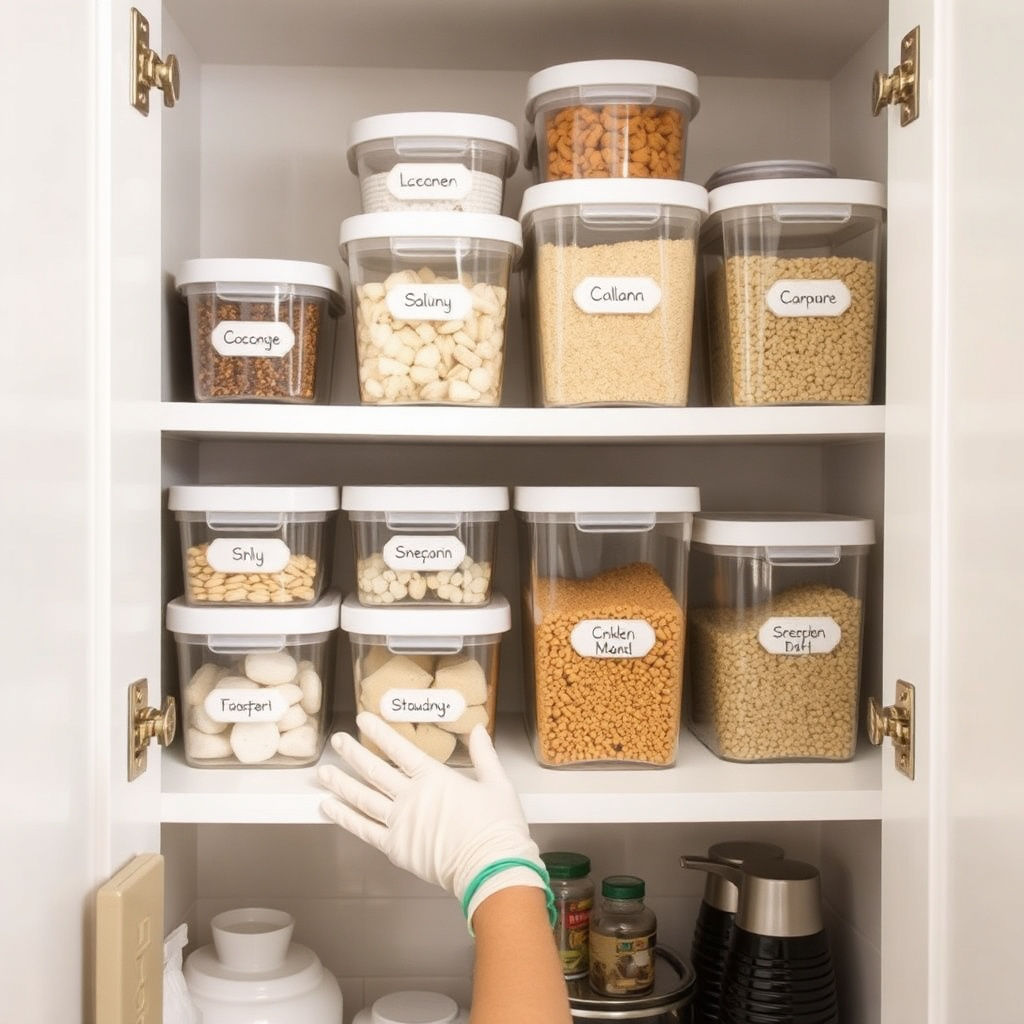
Regular Decluttering and Cleaning
Set a reminder to check your kitchen cupboard every few months to remove expired items and clean shelves. This prevents buildup of dust and crumbs and keeps your system efficient.
Maintaining an organised cupboard reduces food waste and makes cooking more enjoyable by always having a clean, clutter-free space.
Rearranging Based on Usage Patterns
Adjust your organisation as your cooking habits change—for example, relocating frequently used baking supplies into more accessible spots during holiday seasons.
Pay attention to what you use most and least, tweaking zones to maintain convenience and minimize time spent searching.
Smart Tips for Specific Item Organisation
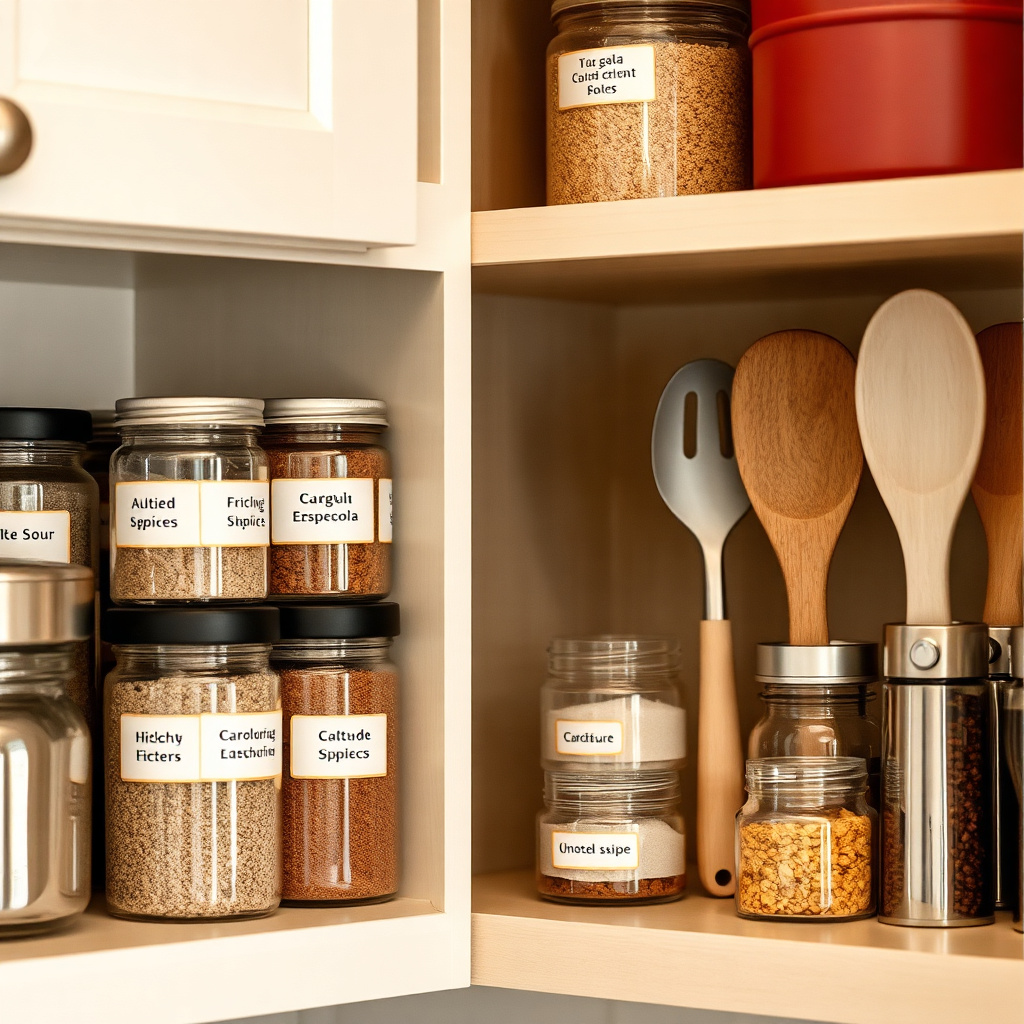
Organising Spices and Small Jars
Spices benefit from being stored in clear, labeled containers arranged alphabetically or by cuisine type for quick selection. Compact racks or horizontal drawers help utilize small spaces.
Keep spices away from heat and sunlight to preserve flavors, and consider grouping frequently used ones near your cooking zone.
- Use uniform jars
- Label visibly
- Store away from heat
Storing Large Pots and Baking Equipment
Bulky items like pots and bakeware require a dedicated lower cabinet space or pull-out shelves for safe storage and easy access.
Use vertical dividers to separate baking sheets and cutting boards, which prevents scratching and keeps them upright.
- Assign spacious areas
- Use dividers for flat items
- Pull-out shelves improve access
Incorporating Kitchen Cupboard Storage Ideas
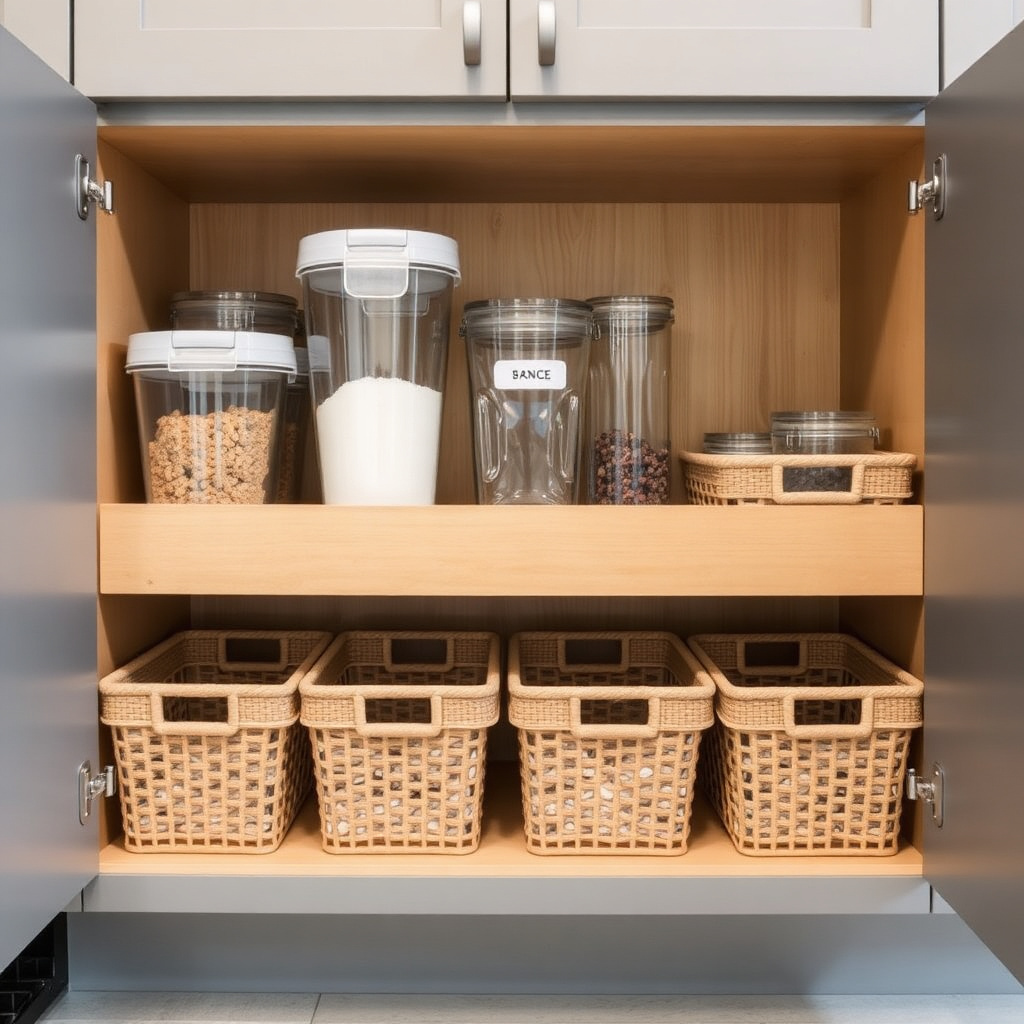
Utilising Clear Containers to See Contents
Clear containers make it easy to identify contents at a glance, reducing the need to open jars or boxes. They also create a uniform look that feels tidy and appealing.
Consider using modular sizes that fit your cupboard shelves perfectly, minimizing wasted space and improving visual order.
- Quick content identification
- Creates a neat appearance
- Fits shelf dimensions neatly
For additional information on different types of kitchen storage, you can refer to this kitchen storage guidance on Wikipedia. kitchen storage guidance on Wikipedia.
Implementing Pull-Out Drawers and Lazy Susans
Pull-out drawers turn deep cupboards into accessible storage, reducing the effort of reaching to the back. Lazy Susans rotate, offering easy access to spices, oils, and condiments stored in one spot.
These accessories are especially helpful in compact kitchens, maximizing usability of every inch inside the cupboard.
- Improves item reachability
- Maximizes corner and deep shelf space
- Ideal for small containers
Kitchen Cupboard Organisation Tools Comparison
This table compares five popular storage solutions based on ease of installation, price, space efficiency, and accessibility.
| Storage Type | Ease of Installation | Price Range | Space Efficiency | Accessibility |
|---|---|---|---|---|
| Airtight Containers | Easy | $$ | High | High |
| Baskets and Bins | Very Easy | $ | Moderate | High |
| Shelf Risers | Moderate | $$ | High | Moderate |
| Pull-Out Drawers | Difficult | $$$ | High | Very High |
| Lazy Susans | Moderate | $$ | Moderate | High |
Frequently Asked Questions
How often should I clean and reorganise my kitchen cupboard?
Ideally, clean and reorganise your kitchen cupboard every three to six months to remove expired items and maintain orderliness. This schedule helps keep your supplies fresh and the space efficient.
What is the best way to keep spices organized in a cupboard?
Use uniform clear jars with visible labels and arrange spices alphabetically or by frequency of use. Store them away from heat sources to maintain flavor longevity.
Are airtight containers necessary for all dry food storage?
While not necessary for all items, airtight containers are highly recommended for perishable dry goods like flour, sugar, and cereals to keep them fresh longer and prevent pest contamination.
Can door racks really add effective storage space?
Yes, door racks utilize often-wasted space inside cupboard doors and are perfect for small or frequently used items, increasing overall storage without sacrificing shelf space.
What is the best strategy to organise bulky pots and pans?
Store bulky pots and pans in lower cupboards using pull-out shelves or vertical dividers. This method keeps items accessible and reduces stacking that can cause damage.
Key Takeaways
- Sort and categorize items before reorganising your cupboard.
- Use airtight containers and clear bins to keep items fresh and visible.
- Maximize vertical space with shelf risers and door racks.
- Maintain organisation with regular cleaning and adjustment based on use.
Conclusion
Selecting the best approach to organise a kitchen cupboard involves understanding your storage needs, the variety of items you keep, and how often you use them. Starting with a thorough declutter and categorization creates a foundation for lasting order. Implementing storage solutions that fit your cupboard’s dimensions and cooking style further enhances accessibility and space use. The main keyword 'how to organise a kitchen cupboard' ties this approach together, emphasizing practical steps and tools that bring harmony to a busy cooking environment.
For everyday cooks needing quick access to staples, grouping frequently used items at eye level inside airtight containers works well. Those with limited space may benefit from pull-out drawers or lazy Susans to keep smaller items manageable. Meanwhile, baskets and bins offer affordable, adaptable storage ideal for snacks or baking ingredients. By mixing these kitchen cupboard storage ideas strategically, you can create a system that reduces clutter and speeds meal preparation.
To bring this into practice, start by emptying your cupboard and sorting contents. Invest in clear airtight containers and some shelf risers for improved visibility and capacity. Add door racks if space permits for extras like spice jars. Maintain this setup by routinely checking for expired goods and reorganising based on changing use patterns. In time, your organised kitchen cupboard will become a model of efficiency, making meal prep smooth and enjoyable.