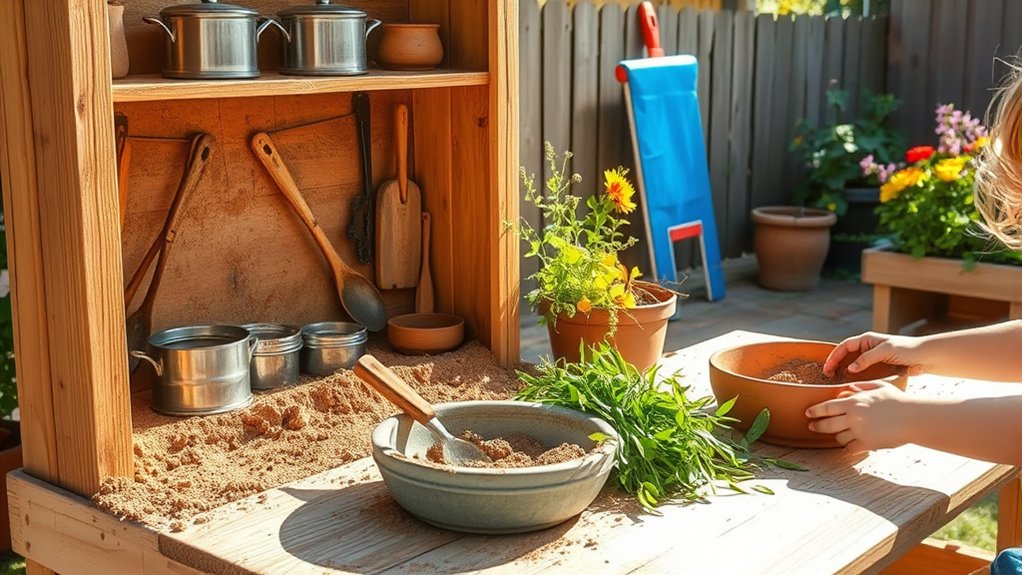
How to Build a Mud Kitchen in 3 Easy Steps
Many parents want to create an exciting outdoor play space without spending a fortune or tackling a complicated DIY project. You’re not alone—finding a simple, safe, and fun setup can be challenging.
A mud kitchen is an easy way to encourage imaginative play while making the most of your backyard.
To build a mud kitchen in three easy steps, start by choosing a flat, well-drained spot with natural shade and good visibility.
Next, gather simple, durable materials like wooden pallets, old basins, and non-toxic paint, along with basic tools such as a hammer and screwdriver.
Finally, assemble your kitchen with safety in mind—smooth edges, a sink area, hooks, and shelves for utensils.
Keep going to find out how to add creative, fun features that make outdoor play even better.
Key Takeaways
- Choose a flat, well-drained spot with natural shade and easy supervision for safety and comfort.
- Gather durable materials like wooden pallets, old sinks, non-toxic paint, and essential tools.
- Build a sturdy base with smooth edges, adding a sink area using a water container for realistic play.
- Install hooks, shelves, and storage bins to organize utensils, mud, and natural ingredients efficiently.
- Add creative features like a chalkboard, and ensure all materials are safe and non-toxic for kids.
Choose the Best Spot for Your Mud Kitchen
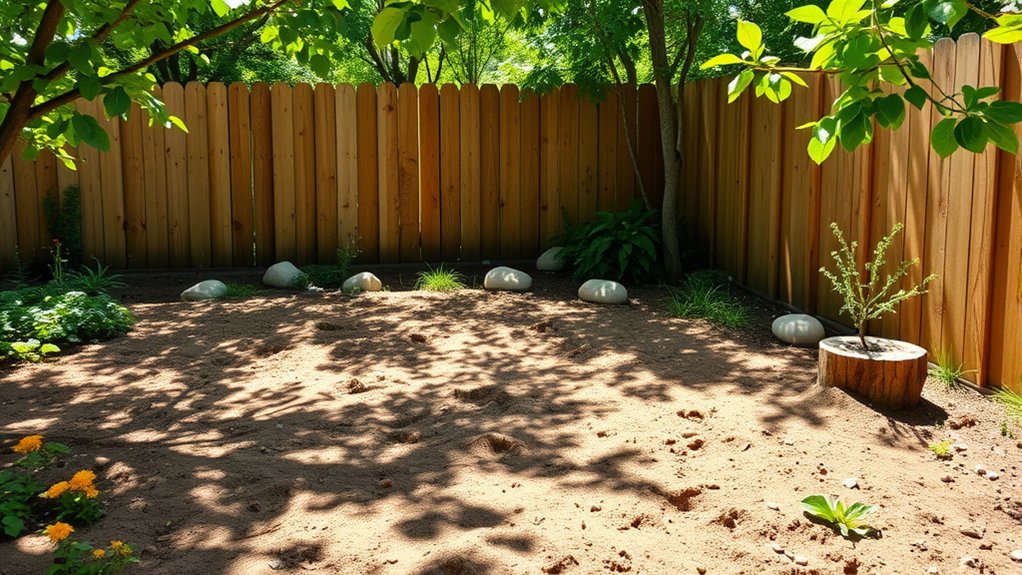
Where should you set up your mud kitchen? Choose a spot that’s flat and well-drained to keep the area safe and comfortable for outdoor play. Avoid low-lying areas where water can pool, as this creates slippery conditions that compromise mud kitchen safety.
Ideally, pick a location with some natural shade, like under a tree or near a porch, to protect kids from direct sun during playtime. Make sure the site is visible from your usual hangout spots so you can easily supervise.
Also, keep your mud kitchen away from areas with thorny bushes, sharp objects, or heavy foot traffic to prevent accidents. Confirm there’s easy access to water nearby for cleaning up, which is vital for maintaining hygiene and mud kitchen safety.
Gather Materials and Tools for Building
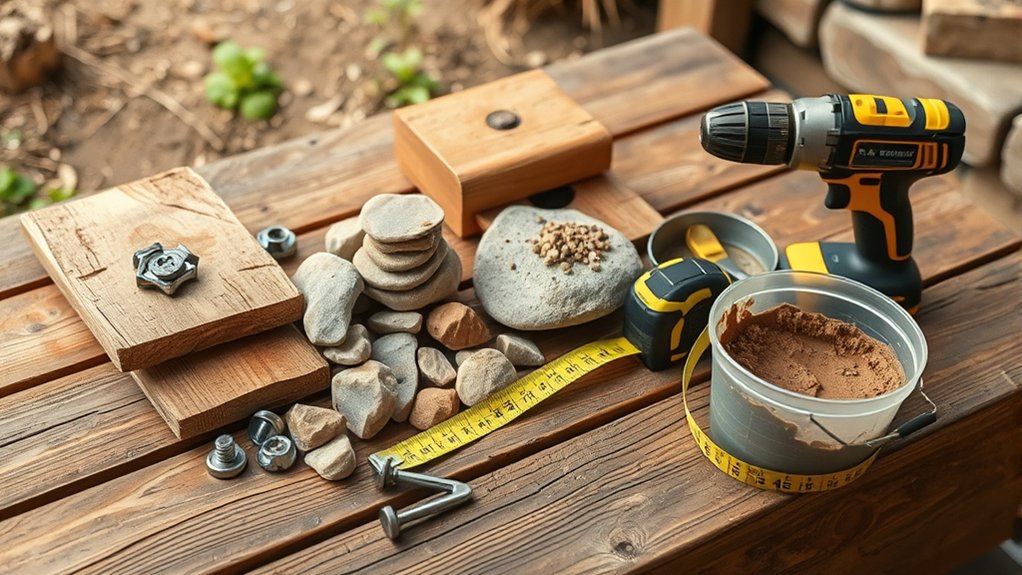
Once you’ve settled on the perfect spot for your mud kitchen, it’s time to gather the materials and tools you’ll need to bring it to life. For an engaging outdoor setup that encourages creative play, focus on durable, natural materials and simple tools to keep the build straightforward.
Here’s a quick reference table to help you organize your essentials:
| Materials | Tools |
|---|---|
| Wooden pallets | Hammer |
| Old sink or basin | Screwdriver |
| Paint (non-toxic) | Saw |
| Buckets and tubs | Measuring tape |
| Nails and screws | Drill |
Collect these items before starting to ensure a smooth building process. Using reclaimed wood and household items not only saves money but also boosts creativity. With your materials and tools ready, you’ll be set to create a mud kitchen that sparks imaginative play outdoors.
Build Your Mud Kitchen and Add Fun Features
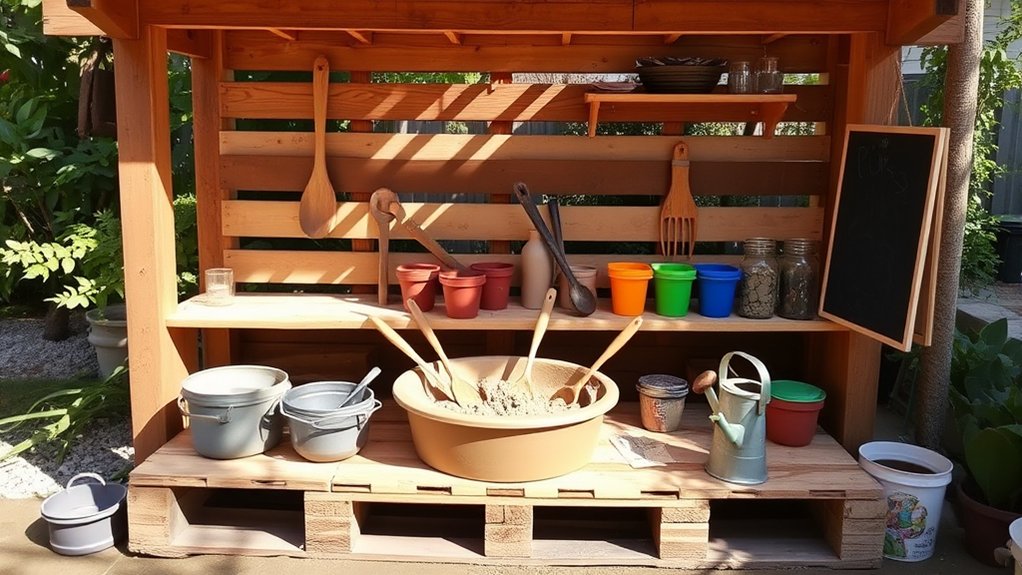
Although building your mud kitchen might seem challenging at first, you’ll find the process rewarding and straightforward when you break it down step by step. Start by assembling your base using sturdy wood or pallets, ensuring it’s stable and secure.
Focus on a creative design that encourages imaginative play while keeping safety in mind. Use smooth edges and non-toxic materials. Once the structure is solid, add fun features to engage kids and spark creativity.
Consider including:
- A sink area with a water container for realistic cooking
- Hooks or shelves for utensils and pots
- Chalkboard panels for menus or drawing
- A storage bin for mud and natural ingredients
These elements make the mud kitchen functional and exciting. By combining safety with inventive design, you create a playful space where children can discover, learn, and have endless fun outdoors.
Frequently Asked Questions
How Do I Clean and Maintain a Mud Kitchen?
You should establish regular cleaning routines to keep your mud kitchen in great shape. After each use, rinse surfaces with water and scrub off any dried mud. Use a mild soap occasionally to prevent grime buildup.
For maintenance, check for loose screws or damaged parts weekly and fix them promptly. Applying a weatherproof sealant helps safeguard wooden areas from moisture. These maintenance tips ensure your mud kitchen stays safe, clean, and ready for fun.
What Are the Benefits of Playing With a Mud Kitchen?
Playing with a mud kitchen boosts your creativity and problem-solving skills through hands-on creative design. You get to experiment with different textures and materials, enhancing sensory development.
Material selection teaches you about natural resources and sustainability. Plus, it encourages social interaction and teamwork when you play with others.
Can Mud Kitchens Be Used Indoors Safely?
Yes, you can use mud kitchens indoors safely if you guarantee good indoor ventilation and choose non-toxic materials. Studies show that 85% of indoor air pollution comes from household activities, so keeping air flowing is essential.
Use natural, non-toxic clay and untreated wood to avoid harmful chemicals. Open windows or use fans to circulate air, and place a mat underneath to catch spills. This way, your indoor mud kitchen stays fun and safe.
How Do I Encourage Kids to Use the Mud Kitchen?
You can encourage kids to use the mud kitchen by sparking their interest in imaginative play. Suggest fun scenarios like cooking up magical potions or hosting a tea party with nature’s ingredients.
Highlight how playing with mud supports sensory development, helping them investigate textures and smells. Join in the fun to model creativity and make the experience social.
Providing tools like spoons and pots will also make the play more engaging and hands-on.
Are Mud Kitchens Safe for Children With Allergies?
When it comes to allergy prevention, you can’t afford to drop the ball with mud kitchens. They’re generally safe for kids with allergies if you choose safe materials like untreated wood and non-toxic paints.
Keep a close eye on what’s in the soil, and regularly clean play areas to avoid mold or allergens. By taking these steps, you’ll create a fun, safe space where all children can enjoy without worry.
Conclusion
Now that you’ve built your mud kitchen, get ready for endless creative play. Like a garden blooming with wildflowers, your mud kitchen will grow with laughter, learning, and imagination.
Remember, the best part isn’t just the building—it’s the joy you’ll share making muddy masterpieces and memories. So plunge in, get messy, and watch your little one’s creativity flourish right in your backyard!