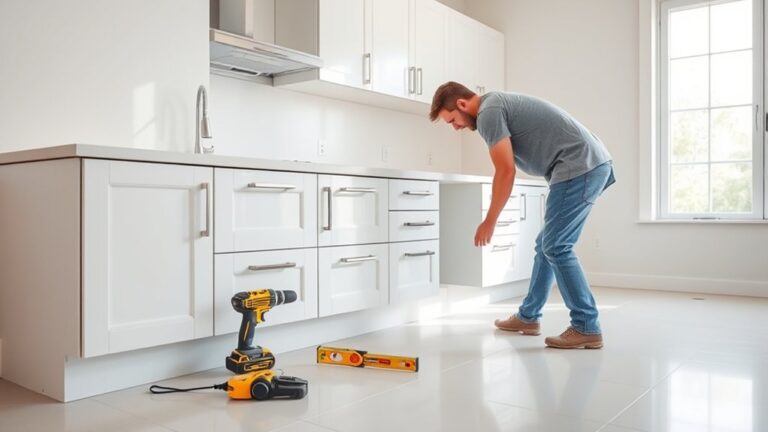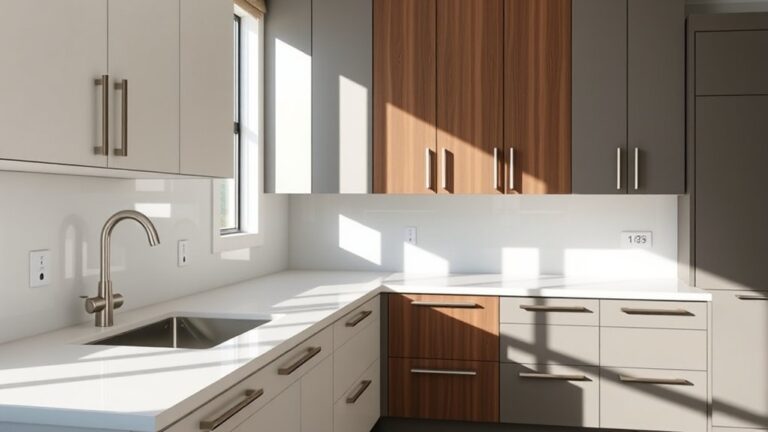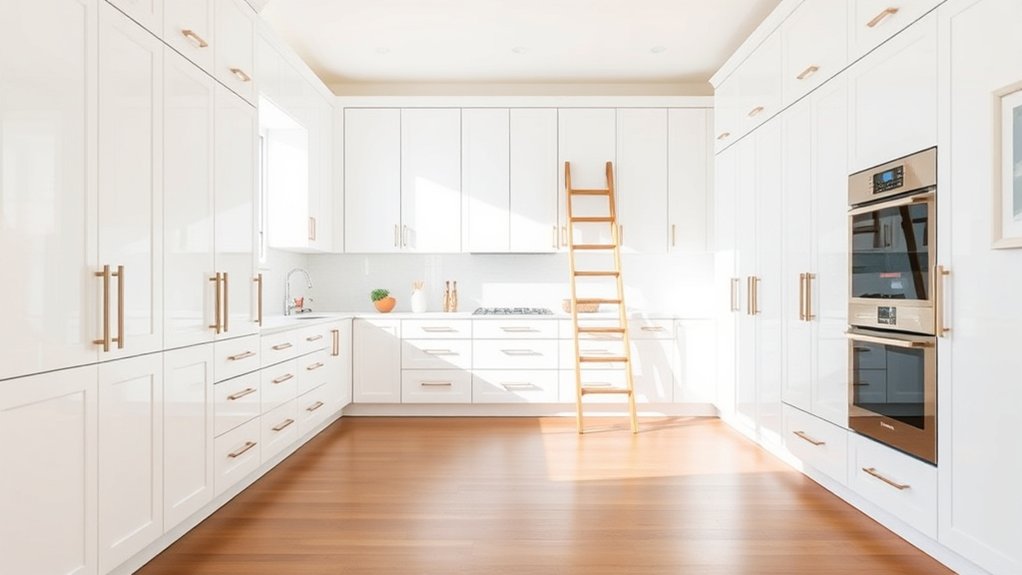
5 Reasons Kitchen Cabinets Should Go to the Ceiling
Many homeowners struggle with wasted space, dust collecting above their cabinets, and kitchens that feel unfinished. You’re not alone—these common frustrations can make cleaning and organizing harder than they need to be.
That’s why kitchen cabinets should go to the ceiling.
You should extend your kitchen cabinets to the ceiling to maximize storage space and keep rarely used items organized. It cuts down on dust buildup by eliminating hard-to-clean gaps, making maintenance easier.
Tall cabinets create a sleek, seamless look that brightens and opens up your kitchen. Plus, they boost your home’s value with a modern, high-end feel.
Keep exploring to uncover how these benefits transform your kitchen experience.
Key Takeaways
- Extending cabinets to the ceiling maximizes storage by utilizing vertical space without increasing the kitchen footprint.
- Ceiling-height cabinets eliminate dust-collecting gaps, reducing cleaning time and allergens.
- They create a sleek, seamless look that enhances the kitchen’s overall aesthetic.
- Taller cabinets improve room brightness and spaciousness by reflecting more light and drawing the eye upward.
- Cabinets to the ceiling increase home value by showcasing quality design and thoughtful use of space.
Maximize Storage With Ceiling-High Cabinets
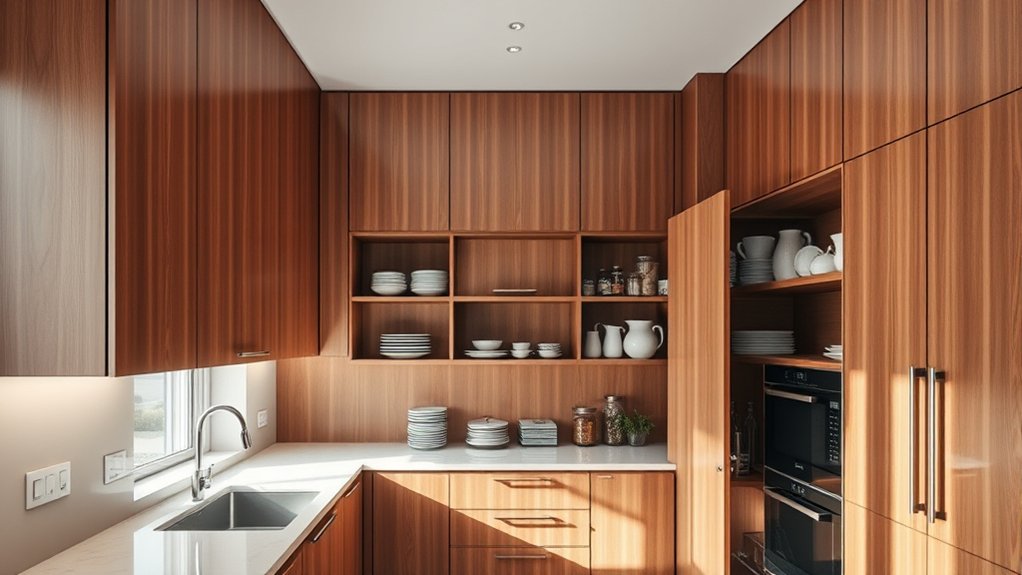
When you install kitchen cabinets that reach the ceiling, you instantly increase your storage space without expanding your kitchen’s footprint. You’ll find it easier to organize your items and tuck away seldom-used gadgets or seasonal dishes in those upper cabinets.
Plus, ceiling-high cabinets allow you to incorporate ornamental accents that raise your kitchen’s look, blending storage with style seamlessly. Whether you prefer sleek modern designs or want to echo historical styles, these tall cabinets provide a perfect canvas.
You can highlight crown molding or decorative corbels, adding character while maximizing functionality. By going all the way up, you reduce wasted space that often collects clutter or goes ignored.
Say Goodbye to Dust Buildup With Tall Cabinets
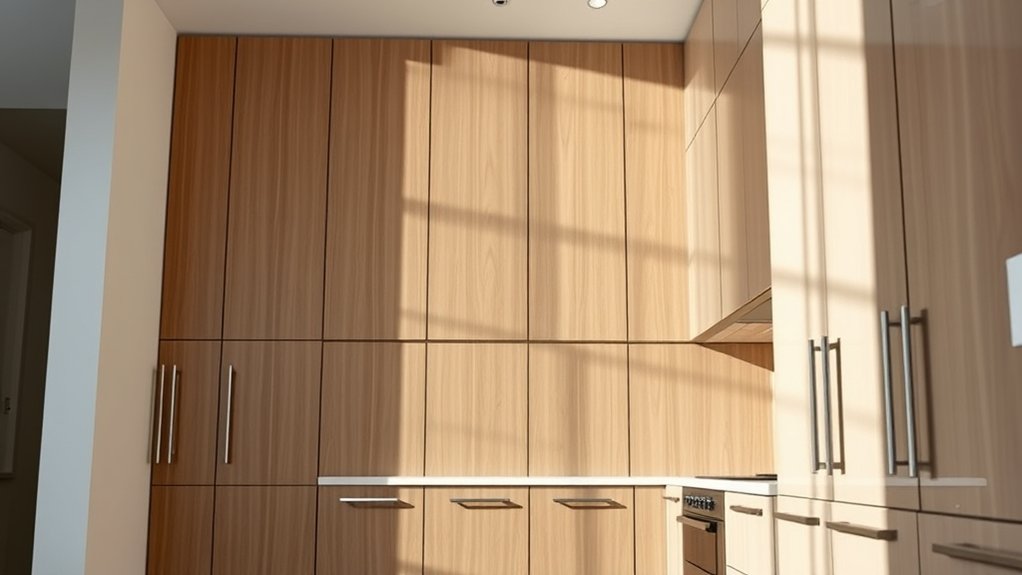
Although shorter cabinets might seem easier to reach, they often leave a gap between the top and the ceiling where dust loves to settle. This empty space becomes a magnet for dust accumulation, creating cleaning challenges you don’t need.
When you choose tall cabinets that reach the ceiling, you eliminate this awkward gap, making your kitchen cleaner and easier to maintain.
Here’s why tall cabinets help you bid farewell to dust buildup:
- No space for dust to gather above cabinets
- Reduced frequency of stubborn dust cleaning
- Fewer allergens circulating in your kitchen
- Simplified cleaning routine without hard-to-reach spots
Create a Sleek, Seamless Look With Ceiling Cabinets
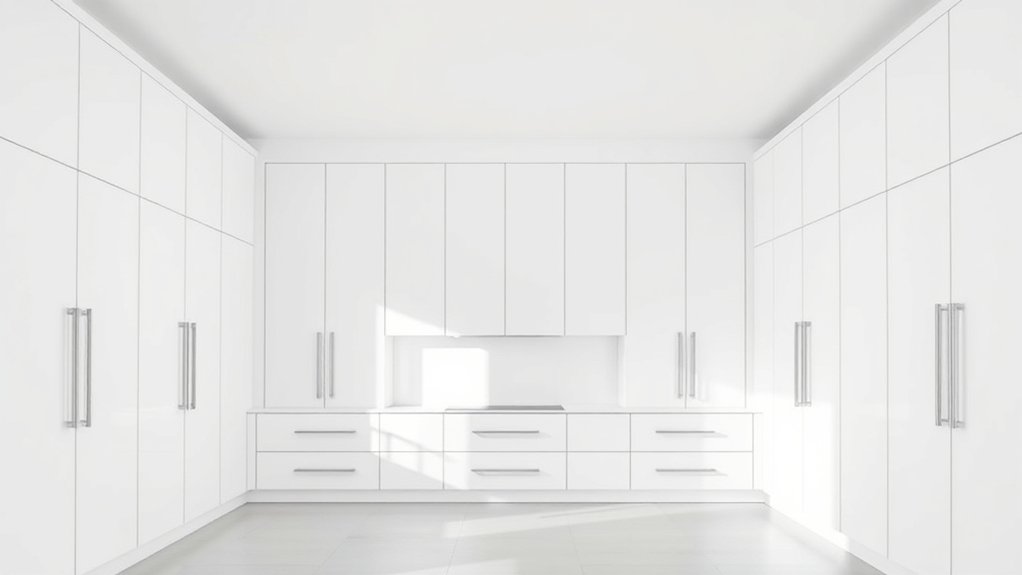
How can ceiling-height cabinets transform your kitchen’s appearance? By extending your cabinets all the way up, you create a sleek, seamless look that instantly modernizes your space. Without gaps between the cabinet tops and the ceiling, your kitchen feels more cohesive and thoughtfully designed. This design choice eliminates awkward spaces where dust collects and visually unites the room.
While open shelving offers a trendy contrast with decorative accents, choosing ceiling cabinets keeps your kitchen streamlined and clutter-free. You can still highlight decorative accents on your countertops or in glass-front cabinets, maintaining personality without disrupting the smooth flow. Ceiling-height cabinets give you a clean backdrop that balances style and function perfectly.
Make Your Kitchen Feel Bigger and Brighter With Tall Cabinets
Extending your cabinets to the ceiling not only creates a sleek look but also opens up opportunities to improve your kitchen’s spaciousness and brightness.
When you opt for tall cabinets, you visually extend your walls upward, making the room feel larger and more open. Plus, the extra height allows more natural and artificial light to reflect, amplifying brightness.
Here’s how tall cabinets achieve this effect:
- They reduce empty wall space, creating a continuous vertical flow.
- Decorative molding at the top adds elegance and draws the eye upward.
- Custom finishes in lighter tones boost light reflection.
- Tall cabinets minimize shadows by evenly distributing light across the room.
Increase Your Kitchen’s Value and Appeal
When you choose kitchen cabinets that reach the ceiling, you not only improve your space’s aesthetic but also boost its market value. Tall cabinets create a sleek, modern look buyers love, signaling quality and thoughtful design.
Moreover, they maximize storage without taking extra floor space, which appeals to anyone wanting an efficient kitchen.
You can further increase your kitchen’s appeal by opting for custom finishes that reflect your personal style and enhance the overall design. These finishes make your cabinets stand out and show that you’ve invested in high-end details.
Furthermore, ceiling-height cabinets reduce dust buildup on top, making cabinet maintenance easier and keeping your kitchen looking pristine.
Frequently Asked Questions
Are Ceiling-High Cabinets More Expensive to Install?
Yes, ceiling-high cabinets usually cost more to install. When you do a cost comparison, you’ll find that taller cabinets require more materials and extra labor, which drives up the price.
However, the material durability often justifies the investment because these cabinets tend to be sturdier and last longer. So, while you’ll pay more upfront, you’re getting better quality that can save you money over time.
Can Ceiling Cabinets Be Difficult to Reach Without a Step Stool?
Yes, ceiling cabinets can be difficult to reach without a step stool, especially if you don’t have the height or mobility. To make accessible storage easier, consider installing pull-down shelves or using organizers that bring items closer to you.
You’ll also want to plan for enough ceiling clearance so you can safely use a step stool when needed. This way, you’ll maximize your storage without sacrificing convenience or safety.
Do Ceiling Cabinets Require Special Hardware or Installation Techniques?
Oh, no special hardware or installation techniques needed—said no one ever about ceiling cabinets! You’ll definitely face hardware considerations like stronger brackets and longer screws to handle the extra height and weight.
Installation challenges pop up too, since aligning cabinets all the way up requires precision and sometimes extra help. So, while it’s doable, you’ll want to prepare for a bit more effort and the right tools to get those cabinets securely in place.
How Do Ceiling Cabinets Affect Kitchen Ventilation and Lighting?
Ceiling cabinets can restrict air circulation if they block vents or your range hood, so you’ll want to plan carefully. However, they don’t inherently reduce natural illumination since they’re usually above your main workspace and windows.
To keep your kitchen well-ventilated and bright, consider integrating under-cabinet lighting and ensuring your ventilation system isn’t obstructed. That way, you’ll maintain good airflow and plenty of natural light while maximizing storage.
Are Ceiling-High Cabinets Compatible With All Kitchen Styles?
Ceiling high cabinets offer great style versatility, so you’ll find they work with most kitchen styles, from modern to traditional. You can customize finishes and hardware to match your design, making them a seamless fit.
However, in very small or ultra-minimalist kitchens, they might feel overwhelming. Still, with the right choices, ceiling high cabinets can improve both function and aesthetics in nearly any kitchen style you choose.
Conclusion
Choosing ceiling-high kitchen cabinets is like adding the final brushstroke to a masterpiece. You’ll maximize every inch of storage, banish dust from forgotten shelves, and create a sleek, seamless look that opens up your space.
Tall cabinets brighten your kitchen, making it feel larger and more inviting. Plus, they boost your home’s value and appeal.
Don’t just settle for ordinary. Choose kitchen cabinets that go to the ceiling and transform your kitchen into something extraordinary.